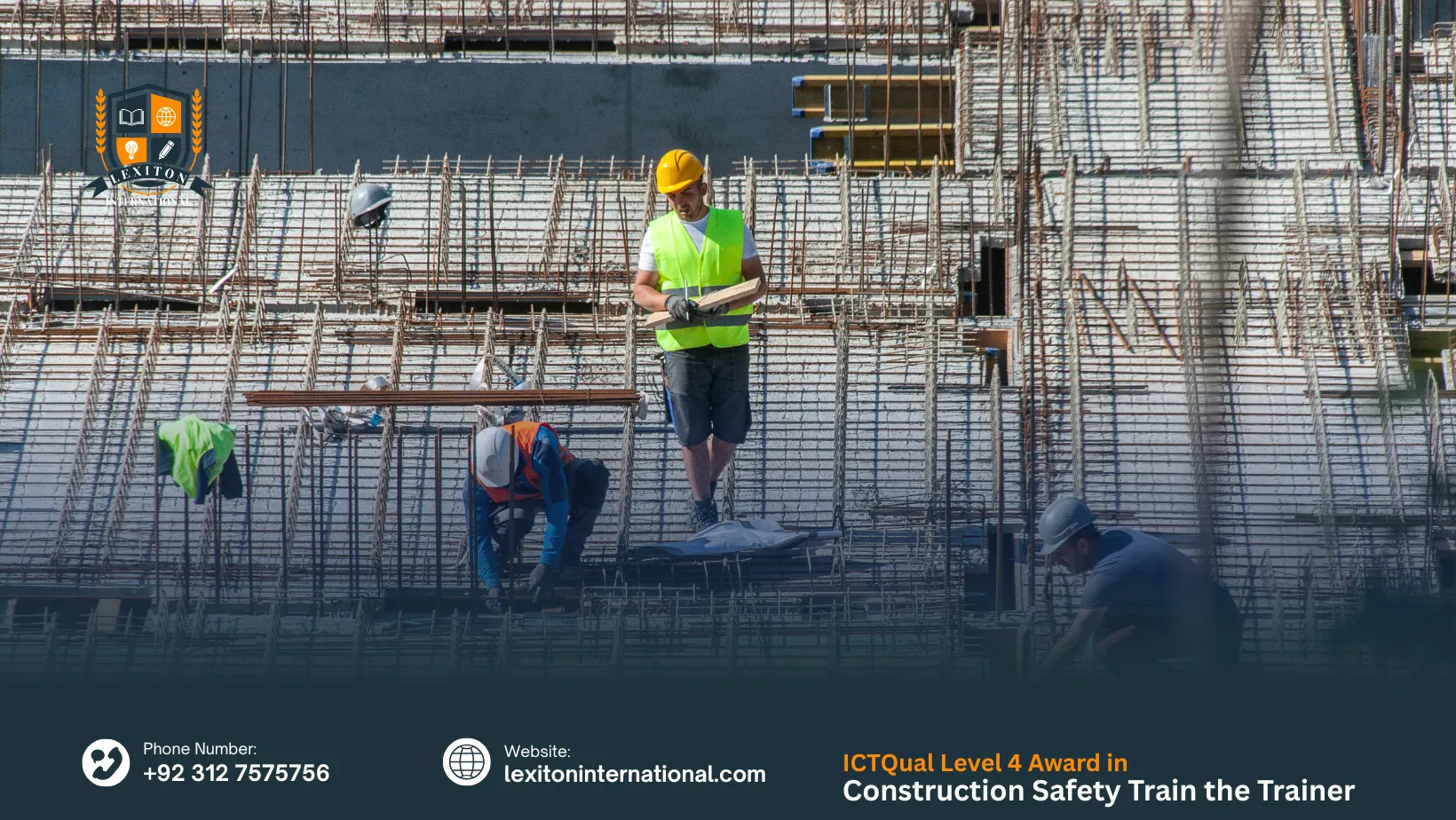
The ICTQual Level 4 Award in Construction Safety Train the Trainer is a specialized qualification designed to prepare professionals to deliver effective training in construction safety practices. This program bridges technical expertise in construction site safety with advanced instructional skills, enabling trainers to communicate complex safety requirements in a clear and practical manner. It emphasizes the trainer’s role as both an educator and a safety advocate, ensuring that learners not only understand compliance standards but also adopt safe behaviors that reduce risks and improve workplace culture. By combining theory, practical application, and coaching techniques, the course equips participants to become confident trainers who can influence safety outcomes across construction projects.
This course provides a comprehensive framework for understanding the unique safety challenges within the construction industry. Participants will explore critical topics such as hazard identification, risk assessment, site-specific safety protocols, and compliance with national and international regulations. The program emphasizes practical training design, enabling trainers to develop sessions that address real-world construction scenarios. Learners will also gain insights into adult learning principles, communication strategies, and interactive teaching methods, ensuring they can engage diverse groups of workers effectively. The focus is on building trainers who can translate technical safety standards into accessible, actionable knowledge that supports both compliance and productivity.
Beyond technical safety knowledge, the course highlights the importance of fostering a proactive safety culture within construction environments. Participants will learn how to mentor workers, encourage safe practices, and integrate safety awareness into daily operations. The program also covers performance evaluation, continuous improvement, and the trainer’s responsibility in promoting accountability and professionalism on construction sites. By the end of the course, learners will be equipped to design and deliver impactful training programs that not only meet regulatory requirements but also contribute to safer, more efficient, and more sustainable construction projects. This award strengthens professional credibility and opens pathways to advanced qualifications and leadership roles in construction safety training.
To ensure learners are well-prepared for the ICTQual Level 4 Award in Construction Safety Train the Trainer, applicants must meet specific criteria. These requirements guarantee that participants have the maturity, background, and professional readiness to succeed in both construction safety and training delivery.
- Age Requirements Applicants must be at least 21 years old, reflecting maturity and readiness for advanced training responsibilities.
- Qualification Requirements A minimum of a Level 3 qualification or equivalent in any discipline is required to ensure academic competence.
- Professional Experience Candidates should have at least 2–3 years of relevant workplace experience, ideally in construction, safety, or training roles.
- Educational Background A background in technical, vocational, or professional education is preferred, though applicants with other relevant experience may also be considered.
Mandatory Units
The ICTQual Level 4 Award in Construction Safety Train the Trainer equips learners with advanced knowledge and practical skills to deliver effective safety training in construction environments. Each unit is designed to strengthen technical expertise, instructional ability, and leadership in fostering a culture of safety and compliance across construction projects.
Principles of Construction Safety
- Understand the fundamental safety principles specific to the construction industry and their practical application.
- Recognise common hazards and risks present on construction sites and explore effective mitigation strategies.
- Learn the importance of creating a safe working environment through structured safety protocols.
- Develop awareness of how safety practices contribute to productivity and organizational success.
- Promote proactive safety behaviors that reduce risks and enhance site performance.
Occupational Health and Safety Regulations & Compliance
- Gain knowledge of national and international health and safety regulations governing construction activities.
- Learn how to ensure compliance with safety laws and standards, both legally and ethically.
- Understand the role of regulations in preventing accidents and promoting worker wellbeing.
- Explore industry-specific compliance frameworks and their application in training sessions.
- Build confidence in communicating complex regulatory requirements to diverse audiences.
Training Techniques and Adult Learning Principles
- Understand the principles of adult learning and how they apply to construction safety training.
- Develop skills to engage and motivate learners using effective teaching techniques.
- Learn how to adapt training methods to suit different learning styles and workplace contexts.
- Apply interactive and practical approaches to improve learner participation and retention.
- Foster inclusive learning environments that encourage collaboration and accountability.
Developing and Delivering Construction Safety Training
- Acquire the ability to design and structure training sessions that meet safety objectives.
- Learn how to deliver training in an engaging, clear, and effective manner.
- Incorporate real-world construction scenarios and examples to enhance learning outcomes.
- Use technology and visual aids to strengthen training delivery and learner understanding.
- Evaluate training effectiveness and refine delivery methods for continuous improvement.
Assessing Learner Competency and Providing Feedback
- Learn how to assess learner competency in construction safety practices through structured methods.
- Understand how to provide constructive feedback that supports learner growth and confidence.
- Develop the ability to monitor learner progress and adjust training approaches as needed.
- Apply assessment tools to measure both knowledge and practical application of safety principles.
- Encourage reflective practice among learners to reinforce long-term safety awareness.
Managing Challenging Situations and Continuous Improvement
- Develop strategies for managing challenging situations during safety training sessions.
- Learn techniques for maintaining control and creating a positive learning environment.
- Understand the importance of continuous improvement in training delivery and safety practices.
- Apply problem-solving and conflict resolution skills to address training challenges.
- Promote a culture of ongoing learning and accountability within construction teams.
The ICTQual Level 4 Award in Construction Safety Train the Trainer is designed for professionals who aim to deliver effective safety training within the construction industry. It is suitable for individuals who want to combine technical safety expertise with advanced instructional skills to influence workplace culture and compliance.
Construction Site Managers and Supervisors
- Professionals responsible for overseeing daily operations and ensuring site safety standards are met.
- Supervisors tasked with monitoring worker performance and enforcing safety protocols.
- Managers who want to integrate structured training into construction site practices.
- Leaders aiming to reduce risks and improve efficiency through effective safety coaching.
- Individuals committed to fostering accountability and professionalism among construction teams.
Safety Officers and Compliance Professionals
- Officers responsible for implementing occupational health and safety regulations on construction sites.
- Compliance professionals ensuring adherence to national and international safety standards.
- Individuals who want to strengthen their ability to train workers on compliance requirements.
- Safety specialists seeking to reduce accidents and promote wellbeing through structured training.
- Professionals aiming to align organizational practices with evolving regulatory frameworks.
Professional Trainers and Educators
- Trainers who want to specialize in construction safety and compliance training.
- Educators seeking to expand their portfolio with industry-specific safety programs.
- Professionals delivering induction, refresher, or advanced safety training for construction workers.
- Those interested in applying adult learning principles to technical safety contexts.
- Trainers aiming to improve engagement and long-term behavioral change among learners.
Experienced Construction Workers Transitioning into Training Roles
- Skilled workers who want to move into coaching and training positions.
- Individuals motivated to share their expertise with new or less experienced colleagues.
- Workers seeking career progression into supervisory or instructional roles.
- Professionals aiming to formalize their knowledge with a recognized qualification.
- Those committed to promoting safe practices and reducing risks on construction sites.
HR and Organizational Training Representatives
- HR professionals managing workforce training and development initiatives in construction companies.
- Training officers responsible for designing and delivering safety programs for employees.
- Company representatives seeking to improve worker performance and reduce incidents.
- Individuals tasked with aligning training with organizational goals and safety culture.
- Professionals aiming to build sustainable training frameworks for construction operations.
Completing the ICTQual Level 4 Award in Construction Safety Train the Trainer opens diverse pathways for professional growth, specialization, and leadership. Learners gain recognition as advanced trainers and can progress into higher-level qualifications, consultancy roles, and industry leadership positions within construction safety and training.
Advanced Training and Education Pathways
- Opportunities to pursue higher-level diplomas or awards in occupational safety and training.
- Access to specialized programs in construction risk management, auditing, and compliance.
- Engagement in research projects focused on safety culture and training methodologies.
- Development of expertise in integrating technology into construction safety training.
Career Advancement Opportunities
- Progression into senior safety training roles within construction and engineering firms.
- Opportunities to lead corporate safety departments or training divisions.
- Roles as master trainers responsible for mentoring new safety trainers.
- Advancement into consultancy positions offering training solutions to construction companies.
- Career growth into leadership positions in professional training institutions.
Industry Specialization
- Ability to specialize in sector-specific safety training such as civil engineering, infrastructure, or industrial construction.
- Opportunities to focus on compliance frameworks unique to construction projects.
- Development of niche expertise in hazard prevention and site safety culture transformation.
- Expansion into emergency preparedness and crisis management training.
- Specialization in sustainability practices, including eco-friendly construction safety approaches.
Professional Development and Networking
- Engagement in continuous professional development (CPD) activities to maintain expertise.
- Opportunities to join professional associations and construction safety networks.
- Access to conferences, seminars, and workshops for knowledge sharing.
- Development of professional portfolios showcasing advanced training achievements.
- Building connections with global safety and training communities to expand influence.
Consultancy and Leadership Roles
- Establishment of independent consultancy services for construction safety training.
- Opportunities to advise companies on compliance and safety strategies.
- Roles in designing large-scale training frameworks for multinational construction projects.
- Leadership positions in educational institutions or training academies.
- Influence in shaping organizational learning policies and industry safety standards.
Graduates of the ICTQual Level 4 Award in Construction Safety Train the Trainer are well-positioned to advance into leadership, consultancy, and specialized training roles. This qualification not only strengthens professional credibility but also opens doors to lifelong growth, innovation, and impact in the construction industry.
Curious About This Course?