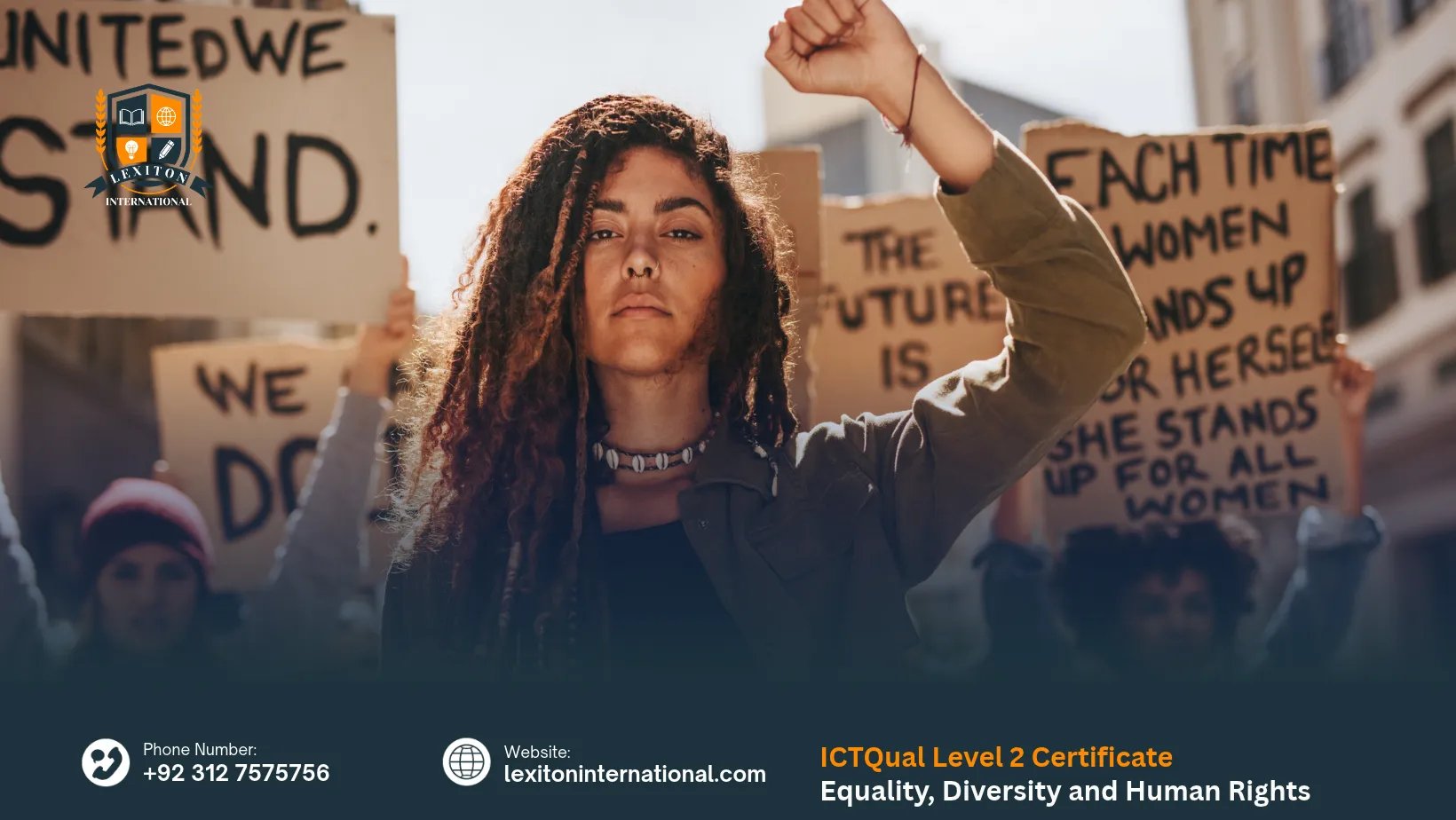
The ICTQual Level 2 Certificate in Equality, Diversity and Human Rights is an introductory qualification designed to develop learners’ understanding of equality, diversity, inclusion and fundamental human rights. This course provides essential knowledge of how individuals and organisations can promote fair treatment, respect differences and prevent discrimination in personal, educational and professional environments.
Throughout this qualification, learners explore key principles of equality and diversity, different forms of discrimination, protected characteristics, human rights legislation and the importance of inclusive practices. The course also develops awareness of individual rights, cultural differences, social responsibilities and the importance of challenging unfair treatment. Learners gain an understanding of how to recognise discriminatory behaviour, promote equal opportunities and contribute to safe, respectful and inclusive environments.
The ICTQual Level 2 Certificate in Equality, Diversity and Human Rights is suitable for beginners, employees, volunteers and individuals seeking to develop their knowledge of equality, diversity and human rights. It provides a valuable foundation for those working or aspiring to work in health and social care, education, customer service, community support, administration and other people-focused sectors.
By completing this qualification, learners can strengthen their personal and professional awareness, improve inclusive communication skills and develop the confidence to support equality, respect diversity and uphold human rights in everyday situations.
Learners interested in enrolling on the ICTQual Level 2 Certificate in Equality, Diversity and Human Rights should meet the following recommended entry requirements:
- Age: Learners should normally be at least 16 years old.
- Educational Background: No formal academic qualifications are required
- Experience: Previous work experience is not mandatory.
- English Language: Learners should have a sufficient level of English reading, writing, speaking and comprehension skills to understand course materials, participate in learning activities and complete assessments.
Mandatory Units
- The Legal Framework for Equality and Diversity
- Understanding the Impact of Discrimination and Bias
- The Role of Organisational Policies in Promoting Inclusion
- Effective Communication for a Diverse Workforce
- Developing Strategies for Inclusive Leadership
- Addressing Barriers to Equality in Different Sectors
- Crisis Management and Addressing Discrimination in the Workplace
Skills You Will Gain
The Legal Framework for Equality and Diversity
- Identify key legislation governing equality and diversity
- Understand the responsibilities of employers and employees in compliance
Understanding the Impact of Discrimination and Bias
- Examine the effects of discrimination on individuals and society
- Learn how to identify and challenge bias effectively
The Role of Organisational Policies in Promoting Inclusion
- Understand how policies influence workplace diversity and inclusion
- Learn how to develop and assess inclusion policies
Effective Communication for a Diverse Workforce
- Recognise the importance of inclusive communication methods
- Learn strategies for promoting understanding in diverse teams
Developing Strategies for Inclusive Leadership
- Identify leadership practices that promote equality and human rights
- Understand how to create an inclusive organisational culture
Addressing Barriers to Equality in Different Sectors
- Explore industry-specific challenges to implementing equality policies
- Learn ways to overcome barriers to diversity in different fields
Who is This Course For?
The ICTQual Level 2 Certificate in Equality, Diversity and Human Rights is designed for individuals who want to develop a foundational understanding of equality, diversity, inclusion and human rights. It is suitable for beginners and individuals from different professional backgrounds who wish to promote fair treatment, respect individual differences and contribute to inclusive environments.
This course is particularly suitable for:
- Beginners who want to gain introductory knowledge of equality, diversity, inclusion and human rights.
- Healthcare and Social Care Workers seeking to understand equal treatment, individual rights and inclusive care practices.
- Education Staff and Teaching Assistants who want to promote equality, respect cultural differences and support inclusive learning environments.
- Customer Service Professionals aiming to develop respectful communication and provide fair services to individuals from diverse backgrounds.
- Community Support Workers and Volunteers involved in supporting individuals and groups from different social and cultural backgrounds.
- HR and Administrative Staff who want to understand workplace equality, discrimination awareness and inclusive organisational practices.
- Employees and Workplace Teams looking to improve their awareness of discrimination, protected characteristics and equal opportunities.
- School Leavers and Career Starters interested in developing knowledge that can support future opportunities in people-focused professions.
- Individuals Seeking Personal Development who want to understand human rights, challenge discriminatory behaviour and promote respect for others.
The qualification is ideal for anyone looking to build essential knowledge of equality, diversity and human rights and develop a strong foundation for further learning and professional development.ir employability, improve workplace practices and contribute to organisations that value diversity, equality, human dignity and inclusive professional environments.
Future Progression
After completing the ICTQual Level 2 Certificate in Equality, Diversity and Human Rights, learners can explore further training and development opportunities in equality, diversity, inclusion, human rights and related professional fields. This qualification provides a foundation for progressing to higher-level learning and developing the knowledge required for people-focused roles.
Potential progression opportunities include:
- Further Qualifications in Equality and Diversity: Progress to Level 3 qualifications in equality, diversity and inclusion to develop a deeper understanding of inclusive practices, discrimination prevention and equal opportunities.
- Human Rights and Social Justice: Explore further learning in human rights, social justice, individual freedoms and the protection of vulnerable individuals and communities.
- Health and Social Care Qualifications: Progress towards relevant Level 3 qualifications in health and social care to strengthen knowledge of person-centred support, equality and individual rights.
- Safeguarding and Protection Training: Undertake additional training in safeguarding, protection of vulnerable individuals, duty of care and professional responsibilities.
- Diversity and Inclusion Training: Develop specialist knowledge through further courses covering workplace diversity, inclusive communication, cultural awareness and anti-discrimination practices.
- Human Resource Management: Explore qualifications and training in human resource management, workplace equality, employee relations and inclusive recruitment practices.
- Community Support and Voluntary Work: Apply the knowledge gained to community-based activities, voluntary services and roles supporting individuals from diverse backgrounds.
- Professional Development: Use the qualification as a foundation for developing transferable skills, improving workplace awareness and preparing for further vocational training.
This qualification supports learners in building a foundation for continued education, personal development and career opportunities in sectors where equality, diversity, inclusion and human rights are essential.ources, community services and other sectors.t Learners in developing a foundation for further education, skills development and employment-related training. Progression will depend on individual interests, experience and the entry requirements of the next qualification.
Curious About This Course?