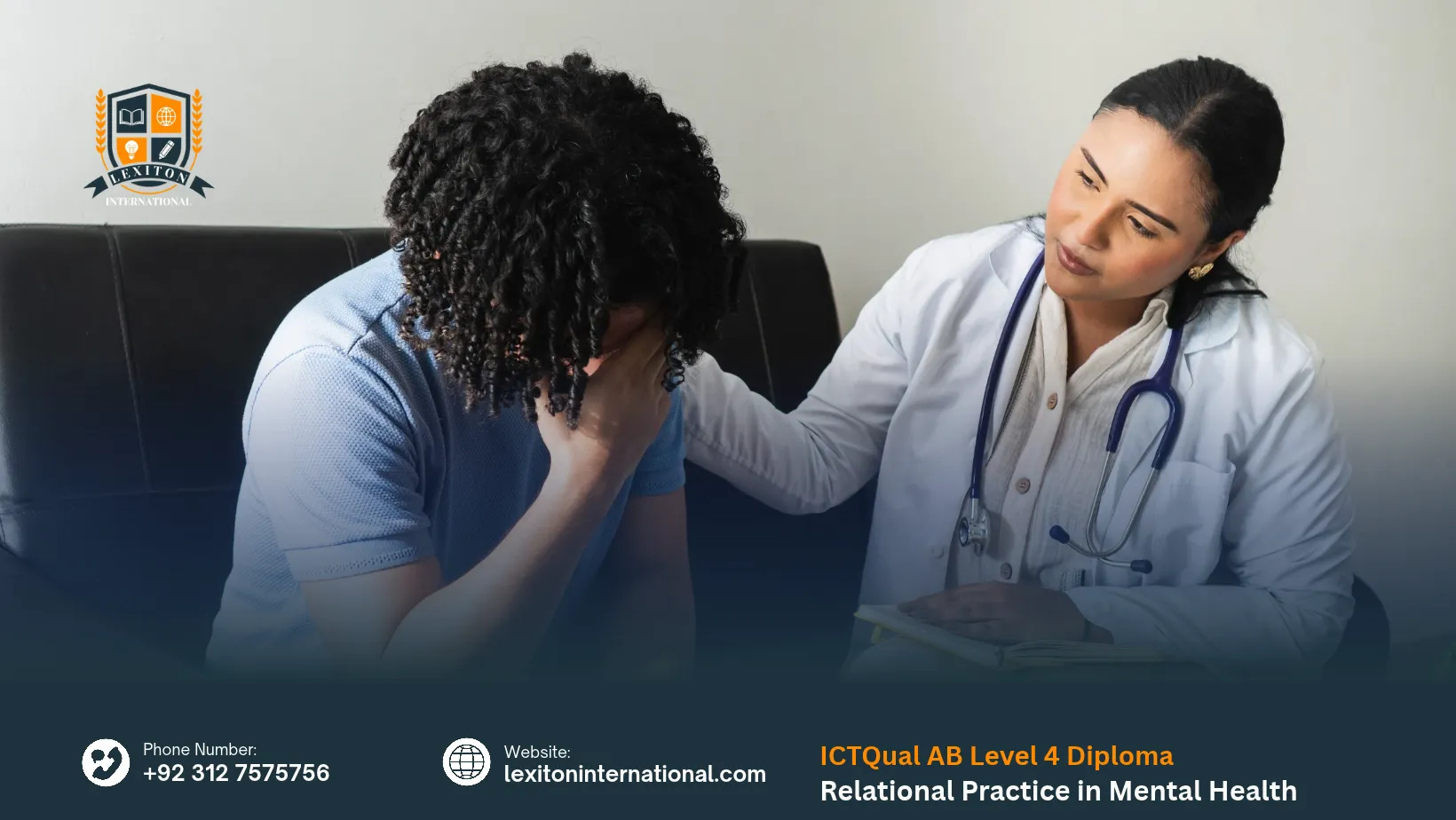
The ICTQual AB Level 4 Diploma in Relational Practice in Mental Health is designed to help Learners develop essential knowledge and practical skills for building effective, supportive relationships in mental health settings. This qualification focuses on the importance of communication, trust, empathy and person-centred approaches when supporting individuals experiencing mental health challenges.
Through this mental health diploma, Learners explore the principles of relational practice, emotional wellbeing, professional boundaries and ethical responsibilities. The course highlights how positive therapeutic relationships can improve engagement, encourage personal development and support individuals in managing their mental health needs with dignity and respect.
The ICTQual AB Level 4 Diploma in Relational Practice in Mental Health is suitable for individuals working in, or aspiring to enter, mental health support, health and social care, community services and related professional environments. It helps Learners strengthen their understanding of individual needs, effective communication strategies and approaches that promote inclusive, compassionate and person-centred support.
Upon completion, Learners can apply their knowledge to support professional development and explore further learning opportunities in mental health, counselling-related support, wellbeing services and health and social care. This Level 4 diploma provides a valuable foundation for individuals seeking to enhance their professional skills, strengthen relational practice and contribute positively to person-centred mental health support services.
To enrol in the ICTQual AB Level 4 Diploma in Relational Practice in Mental Health, Learners should meet the following recommended entry requirements to support successful learning and professional development.
- Age: Learners should generally be at least 18 years old at the time of enrolment.
- Educational Background: Learners should have a relevant Level 3 qualification in mental health, health and social care, counselling or a related subject.
- Experience: Previous experience in mental health support, health and social care, community services or a related field is beneficial but may not be mandatory.
- English Language: Learners should have a sufficient level of English reading, writing, speaking and comprehension skills to understand course materials, participate in learning activities and complete assessments.
Mandatory Units
- Applied Principles of Relational Practice in Mental Health
- Developing Therapeutic Relationships and Collaborative Communication
- Trauma-Informed and Culturally Responsive Mental Health Practice
- Supporting Emotional Regulation and Responding to Mental Health Distress
- Managing Professional Boundaries, Ethical Dilemmas and Safeguarding Concerns
- Reflective Practice and Continuous Improvement in Mental Health Support
Skills You Will Gain
Applied Principles of Relational Practice in Mental Health
- Explain the core principles of relational practice and their importance in mental health support.
- Identify approaches for developing respectful, supportive, and professional relationships with individuals.
- Analyse how trust, empathy, and communication influence mental wellbeing and support outcomes.
- Apply relational practice principles to promote dignity, inclusion, and person-centred mental health care.
Developing Therapeutic Relationships and Collaborative Communication
- Explain the importance of therapeutic relationships in effective mental health support.
- Identify communication techniques that promote active listening, trust, and mutual understanding.
- Demonstrate collaborative approaches that encourage individuals to express their needs and preferences.
- Evaluate strategies for managing communication barriers and maintaining positive helping relationships.
Trauma-Informed and Culturally Responsive Mental Health Practice
- Explain the principles of trauma-informed and culturally responsive mental health practice.
- Identify how trauma, cultural values, and personal experiences influence mental health needs.
- Analyse barriers to inclusive support arising from stigma, discrimination, and cultural misunderstandings.
- Apply respectful support approaches that promote safety, dignity, choice, and cultural sensitivity.
Supporting Emotional Regulation and Responding to Mental Health Distress
- Explain emotional regulation and its relevance to mental health and personal wellbeing.
- Identify signs of emotional distress and changes that may indicate an individual’s need for support.
- Describe appropriate communication and support strategies for responding to mental health distress.
- Evaluate ways to promote emotional safety while following relevant organisational procedures and safeguarding requirements.
Managing Professional Boundaries, Ethical Dilemmas and Safeguarding Concerns
- Explain the importance of professional boundaries and ethical conduct in mental health support.
- Identify ethical dilemmas that may arise when supporting individuals experiencing mental health challenges.
- Analyse confidentiality, information-sharing, and safeguarding responsibilities in professional practice.
- Apply appropriate procedures for reporting concerns, managing professional boundaries, and protecting individuals from harm.
Reflective Practice and Continuous Improvement in Mental Health Support
- Explain the role of reflective practice in improving mental health support and professional development.
- Identify strengths and areas for improvement in communication and relationship-building practices.
- Analyse feedback and professional experiences to identify opportunities for improving support quality.
- Develop practical improvement strategies that promote ethical practice, effective relationships, and person-centred mental health support.
Who is This Course For?
The ICTQual AB Level 4 Diploma in Relational Practice in Mental Health is designed for Learners who want to develop their knowledge of mental health support, professional relationships and person-centred care. This qualification is suitable for individuals seeking to strengthen their communication skills and understanding of relational approaches in mental health and wellbeing settings.
This course is particularly suitable for:
- Mental Health Support Workers: Individuals who want to improve their ability to build supportive relationships with people experiencing mental health challenges.
- Health and Social Care Professionals: Professionals seeking to enhance their understanding of person-centred support, emotional wellbeing and effective communication.
- Counselling Support Practitioners: Individuals interested in developing their knowledge of relational practice and professional boundaries in supportive settings.
- Community Support Workers: Learners working with individuals and communities who require mental health and emotional wellbeing support.
- Care Workers and Support Staff: Professionals who want to strengthen their empathetic communication skills and provide respectful, individual-focused care.
- Aspiring Mental Health Practitioners: Individuals planning to develop their knowledge and explore career opportunities in mental health support and related services.
- Wellbeing and Recovery Support Workers: Professionals interested in promoting emotional resilience, positive relationships and recovery-focused support.
- Individuals Seeking Career Development: Learners who want to expand their understanding of mental health, relational approaches and ethical professional practice.
Future Progression
After completing the ICTQual AB Level 4 Diploma in Relational Practice in Mental Health, Learners can explore further training and professional development opportunities to strengthen their knowledge of mental health, relational practice and person-centred support.
- Advanced Mental Health Qualifications: Progress to higher-level qualifications in mental health support, mental health practice or related subjects to develop advanced knowledge and professional skills.
- Counselling and Psychotherapy Training: Explore further learning in counselling skills, therapeutic communication and psychotherapy-related subjects, subject to the relevant entry requirements.
- Health and Social Care Qualifications: Pursue additional qualifications in health and social care to enhance understanding of individual needs, wellbeing and person-centred support.
- Mental Health Support Roles: Develop relevant skills for opportunities in mental health support services, community care and wellbeing-focused environments, subject to employers’ requirements.
- Relational Practice Development: Undertake further training in communication, professional boundaries, relationship-based support and ethical practice.
- Recovery and Wellbeing Support: Explore specialised learning in recovery-focused approaches, emotional wellbeing and strategies for supporting individuals experiencing mental health challenges.
- Professional Development and CPD: Participate in continuing professional development (CPD) activities to maintain relevant knowledge, strengthen practical skills and support ongoing career development.
The ICTQual AB Level 4 Diploma in Relational Practice in Mental Health provides a foundation for further learning in mental health and related fields.are for further study or suitable roles in health and social care. Career opportunities depend on additional qualifications, practical experience, employer requirements and any applicable professional registration criteria.
Curious About This Course?