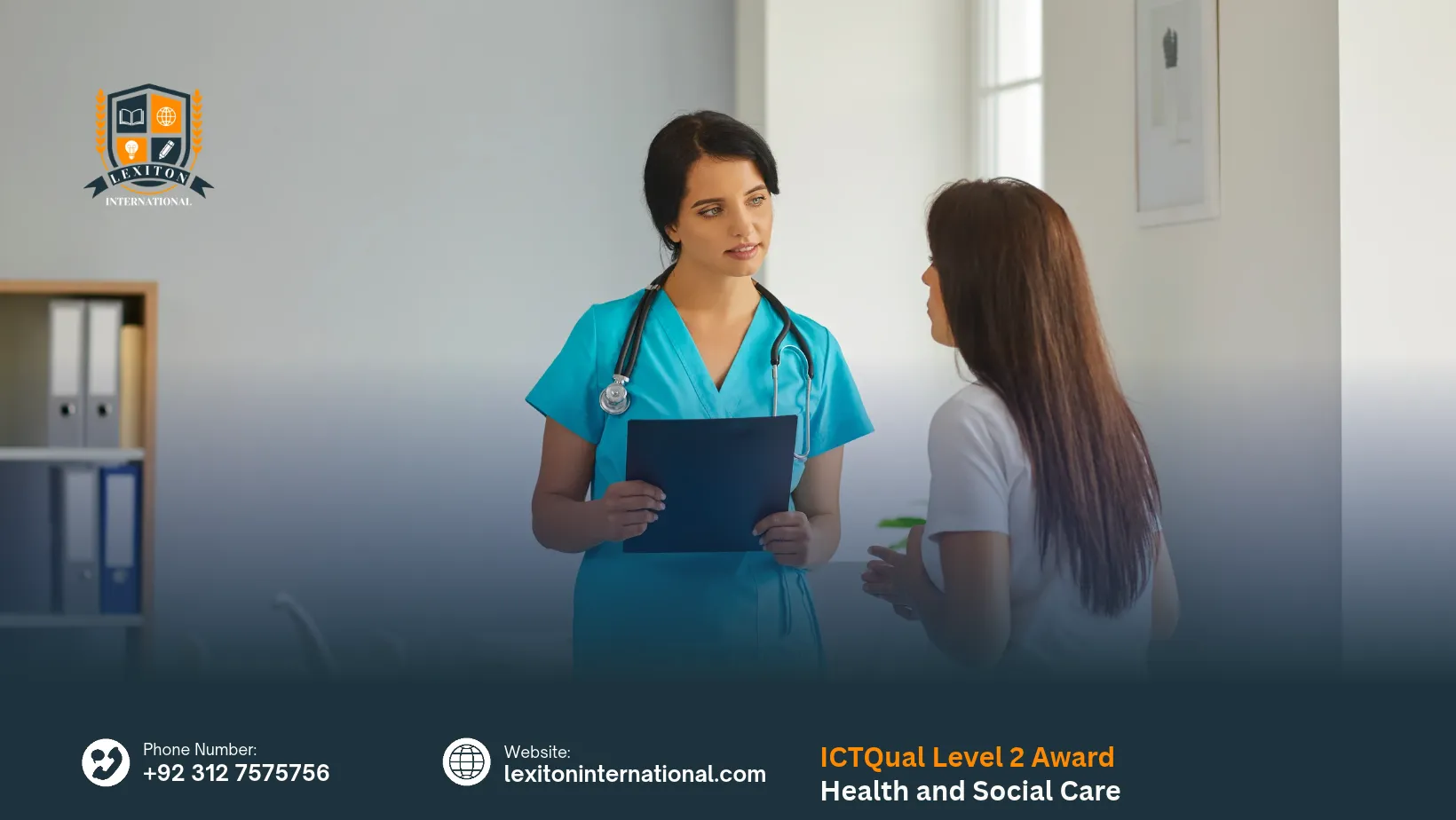
The ICTQual Level 2 Award in Health and Social Care is designed for learners who want to develop essential knowledge and understanding of professional health and social care practices. This entry-level certification provides a foundation for individuals interested in working in healthcare, residential care, community support and other care-related environments. It introduces the fundamental principles of delivering safe, compassionate and person-centred care while promoting individual dignity, independence and wellbeing.
Throughout this course, learners explore important areas of health and social care, including effective communication, mental health and wellbeing, safeguarding, health and safety, equality and inclusion, and partnership working. The programme also develops awareness of professional responsibilities, ethical care practices and the importance of protecting individuals who may require additional support.
The ICTQual Level 2 Award in Health and Social Care is suitable for beginners as well as individuals already involved in care-related activities who want to strengthen their knowledge and professional understanding. By completing this certification, learners can develop the confidence and foundational skills needed to support individuals in different care settings. It also provides a valuable starting point for further professional development and career opportunities across the health and social care sector.
Learners interested in enrolling in the ICTQual Level 3 Award in Health and Social Care should meet the following entry requirements:
- Age: Learners should normally be at least 16 years old.
- Educational Background: A Level 2 certification in Health and Social Care or an equivalent relevant certification is generally expected.
- Experience: Previous experience in health and social care is beneficial but not mandatory.
- English Language: Learners should have a sufficient level of English reading, writing, speaking and comprehension skills to understand course materials, participate in learning activities and complete assessments.
Mandatory Units
- Communication in Health and Social Care
- Understanding Mental Health and Well-being
- Safeguarding and Protection in Care Settings
- Person-Centered Approaches in Health and Social Care
- Health and Safety in Health and Social Care Settings
- Promoting Equality and Inclusion in Health and Social Care
- Working in Partnership in Health and Social Care
Skills You Will Gain
Communication in Health and Social Care
- Demonstrate effective verbal and non-verbal communication skills in a range of care settings.
- Understand the importance of active listening and empathy when interacting with individuals.
- Identify barriers to communication and strategies to overcome them, ensuring clear and respectful exchanges.
- Develop skills to record and report information accurately while maintaining confidentiality.
- Apply communication techniques that enhance relationships with service users, colleagues, and other professionals.
Understanding Mental Health and Well-being
- Explain the concept of mental health, its impact on individuals, and the factors affecting well-being.
- Recognise common mental health conditions and their signs and symptoms.
- Understand strategies to promote positive mental health and emotional well-being.
- Support individuals in managing stress, anxiety, or other mental health challenges safely and sensitively.
- Appreciate the role of care professionals in encouraging resilience and self-care.
Safeguarding and Protection in Care Settings
- Identify the principles of safeguarding and protection in health and social care.
- Recognise signs of abuse, neglect, or harm in vulnerable individuals.
- Understand legal frameworks, policies, and procedures for safeguarding in care environments.
- Apply safe practices to protect individuals from harm while promoting dignity and respect.
- Respond appropriately to safeguarding concerns, following organisational guidelines and reporting procedures.
Person-Centered Approaches in Health and Social Care
- Understand the principles of person-centered care and its importance in promoting individual choice.
- Assess individual needs and preferences to deliver tailored care and support.
- Develop strategies to involve service users in decision-making about their care.
- Promote independence, autonomy, and self-esteem in individuals receiving care.
- Reflect on personal practice to ensure care delivery remains person-focused.
Health and Safety in Health and Social Care Settings
- Identify key health and safety legislation and guidelines relevant to care environments.
- Recognise potential hazards and risks to individuals, staff, and visitors.
- Apply procedures to prevent accidents, injuries, and infections in care settings.
- Demonstrate the correct use of equipment and personal protective measures.
- Maintain a safe and secure environment while balancing the needs and rights of service users.
Promoting Equality and Inclusion in Health and Social Care
- Understand the principles of equality, diversity, and inclusion in care provision.
- Recognise and challenge discrimination, prejudice, and bias in all care interactions.
- Promote fair access to care services for all individuals regardless of background.
- Apply inclusive practices to ensure every individual feels respected and valued.
- Encourage an environment where cultural, social, and personal differences are acknowledged and supported.
Working in Partnership in Health and Social Care
- Understand the benefits of effective teamwork and collaboration in care settings.
- Identify key stakeholders, including service users, families, and multidisciplinary teams.
- Develop strategies to communicate and collaborate effectively with colleagues and external organisations.
- Support continuity of care through shared information and coordinated practices.
- Reflect on partnership approaches to improve care outcomes and service delivery.
Who is This Course For?
The ICTQual Level 2 Award in Health and Social Care is suitable for:
- Beginners interested in starting a career in health and social care.
- School leavers seeking an entry-level care certification.
- Individuals interested in working in hospitals, clinics and healthcare facilities.
- Aspiring healthcare assistants and support workers.
- Individuals interested in residential care homes and community support services.
- Existing care workers seeking to strengthen their foundational knowledge.
- Volunteers involved in healthcare, elderly care or community welfare activities.
- Career changers interested in developing professional knowledge of care practices.
Future Progression
After successfully completing the ICTQual Level 2 Award in Health and Social Care, learners can explore further professional development and career opportunities, including:
- ICTQual Level 3 Award in Health and Social Care: Develop more advanced knowledge and understanding of professional care practices.
- Level 3 Diploma in Health and Social Care: Build broader occupational knowledge and skills for care-related responsibilities.
- Specialist Care Training: Explore areas such as mental health support, dementia care, elderly care and disability support.
- Healthcare Support Roles: Pursue entry-level opportunities as healthcare assistants or care support workers, subject to employer requirements.
- Residential and Community Care: Explore opportunities in residential homes, domiciliary care and community support services.
- Professional Development: Continue developing communication, safeguarding, person-centred care and teamwork skills.
Curious About This Course?