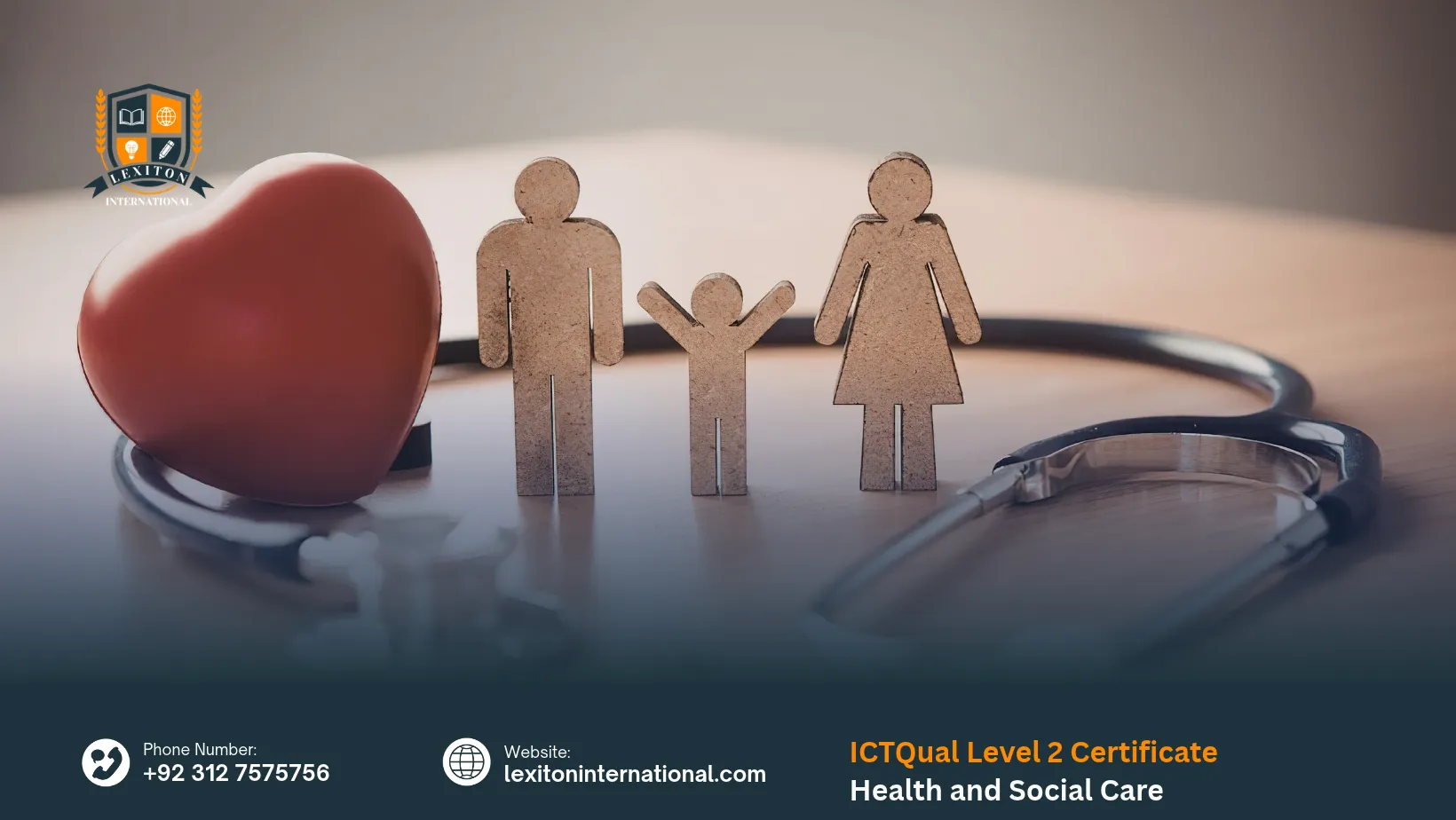
The ICTQual Level 2 Certificate in Health and Social Care is a professionally designed qualification that provides learners with essential knowledge and practical understanding of health and social care services. It introduces the fundamental principles of providing quality care, supporting individuals, maintaining personal well-being, and promoting a safe and supportive care environment
This qualification helps learners understand the roles and responsibilities of health and social care professionals, effective communication, person-centred care, safeguarding, and the importance of respecting individual needs. It develops an understanding of how to support people with different backgrounds, abilities, and care requirements while maintaining dignity, privacy, and independence.
The ICTQual Level 2 Certificate in Health and Social Care is suitable for individuals interested in starting a career in healthcare, residential care, community support, or social care services. It provides foundational knowledge that can be applied in various care settings, including hospitals, nursing homes, care homes, and community-based support environments.
Whether you are a beginner or looking to develop your existing understanding of care practices, this certificate offers a valuable opportunity to build essential health and social care knowledge. It supports professional development and helps learners develop the confidence and awareness needed to contribute positively to the health, safety, and well-being of individuals receiving care.
The ICTQual Level 2 Certificate in Health and Social Care is designed to be accessible to beginners and individuals interested in developing their knowledge of health and social care practices. The entry requirements are generally flexible, making this qualification suitable for learners from different educational and professional backgrounds.
- Age: Learners should normally be at least 16 years old.
- Educational Background: No specific higher education qualification is generally required.
- Experience: No previous work experience in health and social care is required.
- English Language: Learners should have a sufficient level of English reading, writing, speaking and comprehension skills to understand course materials, participate in learning activities and complete assessments.
Mandatory Units
- Principles of Health and Social Care Practice
- Understanding Mental Health and Wellbeing
- Supporting Individuals with Additional Needs
- Professional Ethics and Safeguarding in Care
- Promoting Independence and Dignity in Care
- Care Planning and Risk Management
Skills You Will Gain
Principles of Health and Social Care Practice
- Learn the key principles guiding health and social care.
- Understand the significance of maintaining professional standards.
Understanding Mental Health and Wellbeing
- Recognise the importance of mental health in overall wellbeing.
- Learn strategies to support individuals with mental health conditions.
Supporting Individuals with Additional Needs
- Understand the needs of individuals requiring specialised care.
- Learn how to provide appropriate support for different conditions.
Professional Ethics and Safeguarding in Care
- Develop awareness of ethical considerations in care.
- Learn how to ensure safeguarding and protection of service users.
Promoting Independence and Dignity in Care
- Understand the role of care professionals in fostering independence.
- Learn strategies to promote dignity and respect in care.
Care Planning and Risk Management
- Learn how to develop and implement effective care plans.
- Understand risk assessment and management in health and social care.
Who is This Course For?
The ICTQual Level 2 Certificate in Health and Social Care is designed for individuals who want to develop foundational knowledge and understanding of health and social care practices. It is particularly suitable for beginners, school leavers, and individuals interested in starting a career in healthcare, residential care, or community support services. The qualification helps learners understand person-centred care, effective communication, safeguarding, and the importance of promoting individual health, safety, and well-being.
This Course Is Suitable For:
- Aspiring Healthcare Workers: Individuals interested in beginning a career in healthcare and care services.
- School Leavers: Students seeking an entry-level qualification to develop their knowledge of health and social care.
- Care Assistants: Individuals who want to strengthen their understanding of basic care practices and responsibilities.
- Community Support Workers: People interested in supporting individuals within community-based care settings.
- Residential Care Staff: Individuals working or planning to work in care homes and residential support facilities.
- Career Changers: Professionals looking to enter the health and social care sector.
- Personal Care Providers: Individuals interested in understanding personal support, dignity, and person-centred care.
- Beginners: Anyone seeking an introductory qualification in health and social care without requiring previous industry experience.
Future Progression
The ICTQual Level 2 Certificate in Health and Social Care provides a foundation for further learning and professional development within the healthcare and social care sector. After completing this qualification, learners can explore higher-level certifications and develop their knowledge for various care-related roles.
Potential Future Progression Opportunities:
- ICTQual Level 3 Qualifications in Health and Social Care: Develop advanced knowledge of care practices and professional responsibilities.
- Health and Social Care Diplomas: Pursue higher-level qualifications to strengthen practical and theoretical understanding.
- Healthcare Assistant: Explore entry-level opportunities supporting patients in healthcare environments.
- Care Assistant: Develop a career providing personal care and daily living support.
- Residential Care Worker: Progress towards supporting individuals in residential care facilities.
- Community Support Worker: Explore opportunities to assist individuals within community-based services.
- Specialised Care Training: Develop additional knowledge in elderly care, disability support, safeguarding, and person-centred care.
These progression opportunities depend on individual experience, employer requirements, and the entry criteria of further qualifications. depend on individual experience, employer requirements, and admission criteria for further qualifications. build their knowledge gradually and work towards further learning and career development in health and social care.
Curious About This Course?