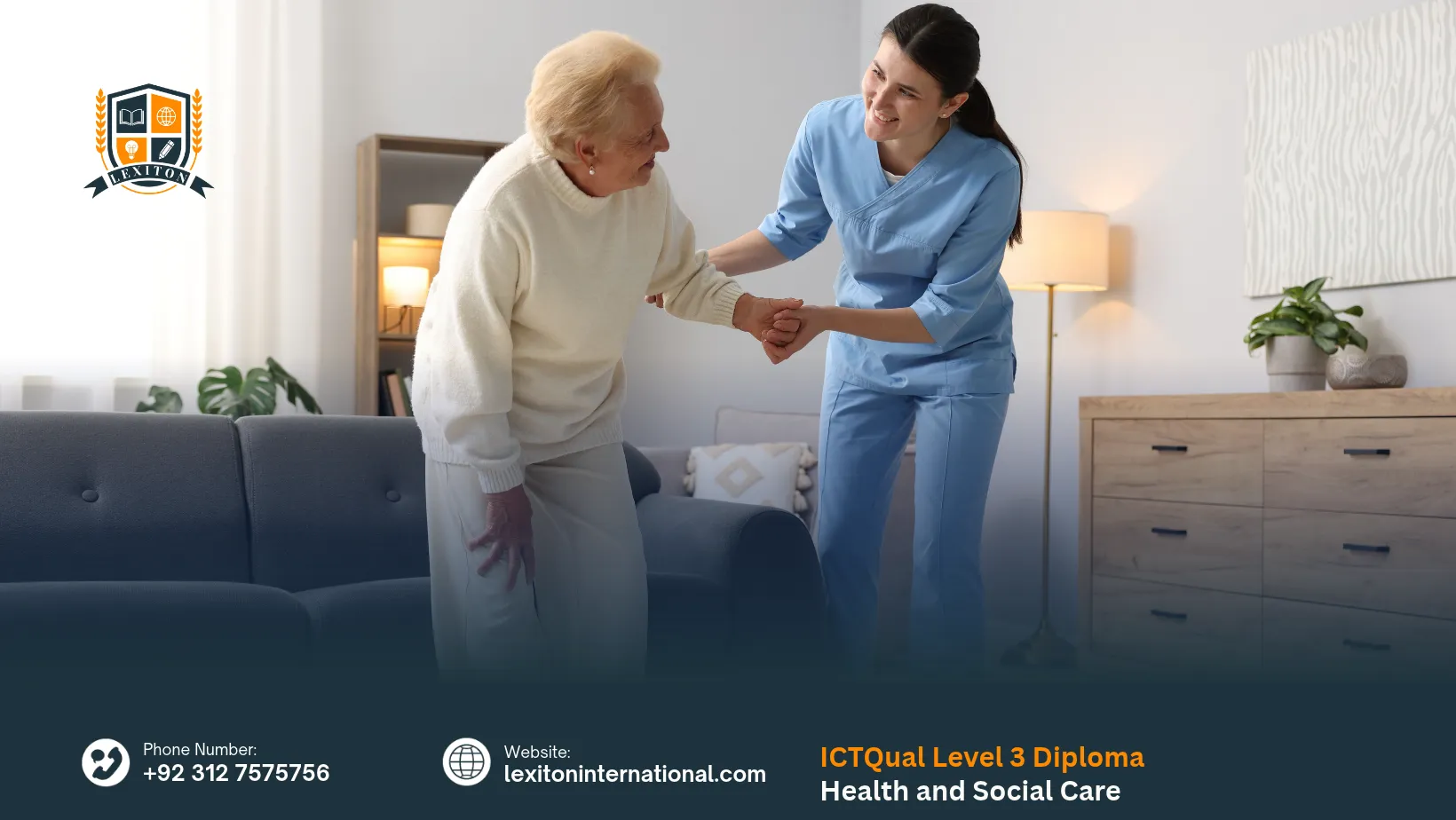
The ICTQual Level 3 Diploma in Health and Social Care is a professionally designed qualification that provides Learners with the essential knowledge, practical skills and understanding required to work effectively within the health and social care sector. This course focuses on key areas such as person-centred care, safeguarding, communication, health and safety, equality and diversity, and supporting individuals with different care needs. It prepares Learners to understand the responsibilities of care professionals while promoting dignity, independence, wellbeing and respect for individual rights.
Suitable for individuals aspiring to build a career in healthcare, residential care, community support or social care services, this Level 3 Diploma develops the competencies needed to support children, adults, older people and individuals with additional care requirements. Learners gain an understanding of professional standards, ethical practices and effective care delivery in different health and social care settings.
The ICTQual Level 3 Diploma in Health and Social Care provides a valuable learning pathway for individuals seeking to develop careers in the health and social care sector. Whether you are entering the profession or enhancing your existing knowledge and skills, this qualification strengthens your professional capabilities and prepares you for further learning, advanced qualifications and career progression. It supports opportunities across various care settings, including residential care, community support, healthcare services and social care organisations.
To enrol on the ICTQual Level 3 Diploma in Health and Social Care, Learners should meet the following recommended entry requirements to ensure they can understand the course content and successfully develop the knowledge and skills needed for a career in health and social care.
- Age: Learners should normally be at least 16 years old.
- Educational Background: A basic secondary school education or an equivalent qualification is recommended.
- Experience: Previous experience in health and social care is not mandatory.
- English Language: Learners should have a sufficient level of English reading, writing, speaking and comprehension skills to understand course materials, participate in learning activities and complete assessments.
Mandatory Units
- Professional Standards and Codes of Practice in Health and Social Care
- Leadership and Team Management in Care Settings
- Specialist Care and Supporting Complex Needs
- Advanced Safeguarding and Crisis Intervention
- Health Promotion and Disease Prevention
- Continuous Professional Development and Reflective PracticeDiversity
Skills You Will Gain
Professional Standards and Codes of Practice in Health and Social Care
- Understand the expectations of professionalism in care roles.
- Learn how to maintain high standards of care delivery.
Leadership and Team Management in Care Settings
- Develop skills in supervising and leading care teams.
- Learn how to enhance teamwork and collaboration in care environments.
Specialist Care and Supporting Complex Needs
- Identify strategies for supporting individuals with multiple and complex conditions.
- Learn how to personalise care plans to meet diverse needs.
Advanced Safeguarding and Crisis Intervention
- Understand advanced safeguarding techniques and legal frameworks.
- Learn strategies for handling emergencies and crisis situations.
Health Promotion and Disease Prevention
- Learn about public health initiatives and preventive care strategies.
- Understand the role of care workers in promoting healthy lifestyles.
Continuous Professional Development and Reflective Practice
- Recognise the importance of ongoing learning in the care profession.
Who is This Course For?
The ICTQual Level 3 Diploma in Health and Social Care is designed for individuals who want to develop professional knowledge, practical understanding and essential skills for working in the health and social care sector. This qualification is suitable for both aspiring care professionals and individuals looking to strengthen their existing capabilities.
This course is particularly suitable for:
- Aspiring Health and Social Care Professionals: Individuals who want to start a career in health and social care and gain a recognised qualification to support their professional development.
- Healthcare Assistants: Individuals working or planning to work as healthcare assistants in hospitals, clinics and other healthcare environments.
- Care Assistants and Support Workers: Those interested in supporting individuals with daily living activities, personal care, independence and wellbeing.
- Residential Care Workers: Individuals seeking to develop the skills required to support residents in nursing homes, residential care facilities and supported living environments.
- Community Care Workers: Those who want to provide care and assistance to individuals within their homes and local communities.
- Individuals Supporting Older People: People interested in working with older adults and understanding their specific health, personal care and support requirements.
- Career Changers: Individuals planning to transition into the health and social care profession from another industry.
- Existing Care Professionals: Learners who want to enhance their understanding of person-centred care, safeguarding, communication, equality and diversity, and professional responsibilities.
- School Leavers and New Learners: Individuals seeking a foundation for further education, vocational training and career progression in health and social care.
This diploma is particularly valuable for anyone passionate about improving people’s quality of life, promoting dignity and independence, and delivering safe, compassionate and person-centred care.erience who want to build a foundation in equality, diversity and human rights and develop knowledge that can support further learning and professional development.ronments.
Future Progression
The ICTQual Level 3 Diploma in Health and Social Care provides Learners with a foundation for further education, professional development and career opportunities across the health and social care sector. After completing this qualification, Learners can explore various progression pathways, including:
- Advanced Health and Social Care Qualifications: Progress to Level 4 and Level 5 qualifications in Health and Social Care to develop advanced knowledge of care practices, service delivery and professional responsibilities.
- Diploma in Adult Care: Pursue further vocational qualifications in adult care to strengthen expertise in supporting individuals with diverse physical, emotional and social needs.
- Health and Social Care Management: Progress towards management-focused qualifications to develop leadership, team coordination, care planning and service management skills.
- Specialist Care Training: Undertake additional training in areas such as dementia care, elderly care, disability support, mental health awareness, safeguarding and rehabilitation support.
- Healthcare Assistant Roles: Explore employment opportunities as a healthcare assistant, supporting patients with personal care, daily activities and general wellbeing.
- Care Assistant and Support Worker Roles: Develop a career in residential care, supported living, community care and home-based support services.
- Senior Care and Supervisory Roles: With relevant workplace experience and additional training, work towards senior care assistant, team leader or supervisory positions.
- Further Professional Development: Undertake continuing professional development (CPD) courses to improve practical competencies, maintain professional knowledge and enhance employability.
- Specialised Health and Social Care Pathways: Explore further learning in mental health support, palliative care, learning disabilities and person-centred care.
- Long-Term Career Development: Build the knowledge and experience required to pursue broader responsibilities in care coordination, service delivery and health and social care leadership.
This qualification can serve as an important stepping stone towards further vocational education and career development for individuals committed to delivering high-quality, compassionate and person-centred care.sential.ources, community services and other sectors.t Learners in developing a foundation for further education, skills development and employment-related training. Progression will depend on individual interests, experience and the entry requirements of the next qualification.
Curious About This Course?