ISO 14001:2026 EMS Lead Implementer Certification
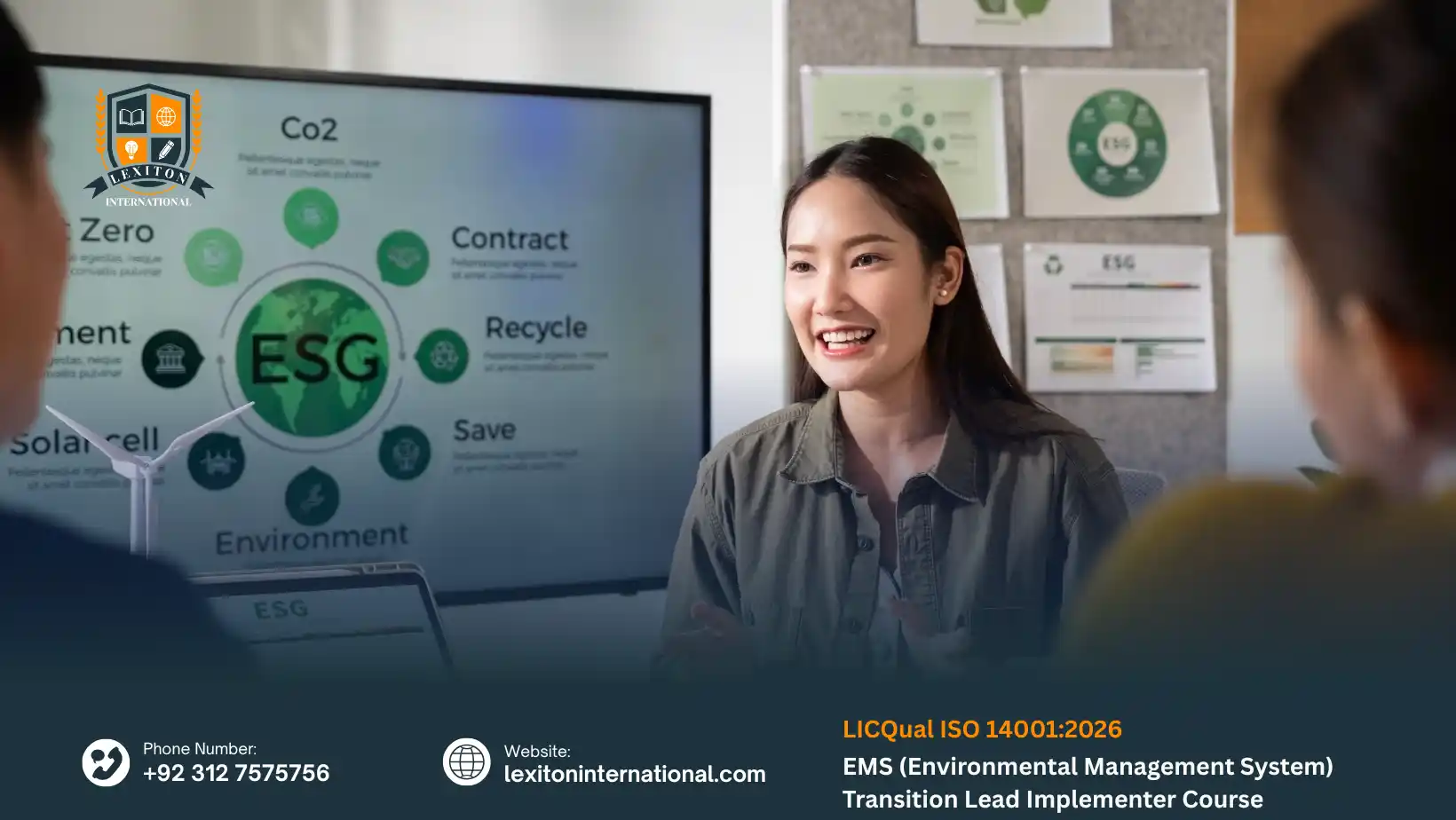
Sustainability and environmental responsibility are no longer optional they are essential for organizations worldwide. The LICQual ISO 14001:2026 EMS (Environmental Management System) Transition Lead Implementer Course is designed to meet this urgent need by equipping professionals with the skills to lead organizations through the transition to the updated ISO 14001:2026 standard.
Environmental challenges are reshaping industries, and businesses must demonstrate compliance with international standards to remain competitive. ISO 14001:2026 provides a structured framework for managing environmental responsibilities, ensuring organizations reduce risks, improve efficiency, and build trust with stakeholders.
This course emphasizes the importance of strong leadership in implementing and transitioning environmental management systems. It prepares learners to guide organizations through regulatory changes, sustainability goals, and operational improvements. By mastering the principles of ISO 14001:2026 EMS, professionals can position themselves as key drivers of environmental excellence and corporate responsibility.
Whether you are advancing your career or helping your organization achieve compliance, this course offers the knowledge and authority to lead effectively in today’s sustainability‑focused world.
- Age Requirements: Applicants must be 18 years or above at the time of enrollment.
- Professional Experience: A basic understanding of ISO 14001 or Environmental Management Systems is recommended, though not mandatory.
- Educational Background: Secondary education or equivalent is required. Studies in environmental science, engineering, or management are considered beneficial.
- English Language Proficiency: Learners must have good written and spoken English skills to engage effectively with course materials, reporting tasks, and communication in industrial settings.
Mandatory Units
Skills You Will Gain
EMS Transition Strategy & Change Leadership
- Develop strategic plans for transitioning from ISO 14001:2015 to ISO 14001:2026 EMS.
- Apply change leadership principles to drive organizational EMS adoption effectively.
- Identify critical success factors for EMS transition projects.
- Evaluate risk management approaches to support smooth EMS implementation.
- Establish governance mechanisms for monitoring and sustaining EMS change initiatives.
- Integrate stakeholder engagement strategies to enhance EMS adoption and compliance.
Aligning EMS with Updated Context & Strategic Direction
- Assess the organization’s context to align EMS with ISO 14001:2026 requirements.
- Integrate strategic environmental objectives with business goals and operational priorities.
- Apply risk-based thinking to link EMS initiatives with organizational strategy.
- Analyze regulatory, sustainability, and climate-related impacts on EMS planning.
- Develop mechanisms to align internal policies and procedures with updated EMS standards.
- Monitor organizational alignment through audits, reviews, and performance metrics.
Updating Environmental Aspects & Lifecycle Controls
- Identify and evaluate environmental aspects and impacts under ISO 14001:2026.
- Apply lifecycle thinking to improve environmental performance and sustainability.
- Update operational controls to address new risks and regulatory requirements.
- Develop monitoring and measurement systems to track environmental impacts.
- Implement strategies to reduce environmental footprint across products and services.
- Integrate data-driven insights for continuous improvement of lifecycle management.
Operational Control Enhancements & Compliance Updates
- Strengthen operational procedures to ensure compliance with updated EMS standards.
- Implement risk-based operational controls for improved environmental performance.
- Develop documentation and reporting systems aligned with ISO 14001:2026.
- Evaluate compliance gaps and corrective action mechanisms effectively.
- Apply audit-ready techniques for verifying operational control effectiveness.
- Integrate continuous improvement practices into operational processes.
AI-Driven Environmental Intelligence & Digital Transformation
- Utilize AI tools to monitor and analyze environmental performance data.
- Implement digital platforms for EMS auditing, reporting, and compliance tracking.
- Apply predictive analytics for risk identification and proactive environmental management.
- Enhance traceability and decision-making through AI-enabled data visualization.
- Integrate automated monitoring systems for energy, emissions, and resource efficiency.
- Leverage digital transformation to support sustainability, regulatory alignment, and EMS optimization.
Post-Transition Performance Evaluation & Continual Improvement
- Conduct performance evaluations to verify EMS effectiveness post-transition.
- Analyze audit results and environmental data to identify improvement opportunities.
- Implement corrective and preventive actions based on performance gaps.
- Establish key performance indicators (KPIs) for continual EMS enhancement.
- Develop sustainability reporting frameworks aligned with ISO 14001:2026.
- Foster a culture of continuous improvement and long-term EMS resilience.
This course is designed for professionals who want to lead environmental management transitions with confidence. It is ideal for individuals aiming to strengthen their expertise in compliance, sustainability, and organizational leadership.
Who Is This Course For?
- Environmental managers seeking advanced skills
- Compliance officers responsible for ISO standards
- Quality assurance professionals expanding into EMS
- Consultants supporting organizational transitions
- Sustainability coordinators driving eco‑initiatives
- Auditors pursuing deeper ISO 14001:2026 knowledge
- Team leaders managing operational improvements
- Professionals aspiring to global recognition in EMS
Completing the LICQual ISO 14001:2026 EMS (Environmental Management System) Transition Lead Implementer Course provides learners with valuable opportunities to advance their careers. This qualification equips professionals with the authority and expertise to take on leadership roles in sustainability, compliance, and auditing across diverse industries.
Future Progression
- Progress into senior environmental management positions
- Lead organizational compliance and sustainability initiatives
- Take on consultancy roles supporting ISO 14001:2026 transitions
- Pursue auditing opportunities with international recognition
- Strengthen career prospects in compliance and risk management
- Enhance leadership skills for managing environmental strategies
- Expand opportunities across global industries requiring EMS expertise
Curious About This Course?