OSHAA 30-Hour Certificate in Structural Support Systems
The OSHAA 30-Hours Diploma in Supporting Structures (SUP) is a US-aligned professional qualification designed to provide essential knowledge and practical understanding of structural safety, stability, and support systems used in construction and engineering environments. This course is ideal for individuals working in high-risk industries where structural integrity and safety compliance are critical for operational success.
The programme covers key areas such as types of supporting structures, load distribution principles, structural inspection techniques, risk assessment, and safety regulations. Learners will develop a clear understanding of how supporting structures function within construction and industrial projects, ensuring they can identify potential risks and apply appropriate safety measures. The course also emphasizes compliance with international safety standards and best practices.
This qualification is suitable for construction workers, site supervisors, engineers, safety officers, and maintenance personnel involved in structural projects. The OSHAA 30-Hours Diploma in Supporting Structures (SUP) enhances career prospects in construction, civil engineering, and industrial safety sectors. It equips learners with the technical knowledge and safety awareness required to work confidently in environments where structural stability is essential, supporting professional development in both USA and global industries.
- Minimum Age: Learners must be at least 18 years old at the time of enrolment.
- Educational Background: A minimum of secondary school education (or equivalent qualification) is recommended.
- Language Proficiency: Learners should have a good command of English.
- Work Experience:No formal work experience is required for this course.
Mandatory Units
Skills You Will Gain
Introduction to OSHAA and Structural Safety Standards (2 Hours)
- Understand the purpose and scope of OSHAA in relation to structural safety
- Recognize key international and national safety standards for supporting structures
- Identify the responsibilities of workers and supervisors under OSHAA guidelines
Types and Functions of Supporting Structures (3 Hours)
- Classify different types of supporting structures used in construction
- Explain the functions of each type in load distribution and structural integrity
- Assess when and where to apply specific structural systems
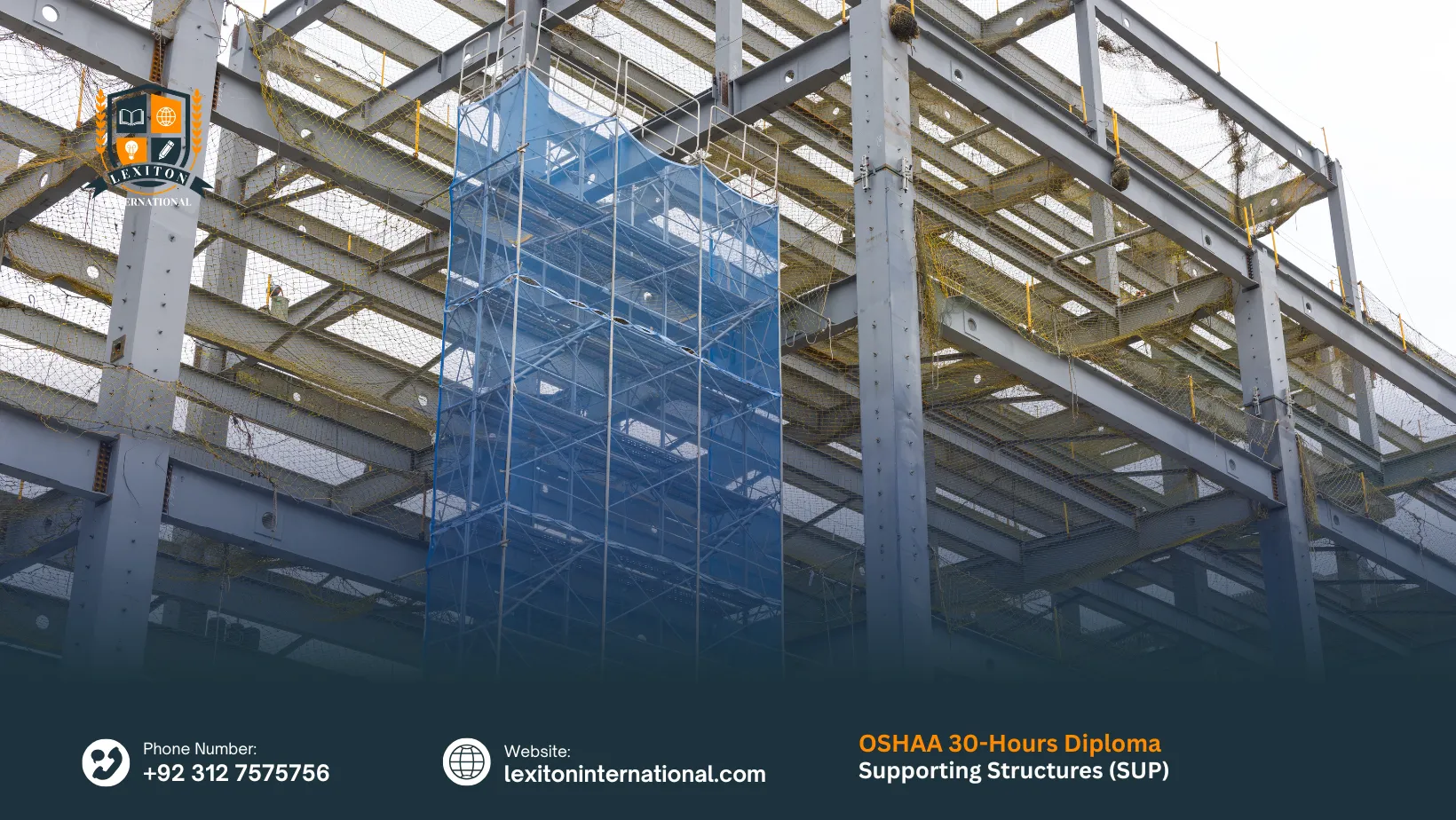
Scaffolding Systems: Design, Erection, and Dismantling (4 Hours)
- Understand the components and configurations of scaffolding systems
- Demonstrate safe procedures for scaffolding erection and dismantling
- Evaluate scaffolding design according to job-specific requirements
Formwork Systems and Their Safe Use (3 Hours)
- Describe the function and types of formwork in concrete construction
- Apply safe handling, installation, and removal techniques
- Understand material compatibility and formwork stability during pouring
Shoring and Bracing Techniques in Construction (3 Hours)
- Identify various shoring and bracing methods used in temporary support
- Analyze structural needs for choosing appropriate techniques
- Implement safety protocols when installing or removing support systems
Load-Bearing Calculations and Structural Stability (6 Hours)
- Perform basic load-bearing calculations for structural support
- Evaluate the impact of live and dead loads on structural systems
- Ensure compliance with engineering safety margins and design codes
Inspection and Maintenance of Supporting Structures (3 Hours)
- Conduct routine inspections for wear, damage, or misalignment
- Create maintenance schedules and checklists to prolong structure life
- Report and address issues before they pose safety hazards
Hazard Identification and Risk Assessment in Structural Work (3 Hours)
- Recognize potential hazards in scaffolding, formwork, and shoring operations
- Perform risk assessments and implement mitigation strategies
- Understand the use of personal protective equipment and safety signage
Emergency Procedures
- Develop response plans for partial or total structural failures
- Communicate effectively during emergencies using pre-defined protocols
- Implement evacuation, rescue, and incident reporting procedures
The OSHAA 30-Hours Diploma in Supporting Structures (SUP) is designed for individuals working in or aspiring to join construction, engineering, and industrial safety environments where structural stability and safety are critical. This course is ideal for learners who want to build practical knowledge of supporting structures, improve workplace safety awareness, and enhance their technical understanding of structural systems.
Who Is This Course For
- Construction workers involved in building and structural projects
- Civil engineering technicians and site assistants
- Site supervisors responsible for structural safety and compliance
- Maintenance and repair personnel working on structural systems
- Health and safety officers in construction and industrial sectors
- Entry-level workers aiming to start a career in construction or engineering
- Structural inspection and quality control staff
- Professionals seeking to improve knowledge of supporting structures and safety standards
The OSHAA 30-Hours Diploma in Supporting Structures (SUP) provides a strong foundation for learners aiming to progress in construction, engineering, and structural safety careers. Upon completion, learners can advance to higher levels in construction management, civil engineering, and health and safety disciplines, strengthening their technical and professional expertise in structural systems.
Future Progression
- Progression to higher levels in construction, civil engineering, and structural safety management
- Advancement into supervisory roles in construction site operations and structural projects
- Opportunities in health and safety compliance and structural inspection roles
- Career development into site engineer assistant or construction technician positions
- Pathway to specialised training in building safety and structural analysis
- Progression into internationally recognised construction and engineering safety qualifications
- Eligibility for leadership roles in construction site management and project coordination
- Strong foundation for further professional development in industrial and infrastructure sectors
Curious About This Course?