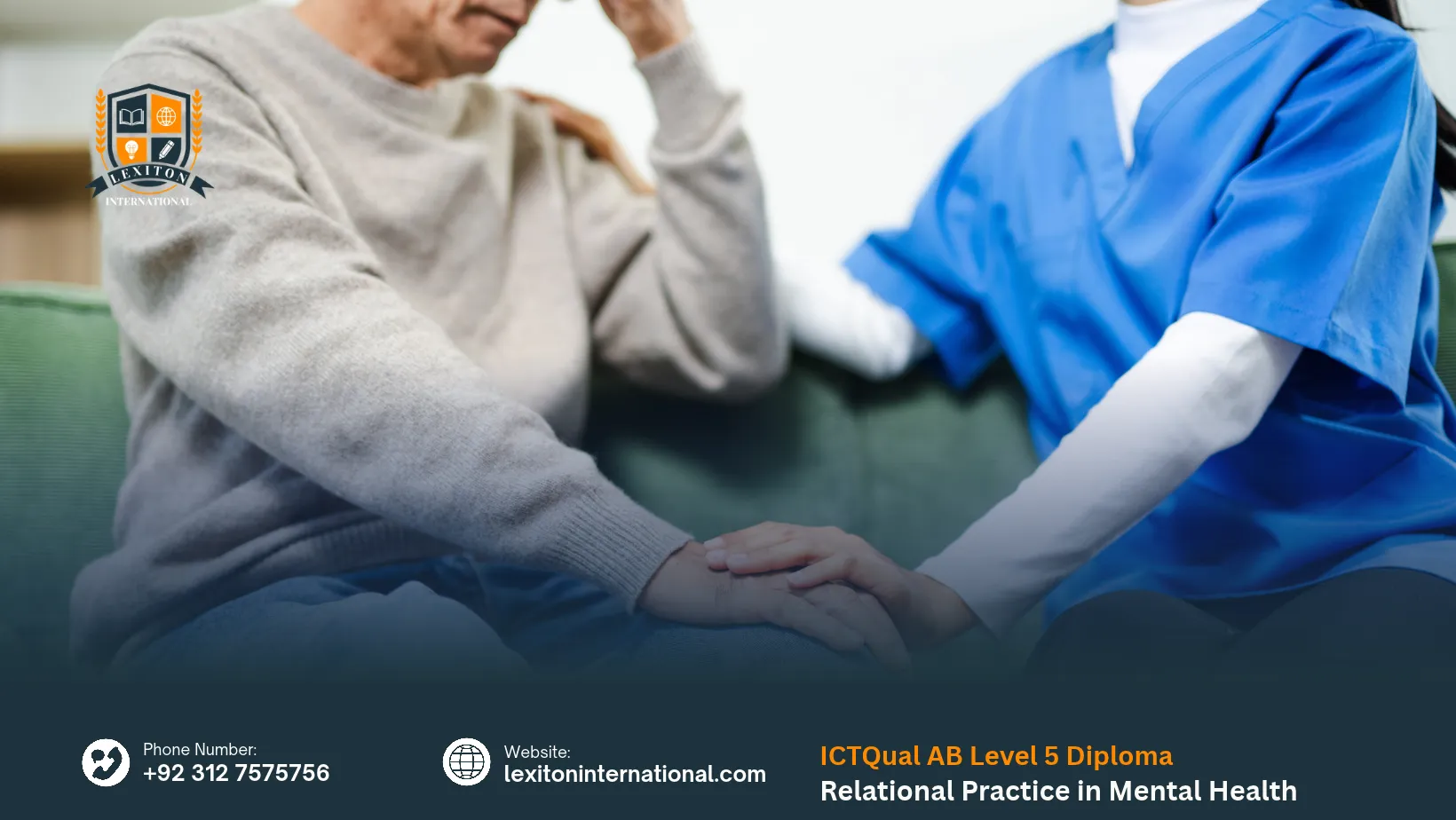
The ICTQual AB Level 5 Diploma in Relational Practice in Mental Health is designed for Learners who want to develop advanced knowledge and practical skills in relationship-centred mental health support. This qualification focuses on understanding how meaningful relationships, effective communication and emotional connections contribute to mental health, psychological wellbeing and personal development.
This mental health diploma explores the principles of relational practice, including empathy, active listening, trust-building, professional boundaries and person-centred approaches. Learners develop an understanding of how relationships influence emotional experiences, behaviour and recovery, enabling them to recognise individual needs and provide appropriate, compassionate support in different mental health settings.
The ICTQual AB Level 5 Diploma in Relational Practice in Mental Health is suitable for professionals working in mental health support, health and social care, counselling-related services and community wellbeing environments. It helps Learners strengthen their interpersonal skills, understand the importance of ethical practice and develop approaches that promote dignity, inclusion, respect and collaborative working.
By completing this qualification, Learners can enhance their professional development and strengthen their understanding of relationship-based mental health care. The knowledge gained may support progression into relevant supervisory, specialist support or further learning opportunities, depending on individual experience and employer requirements. This diploma is particularly valuable for those seeking to improve the quality of mental health support through effective, ethical and compassionate relational practice.
To enrol on the ICTQual AB Level 5 Diploma in Relational Practice in Mental Health, Learners should meet the following recommended entry requirements to ensure they can understand the course content and benefit from the qualification.
- Age: Learners should normally be at least 18 years old at the time of enrolment.
- Educational Background: Learners should preferably hold a Level 3 or Level 4 qualification in mental health, health and social care, counselling, psychology or a related subject.
- Experience: Previous experience in mental health support, healthcare, counselling-related services, social care or community wellbeing is beneficial.
- English Language: Learners should have a sufficient level of English reading, writing, speaking and comprehension skills to understand course materials, participate in learning activities and complete assessments.
Mandatory Units
- Advanced Theories and Models of Relational Practice in Mental Health
- Psychological Safety, Attachment and the Development of Therapeutic Relationships
- Trauma-Informed, Recovery-Oriented and Strengths-Based Mental Health Practice
- Managing Complex Communication, Conflict and Relational Challenges
- Collaborative Care Planning, Shared Decision-Making and Multi-Agency Working
- Critical Reflection, Professional Supervision and Evidence-Informed Relational Practice
Skills You Will Gain
Advanced Theories and Models of Relational Practice in Mental Health
- Analyse advanced relational theories and models relevant to contemporary mental health support.
- Evaluate how relational approaches influence therapeutic engagement, recovery, and individual wellbeing.
- Compare different models of relational practice to determine their suitability for diverse mental health needs.
- Apply evidence-informed relational frameworks to improve professional decision-making and person-centred care.
Psychological Safety, Attachment and the Development of Therapeutic Relationships
- Explain the relationship between psychological safety, attachment, and effective therapeutic relationships.
- Analyse how attachment experiences may influence trust, communication, and engagement with mental health support.
- Evaluate strategies for creating emotionally safe, respectful, and supportive professional relationships.
- Apply relationship-building approaches that promote trust, consistency, and individual participation in care.
Trauma-Informed, Recovery-Oriented and Strengths-Based Mental Health Practice
- Evaluate trauma-informed principles and their application to complex mental health support needs.
- Analyse recovery-oriented approaches that promote hope, resilience, autonomy, and personal choice.
- Apply strengths-based methods to identify individual abilities, resources, and support networks.
- Develop person-centred strategies that respect cultural diversity, personal experiences, and recovery goals.
Managing Complex Communication, Conflict and Relational Challenges
- Analyse complex communication barriers that affect relationships in mental health care settings.
- Evaluate strategies for managing disagreements, emotional responses, and challenging interactions.
- Apply de-escalation and conflict-resolution techniques while maintaining dignity and professional boundaries.
- Develop communication approaches that strengthen trust, collaboration, and safe mental health support.
Collaborative Care Planning, Shared Decision-Making and Multi-Agency Working
- Evaluate collaborative care planning approaches that reflect individual needs, preferences, and recovery goals.
- Apply shared decision-making principles to promote autonomy and meaningful participation in mental health care.
- Analyse the roles of multidisciplinary professionals and agencies in coordinated mental health support.
- Develop strategies for effective information-sharing and partnership working within confidentiality and safeguarding requirements.
Critical Reflection, Professional Supervision and Evidence-Informed Relational Practice
- Critically evaluate personal practice to identify strengths, limitations, and opportunities for professional improvement.
- Analyse how professional supervision supports ethical decision-making, accountability, and relational competence.
- Evaluate research evidence and professional guidance to inform mental health support practices.
- Develop continuous improvement strategies that strengthen therapeutic relationships, professional standards, and person-centred outcomes.
Who is This Course For?
The ICTQual AB Level 5 Diploma in Relational Practice in Mental Health is designed for Learners who want to develop their knowledge of relationship-centred mental health support, improve interpersonal communication and promote positive mental health outcomes. This qualification is suitable for individuals working in health and social care, mental health services and related professional settings.
This course is particularly suitable for:
- Mental Health Support Workers seeking to strengthen their relational practice and person-centred support skills.
- Health and Social Care Professionals aiming to improve communication, empathy and relationship-building when supporting individuals with mental health needs.
- Counselling and Wellbeing Practitioners looking to develop their understanding of professional relationships, emotional support and ethical boundaries.
- Community Mental Health Workers involved in supporting individuals experiencing emotional, psychological or social challenges.
- Residential Care and Support Staff who want to build trusting relationships and provide compassionate, person-centred care.
- Team Leaders and Supervisors in Mental Health Services seeking to improve relationship-based approaches and support effective professional practice.
- Psychology and Mental Health Learners interested in developing specialist knowledge of relational practice and mental health support.
- Career Changers Interested in Mental Health who wish to build relevant knowledge for potential opportunities in mental health, health and social care or community support.
Future Progression
After completing the ICTQual AB Level 5 Diploma in Relational Practice in Mental Health, Learners can explore further training and professional development opportunities in mental health, health and social care, and relationship-centred support.
- Specialist Mental Health Training: Explore further learning in trauma-informed care, safeguarding, recovery-oriented practice and psychological wellbeing.foundation for further learning in mental health and related fields.are for further study or suitable roles in health and social care. Career opportunities depend on additional qualifications, practical experience, employer requirements and any applicable professional registration criteria.
- Advanced Mental Health Qualifications: Progress to relevant higher-level qualifications in mental health, psychological wellbeing or related care disciplines, subject to entry requirements.
- Mental Health Support Roles: Develop the knowledge and skills relevant to opportunities in mental health support services and community-based care.
- Health and Social Care Career Development: Strengthen professional knowledge for potential progression into senior support or supervisory roles, depending on experience and employer requirements.
- Counselling and Wellbeing Training: Explore additional training in counselling skills, emotional wellbeing and person-centred support.
- Community Mental Health Services: Develop relevant skills for supporting individuals experiencing emotional, psychological and social challenges.
- Leadership and Management Training: Pursue further learning in health and social care leadership, team supervision and service coordination.
- Continuing Professional Development (CPD): Participate in relevant professional development activities to enhance communication, ethical practice, relationship-building and mental health support skills.
Curious About This Course?