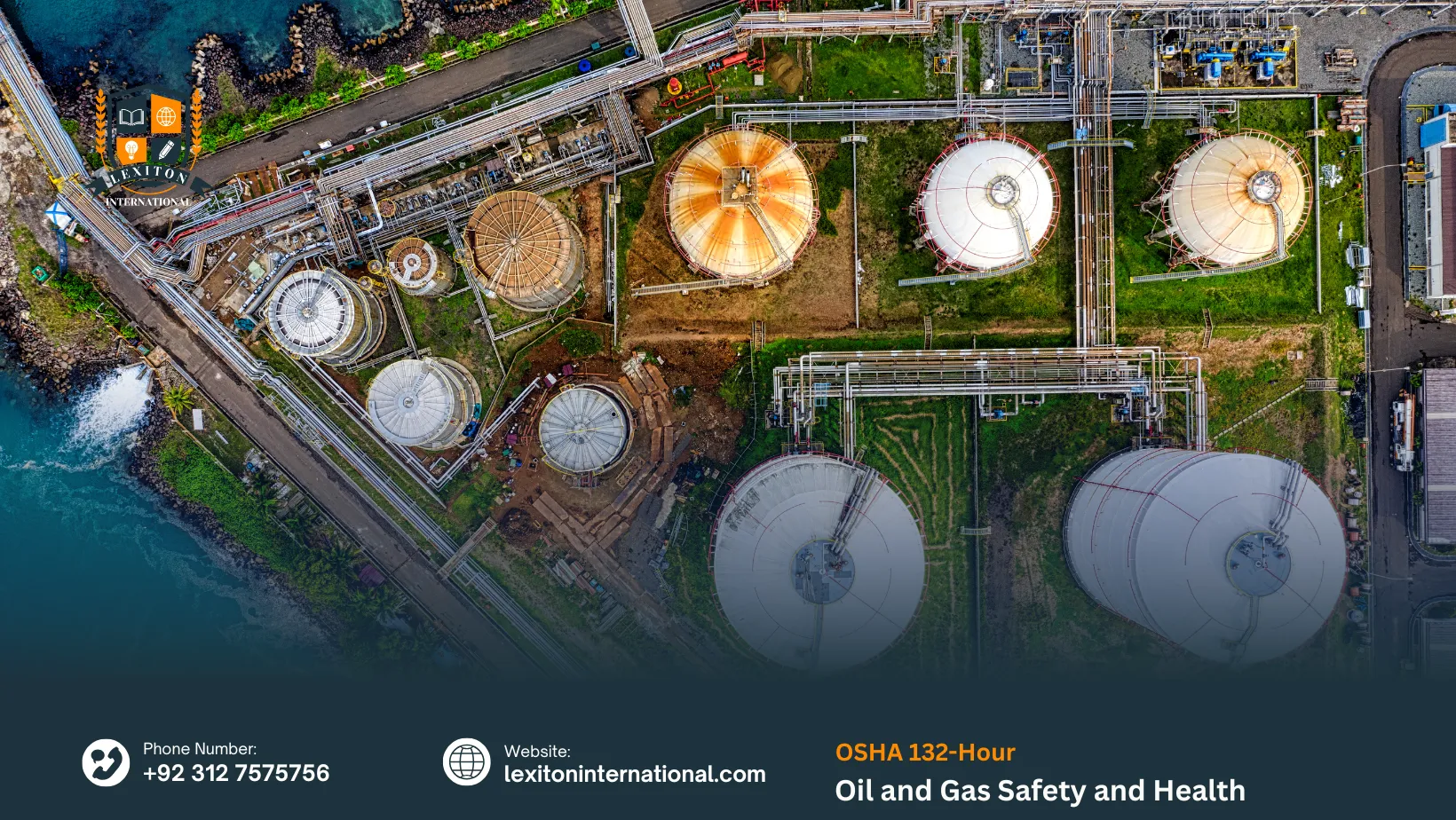
The OSHA 132-Hour Oil and Gas Safety and Health course is a specialized training program designed to prepare professionals for the unique challenges of occupational safety in the oil and gas industry. With a strong focus on OSHA standards, hazard prevention, and compliance strategies, this course equips learners with the knowledge and skills required to safeguard workers, protect assets, and maintain operational integrity in one of the most hazardous industrial sectors. By combining theoretical instruction with practical applications, participants gain the confidence to manage risks effectively and contribute to building a safer workplace culture.
This course provides a comprehensive exploration of safety and health issues specific to oil and gas operations, including drilling, refining, production, and offshore activities. Learners will study critical topics such as hazard identification, risk management, personal protective equipment (PPE), fire and explosion prevention, chemical safety, and environmental protection. The curriculum emphasizes OSHA-compliant practices while integrating industry best standards, ensuring participants are well-prepared to address both regulatory requirements and real-world safety challenges. Through structured modules, learners develop the ability to apply safety principles across diverse operational environments.
Beyond technical knowledge, the program emphasizes leadership, communication, and proactive safety culture development. Participants will learn how to conduct audits, implement safety management systems, and respond effectively to emergencies. Case studies and scenario-based learning reinforce practical skills, making the training highly relevant to current industry demands. By the end of the course, learners will be equipped to take on supervisory or specialist roles in occupational safety, contributing to organizational compliance, risk reduction, and operational excellence in the oil and gas sector.
To ensure participants are prepared for the technical and practical demands of the OSHA 132-Hour Oil and Gas Safety and Health course, applicants must meet specific entry requirements. These criteria guarantee that learners have the necessary foundation to benefit fully from the training and apply their knowledge effectively in professional settings.
- Age Requirements: Applicants must be at least 18 years old, ensuring maturity and legal eligibility for professional training.
- Qualification Requirements: A minimum of a high school diploma or equivalent certification is required to demonstrate academic readiness.
- Professional Experience: At least one year of work experience in industrial, construction, or energy-related fields is preferred to provide practical context for learning.
- Educational Background: Candidates with backgrounds in Oil and Gas Engineering, occupational safety, environmental sciences, or technical trades will benefit most from the course.
Mandatory Units
By completing the OSHA 132-Hour Oil and Gas Safety and Health course, participants will achieve advanced knowledge, practical skills, and professional competencies across ten structured study units. Each unit is designed to strengthen OSHA compliance, enhance risk management, and build leadership capacity to ensure safer workplaces and sustainable operations in the oil and gas industry.
1. Understand Advanced OSHA Regulations and Standards
- Interpret and apply advanced OSHA regulations specific to oil and gas operations for comprehensive compliance.
- Explain the legal implications and organizational consequences of non-compliance with OSHA standards.
- Implement strategies to remain current with evolving regulations and integrate them into daily practices.
- Develop organizational policies that align with OSHA requirements and international safety frameworks.
- Strengthen the ability to communicate regulatory obligations across all levels of the workforce.
2. Advanced Hazard Identification and Risk Assessment
- Utilize advanced tools and methodologies to identify hazards in drilling, refining, pipeline, and offshore environments.
- Conduct detailed risk assessments to prioritize hazards based on severity and likelihood of occurrence.
- Develop proactive risk management strategies to mitigate workplace risks effectively.
- Apply hazard mapping and control hierarchy to reduce exposure to critical risks.
- Strengthen decision-making skills for managing high-risk scenarios in complex operations.
3. Process Safety Management (PSM)
- Implement and maintain OSHA-compliant PSM systems in line with 29 CFR 1910.119.
- Conduct process hazard analyses (PHAs) to identify and control chemical process risks.
- Manage change processes to reduce the likelihood of major incidents.
- Monitor and evaluate the effectiveness of PSM systems through audits and inspections.
- Foster continuous improvement by integrating lessons learned into safety management systems.
4. Emergency Preparedness and Response Planning
- Develop and implement comprehensive emergency action plans tailored to diverse workplace scenarios.
- Conduct regular drills and simulations to prepare employees for fires, chemical releases, and other emergencies.
- Evaluate response effectiveness through post-incident analysis and feedback mechanisms.
- Strengthen coordination between emergency teams, contractors, and external agencies.
- Build leadership capacity to direct crisis management during critical situations.
5. Health and Environmental Hazards
- Identify and assess workplace health hazards including chemical exposures, ergonomic risks, and environmental impacts.
- Apply preventive measures and engineering controls to protect worker well-being.
- Monitor environmental conditions and adopt sustainability practices to minimize ecological footprint.
- Develop strategies for spill prevention, containment, and cleanup in compliance with regulations.
- Strengthen competencies in balancing worker safety with environmental protection.
6. Leadership and Safety Culture
- Promote safety awareness and accountability across all organizational levels.
- Demonstrate leadership in fostering a culture of safety and continuous improvement.
- Strengthen communication strategies that support effective safety management.
- Engage employees in proactive safety initiatives to build ownership and responsibility.
- Develop mentoring skills to guide teams toward long-term safety excellence.
7. Advanced Personal Protective Equipment (PPE)
- Select appropriate PPE for specific workplace hazards and operational tasks.
- Train employees on correct usage, maintenance, and storage of PPE to ensure compliance.
- Conduct inspections and evaluations to assess the adequacy and condition of PPE.
- Integrate PPE programs into broader safety management systems.
- Build awareness of emerging technologies in protective equipment for enhanced safety.
8. Safety Training and Education
- Design and deliver advanced safety training tailored to different employee groups and job roles.
- Measure training effectiveness through performance evaluations and feedback systems.
- Continuously improve training programs to meet evolving OSHA standards and organizational needs.
- Develop competency-based training modules for specialized oil and gas operations.
- Strengthen organizational capacity by embedding safety education into long-term workforce development.
9. Contractor and Vendor Safety Management
- Establish and enforce strict safety requirements for contractors and vendors in oil and gas operations.
- Monitor compliance with OSHA regulations and hold contractors accountable for performance.
- Conduct safety audits of contractor activities to ensure alignment with organizational objectives.
- Strengthen collaboration between contractors and employers to maintain unified safety standards.
- Develop contractual frameworks that prioritize safety accountability and compliance.
10. Regulatory Compliance and Auditing
- Conduct audits and inspections to assess compliance with OSHA regulations and global industry standards.
- Implement corrective actions and process improvements based on audit findings.
- Maintain accurate documentation to demonstrate compliance and support regulatory inspections.
- Strengthen organizational resilience through continuous monitoring and evaluation of safety systems.
- Build expertise in aligning compliance strategies with international best practices.
Upon completion, graduates of the OSHA 132-Hour Oil and Gas Safety and Health course will possess advanced knowledge and skills to lead safety initiatives, ensure compliance, and foster a strong safety culture within the oil and gas industry. This program empowers professionals to reduce risks, protect workers, and drive sustainable operational excellence in one of the most demanding industrial sectors worldwide.
The ideal learner for the OSHA 132-Hour Oil and Gas Safety and Health course is someone who demonstrates a strong commitment to workplace safety, professional development, and the ability to apply technical knowledge in high-risk oil and gas environments. This learner profile reflects individuals motivated to enhance their competencies and contribute meaningfully to organizational safety culture.
Professional Background
- Individuals currently working in oil and gas operations such as drilling, refining, production, or offshore facilities
- Safety officers, supervisors, and managers responsible for occupational health and safety programs
- Engineers and technical staff seeking specialized OSHA knowledge for industry compliance
- Contractors and consultants engaged in multi-employer worksites and energy projects
- Professionals transitioning into safety-focused roles within industrial or energy sectors
Educational Preparedness
- Learners with at least a high school diploma or equivalent qualification
- Those with backgrounds in engineering, environmental sciences, or technical trades
- Participants familiar with industrial processes and workplace safety fundamentals
- Individuals with prior exposure to compliance frameworks and regulatory standards
- Candidates motivated to expand their knowledge through structured and advanced training
Skills and Competencies
- Strong analytical skills for hazard identification and risk assessment
- Ability to interpret and apply OSHA regulations in practical workplace scenarios
- Effective communication skills for training and safety awareness initiatives
- Leadership qualities to guide teams during emergencies and audits
- Commitment to continuous improvement and proactive safety culture development
Personal Attributes
- High level of responsibility and accountability in workplace practices
- Motivation to protect lives, assets, and the environment through safety measures
- Adaptability to work in diverse and challenging oil and gas environments
- Ethical mindset aligned with compliance and safety standards
- Willingness to engage in lifelong learning and professional growth
Career Aspirations
- Desire to advance into supervisory or specialist safety roles in oil and gas organizations
- Interest in contributing to organizational compliance and operational excellence
- Ambition to become a recognized safety leader in the energy sector
- Motivation to enhance employability and career progression opportunities
- Commitment to building a safer and more sustainable industry
The ideal learner is not only prepared to absorb technical knowledge but also driven to apply it effectively, ensuring safer workplaces and stronger compliance across oil and gas operations.
The OSHA 132-Hour Oil and Gas Safety and Health course provides learners with a solid foundation for career advancement, enabling them to pursue specialized roles, certifications, and leadership opportunities in occupational safety and health. Future progression pathways ensure that participants continue to grow professionally while contributing to industry-wide safety improvements.
Career Advancement
- Progression into supervisory and managerial safety roles within oil and gas companies
- Opportunities to serve as safety coordinators, auditors, or compliance officers
- Enhanced employability in multinational energy corporations and contractors
- Ability to lead safety programs and initiatives across diverse worksites
- Recognition as a qualified professional in occupational safety and health
Specialized Training Pathways
- Eligibility to pursue advanced diplomas in occupational safety and health disciplines
- Opportunities to specialize in fire safety, environmental management, or industrial hygiene
- Access to sector-specific training in offshore and remote worksite safety
- Pathways to certifications in emergency response and crisis management
- Expansion into technical courses focusing on chemical safety and advanced risk assessment
Academic Progression
- Foundation for pursuing diplomas in safety engineering or environmental sciences
- Opportunities to enroll in postgraduate programs related to occupational health and safety
- Preparation for research and academic contributions in safety management fields
- Ability to integrate OSHA knowledge into broader academic pursuits
Industry Recognition
- Increased credibility in oil and gas safety roles through OSHA-compliant training
- Recognition by employers for advanced safety knowledge and expertise
- Opportunities to contribute to safety committees and industry forums
- Enhanced reputation as a proactive safety leader in the sector
- Ability to influence organizational safety culture and compliance strategies
Long-Term Professional Growth
- Development of lifelong skills in hazard control and risk management
- Opportunities to mentor junior staff and safety trainees
- Continuous engagement in safety auditing and improvement initiatives
- Expansion into consultancy roles supporting multiple organizations
- Building a career trajectory that aligns with global safety standards
Future progression from this course empowers learners to advance their careers, specialize in critical safety domains, and contribute to building resilient, compliant, and sustainable oil and gas operations worldwide.
Curious About This Course?