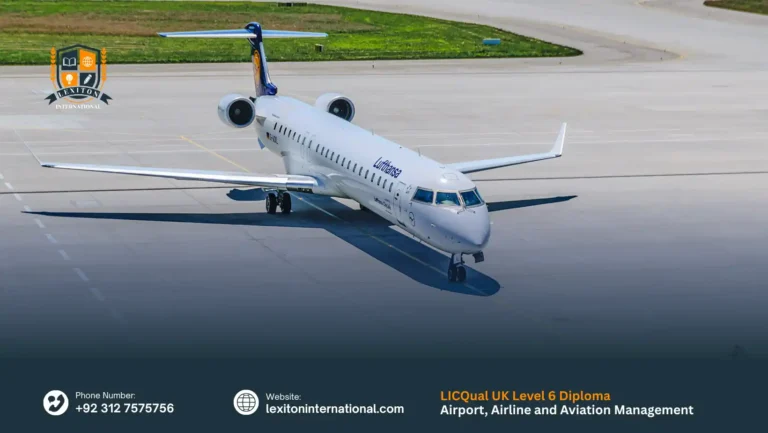

LICQual UK Airport Safety Level 6 Award
Airports are at the heart of global travel, connecting people, goods, and economies across continents. With millions of passengers and complex operations taking place daily, safety is the cornerstone of aviation success. Every aspect of airport activity from runway operations to passenger handling relies on strict safety standards and skilled professionals who can ensure compliance and efficiency.
The LICQual UK Level 6 Diploma in Airport Safety highlights the importance of preparing individuals to meet these challenges with confidence. Airport safety is not just about following rules; it is about proactive risk management, understanding international regulations, and fostering a culture of responsibility. As aviation continues to expand, the demand for professionals who can lead safety initiatives and uphold global standards has never been greater.
By pursuing the LICQual UK Level 6 Diploma in Airport Safety, learners position themselves as capable leaders ready to contribute to secure, efficient, and globally trusted airport operations. This qualification emphasizes the critical role of safety professionals in shaping the future of aviation.
- Age Requirements: Applicants must be 19 years or above at the time of enrollment.
- Professional Experience: Prior exposure to aviation, travel, or safety environments is beneficial.
- Educational Background: A qualification in business, management, or aviation studies is recommended.
- English Language Proficiency: Learners must have good written and spoken English skills to engage effectively with course materials, reporting tasks, and communication in industrial settings.
Mandatory Units
Strategic Airport Safety Management and Planning
By the end of this unit, learners will be able to:
- Analyze global aviation trends and apply strategic planning models to airport safety management.
- Develop long‑term safety strategies that align with international aviation standards.
- Evaluate airport safety performance using advanced management frameworks and KPIs.
- Design sustainable safety management systems that integrate operational efficiency and compliance.
- Apply decision‑making tools to optimize airport safety planning and resource allocation.
- Critically assess the impact of globalization, technology, and policy on airport safety strategies.
Global Aviation Policy, Law, and Regulatory Compliance
By the end of this unit, learners will be able to:
- Interpret international aviation policies, treaties, and conventions governing airport safety.
- Evaluate the role of ICAO, IATA, EASA, and national regulators in shaping compliance frameworks.
- Apply legal and regulatory requirements to ensure airport operations meet global safety standards.
- Analyze the impact of bilateral and multilateral agreements on airport safety and security.
- Assess ethical, legal, and regulatory challenges in aviation safety management.
- Recommend compliance strategies that align with evolving global aviation regulations.
Advanced Aviation Safety and Risk Management
By the end of this unit, learners will be able to:
- Apply advanced safety management systems (SMS) to complex airport operations.
- Identify, assess, and mitigate operational risks using international risk management models.
- Evaluate accident investigation processes and implement preventive safety measures.
- Develop risk management frameworks that comply with ICAO Annex 19 and global standards.
- Analyze human factors and organizational culture in aviation safety performance.
- Design crisis management and emergency response strategies for large‑scale airport operations.
Aviation Finance, Safety Investment, and Resource Optimization
By the end of this unit, learners will be able to:
- Interpret financial statements and performance indicators specific to airport safety operations.
- Apply cost‑control strategies to optimize safety investments and resource allocation.
- Evaluate the financial impact of safety initiatives on airport profitability and sustainability.
- Develop financial models for safety infrastructure, training, and compliance programs.
- Assess the influence of global economic trends on aviation safety funding and investment.
- Recommend strategies for sustainable financial growth while maintaining safety excellence.
Leadership and Human Resource Management in Aviation Safety
By the end of this unit, learners will be able to:
- Apply leadership theories to manage diverse teams in safety‑critical airport environments.
- Evaluate HR strategies for talent acquisition, retention, and workforce development in aviation safety.
- Develop performance management systems that align with international safety standards.
- Analyze the impact of organizational culture and change management on safety outcomes.
- Recommend strategies for conflict resolution, employee engagement, and cross‑cultural teamwork.
- Demonstrate ethical leadership practices that enhance safety culture and organizational performance.
Innovation, Technology, and Sustainability in Airport Safety
By the end of this unit, learners will be able to:
- Evaluate the role of innovation in driving efficiency and safety in airport operations.
- Analyze sustainable aviation practices, including green airports and eco‑friendly safety initiatives.
- Assess the impact of emerging technologies such as AI, biometrics, and automation on airport safety.
- Develop strategies for reducing carbon emissions while maintaining safety compliance.
- Recommend innovative solutions for enhancing passenger safety and operational efficiency.
- Critically examine global sustainability policies and their implications for airport safety management.
The aviation industry requires professionals who can combine technical knowledge with leadership and safety awareness. The LICQual UK Level 6 Diploma in Airport Safety is tailored for learners who want to advance their careers and solve real‑world challenges in aviation safety.
Who Is This Course For?
- Airport staff seeking advanced safety training
- Aviation professionals aiming for compliance leadership
- Ground handling teams improving operational safety standards
- Security staff working in airport environments
- Travel industry employees expanding into aviation safety roles
- Logistics and transport specialists entering aviation safety
- Career changers pursuing opportunities in airport safety management
The LICQual UK Level 6 Diploma in Airport Safety provides learners with the foundation to move confidently into advanced roles across aviation safety and airport operations. This qualification strengthens professional credibility and opens doors to diverse opportunities in global air transport.
Future Progression
- Advancement into senior airport safety management positions
- Opportunities to work in international airports and aviation organizations
- Enhanced prospects in airport operations and compliance roles
- Ability to contribute to risk management and emergency response initiatives
- Recognition as a qualified airport safety professional
- Potential to progress into mentoring, training, or supervisory roles
- Strengthened credibility for global aviation safety opportunities
- Expanded career pathways in airport operations, aviation logistics, and support services
Curious About This Course?