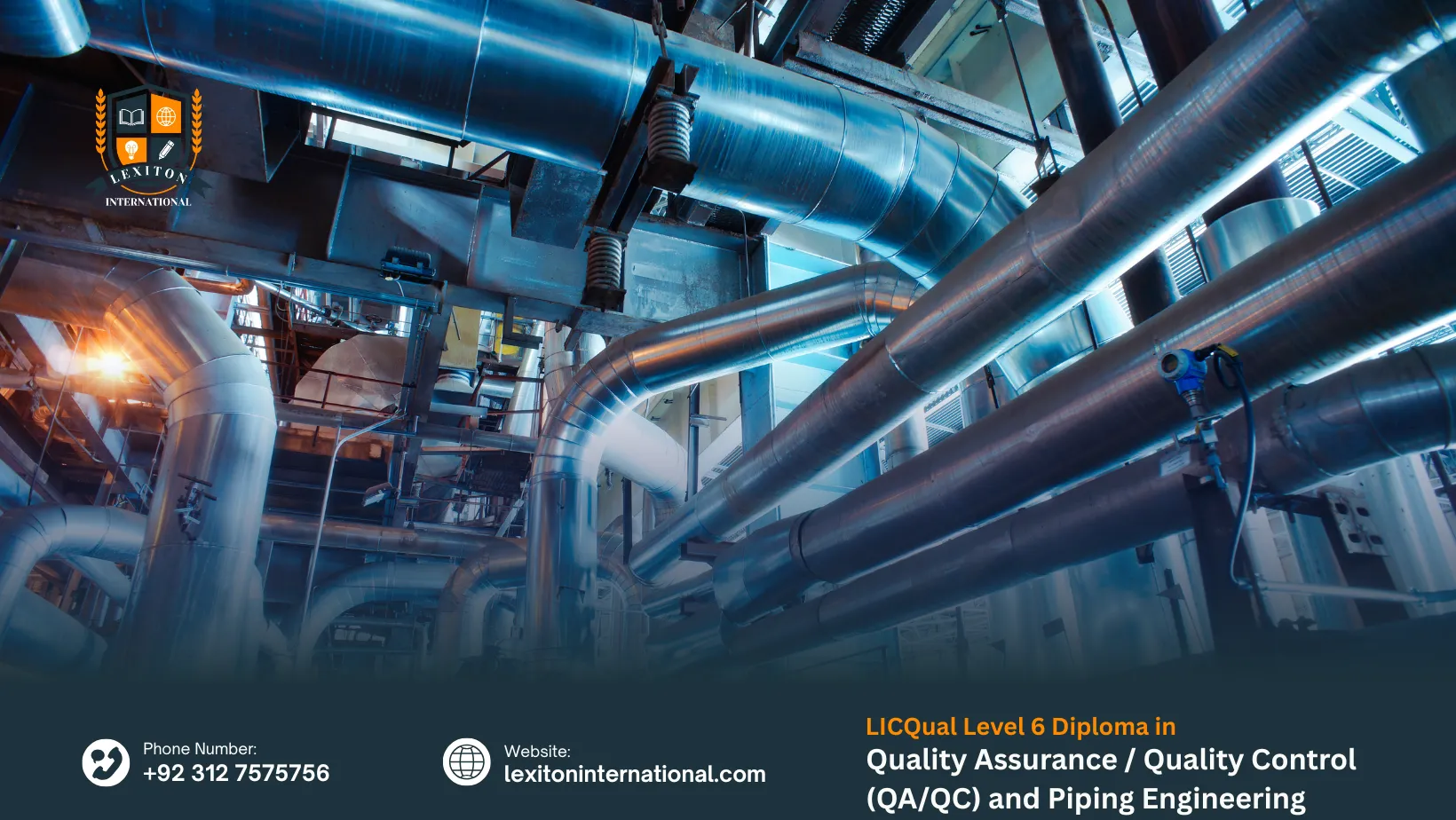
The LICQual Level 6 Diploma in Quality Assurance / Quality Control (QA/QC) and Piping Engineering is designed to provide learners with a comprehensive understanding of the principles, practices, and technical standards that underpin modern industrial operations. This qualification emphasizes the critical role of QA/QC in ensuring safety, efficiency, and compliance across engineering projects, particularly within the piping sector. Learners are introduced to advanced methodologies that strengthen their ability to identify risks, implement corrective measures, and maintain the highest standards of quality in line with international benchmarks. The course also highlights the importance of technical precision, documentation, and inspection processes, equipping participants with the confidence to manage complex engineering environments and contribute effectively to organizational success.
The program offers a detailed exploration of piping engineering, covering design fundamentals, material selection, fabrication processes, and installation techniques. Learners gain practical insights into inspection methods, testing procedures, and quality control systems that are essential for maintaining reliability in piping networks. By integrating theoretical knowledge with applied practices, the course ensures participants develop the analytical and problem-solving skills required to oversee projects from planning through execution. Emphasis is placed on industry codes, standards, and regulatory frameworks, enabling learners to align their work with global best practices while addressing the challenges of modern engineering industries.
Beyond technical expertise, the diploma fosters a professional mindset that values accuracy, accountability, and continuous improvement. Learners are encouraged to adopt a proactive approach to quality assurance, recognizing its impact on safety, cost efficiency, and long-term sustainability. The course prepares individuals to take on leadership roles in QA/QC and piping engineering by strengthening their ability to manage teams, coordinate inspections, and implement quality systems across diverse projects. With its blend of technical depth and practical application, the qualification serves as a powerful platform for professionals seeking to advance their careers in engineering, construction, oil and gas, and related sectors where quality and precision are paramount.
To enroll in the LICQual Level 6 Diploma in Quality Assurance / Quality Control (QA/QC) and Piping Engineering, learners are expected to meet certain entry requirements that ensure they are prepared for the advanced technical and professional standards of the qualification. These requirements are designed to balance accessibility with the need for prior knowledge and experience, helping participants succeed in both theoretical and practical aspects of the course.
- Age Requirements: Applicants should be at least 21 years old at the time of enrollment to ensure maturity and readiness for advanced-level study.
- Qualification Requirements: A Level 5 diploma or equivalent qualification in engineering, technical studies, or a related discipline is required for entry.
- Professional Experience: Candidates should have a minimum of two years of relevant industry experience in engineering, construction, oil and gas, or quality management roles.
- Educational Background: A strong foundation in mathematics, science, or engineering subjects is preferred to support understanding of technical concepts.
- Language Proficiency Requirement: Learners must demonstrate competency in English communication, both written and verbal, to engage effectively with course materials and assessments.
- Technical Aptitude Requirement: Applicants should possess basic computer literacy and familiarity with engineering documentation or quality control systems to manage coursework efficiently.
Mandatory Units
By the end of this course, applicants will be able to:
1: Advanced Quality Management Systems in Engineering
By the end of this unit, learners will be able to:
- Critically evaluate the structure, scope, and purpose of Quality Management Systems (QMS) in engineering contexts.
- Implement ISO 9001 and related international standards to ensure compliance and efficiency in projects.
- Apply continuous improvement strategies such as Six Sigma, Lean, and Kaizen to optimize processes.
- Integrate risk-based thinking into quality planning, monitoring, and process control for proactive management.
- Assess organizational performance through audits, corrective actions, and measurable quality indicators.
2: Piping Design, Analysis, and Engineering Applications
By the end of this unit, learners will be able to:
- Design complex piping systems that meet operational, safety, and environmental requirements.
- Conduct pipe stress, flexibility, and vibration analyses using recognized engineering techniques and software tools.
- Select appropriate piping materials based on mechanical strength, corrosion resistance, and chemical compatibility.
- Use CAD/CAE tools to develop accurate piping layouts, schematics, and engineering documentation.
- Evaluate system performance through simulation and testing to ensure reliability and compliance with standards.
3: Welding Technology and Quality Control
By the end of this unit, learners will be able to:
- Analyze advanced welding methods and determine their suitability for diverse engineering applications.
- Interpret and evaluate WPS (Welding Procedure Specifications), PQR (Procedure Qualification Records), and WPQ (Welder Performance Qualifications) for compliance.
- Identify common and advanced welding defects, assess their root causes, and recommend corrective measures.
- Establish and oversee quality control procedures to ensure consistency in welding operations.
- Apply inspection techniques and documentation practices to maintain traceability and accountability in welding projects.
4: Non-Destructive Testing (NDT) and Inspection Methods
By the end of this unit, learners will be able to:
- Explain the principles and applications of advanced NDT techniques such as PAUT (Phased Array Ultrasonic Testing) and TOFD (Time of Flight Diffraction).
- Select appropriate NDT methods based on material type, project requirements, and inspection objectives.
- Interpret NDT data accurately, classify defects, and evaluate them against acceptance criteria.
- Ensure safe, ethical, and compliant execution of NDT procedures in industrial environments.
- Integrate NDT findings into quality assurance systems to support decision-making and corrective actions.
5: International Standards and Regulatory Compliance
By the end of this unit, learners will be able to:
- Apply ASME, API, ASTM, and ISO standards effectively in QA/QC engineering tasks.
- Interpret legal, regulatory, and contractual requirements relevant to engineering and construction projects.
- Conduct audits, inspections, and prepare documentation to demonstrate compliance with industry standards.
- Evaluate real-world case studies involving standard violations, project failures, and corrective strategies.
- Develop strategies to align organizational practices with global regulatory frameworks and ethical standards.
6: QA/QC Project Planning and Documentation Control
By the end of this unit, learners will be able to:
- Develop comprehensive ITPs (Inspection Test Plans), QCPs (Quality Control Plans), and method statements for engineering projects.
- Implement effective documentation control systems using digital tools and software platforms.
- Maintain traceability of materials, welding processes, and inspection records throughout the project lifecycle.
- Manage NCRs (Non-Conformance Reports) and CAPAs (Corrective and Preventive Actions) in alignment with project timelines.
- Coordinate documentation and reporting to ensure transparency, accountability, and compliance with client requirements.
The ideal learner for the LICQual Level 6 Diploma in Quality Assurance / Quality Control (QA/QC) and Piping Engineering is someone who demonstrates technical competence, professional maturity, and a strong commitment to quality and safety in engineering environments. This profile highlights the skills, attributes, and background that make learners well-suited to excel in this advanced qualification.
Professional Background and Experience
- Possesses prior exposure to engineering, construction, oil and gas, or industrial projects.
- Has practical involvement in QA/QC processes, inspections, or project supervision.
- Demonstrates familiarity with technical documentation, standards, and compliance requirements.
- Understands the importance of safety, reliability, and efficiency in engineering operations.
- Brings at least two years of professional experience in a relevant technical or managerial role.
Educational Foundation
- Holds a Level 5 diploma or equivalent qualification in engineering or a related discipline.
- Has a solid grounding in mathematics, science, or technical studies.
- Demonstrates the ability to interpret engineering drawings, specifications, and standards.
- Shows readiness to engage with advanced concepts in quality assurance and piping engineering.
- Possesses strong analytical and problem-solving skills developed through prior study or training.
Technical and Analytical Skills
- Capable of applying engineering principles to practical scenarios.
- Familiar with tools such as CAD/CAE software and inspection technologies.
- Understands material properties, welding processes, and piping system requirements.
- Able to conduct risk assessments and apply quality control methodologies.
- Demonstrates adaptability in using modern digital tools for documentation and reporting.
Personal Attributes and Competencies
- Displays attention to detail and a commitment to accuracy in all tasks.
- Maintains a proactive approach to identifying and solving problems.
- Communicates effectively with teams, clients, and stakeholders.
- Upholds ethical standards and professional accountability in engineering practices.
- Shows resilience and adaptability in challenging project environments.
Career Motivation and Goals
- Seeks to enhance professional credibility and recognition in QA/QC and piping engineering.
- Aims to contribute to high-quality, safe, and efficient engineering projects.
- Values continuous improvement and lifelong learning in technical fields.
- Aspires to take on leadership roles in quality management and project supervision.
- Motivated by the opportunity to align work with international standards and best practices.
Additional Suitability Factors
- Demonstrates strong organizational skills for managing documentation and compliance records.
- Comfortable working in multidisciplinary teams across diverse industries.
- Shows readiness to meet deadlines and manage project timelines effectively.
- Possesses basic computer literacy and digital communication skills.
- Committed to professional growth and industry relevance through advanced training.
The ideal learner for this diploma is a motivated professional with a blend of technical expertise, practical experience, and a strong dedication to quality assurance. With these attributes, learners are well-positioned to excel in QA/QC and piping engineering, contributing to safe, efficient, and globally recognized engineering practices.
Completing the LICQual Level 6 Diploma in Quality Assurance / Quality Control (QA/QC) and Piping Engineering opens diverse pathways for learners to advance their careers, enhance their professional recognition, and pursue specialized certifications and diplomas. The progression opportunities reflect both technical expertise and leadership potential across global industries.
Career Advancement in Engineering and Construction
- Progress into senior QA/QC roles within engineering, oil and gas, and construction projects.
- Take on responsibilities for supervising inspection teams and managing compliance systems.
- Lead project quality planning, documentation control, and risk management initiatives.
- Oversee complex piping engineering projects with accountability for safety and efficiency.
- Gain recognition as a trusted professional capable of delivering high-quality outcomes.
Specialized Diplomas and Certifications
- Pursue advanced diplomas in Welding Inspection and Technology to deepen expertise.
- Enroll in certifications such as ASNT Level II/III in Non-Destructive Testing.
- Obtain specialized qualifications in API piping and pressure vessel inspection.
- Explore diplomas in Occupational Health and Safety to complement QA/QC knowledge.
- Strengthen credentials with internationally recognized certifications in project quality management.
Leadership and Supervisory Roles
- Transition into quality assurance management positions across industrial sectors.
- Coordinate multidisciplinary teams to achieve compliance with international standards.
- Mentor junior engineers and inspectors, fostering a culture of continuous improvement.
- Develop organizational policies that align with global QA/QC frameworks.
- Represent companies in audits, client meetings, and regulatory inspections.
Industry-Specific Opportunities
- Apply expertise in oil and gas pipelines, petrochemical plants, and power generation projects.
- Contribute to infrastructure development projects requiring advanced piping engineering.
- Support manufacturing industries with quality control systems and inspection protocols.
- Engage in international projects where compliance with ASME, API, and ISO standards is critical.
- Enhance employability in industries that prioritize safety, efficiency, and sustainability.
Professional Recognition and Global Mobility
- Build credibility as a certified QA/QC and piping engineering professional.
- Access opportunities in multinational companies and international projects.
- Strengthen professional portfolios with globally recognized certifications and diplomas.
- Demonstrate adaptability to diverse engineering environments and compliance systems.
- Position oneself as a valuable contributor to global quality assurance initiatives.
Continuous Skill Development
- Stay updated with evolving industry standards and inspection technologies.
- Engage in refresher courses and advanced certifications to maintain relevance.
- Expand technical knowledge in digital documentation and quality management systems.
- Participate in workshops and seminars to network with industry experts.
- Commit to lifelong learning to remain competitive in dynamic engineering fields.
The future progression of learners completing this diploma is marked by opportunities to advance into senior roles, pursue specialized diplomas and certifications, and gain global recognition. With a strong foundation in QA/QC and piping engineering, professionals are equipped to lead, innovate, and contribute to the highest standards of quality across industries worldwide.
Curious About This Course?