ICTQual Level 8 Diploma in Civil Construction Management
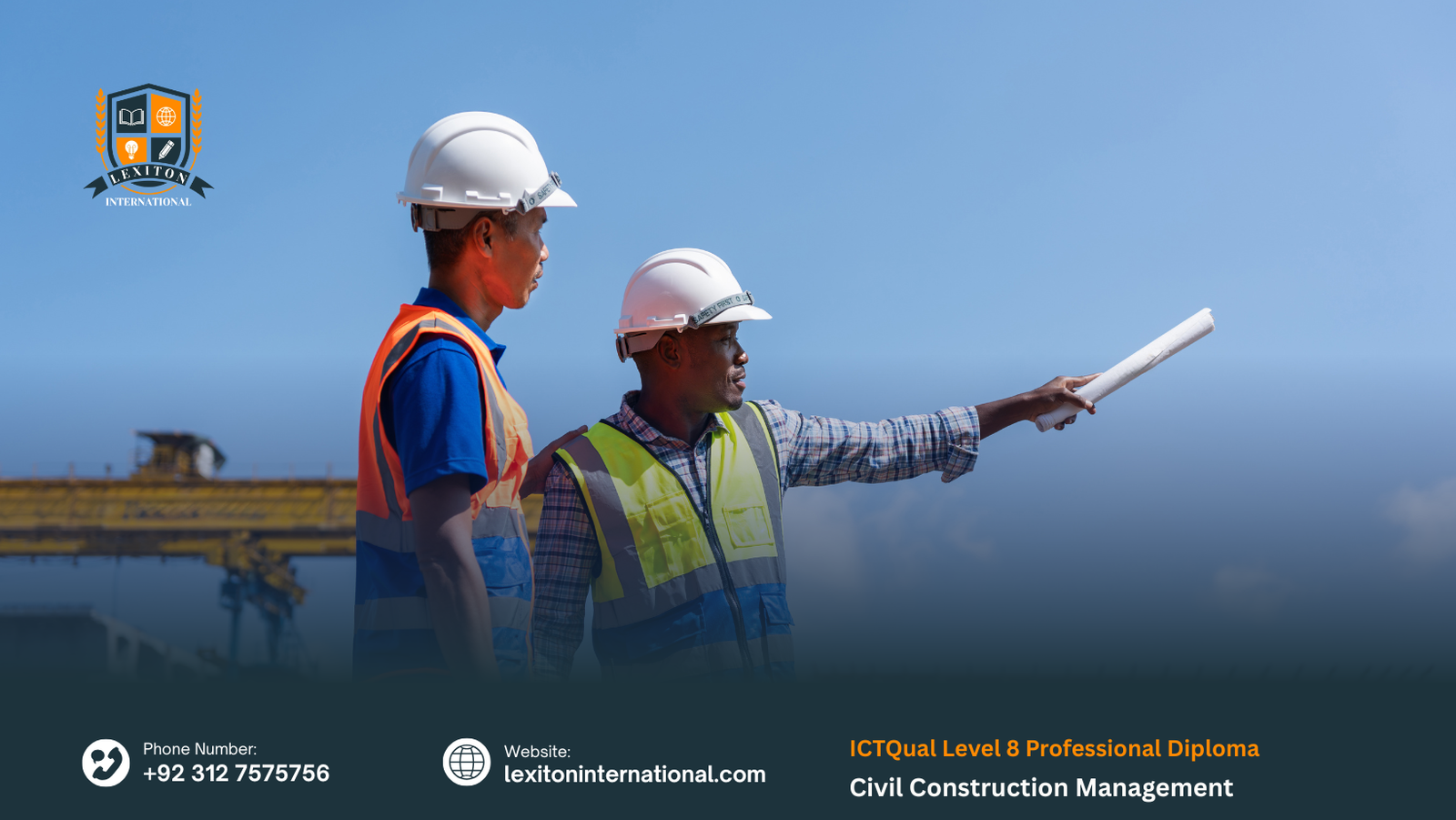
The ICTQual Level 8 Professional Diploma in Civil Construction Management is an advanced qualification designed for people who want to build strong careers in the construction field. It focuses on how large building projects are planned, managed, and completed in a safe and organised way. This course is suitable for learners who want to move into senior roles in civil construction and site management.
During the programme, learners understand how construction work is planned from the ground up, including managing teams, handling resources, and making sure work is completed on time. It also explains how to keep sites safe, well-organised, and running smoothly. The aim is to help learners develop the ability to handle real construction challenges with confidence.
This qualification is useful for people already working in construction as well as those who want to step into leadership roles. It builds practical understanding of how construction sites operate in real situations and how to guide teams effectively. After completing this diploma, learners can progress into roles such as site manager, construction supervisor, or project coordinator. It also opens doors to higher-level study and long-term career growth in the civil construction industry.
- Age Requirement: Learners must be at least 21 years or older at the time of enrollment.
- Educational Background: A recognised Level 7 qualification (or similar) in construction, engineering, or a related subject is usually expected.
- Experience: Practical involvement in construction work, site coordination, or project handling is useful and can support learning success.
- Language Proficiency: Learners need sufficient English skills in reading, writing, and speaking to follow course content and complete assignments clearly.
Mandatory Units
Skills You Will Gain
Advanced Principles of Civil Engineering and Construction Management
- Advanced Structural Analysis and Design:
- Demonstrate a comprehensive understanding of advanced structural analysis techniques, including finite element analysis, structural dynamics, and seismic design.
- Evaluate the performance and suitability of various structural systems under complex loading conditions for different types of construction projects.
- Apply advanced design principles to develop safe, efficient, and resilient structural solutions.
- Advanced Construction Materials and Techniques:
- Analyze the properties, behavior, and applications of advanced construction materials such as high-performance concrete and composite materials.
- Evaluate cutting-edge construction techniques, including prefabrication, modular construction, and innovative assembly methods.
- Develop strategies for the effective integration of advanced materials and techniques into construction projects.
- Project Planning and Control Strategies:
- Formulate advanced project planning and control strategies using methodologies such as CPM, PERT, and Lean Construction principles.
- Optimize project schedules, resource allocation, and cost management tailored to the unique requirements of civil construction projects.
- Critically assess the effectiveness of different project planning and control strategies in achieving project objectives.
- Risk Management and Resilience in Construction:
- Identify and assess complex risks and uncertainties in civil construction projects.
- Develop and implement advanced risk management techniques and resilience planning strategies to mitigate impacts.
- Design disaster recovery strategies to ensure project resilience and continuity of operations during unforeseen challenges.
Advanced Project Management in Civil Construction
- Integrated Project Delivery Systems:
- Critically analyze integrated project delivery (IPD) systems and collaborative project delivery methods.
- Evaluate the roles and responsibilities of various project stakeholders in IPD implementation.
- Assess the benefits and challenges of adopting IPD systems in enhancing project integration and efficiency.
- Contract Administration and Legal Considerations:
- Demonstrate advanced knowledge of contract administration practices and legal considerations in civil construction.
- Analyze different contract types, terms, clauses, and dispute resolution mechanisms.
- Develop strategies for effective contract negotiation and compliance with emerging legal trends.
- Quality Assurance and Control in Construction:
- Design and implement advanced quality assurance and control systems using TQM principles.
- Employ advanced quality control techniques to optimize construction processes and minimize defects.
- Evaluate the effectiveness of quality assurance frameworks in ensuring high-quality project delivery.
- Advanced Procurement and Supply Chain Management:
- Analyze advanced procurement strategies and supply chain management practices.
- Develop effective procurement methods and supplier selection criteria to enhance project efficiency.
- Implement supply chain optimization techniques to reduce costs and minimize risks.
Sustainable Construction and Environmental Management
- Green Building Design and Certification:
- Apply sustainable construction principles and green building rating systems (e.g., LEED, BREEAM) to design and certify green buildings.
- Develop advanced strategies for minimizing environmental impact and maximizing resource efficiency in construction projects.
- Evaluate the effectiveness of green building practices in achieving sustainability goals.
- Lifecycle Assessment and Carbon Footprint Analysis:
- Conduct advanced lifecycle assessments (LCAs) and carbon footprint analyses to evaluate environmental impacts.
- Develop methodologies for quantifying embodied carbon and assessing lifecycle impacts.
- Identify opportunities for carbon mitigation and offsetting in construction projects.
- Environmental Compliance and Regulatory Frameworks:
- Navigate complex environmental regulations and compliance requirements in civil construction.
- Conduct environmental impact assessments (EIAs) and navigate permitting procedures.
- Develop best practices for achieving regulatory compliance while minimizing environmental risks.
- Resilient Infrastructure and Climate Adaptation:
- Develop strategies for designing and constructing resilient infrastructure.
- Apply climate adaptation principles to enhance project sustainability and reduce vulnerability to climate-related hazards.
- Evaluate the effectiveness of resilience planning in mitigating climate impacts.
Advanced Construction Management Practices
- Advanced Cost Estimation and Value Engineering:
- Apply advanced cost estimation techniques and value engineering principles to optimize project budgets.
- Conduct detailed cost analyses, value engineering workshops, and lifecycle cost assessments.
- Identify cost-saving opportunities and maximize project value through effective cost management.
- Labor Productivity and Workforce Management:
- Evaluate factors influencing labor productivity in civil construction projects.
- Develop strategies for optimizing workforce management, including advanced labor productivity metrics and workforce planning techniques.
- Enhance productivity, morale, and performance on construction sites through effective workforce management.
- Advanced Technology Adoption in Construction:
- Explore the latest trends and innovations in construction technology and their applications.
- Investigate the use of BIM, construction automation, robotics, and augmented reality (AR) to improve project efficiency and coordination.
- Develop strategies for the effective adoption of advanced technologies throughout the project lifecycle.
- Stakeholder Engagement and Community Relations:
- Develop advanced strategies for stakeholder engagement and community relations in civil construction projects.
- Identify and manage stakeholder expectations, resolve conflicts, and foster positive relationships with local communities and regulatory agencies.
- Evaluate the effectiveness of stakeholder engagement practices in achieving project success.
Advanced Topics in Civil Construction Management
- Topic Selection and Proposal Development:
- Select a specific topic within the field of civil construction management that addresses a significant challenge or opportunity.
- Develop a research proposal outlining the research objectives, methodology, and expected outcomes.
- Literature Review and Conceptual Framework:
- Conduct a comprehensive literature review to identify relevant theories, concepts, and empirical studies.
- Develop a conceptual framework to guide the research and provide context for the study.
- Data Collection and Analysis:
- Collect and analyze primary or secondary data using advanced research methods and techniques.
- Utilize quantitative or qualitative analysis to explore research questions and hypotheses, drawing meaningful conclusions from the data.
- Findings and Recommendations:
- Present the findings of the research project, critically analyzing the results.
- Draw meaningful conclusions and provide evidence-based recommendations for practice.
- Contribute to knowledge advancement and evidence-based decision-making in civil construction management.
The ICTQual Level 8 Professional Diploma in Civil Construction Management is designed for individuals who want to grow into senior roles in the construction field. It is ideal for people aiming to improve their skills in managing building projects, teams, and on-site activities in a more professional way.
Who Is This Course For
- Construction professionals looking to move into site management or leadership roles.
- Site supervisors who want to strengthen their project handling and decision-making skills.
- Civil engineers aiming to expand their knowledge of construction planning and execution.
- Project coordinators working in building or infrastructure projects.
- Professionals in the construction industry seeking career progression to senior positions.
- Individuals involved in engineering or building services who want advanced management skills.
- Learners with construction experience aiming for higher-level vocational development.
The ICTQual Level 8 Professional Diploma in Civil Construction Management supports strong career growth in the construction and infrastructure sector. It prepares learners for advanced responsibilities in managing large projects, leading teams, and improving site operations.
Future Progression
- Senior site manager roles responsible for overseeing large construction projects.
- Construction project manager positions focused on planning and delivery of infrastructure work.
- Construction operations manager roles handling multiple sites and teams.
- Civil engineering management positions in private and public sector projects.
- Health and safety manager roles within construction environments.
- Project coordination and planning specialist roles in building and infrastructure companies.
Curious About This Course?