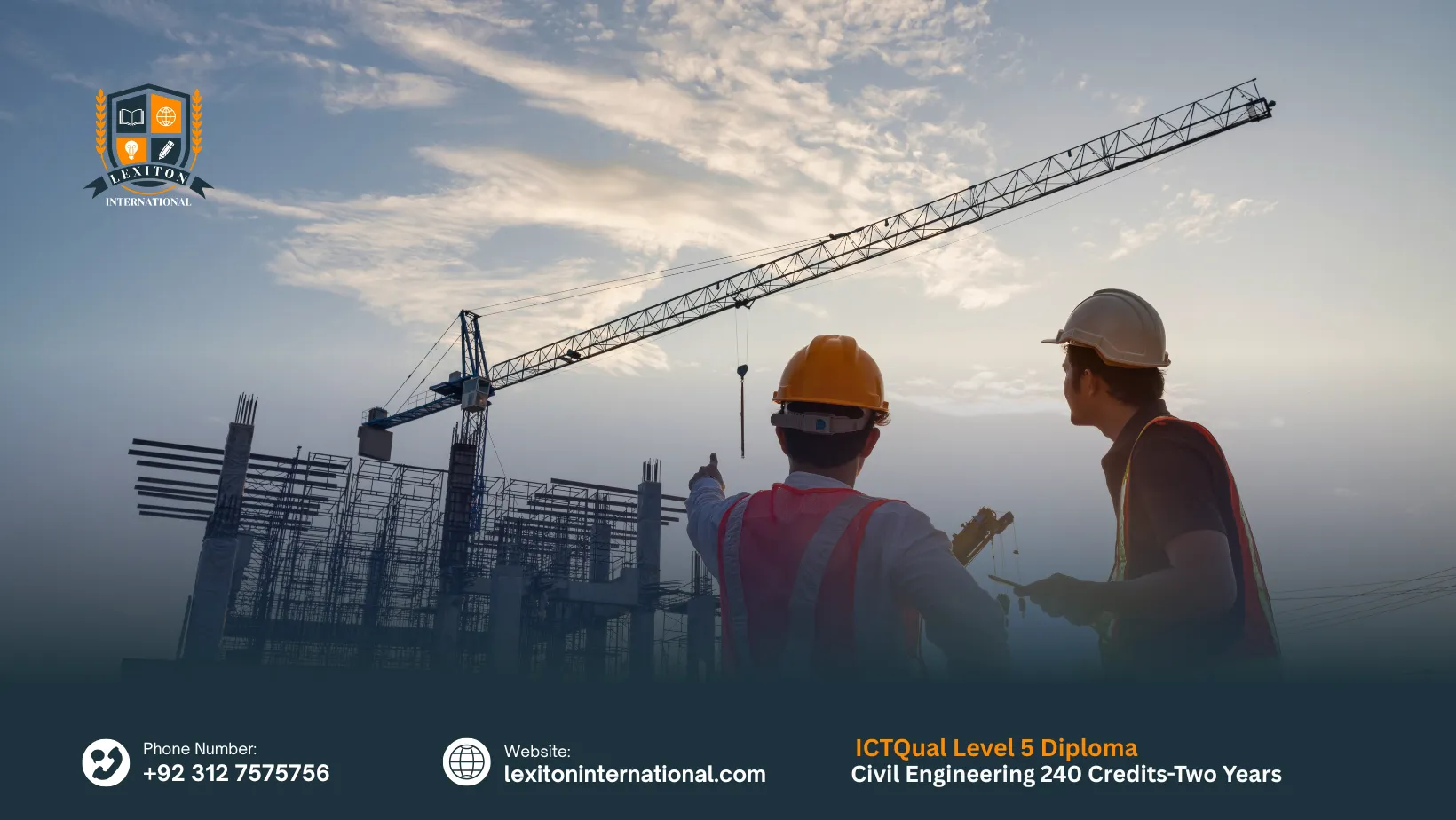
ICTQual Level 5 Diploma in Civil Engineering 240 Credits – Two Years is a comprehensive qualification designed to provide learners with advanced knowledge and practical understanding of civil engineering principles, construction methodologies, infrastructure development, and engineering management practices. The programme combines theoretical concepts with industry-relevant applications, enabling learners to develop a strong foundation in structural design, surveying, construction technology, project planning, and engineering operations. It is structured to reflect current industry standards and the evolving demands of the civil engineering sector.
This two-year diploma covers a broad range of topics that support the development of technical competence and professional capabilities required in modern construction and infrastructure projects. Learners gain insight into engineering materials, geotechnical principles, environmental considerations, health and safety requirements, and quality management practices. The qualification also emphasizes problem-solving, analytical thinking, and the application of engineering techniques to real-world construction challenges.
The ICTQual Level 5 Diploma in Civil Engineering 240 Credits – Two Years is suitable for individuals seeking a structured and in-depth understanding of civil engineering within a professional learning environment. Through a balanced curriculum that integrates technical knowledge with practical application, the programme supports the development of industry-relevant skills and competencies that are valued across construction, infrastructure, engineering consultancy, and project-based sectors worldwide.
- Age Requirements: Learners should be at least 18 years of age at the time of registration.
- Professional Experience: Prior work experience is not mandatory.
- Educational Background: Applicants should possess a Level 4 qualification in related discipline.
- English Language Proficiency: Learners should have a reasonable standard of English language proficiency
Mandatory Units
Year 1:
Year 2:
Skills You Will Gain
Below are the learning outcomes for each of the study units in the ICTQual Level 5 Diploma in Civil Engineering program:
Year 1: Foundation and Core Knowledge (120 Credits)
1. Engineering Principles and Applications
- Learning Outcomes:
- Understand and apply fundamental engineering principles to real-world civil engineering problems.
- Demonstrate knowledge of mechanics, thermodynamics, and fluid dynamics within engineering contexts.
- Solve basic engineering problems using analytical techniques.
2. Mathematics for Civil Engineers
- Learning Outcomes:
- Apply mathematical methods, including calculus, algebra, and statistics, to solve complex civil engineering problems.
- Analyze and interpret mathematical data in the context of civil engineering projects.
- Use advanced mathematical tools to support structural and systems analysis.
3. Structural Mechanics
- Learning Outcomes:
- Analyze the behavior of structures under various loads using engineering principles.
- Apply concepts such as bending, shear, torsion, and axial forces to structural analysis.
- Design simple structural elements with appropriate load considerations.
4. Materials Science and Technology
- Learning Outcomes:
- Understand the properties and behavior of materials used in civil engineering, including concrete, steel, and composites.
- Evaluate the durability and strength of materials in various environmental conditions.
- Select and apply appropriate materials for different civil engineering applications.
5. Geotechnical Engineering
- Learning Outcomes:
- Understand the principles of soil mechanics and how they impact foundation design.
- Conduct basic site investigations, including soil testing and analysis.
- Apply geotechnical principles in the design of foundations and soil improvement techniques.
6. Hydraulics and Fluid Mechanics
- Learning Outcomes:
- Demonstrate knowledge of fluid mechanics and its applications in civil engineering systems.
- Design basic hydraulic structures like canals, dams, and drainage systems.
- Apply principles of fluid flow to water distribution and management systems.
7. Surveying and Measurement Techniques
- Learning Outcomes:
- Use surveying instruments and techniques to measure distances, levels, and angles on construction sites.
- Interpret and create survey maps, drawings, and reports.
- Apply surveying data in the planning and design of civil engineering projects.
8. Engineering Drawing and CAD
- Learning Outcomes:
- Produce technical drawings following engineering standards.
- Use computer-aided design (CAD) software to create and modify civil engineering designs.
- Apply drawing and modeling techniques to represent civil engineering projects accurately.
9. Construction Technology
- Learning Outcomes:
- Understand the construction methods, techniques, and technologies used in civil engineering projects.
- Identify construction materials, tools, and equipment relevant to civil engineering tasks.
- Apply construction technology in site preparation, excavation, and material handling.
10. Project Management for Engineers
- Learning Outcomes:
- Apply project management techniques to civil engineering projects, including scheduling, budgeting, and resource allocation.
- Manage project risks, quality control, and ensure compliance with standards.
- Collaborate effectively in multidisciplinary teams to complete engineering projects on time and within budget.
11. Advanced Structural Analysis
- Learning Outcomes:
- Use advanced analytical techniques, such as finite element analysis (FEA), to assess complex structures.
- Analyze and design large-scale civil engineering structures under dynamic loading conditions.
- Apply software tools for modeling and simulating structural behavior.
12. Environmental Engineering
- Learning Outcomes:
- Assess the environmental impacts of civil engineering projects, including waste management, water treatment, and pollution control.
- Apply sustainable practices to reduce the environmental footprint of engineering designs.
- Design infrastructure solutions that contribute to environmental protection and sustainability.
Year 2: Advanced Applications and Specialization (120 Credits)
13. Transportation Engineering
- Learning Outcomes:
- Design and plan transportation infrastructure such as roads, railways, and airports.
- Apply principles of traffic flow, safety, and capacity to transportation systems.
- Evaluate environmental and economic impacts of transportation projects.
14. Construction Management and Law
- Learning Outcomes:
- Understand the legal and regulatory framework that governs civil engineering projects.
- Apply construction management principles to oversee project timelines, costs, and quality.
- Manage contracts, health and safety regulations, and dispute resolution in construction projects.
15. Water Resources Engineering
- Learning Outcomes:
- Design and manage water resources systems, including flood control, stormwater management, and water treatment.
- Assess and mitigate the environmental impacts of water infrastructure.
- Apply hydrological modeling and analysis in water resource planning and management.
16. Building Information Modeling (BIM)
- Learning Outcomes:
- Apply Building Information Modeling (BIM) principles and tools to design, manage, and optimize civil engineering projects.
- Collaborate in multidisciplinary teams using BIM to improve project coordination and reduce inefficiencies.
- Understand the role of BIM in managing construction data, schedules, and resources.
17. Advanced Geotechnical Engineering
- Learning Outcomes:
- Analyze complex geotechnical problems, including slope stability, foundation design, and soil-structure interaction.
- Apply advanced geotechnical techniques in the design of tunnels, deep foundations, and earthworks.
- Use software tools for geotechnical modeling and analysis.
18. Structural Design in Concrete and Steel
- Learning Outcomes:
- Design reinforced concrete and steel structures, ensuring safety, stability, and compliance with building codes.
- Apply advanced design principles to optimize structural systems.
- Analyze and select appropriate materials and construction methods for different structural types.
19. Risk Management in Civil Engineering Projects
- Learning Outcomes:
- Identify and assess risks in civil engineering projects, including financial, safety, and environmental factors.
- Develop strategies to mitigate risks and manage uncertainties in project execution.
- Apply risk management techniques to ensure project success.
20. Sustainable Construction Practices
- Learning Outcomes:
- Implement sustainable construction practices, including the use of eco-friendly materials and energy-efficient designs.
- Evaluate the environmental impact of construction methods and promote waste reduction.
- Integrate sustainability into the planning and execution of civil engineering projects.
21. Advanced Hydraulics and Fluid Flow
- Learning Outcomes:
- Solve complex hydraulic problems involving fluid flow, pressure, and velocity in civil engineering systems.
- Design and optimize water management systems such as dams, reservoirs, and stormwater drainage networks.
- Apply advanced fluid dynamics principles in the analysis of water infrastructure projects.
22. Urban Infrastructure and Development
- Learning Outcomes:
- Plan and design urban infrastructure systems, including roads, utilities, and public spaces.
- Analyze the impact of urban development on environmental, social, and economic systems.
- Apply civil engineering principles to manage the growth and development of cities.
23. Smart Cities and Technology in Civil Engineering
- Learning Outcomes:
- Understand the role of emerging technologies such as IoT, sensors, and data analytics in smart city infrastructure.
- Apply technology to improve urban planning, transportation, and sustainability in civil engineering projects.
- Collaborate with stakeholders in the development of smart city initiatives.
24. Capstone Project and Dissertation
- Learning Outcomes:
- Conduct independent research on a civil engineering topic, applying principles and methodologies learned throughout the course.
- Present a comprehensive solution to a real-world civil engineering problem, demonstrating critical thinking, analysis, and innovation.
The ICTQual Level 5 Diploma in Civil Engineering 240 Credits – Two Years is designed for individuals seeking structured knowledge and practical understanding of civil engineering principles, construction technologies, and infrastructure development. The qualification supports the development of technical competencies, project awareness, and industry-relevant engineering skills required across a wide range of construction and engineering environments.
Who Is This Course For?
- Individuals seeking knowledge of civil engineering principles, construction methods, and infrastructure systems.
- Learners interested in structural design, surveying, engineering materials, and construction technology.
- Construction professionals aiming to enhance their technical and engineering knowledge.
- Site personnel involved in project planning, quality control, and engineering operations.
- Individuals working on infrastructure projects and engineering processes.
- Technical staff developing skills in construction management, health and safety, and environmental practices.
- Those interested in modern construction techniques, project coordination, and engineering problem-solving.
- Individuals seeking a structured and internationally relevant civil engineering qualification.
- Personnel involved in construction support functions and technical documentation.
- Learners building practical, analytical, and project-based civil engineering competencies.
The ICTQual Level 5 Diploma in Civil Engineering 240 Credits – Two Years provides a strong foundation of technical knowledge, practical engineering skills, and industry-relevant competencies. The qualification supports professional development and broadens opportunities across various areas of the civil engineering and construction sectors.
Future Progression
- Civil Engineering Technician roles within construction and infrastructure projects.
- Site Engineering and construction supervision responsibilities.
- Project coordination and engineering support functions.
- Quality control and inspection activities in civil engineering projects.
- Surveying and measurement related positions within the construction industry.
- Construction planning, scheduling, and project administration roles.
- Health, safety, and compliance functions within engineering and construction environments.
- Infrastructure development and maintenance projects in both public and private sectors.
- Technical documentation, reporting, and engineering operations support roles.
Curious About This Course?