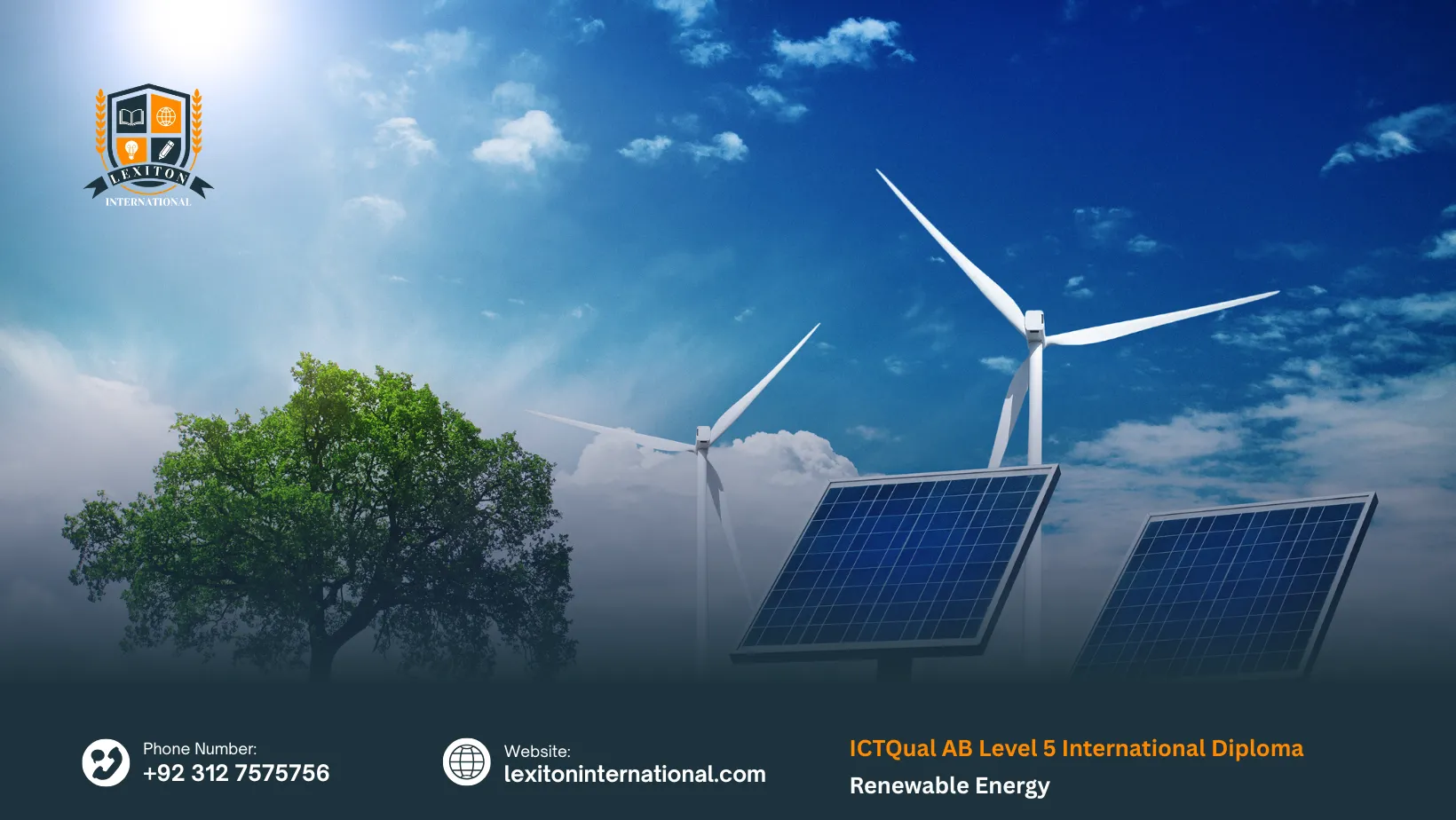
The ICTQual AB Level 5 International Diploma in Renewable Energy is a specialised qualification designed to build advanced understanding of clean and sustainable energy systems. It focuses on the technologies and principles behind solar, wind, hydro, and other renewable energy sources that are shaping the future of global power generation. This programme is ideal for individuals who want to develop strong technical insight into the rapidly expanding renewable energy sector.
The course covers key areas such as renewable energy technologies, system design principles, energy storage solutions, grid integration, and performance efficiency. Learners also explore sustainability practices, environmental impact reduction, and the role of renewable systems in supporting global energy transition goals. The programme combines technical concepts with real-world industry awareness, helping learners understand how renewable energy systems are implemented and managed across different environments.
By completing this diploma, learners gain a deeper understanding of modern energy challenges and the solutions offered by renewable technologies. It strengthens analytical thinking and technical awareness, enabling individuals to understand complex energy systems with confidence. As global demand for clean energy continues to grow, this qualification provides valuable insight into a sector that plays a key role in building a more sustainable and energy-efficient world.
- Age Requirement: Applicants should ideally be 18 years or older at the time of enrollment.
- Educational Background: A secondary school qualification (or equivalent) is required. Preference is given to candidates with a background in science, mathematics, engineering, or environmental studies, as these subjects provide the analytical and problem-solving skills needed for renewable energy studies.
- Work Experience: While not mandatory, prior experience in energy, environmental, or industrial operations is considered an advantage. Learners with exposure to renewable energy projects, sustainability initiatives, or technical environments will find the course especially relevant.
- English Language Proficiency: Since the course is delivered in English, learners must demonstrate a good command of spoken and written English.
Mandatory Units
Year 1 – Foundation in Renewable Energy
Year 2 – Advanced Renewable Energy Management
Skills You Will Gain
Learning Outcomes for the ICTQual AB Level 5 International Diploma in Renewable Energy:
Year 1 – Foundation in Renewable Energy
Introduction to Renewable Energy Systems
- Understand the fundamental principles and types of renewable energy systems.
- Analyse the global impact of renewable energy on sustainability and climate change.
- Recognise the roles of stakeholders in renewable energy projects.
- Develop awareness of emerging technologies in the renewable energy sector.
Solar Energy Technologies
- Understand the operation and components of solar energy systems.
- Evaluate the efficiency and performance of photovoltaic and solar thermal systems.
- Apply basic design principles for solar energy installations.
- Identify maintenance and safety requirements for solar systems.
Wind Energy Principles and Applications
- Understand wind energy conversion and turbine technology.
- Analyse factors affecting wind energy generation and efficiency.
- Apply principles of wind farm design and site assessment.
- Evaluate maintenance and operational considerations for wind systems.
Hydropower Systems and Operations
- Understand the principles of hydropower generation and infrastructure.
- Analyse environmental and operational factors in hydropower projects.
- Apply operational strategies for efficiency and safety in hydro systems.
- Evaluate the role of hydropower in sustainable energy planning.
Bioenergy and Biomass Applications
- Understand bioenergy sources and conversion technologies.
- Analyse the environmental benefits and challenges of biomass energy.
- Apply principles for designing and operating bioenergy systems.
- Evaluate economic and sustainability aspects of bioenergy projects.
Energy Efficiency and Management Fundamentals
- Understand energy consumption patterns and efficiency principles.
- Apply strategies to optimise energy use in industrial and commercial settings.
- Evaluate energy management systems and performance indicators.
- Promote sustainable practices in energy operations and planning.
Electrical Systems and Power Distribution
- Understand the fundamentals of electrical circuits and power systems.
- Analyse power distribution networks for efficiency and reliability.
- Apply basic design and operational principles in electrical systems.
- Evaluate safety and compliance requirements in energy distribution.
Environmental Impact Assessment in Energy Projects
- Understand the purpose and process of environmental impact assessments (EIA).
- Analyse potential environmental risks in renewable energy projects.
- Apply mitigation strategies to minimise negative environmental impacts.
- Evaluate compliance with environmental regulations and sustainability standards.
Energy Storage Technologies
- Understand types and principles of energy storage systems.
- Analyse the applications of batteries, capacitors, and other storage technologies.
- Apply strategies to optimise storage efficiency and reliability.
- Evaluate the role of energy storage in grid stability and renewable integration.
Sustainable Energy Policy and Regulations
- Understand national and international renewable energy policies.
- Analyse legal and regulatory frameworks affecting energy projects.
- Apply compliance strategies in operational and planning activities.
- Evaluate the impact of policies on sustainability and energy adoption.
Communication and Documentation in Energy Operations
- Develop effective communication strategies in energy projects.
- Prepare technical reports, operational documentation, and project plans.
- Apply digital tools for reporting, collaboration, and data management.
- Maintain accurate records to support regulatory compliance and audits.
Professional Ethics and Industry Standards
- Understand ethical principles in renewable energy practices.
- Apply professional conduct in operational and managerial activities.
- Promote accountability, integrity, and transparency in energy projects.
- Adhere to industry standards, safety protocols, and sustainability guidelines.
Year 2 – Advanced Renewable Energy Management
Advanced Solar and Wind Energy Systems
- Analyse complex solar and wind energy system designs.
- Apply advanced operational strategies for performance optimisation.
- Evaluate maintenance and lifecycle considerations for large-scale systems.
- Integrate multiple renewable energy sources for hybrid solutions.
Renewable Energy Project Planning and Management
- Develop project plans for renewable energy installations.
- Allocate resources and manage timelines effectively.
- Monitor project progress and performance indicators.
- Apply problem-solving strategies in project execution.
Energy Auditing and Performance Optimisation
- Conduct energy audits to evaluate consumption and efficiency.
- Analyse system performance and identify optimisation opportunities.
- Recommend strategies to reduce energy waste and costs.
- Apply sustainability metrics to assess operational improvements.
Grid Integration and Smart Energy Systems
- Understand grid infrastructure and smart energy technologies.
- Analyse challenges in integrating renewable energy into power networks.
- Apply control and monitoring systems for efficient energy distribution.
- Evaluate solutions for balancing demand and supply in smart grids.
Sustainable Power Generation Strategies
- Develop strategies for sustainable and efficient energy generation.
- Analyse renewable energy potential across different sources.
- Apply best practices in project design, planning, and execution.
- Evaluate environmental and economic impacts of generation strategies.
Advanced Energy Storage and Battery Technologies
- Understand emerging energy storage solutions and battery innovations.
- Analyse performance, lifespan, and efficiency of storage technologies.
- Apply storage integration strategies with renewable energy systems.
- Evaluate operational and safety requirements in energy storage applications.
Renewable Energy Economics and Financing
- Understand financial models for renewable energy projects.
- Analyse cost-benefit and investment returns in energy initiatives.
- Apply funding strategies, grants, and incentives for project viability.
- Evaluate economic impacts on energy adoption and sustainability.
Safety and Risk Management in Energy Operations
- Identify potential hazards in renewable energy operations.
- Apply risk assessment and mitigation strategies effectively.
- Monitor compliance with health, safety, and environmental standards.
- Promote a culture of safety across energy projects.
Emerging Technologies in Renewable Energy
- Understand innovative technologies shaping the energy sector.
- Analyse potential applications of emerging solutions in real projects.
- Apply new technologies to improve efficiency and sustainability.
- Evaluate trends and their implications for future energy management.
Research Methods in Renewable Energy
- Develop skills in qualitative and quantitative research methods.
- Analyse energy data to inform project and operational decisions.
- Prepare structured reports and presentations based on research findings.
- Apply evidence-based approaches to support renewable energy initiatives.
Capstone Project in Renewable Energy Management
- Integrate knowledge from all study units into a practical project.
- Solve real-world challenges in renewable energy operations and planning.
- Demonstrate project management, analytical, and problem-solving skills.
- Present findings professionally with actionable recommendations.
Innovation and Sustainability in Energy Solutions
- Understand strategies for sustainable and innovative energy solutions.
- Apply creativity and problem-solving to develop efficient systems.
- Evaluate long-term environmental and economic impacts.
- Promote sustainable practices and continuous improvement in energy projects.
The ICTQual AB Level 5 International Diploma in Renewable Energy is designed for individuals who want to gain practical knowledge of sustainable energy systems and play a role in the global shift toward cleaner power solutions. It is ideal for learners who are motivated to work with modern renewable technologies and develop skills in environmentally responsible energy practices.
Who Is This Course For
- Learners aiming to begin a career in renewable energy and green technology sectors.
- Individuals interested in how solar, wind, hydro, and alternative energy systems operate.
- Aspiring professionals seeking entry into sustainable energy and environmental projects.
- Technicians from electrical or mechanical backgrounds wanting to move into renewable systems.
- Workers planning to shift from traditional energy industries into cleaner energy fields.
- Individuals interested in reducing environmental impact through energy innovation.
- Candidates looking for opportunities in renewable power plants and energy facilities.
- Learners who want to build understanding of modern sustainable energy solutions.
- Professionals aiming to gain practical knowledge of clean energy installation and operations.
- Anyone passionate about supporting global efforts toward a greener and more sustainable future.
The ICTQual AB Level 5 International Diploma in Renewable Energy strengthens your technical foundation in clean energy systems and prepares you for active involvement in the global transition toward sustainable power solutions. It builds practical capability in modern energy technologies where innovation, efficiency, and environmental responsibility are key.
Future Progression
- Step into roles supporting solar, wind, and hydro energy project operations.
- Contribute to installation and maintenance of renewable energy systems and infrastructure.
- Work in energy efficiency projects focused on reducing carbon emissions.
- Assist technical teams in managing clean power generation facilities.
- Build opportunities within sustainable energy companies and green technology firms.
- Participate in renewable energy monitoring and system performance activities.
- Support engineering teams in integrating renewable systems into existing grids.
- Strengthen eligibility for technical roles in global energy and sustainability projects.
- Develop recognition for contributing to environmentally responsible energy solutions.
- Position yourself within a rapidly expanding global industry focused on clean and sustainable power.
Curious About This Course?