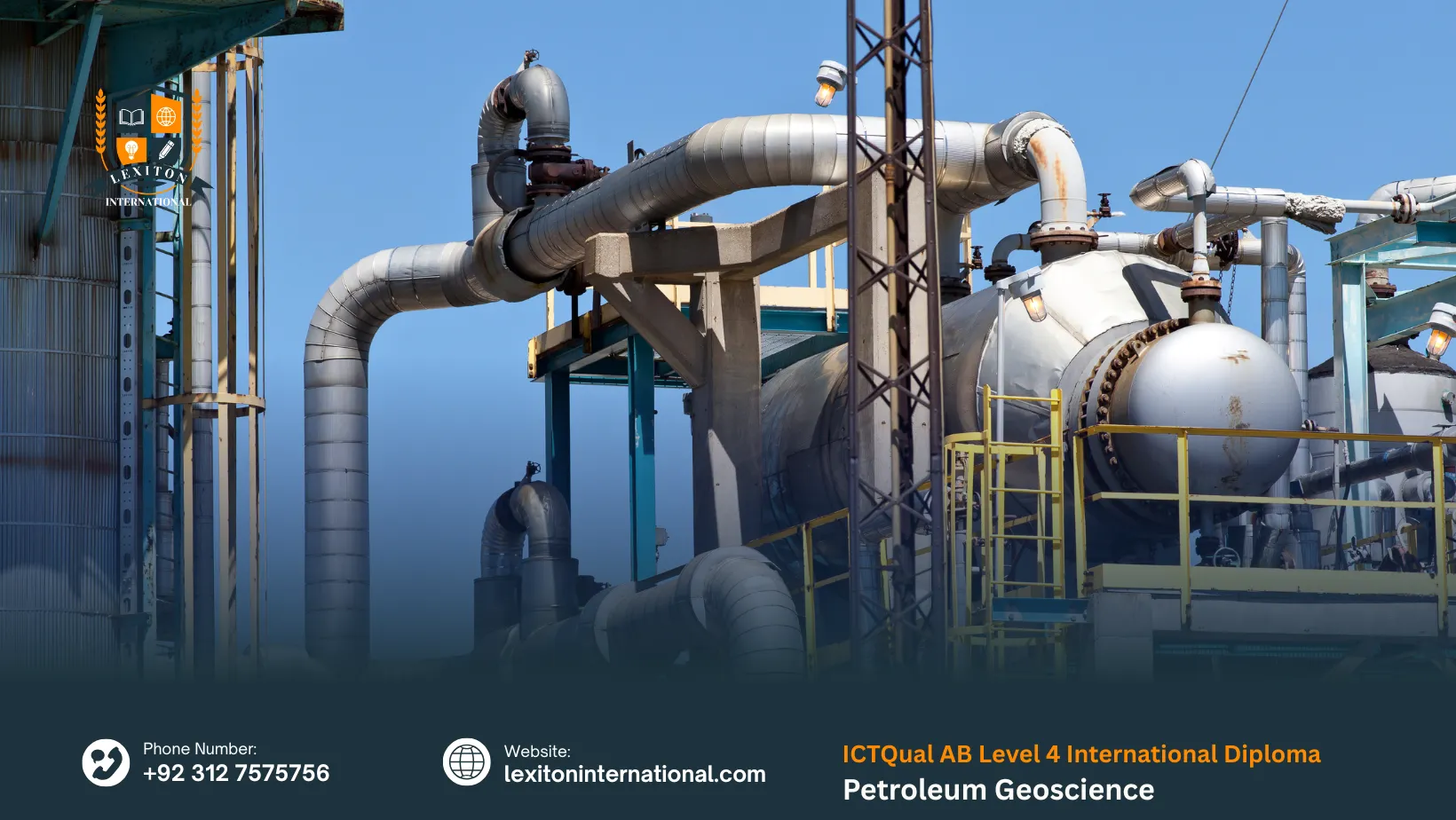
The ICTQual AB Level 4 International Diploma in Petroleum Geoscience is a specialised qualification designed to introduce learners to the fundamental science behind oil and gas exploration. It focuses on how geological processes, rock formations, and subsurface structures are studied to locate and evaluate petroleum resources. This programme is ideal for individuals who want to build strong foundational knowledge in earth sciences as applied to the global energy industry.
The course covers essential areas such as basic geology, sedimentary environments, structural geology, petroleum systems, and introductory geophysical methods. Learners also gain an understanding of how geological data is interpreted to identify potential hydrocarbon reserves. The programme is structured to develop clear scientific thinking and an understanding of how geoscience supports exploration decisions in the oil and gas sector.
By completing this diploma, learners develop the ability to understand the relationship between earth science and energy resources. It enhances analytical thinking and technical awareness, enabling individuals to interpret geological information with confidence. As petroleum exploration continues to rely on scientific data and advanced interpretation, this qualification provides valuable insight into a critical and highly specialised field within the energy industry.
- Age Requirement: Applicants should ideally be 18 years or older at the time of enrollment.
- Educational Background: A secondary school qualification (or equivalent) is required. Preference is given to candidates with a background in science, mathematics, geography, or environmental studies, as these subjects provide the analytical and observational skills needed for geoscience. Candidates with vocational or technical diplomas in related fields are also encouraged to apply.
- Work Experience: Work experience is not mandatory at this level. However, prior exposure to geology, mapping, surveying, or industrial environments is considered an advantage. Learners with such experience will find it easier to connect theoretical knowledge with practical applications.
- English Language Proficiency: Since the course is delivered in English, learners must demonstrate a good command of spoken and written English.
Mandatory Units
Year 1 – Foundation and Core Knowledge
Skills You Will Gain
Learning Outcomes for the ICTQual AB Level 4 International Diploma in Petroleum Geoscience:
Year 1 – Foundation and Core Knowledge
Introduction to Petroleum Geoscience
- Understand the fundamental concepts of petroleum geoscience and its role in the oil and gas industry.
- Identify different types of hydrocarbon resources and their global significance.
- Recognise the processes of petroleum formation, migration, and accumulation.
- Explain the exploration and production lifecycle in the petroleum sector.
- Develop foundational analytical skills for interpreting geological data.
Fundamentals of Sedimentology and Stratigraphy
- Understand sedimentary rock formation processes and depositional environments.
- Analyse stratigraphic sequences and their relevance to petroleum reservoirs.
- Apply sedimentology principles to reservoir characterisation.
- Interpret stratigraphic logs and diagrams for subsurface evaluation.
- Develop skills to integrate stratigraphy data into exploration workflows.
Petroleum Reservoirs and Rock Properties
- Understand the physical and chemical properties of reservoir rocks.
- Analyse porosity, permeability, and fluid saturation in petroleum reservoirs.
- Evaluate reservoir quality and potential hydrocarbon productivity.
- Interpret core samples and well log data effectively.
- Develop practical skills in reservoir characterisation for decision-making.
Petroleum Geology and Basin Analysis
- Understand geological processes influencing hydrocarbon accumulation.
- Analyse sedimentary basins and their petroleum potential.
- Interpret structural features affecting reservoir formation and exploration.
- Apply basin modelling techniques to predict resource distribution.
- Develop critical thinking skills for exploration planning.
Seismic Interpretation and Subsurface Mapping
- Understand the principles of seismic data acquisition and processing.
- Analyse seismic sections to identify geological structures and traps.
- Integrate seismic data with geological models for subsurface mapping.
- Apply seismic interpretation techniques for reservoir evaluation.
- Develop practical skills in geophysical data analysis.
Well Logging and Formation Evaluation
- Understand different well logging methods and their applications.
- Interpret log data to assess formation properties and reservoir potential.
- Analyse porosity, permeability, and hydrocarbon saturation from logs.
- Apply well logging results to drilling and production decisions.
- Develop technical skills in formation evaluation.
Drilling and Production Geoscience Principles
- Understand drilling processes and well design considerations.
- Analyse the role of geoscience in production optimisation.
- Interpret subsurface data to support drilling operations.
- Evaluate drilling risks and reservoir management strategies.
- Develop problem-solving skills in production-related geoscience.
Petroleum Exploration Techniques
- Understand the methodologies used in petroleum exploration.
- Analyse geological, geophysical, and geochemical exploration data.
- Apply exploration techniques to identify prospective hydrocarbon zones.
- Evaluate exploration project risks and uncertainties.
- Develop practical decision-making skills for exploration planning.
Reservoir Characterisation and Modelling
- Understand reservoir heterogeneity and factors influencing productivity.
- Analyse reservoir simulation models for fluid flow and pressure behaviour.
- Apply software tools for reservoir characterisation and modelling.
- Integrate geological, geophysical, and petrophysical data into models.
- Develop skills for reservoir management and production forecasting.
Health, Safety, and Environmental Management in Petroleum Operations
- Understand key safety standards and regulatory frameworks in petroleum operations.
- Analyse environmental risks and implement mitigation strategies.
- Apply health and safety procedures in field and operational contexts.
- Develop awareness of sustainable practices in petroleum geoscience.
- Promote a safety-focused and environmentally responsible work culture.
Digital Tools and Geoscience Software Applications
- Understand digital tools used in geoscience and petroleum engineering.
- Apply software for data analysis, reservoir modelling, and mapping.
- Integrate digital simulations into exploration and production planning.
- Develop technical competency in using industry-standard software.
- Enhance efficiency and accuracy in geoscience decision-making.
Professional Practice and Future Trends in Petroleum Geoscience
- Understand ethical, professional, and regulatory standards in petroleum geoscience.
- Analyse emerging technologies and trends impacting the oil and gas industry.
- Develop communication, teamwork, and project management skills.
- Apply knowledge to real-world petroleum geoscience projects.
- Prepare for continuous professional development and career advancement in the sector.
The ICTQual AB Level 4 International Diploma in Petroleum Geoscience is designed for individuals who want to build a strong entry-level understanding of earth sciences and explore how oil and gas resources are discovered beneath the surface. It is ideal for learners aiming to start a career in geological exploration and the energy sector.
Who Is This Course For
- Learners who want to begin a career in petroleum geoscience and exploration.
- Individuals interested in understanding rocks, layers, and underground energy formations.
- Aspiring geologists seeking foundational knowledge of oil and gas discovery.
- Students from science or technical backgrounds planning to enter the energy industry.
- Workers aiming to shift into geology, surveying, or exploration roles.
- Individuals interested in seismic data and basic subsurface analysis.
- Candidates seeking entry-level roles in exploration and energy companies.
- Learners who want to develop analytical and scientific thinking skills.
- People interested in field studies, earth science, and resource mapping.
- Anyone motivated to start a career in geological exploration and energy discovery.
The ICTQual AB Level 4 International Diploma in Petroleum Geoscience builds your early-stage professional capability by developing essential understanding of earth science, subsurface structures, and exploration basics. It prepares you for practical involvement in a high-demand industry where observation, analysis, and accuracy are highly valued.
Future Progression
- Step into entry-level roles supporting geological exploration and field survey teams.
- Assist in collecting and interpreting basic subsurface and geological data.
- Contribute to mapping activities used in oil and gas exploration projects.
- Work alongside geoscience teams in laboratory and field environments.
- Support exploration activities focused on identifying potential energy resources.
- Build opportunities in upstream oil and gas exploration companies and projects.
- Take part in data recording and analysis for geological assessments.
- Strengthen eligibility for junior roles in geoscience and energy sectors.
- Develop recognition for supporting exploration and resource identification tasks.
- Position yourself within a globally important industry focused on energy discovery and development.
Curious About This Course?