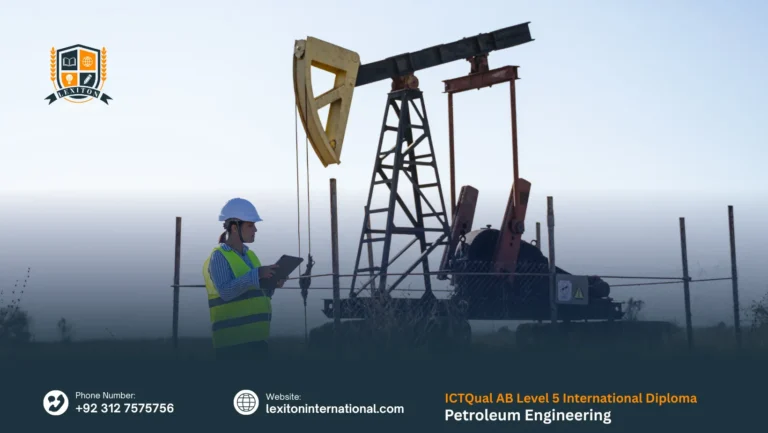
The ICTQual AB Level 4 International Diploma in Petroleum Engineering is a specialized qualification designed to provide learners with a strong foundation in the principles, technologies, and practices of petroleum exploration, drilling, production, and reservoir management. As the oil and gas industry continues to play a vital role in the global energy mix, this diploma equips learners with the technical knowledge and applied skills required to succeed in one of the world’s most dynamic and challenging sectors.
The program covers a wide range of topics, including petroleum geology, drilling engineering, reservoir engineering, production operations, safety management, and environmental considerations. Learners will gain both theoretical insights and practical understanding of how petroleum resources are explored, extracted, and managed efficiently while adhering to international safety and sustainability standards. By combining classroom learning with applied case studies, the course ensures graduates are prepared to meet industry demands.
This diploma is ideal for individuals seeking to begin or advance their careers in petroleum engineering, whether in exploration, drilling, production, or related technical roles. With a curriculum aligned to international industry standards, the ICTQual AB Level 4 International Diploma in Petroleum Engineering provides learners with the skills to contribute effectively to the oil and gas sector while also preparing them for higher-level studies and professional development opportunities.
To ensure learners are fully prepared to succeed in the ICTQual AB Level 4 International Diploma in Petroleum Engineering, applicants are expected to meet the following entry requirements:
- Age Requirement Applicants should ideally be 18 years or older at the time of enrollment. The course involves technical concepts, applied learning, and project-based assessments that require maturity, responsibility, and independent study skills.
- Educational Background A secondary school qualification (or equivalent) is required. Preference is given to candidates with a background in science, mathematics, engineering, or geography, as these subjects provide the analytical and technical skills needed for petroleum engineering studies. Candidates with vocational or technical diplomas in related fields are also encouraged to apply.
- Work Experience Work experience is not mandatory at this level. However, prior exposure to oil and gas, industrial, or engineering environments is considered an advantage. Learners with such experience will find it easier to connect theoretical knowledge with practical applications.
- English Language Proficiency Since the course is delivered in English, learners must demonstrate a good command of spoken and written English. This ensures they can engage with technical manuals, industry case studies, and project documentation, as well as participate effectively in discussions and assessments.
- Professional Interest Applicants should demonstrate a genuine interest in petroleum engineering, energy systems, and resource management. The course is designed for individuals aiming to progress into technical, operational, or support roles within the oil and gas sector.
Mandatory Units
This qualification, the ICTQual AB Level 4 International Diploma in Petroleum Engineering, consists of 12 mandatory units.
Year 1 – Foundation and Core Knowledge
- Introduction to Petroleum Engineering
- Petroleum Geology and Reservoir Fundamentals
- Drilling Engineering and Well Operations
- Production Technology and Systems
- Fluid Mechanics and Thermodynamics in Petroleum Engineering
- Petroleum Exploration Techniques
- Reservoir Engineering and Management
- Health, Safety, and Environmental Practices in Oil and Gas
- Petroleum Processing and Refining Principles
- Offshore Engineering and Subsurface Operations
- Project Management in Petroleum Engineering
- Emerging Trends and Technologies in Petroleum Industry
Learning Outcomes for the ICTQual AB Level 4 International Diploma in Petroleum Engineering:
Year 1 – Foundation and Core Knowledge
Introduction to Petroleum Engineering
- Understand the scope and significance of petroleum engineering in global energy supply.
- Identify key sectors within the oil and gas industry and their interconnections.
- Develop awareness of petroleum engineering roles and responsibilities.
- Recognise the ethical and environmental responsibilities of petroleum engineers.
- Apply fundamental engineering concepts to petroleum-related problems.
Petroleum Geology and Reservoir Fundamentals
- Explain the origin and classification of petroleum reservoirs.
- Analyse geological structures influencing hydrocarbon accumulation.
- Interpret basic geological and reservoir data.
- Understand rock and fluid properties relevant to reservoir engineering.
- Assess reservoir potential for exploration and production.
Drilling Engineering and Well Operations
- Describe drilling techniques, tools, and technologies used in well operations.
- Explain well design and construction principles.
- Identify safety practices in drilling operations.
- Understand mud systems and their role in drilling efficiency.
- Apply problem-solving approaches to drilling challenges.
Production Technology and Systems
- Understand the processes involved in oil and gas production.
- Describe surface and subsurface production systems.
- Analyse the role of artificial lift methods in petroleum production.
- Evaluate technologies for optimising production efficiency.
- Apply safe practices in production system operations.
Fluid Mechanics and Thermodynamics in Petroleum Engineering
- Apply principles of fluid flow in petroleum systems.
- Understand thermodynamic processes relevant to oil and gas operations.
- Analyse multiphase flow in pipelines and reservoirs.
- Solve basic engineering problems involving pressure, temperature, and flow.
- Use fluid mechanics and thermodynamics concepts in petroleum case studies.
Petroleum Exploration Techniques
- Explain methods of petroleum exploration, including seismic and geophysical surveys.
- Interpret basic exploration data to identify potential hydrocarbon reserves.
- Understand exploration project planning and execution.
- Recognise the risks and uncertainties in exploration activities.
- Apply knowledge of exploration techniques to real-world case examples.
Reservoir Engineering and Management
- Understand the principles of reservoir characterisation and modelling.
- Evaluate reservoir performance using engineering data.
- Describe recovery methods, including primary, secondary, and enhanced techniques.
- Apply reservoir management practices to optimise hydrocarbon recovery.
- Recognise the role of sustainability in reservoir management.
Health, Safety, and Environmental Practices in Oil and Gas
- Understand international safety regulations and industry standards.
- Recognise hazards and implement control measures in oil and gas operations.
- Apply risk assessment techniques in petroleum projects.
- Analyse environmental impacts of petroleum exploration and production.
- Promote sustainable and safe working practices in the petroleum sector.
Petroleum Processing and Refining Principles
- Explain the key processes in refining crude oil into usable products.
- Understand the operation of distillation and conversion units.
- Analyse the role of refining in global energy supply.
- Apply safety standards in refining operations.
- Evaluate innovations and efficiency improvements in refining processes.
Offshore Engineering and Subsurface Operations
- Understand the design and construction of offshore platforms.
- Analyse challenges of offshore drilling and production.
- Explain subsea systems and technologies used in offshore operations.
- Apply knowledge of offshore safety and environmental protection.
- Evaluate case studies of offshore engineering projects.
Project Management in Petroleum Engineering
- Understand the principles of project planning and scheduling.
- Apply risk management techniques in petroleum projects.
- Analyse cost estimation and budgeting in engineering projects.
- Evaluate the importance of teamwork and leadership in project delivery.
- Use project management tools to support petroleum engineering activities.
Emerging Trends and Technologies in Petroleum Industry
- Identify new technologies shaping petroleum exploration and production.
- Understand the role of digitalisation, automation, and AI in oil and gas.
- Analyse the impact of renewable energy integration on petroleum operations.
- Evaluate sustainability initiatives within the petroleum industry.
- Anticipate future skills and knowledge required for industry professionals.
The ICTQual AB Level 4 International Diploma in Petroleum Engineering is designed for motivated individuals who want to develop expertise in petroleum exploration, drilling, and production.
Aspiring Petroleum Engineers
- Individuals aiming to start a career in petroleum engineering or oil and gas
- Learners seeking a strong foundation in drilling, reservoir, and production operations
- Students interested in contributing to global energy security
- Those who want to gain an internationally recognized qualification
- Candidates motivated to work in technical or operational roles in oil and gas
- Individuals passionate about energy resources and engineering
Technical and Engineering Enthusiasts
- Learners with a background in science, mathematics, or engineering
- Individuals who enjoy technical problem-solving and applied learning
- Candidates interested in petroleum geology and drilling technologies
- Those who want to connect theory with practical industry applications
- Learners motivated by innovation and emerging oilfield technologies
- Individuals aiming to specialize in reservoir and production engineering
Industry Workers Seeking Formal Recognition
- Professionals already working in oil and gas or industrial sectors
- Workers aiming to upgrade their knowledge with structured training
- Employees seeking career advancement through certification
- Individuals looking to align their skills with international standards
- Candidates transitioning from general engineering to petroleum-specific roles
- Professionals seeking to validate their experience with a diploma
Safety and Compliance-Oriented Learners
- Candidates interested in safety, risk management, and compliance in petroleum operations
- Learners who want to understand global oil and gas regulations and standards
- Individuals motivated to promote safe and sustainable practices
- Those aiming to work in safety, inspection, or compliance roles
- Professionals seeking to specialize in environmental protection in oil and gas
- Learners focused on reducing risks in petroleum operations
Globally Minded Learners
- Individuals interested in international oil and gas projects
- Learners who want to explore global petroleum policies and trends
- Candidates aiming to work with multinational companies or projects
- Those who value cross-border collaboration in energy solutions
- Learners motivated to contribute to global energy development
- Individuals seeking careers with international mobility
The ideal learners for this course are those who are passionate about petroleum engineering, eager to learn advanced technical concepts, and motivated to contribute to the future of global energy.
Completing the ICTQual AB Level 4 International Diploma in Petroleum Engineering provides learners with a strong platform for career advancement and further education. This qualification opens multiple pathways into higher-level studies, specialized certifications, and professional roles within the global oil and gas sector.
Academic Progression
- Opportunity to progress to ICTQual Level 5 or higher diplomas in petroleum engineering
- Access to specialized academic programs in drilling, reservoir, or production engineering
- Eligibility for advanced technical training in oilfield technologies
- Opportunities to pursue research in petroleum and energy systems
- Foundation for academic careers in energy and engineering studies
Professional Development
- Career advancement into supervisory or technical specialist roles
- Opportunities to work in exploration, drilling, and production operations
- Pathway to roles in safety management, compliance, and auditing
- Enhanced employability in multinational oil and gas companies
- Ability to contribute to sustainable energy initiatives in petroleum operations
- Recognition as a qualified professional in the global energy sector
Specialized Certifications
- Eligibility to pursue certifications in drilling safety and well control
- Opportunities for training in reservoir simulation and production optimization
- Access to specialized courses in petroleum geology and seismic interpretation
- Potential to gain industry-recognized safety and compliance certifications
- Ability to specialize in enhanced oil recovery and offshore operations
- Pathway to certifications in environmental and energy auditing
International Career Opportunities
- Ability to work with global oil and gas projects and multinational corporations
- Opportunities in petroleum exporting and importing countries worldwide
- Pathway to roles in international exploration and production operations
- Potential to contribute to global energy transition initiatives
- Access to careers in multinational corporations and government agencies
- Opportunities to work on cross-border petroleum projects
Research and Consultancy Pathways
- Opportunities to engage in applied research in petroleum engineering
- Pathway to consultancy roles in drilling, reservoir, and production operations
- Ability to contribute to innovation in oilfield technologies
- Potential to advise organizations on petroleum resource management
- Opportunities to work with think tanks and policy institutions
- Pathway to roles in global energy advisory and consultancy firms
The progression routes from this diploma ensure that learners can continue to grow academically, professionally, and globally, making meaningful contributions to the petroleum engineering industry.
Curious About This Course?