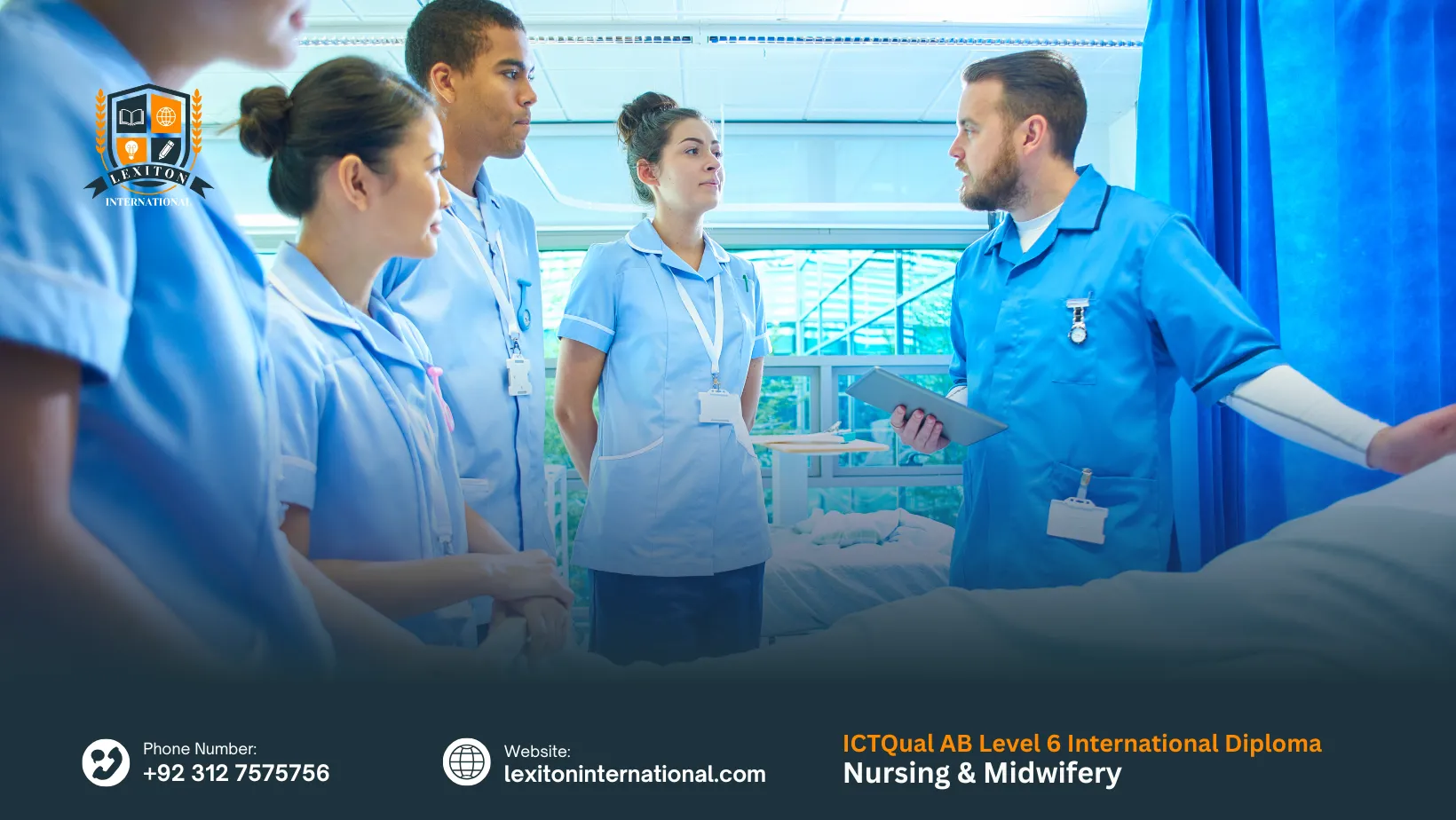
Healthcare is one of the most respected and life-changing professions in the world, where compassion meets clinical expertise. The ICTQual AB Level 6 International Diploma in Nursing & Midwifery is designed for individuals who are passionate about caring for others and want to build strong professional skills in patient care, maternal health, and clinical practice. This qualification provides a powerful foundation in modern nursing and midwifery, preparing learners to understand both the science and the humanity behind healthcare delivery.
This advanced diploma covers essential areas such as anatomy and physiology, maternal and newborn care, medical-surgical nursing, patient safety, infection control, and healthcare ethics. Learners gain in-depth knowledge of clinical procedures and evidence-based practices that are used in hospitals, clinics, and community health settings. The programme combines theoretical understanding with real-world healthcare principles, helping learners develop confidence, accuracy, and strong decision-making skills in critical care environments.
This qualification is highly relevant in today’s healthcare sector, where skilled and compassionate professionals are essential for delivering safe and effective patient care. It builds strong clinical awareness, ethical responsibility, and professional discipline required in nursing and midwifery roles. The ICTQual AB Level 6 International Diploma in Nursing & Midwifery prepares learners to make a meaningful impact in healthcare environments by supporting patients, mothers, and communities with dedication and care.
- Age Requirement: Learners should ideally be 18 years or older, as the course involves advanced medical concepts, patient care responsibilities, and ethical decision-making in clinical settings.
- Educational Background: Applicants should have a Level 5 qualification or equivalent in nursing, midwifery, or allied health sciences. Candidates with a diploma or bachelor’s degree in general nursing, community health, or paramedical studies are also eligible.
- Work Experience: Relevant experience in clinical practice, hospital care, or community health services is advantageous but not mandatory. Practical exposure to patient care, maternal health, or emergency response can enhance understanding of course content.
- English Language Proficiency: Learners should have a good command of spoken and written English to comprehend medical terminology, interact with patients and healthcare teams, and complete assessments effectively.
Mandatory Units
Year 1: Foundational Knowledge
Year 2: Intermediate Proficiency
Year 3: Advanced Specialization and Application
Skills You Will Gain
Learning Outcomes for the Level 6 International Diploma in Nursing & Midwifery 360 Credits – Three Years:
Year 1: Foundational Knowledge
By the end of Year 1, learners will be able to:
Introduction to Nursing and Midwifery Practice
- Explain the roles and responsibilities of nurses and midwives in healthcare settings.
- Apply foundational nursing principles in basic patient care.
- Demonstrate professional conduct aligned with healthcare standards.
Fundamentals of Human Anatomy and Physiology
- Describe the structure and function of major human body systems.
- Relate anatomical and physiological knowledge to patient care.
- Recognise normal versus abnormal body functions relevant to nursing.
Principles of Microbiology and Infection Control
- Identify common pathogens and their modes of transmission.
- Apply infection prevention and control measures in clinical practice.
- Evaluate the impact of microbiological knowledge on patient safety.
Foundations of Pharmacology and Medication Safety
- Explain the principles of pharmacology and drug administration.
- Demonstrate safe medication handling and administration practices.
- Monitor and evaluate patient responses to medications.
Professional Ethics and Legal Frameworks in Healthcare
- Apply ethical principles in clinical decision-making.
- Understand healthcare legislation affecting nursing and midwifery practice.
- Maintain confidentiality and professional responsibility in all patient interactions.
Communication Skills for Healthcare Professionals
- Demonstrate effective communication with patients and healthcare teams.
- Apply active listening and empathetic skills in patient care.
- Document patient information accurately and professionally.
Health Promotion and Public Health Basics
- Explain principles of health promotion and disease prevention.
- Apply public health strategies to support community wellbeing.
- Evaluate interventions for effectiveness in promoting health outcomes.
Psychology and Sociology in Healthcare
- Explain the influence of psychological and social factors on patient health.
- Apply basic counselling techniques to support patients.
- Recognise the impact of social determinants on healthcare delivery.
Nutrition, Dietetics, and Patient Wellbeing
- Assess nutritional needs and dietary requirements of patients.
- Apply knowledge of dietetics in patient care planning.
- Promote healthy eating and lifestyle practices for improved wellbeing.
Basic Clinical Skills and Patient Care Techniques
- Perform essential clinical procedures safely and accurately.
- Demonstrate patient handling and care techniques with empathy.
- Apply infection control and safety standards in clinical practice.
First Aid and Emergency Response in Healthcare
- Respond effectively to common medical emergencies.
- Apply first aid procedures in clinical settings.
- Demonstrate critical decision-making in emergency care situations.
Introduction to Research and Evidence-Based Practice
- Explain the importance of evidence-based practice in healthcare.
- Apply basic research methods to clinical questions.
- Evaluate research findings to support nursing and midwifery practice.
Year 2: Intermediate Proficiency
By the end of Year 2, learners will be able to:
Adult Nursing and Clinical Care
- Provide comprehensive nursing care for adult patients.
- Assess and monitor patient conditions using clinical tools.
- Develop care plans addressing patient-specific needs.
Maternal Health and Midwifery Principles
- Apply principles of midwifery in prenatal, labour, and postnatal care.
- Monitor maternal and foetal wellbeing using clinical assessments.
- Support safe childbirth and promote maternal health education.
Child and Adolescent Health Nursing
- Provide age-appropriate care for children and adolescents.
- Assess growth, development, and health status accurately.
- Implement interventions promoting child and adolescent wellbeing.
Mental Health Nursing and Psychiatric Care
- Recognise common mental health disorders and their clinical presentations.
- Apply therapeutic communication and counselling techniques.
- Deliver safe, compassionate mental health care in clinical settings.
Community Health Nursing and Primary Care
- Assess community health needs and resources.
- Plan and deliver primary care interventions for diverse populations.
- Evaluate the impact of community health initiatives on patient outcomes.
Pathophysiology and Clinical Diagnostics
- Explain disease processes and their physiological effects.
- Apply diagnostic reasoning to patient assessment.
- Interpret laboratory and clinical findings to inform care planning.
Advanced Pharmacology and Therapeutics
- Analyse pharmacological principles in specialised clinical contexts.
- Apply safe medication management in complex care scenarios.
- Evaluate therapeutic outcomes and adjust care plans accordingly.
Infection Prevention and Control in Healthcare Settings
- Implement advanced infection control protocols.
- Evaluate effectiveness of hygiene and sterilisation procedures.
- Promote safe practices for patients and healthcare teams.
Health Assessment and Clinical Decision Making
- Conduct comprehensive patient assessments.
- Integrate assessment data to make informed clinical decisions.
- Prioritise care based on patient needs and risk factors.
Nursing Informatics and Digital Healthcare Systems
- Use digital tools for patient record management and reporting.
- Apply informatics to support clinical decision-making.
- Evaluate the benefits and limitations of digital healthcare systems.
Leadership and Teamwork in Healthcare Practice
- Demonstrate effective leadership in clinical teams.
- Apply teamwork strategies to improve patient care.
- Resolve conflicts and promote collaboration within healthcare settings.
Applied Research Methods in Nursing and Midwifery
- Design and implement small-scale research projects.
- Analyse and interpret clinical data using research methods.
- Apply research findings to improve practice outcomes.
Year 3: Advanced Specialization and Application
By the end of Year 3, learners will be able to:
Advanced Adult Nursing and Critical Care
- Provide specialised care for critically ill adult patients.
- Monitor complex patient conditions and respond to emergencies.
- Develop advanced care plans to support recovery and rehabilitation.
Midwifery Practice: Labour, Delivery, and Postnatal Care
- Manage labour and delivery safely and effectively.
- Provide postnatal care and support for mothers and newborns.
- Apply evidence-based interventions to promote maternal and neonatal health.
Paediatric and Neonatal Nursing
- Deliver specialised care for neonates and children.
- Assess developmental milestones and monitor growth and health.
- Implement interventions to support paediatric recovery and wellbeing.
Geriatric Nursing and Palliative Care
- Assess and manage complex needs of elderly patients.
- Provide compassionate end-of-life and palliative care.
- Promote quality of life through tailored care plans.
Advanced Mental Health and Counselling in Nursing
- Deliver therapeutic interventions for complex mental health conditions.
- Apply advanced counselling techniques to support patient wellbeing.
- Evaluate outcomes and adjust care strategies accordingly.
Global Health Issues and Healthcare Policy
- Analyse global health challenges and their impact on nursing practice.
- Apply healthcare policies to clinical and community settings.
- Promote public health initiatives at local and international levels.
Advanced Clinical Skills and Patient Safety
- Perform advanced clinical procedures competently.
- Identify and mitigate patient safety risks.
- Apply evidence-based strategies to enhance patient care outcomes.
Healthcare Management and Leadership Strategies
- Implement leadership strategies in healthcare organisations.
- Manage resources and personnel effectively.
- Evaluate operational efficiency and implement quality improvement initiatives.
Quality Improvement and Risk Management in Healthcare
- Apply quality improvement frameworks in clinical practice.
- Identify and assess risks to patient safety.
- Implement corrective actions to enhance care quality.
Professional Development and Reflective Practice in Nursing
- Evaluate personal and professional performance through reflection.
- Identify areas for continuing professional development (CPD).
- Apply learning to improve clinical practice and decision-making.
Dissertation / Research Project in Nursing & Midwifery
- Design and conduct independent research in a nursing or midwifery area.
- Analyse data and interpret findings to draw evidence-based conclusions.
- Present research outcomes in a professional report.
Clinical Placement / Practical Competency Assessment
- Apply theoretical knowledge in real-world clinical environments.
- Demonstrate practical competence across a range of nursing and midwifery procedures.
- Reflect on clinical experiences to enhance professional growth and patient care.
The ICTQual AB Level 6 International Diploma in Nursing & Midwifery is designed for individuals who are passionate about healthcare, patient care, and supporting mothers and newborns through every stage of life. It is ideal for learners who want to build a meaningful, respected, and people-focused career in the healthcare sector.
Who Is This Course For
- Learners who want to start a professional career in nursing and midwifery services
- Individuals passionate about patient care, maternal health, and newborn wellbeing
- Students aiming to build strong clinical and healthcare support knowledge
- Healthcare assistants and support workers looking to enhance their skills
- Individuals interested in working in hospitals, clinics, and maternity care settings
- Learners who want to understand human health, anatomy, and care practices
- Those committed to providing compassionate care and emotional support to patients
- People aiming to work in community health and women’s health services
- Individuals interested in healthcare, nursing practice, and maternal care systems
- Anyone motivated to build a rewarding and impactful career in healthcare and nursing
The ICTQual AB Level 6 International Diploma in Nursing & Midwifery equips learners with strong clinical understanding, patient care skills, and maternal health expertise. It prepares individuals to work confidently in healthcare environments where compassion, accuracy, and responsibility are essential.
Future Progression
- Nursing roles in hospitals, clinics, and healthcare centres
- Midwifery support positions in maternity and childbirth care units
- Community health and primary care service roles
- Positions in women’s health and maternal wellbeing programmes
- Healthcare assistant and patient support roles in medical facilities
- Roles in emergency care and clinical support environments
- Opportunities in rehabilitation and long-term patient care services
- Positions in public health and health awareness initiatives
- Work in private healthcare and specialist nursing departments
- Long-term growth into senior healthcare and supervisory responsibilities
Curious About This Course?