
What Is Business Management? Meaning, Functions, Skills and Examples
Business management is the process of planning, organising, leading and controlling business activities to achieve organisational objectives. It involves managing people, finances, resources, operations and strategies to improve efficiency, enhance performance, satisfy customers and support long-term business growth.
Understanding what business management means is essential for entrepreneurs, aspiring managers, supervisors and professionals who want to strengthen their business knowledge. Effective management helps organisations make informed decisions, coordinate teams, manage costs, solve problems and adapt to changing market conditions.
Business management applies to organisations of all sizes, from small businesses and start-ups to large corporations and service-based organisations. Regardless of an organisation’s size or industry, managers must allocate resources effectively, guide employees and ensure that daily operations contribute to clear business objectives.
This guide explores the meaning of business management, its key functions, essential management skills, practical examples, benefits and opportunities for professional development.
What is Business Management?
Business management is the process of coordinating an organisation’s activities and resources to achieve its objectives efficiently. It involves setting goals, developing strategies, managing employees, allocating resources and monitoring performance to support business growth and success.
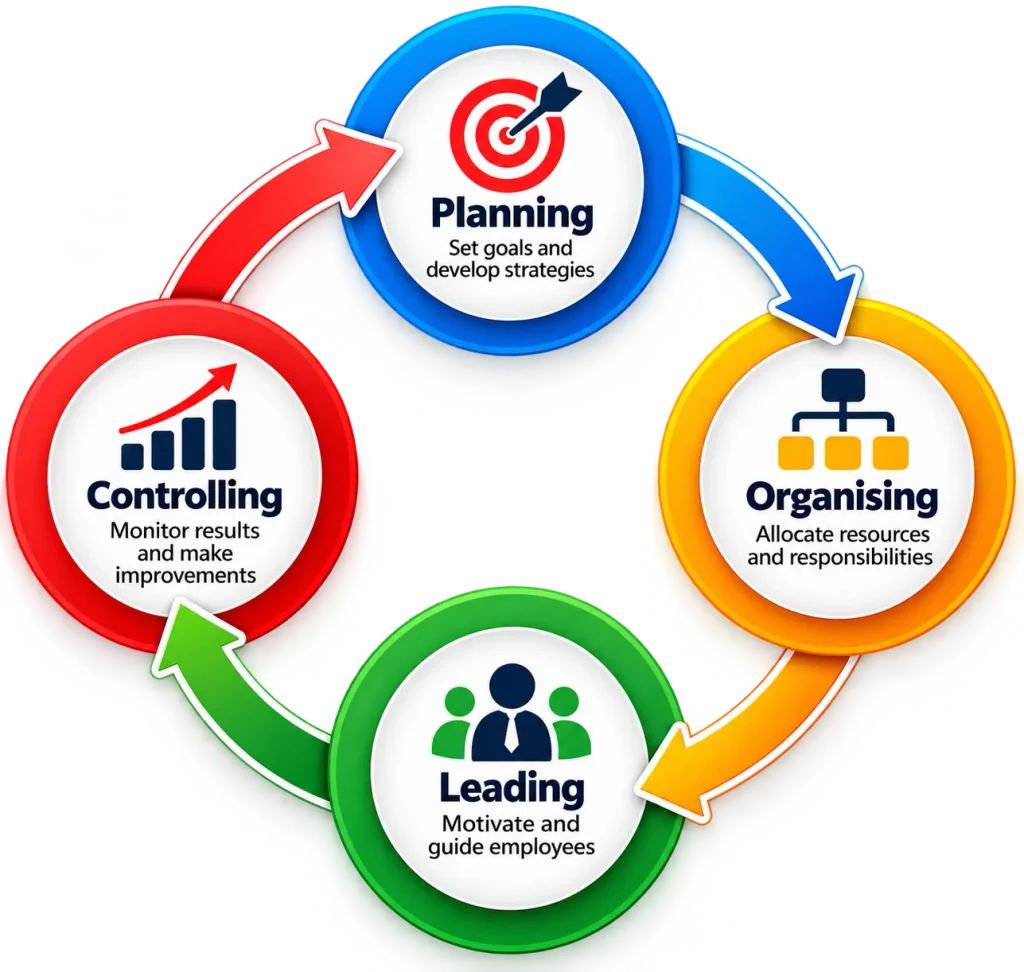
The four main functions of business management are:
- Planning: Setting objectives and developing strategies to achieve them.
- Organising: Allocating resources, assigning responsibilities and coordinating activities.
- Leading: Motivating employees, communicating goals and encouraging teamwork.
- Controlling: Monitoring performance, evaluating results and implementing improvements.
Business management also involves understanding customer needs, reviewing financial information, identifying risks and improving operational processes. For example, a retail manager may set sales targets, organise staff schedules, motivate employees and review sales reports to improve business performance.
Business Management Meaning in Simple Words
In simple terms, business management means ensuring that a business has the right people, resources and plans to achieve its goals. Managers make decisions, coordinate activities and evaluate results to keep the organisation operating effectively.
A business manager focuses on three essential questions:
- What does the business want to achieve?
- What resources and activities are needed to achieve its goals?
- How will the business measure its success?
Answering these questions helps managers turn business objectives into practical actions and measurable results.
Why is Business Management Important?
Business management provides direction, structure and coordination within an organisation. It helps businesses use resources effectively, improve employee performance, make informed decisions and achieve their objectives. Effective management also enables organisations to respond to market changes, maintain customer satisfaction and support long-term growth.
The main reasons why business management is important include:
1. Achieving Business Objectives
Managers establish clear goals and develop strategies to achieve them, such as increasing sales, improving customer satisfaction, launching new products and expanding into new markets.
2. Improving Productivity
Effective management helps employees understand their responsibilities, follow efficient processes and complete tasks on time. Clear communication and proper resource allocation reduce delays and unnecessary duplication.
3. Controlling Costs and Resources
Managers monitor budgets, staffing, equipment and operational expenditure to identify waste, control costs and ensure resources are used efficiently.
4. Supporting Better Decisions
Business managers analyse financial reports, customer feedback, market research and performance data to evaluate options, manage risks and make informed decisions.
5. Developing Employees
Managers support employee development through training, constructive feedback, clear responsibilities and appropriate delegation, helping teams improve their skills and performance.
6. Responding to Business Changes
Effective management enables organisations to adapt to changing customer preferences, new technologies, competition and economic conditions by reviewing strategies and adjusting business activities.
What Are the Four Main Functions of Business Management?
The four main functions of management are planning, organising, leading and controlling. Together, they provide a practical framework for managing business activities and evaluating results.
1. Planning
Planning involves establishing business objectives and deciding how to achieve them. Managers assess the current situation, identify priorities, consider available resources and select appropriate actions.
Common planning activities include:
- Setting business goals and performance targets.
- Preparing budgets and operational plans.
- Identifying customer needs and market opportunities.
- Assessing risks and potential challenges.
- Establishing deadlines and priorities.
- Developing strategies for business growth.
Example: A small business wants to increase its online sales over the next six months. The manager reviews existing sales data, identifies promising customer groups, prepares a marketing budget and establishes monthly performance targets.
Planning provides a clear direction and helps employees understand what the business is trying to achieve.
2. Organising
Organising means arranging people, resources and activities so that business plans can be implemented effectively.
Managers determine who will perform particular tasks, how responsibilities will be divided and what resources each team requires.
Organising activities include:
- Allocating responsibilities to employees.
- Establishing reporting arrangements.
- Coordinating departments and teams.
- Managing equipment, stock and other resources.
- Developing suitable work processes.
- Delegating tasks and responsibilities.
Example: A company preparing to launch a new product assigns market research to the marketing team, budgeting to the finance department and production planning to the operations team.
Effective organising reduces confusion and helps different departments work towards a common objective.
3. Leading
Leading involves guiding, motivating and supporting employees to achieve business objectives. It requires communication, interpersonal awareness, decision-making and the ability to manage workplace challenges.
Important leadership activities include:
- Communicating goals and expectations.
- Motivating employees and recognising contributions.
- Resolving disagreements.
- Providing feedback and guidance.
- Supporting teamwork and collaboration.
- Helping employees adapt to change.
Example: A customer service manager notices that customer complaints are increasing. The manager discusses the problem with employees, identifies training needs and introduces regular team meetings to improve communication and service quality.
Good leadership helps employees understand their contribution to business performance and encourages them to take responsibility for their work.
4. Controlling
Controlling involves monitoring business performance, comparing actual results with planned objectives and taking corrective action when necessary.
It does not simply mean supervising employees. It also includes evaluating financial results, reviewing operational processes and checking whether business activities are producing the intended outcomes.
Controlling activities include:
- Monitoring sales and expenditure.
- Reviewing performance indicators.
- Comparing actual results with targets.
- Identifying operational problems.
- Evaluating product or service quality.
- Implementing improvements where necessary.
Controlling helps businesses identify problems early and improve future performance.
Summary of the Four Management Functions
| Function | Main purpose | Practical example |
|---|---|---|
| Planning | Set objectives and decide how to achieve them | Establishing quarterly sales targets |
| Organising | Allocate people, responsibilities and resources | Assigning tasks to departments |
| Leading | Guide and motivate employees | Coaching a team to improve service |
| Controlling | Monitor results and make improvements | Reviewing sales against targets |
These functions are interconnected. Managers may need to revisit their plans after reviewing performance, reorganise resources when priorities change or adapt their leadership approach to meet employee needs.
What Are the Different Areas of Business Management?
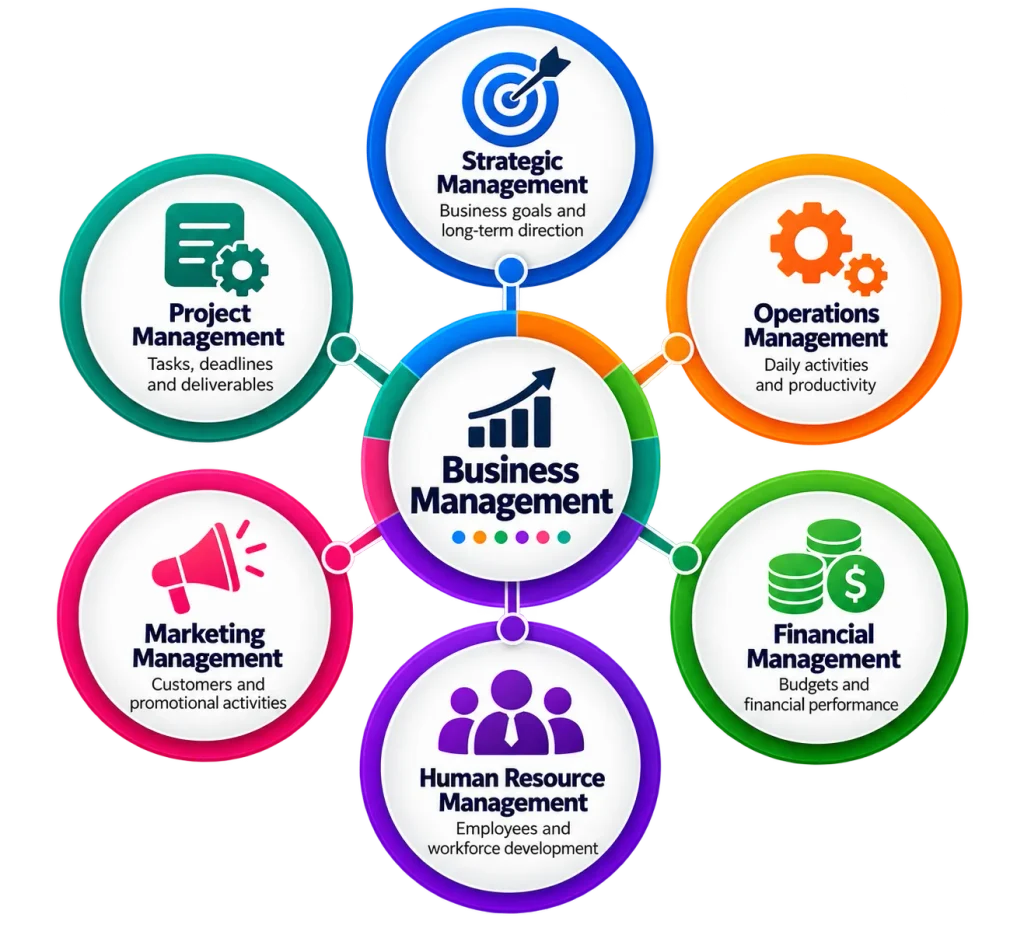
Business management covers several interconnected areas that help organisations achieve their objectives, manage resources and improve performance. The responsibilities of a business manager depend on the organisation’s size, industry, structure and strategic goals.
The main areas of business management include:
1. Strategic Management
Strategic management focuses on long-term business objectives, growth opportunities and competitive positioning. Managers develop strategies to help organisations adapt to market changes and achieve sustainable success.
Key activities include:
- Setting long-term business goals.
- Analysing competitors and market opportunities.
- Identifying strategic risks.
- Planning business growth and development.
2. Operations Management
Operations management focuses on the processes required to deliver products or services efficiently. It helps businesses improve productivity, maintain quality and use resources effectively.
Key activities include:
- Coordinating daily business operations.
- Managing workflows and resources.
- Monitoring product or service quality.
- Identifying opportunities for process improvement.
3. Financial Management
Financial management involves planning, monitoring and controlling an organisation’s financial resources. It helps managers understand costs, evaluate performance and make financially informed decisions.
Key activities include:
- Preparing budgets and financial forecasts.
- Monitoring income and expenditure.
- Reviewing financial performance.
- Controlling costs and allocating resources.
4. Human Resource Management
Human resource management focuses on recruiting, developing and supporting employees. Effective people management helps organisations build capable teams, improve performance and maintain a positive workplace culture.
Key activities include:
- Recruitment and workforce planning.
- Employee training and development.
- Performance management.
- Promoting employee wellbeing and effective communication.
5. Marketing Management
Marketing management involves understanding customer needs, identifying target audiences and promoting products or services. It helps businesses attract customers, strengthen their market position and achieve sales objectives.
Key activities include:
- Conducting market research.
- Developing marketing campaigns.
- Evaluating customer feedback.
- Monitoring promotional spending and campaign performance.
6. Project Management
Project management involves planning, organising and coordinating activities to achieve specific objectives within an agreed timeframe, scope and budget. Business managers may oversee projects such as opening a new branch, introducing new software or launching a new service.
Key activities include:
- Evaluating project outcomes and performance.
- Defining project objectives and deadlines.
- Allocating tasks and resources.
- Monitoring progress and managing risks.
What Skills Does a Business Manager Need?
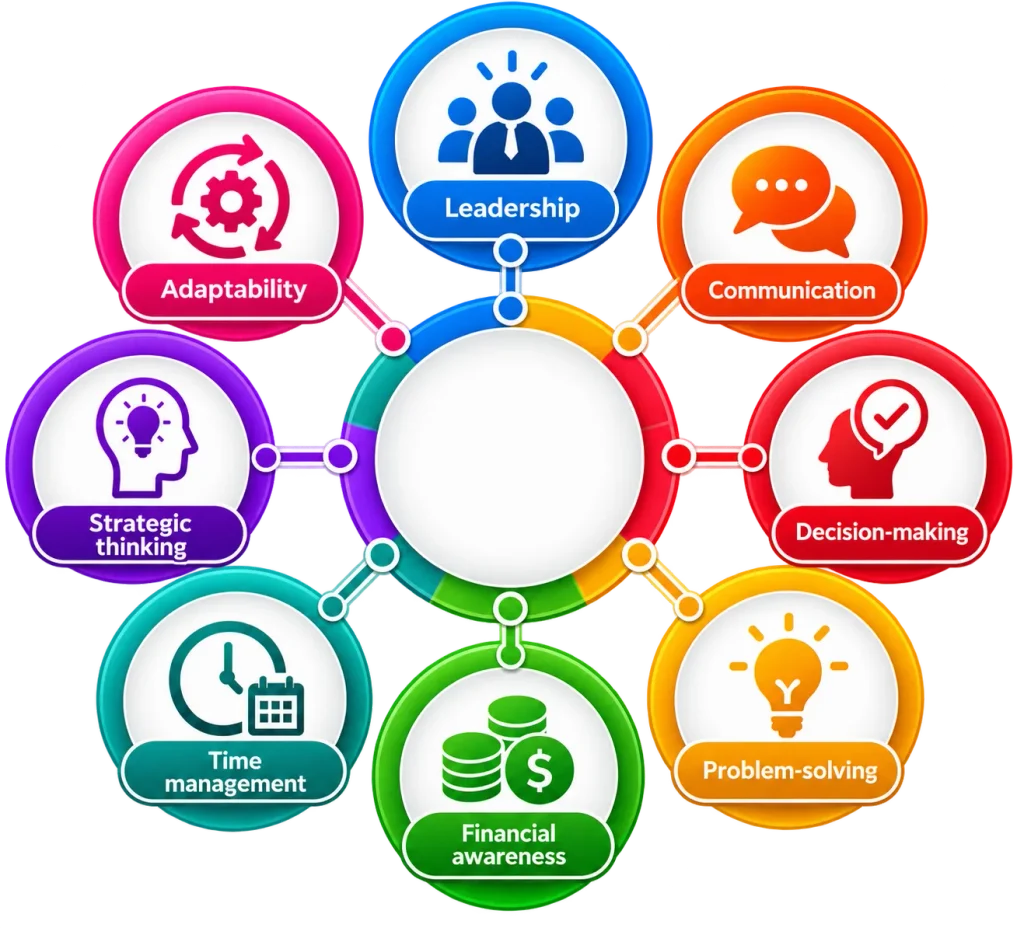
Effective business management requires a combination of technical knowledge, interpersonal abilities and practical decision-making skills.
The most important management skills include the following.
Communication Skills
Managers need to explain expectations clearly, prepare professional reports, conduct meetings and communicate with employees, customers and other stakeholders.
Strong communication helps prevent misunderstandings and supports coordination between departments.
Leadership and Team Management
Leadership skills help managers guide employees, encourage collaboration and address performance challenges. Effective managers understand that different employees may need different forms of support and guidance.
Decision-Making
Business managers frequently need to select between competing options. Good decision-making involves gathering relevant information, evaluating alternatives, considering risks and explaining the reasons behind a decision.
Problem-Solving and Critical Thinking
Problem-solving involves identifying the cause of a challenge and developing practical solutions. Critical thinking helps managers evaluate information rather than relying on assumptions.
For example, declining sales may result from pricing, product quality, customer service or changing market demand. A manager should investigate the underlying causes before selecting a solution.
Financial Awareness
Managers need to understand budgets, revenue, expenditure, cash flow and basic financial reporting. This knowledge helps them evaluate business proposals and manage resources responsibly.
Time Management and Organisation
Managers often coordinate several tasks and deadlines simultaneously. Prioritising activities, delegating responsibilities and monitoring progress help maintain productivity.
Strategic Thinking
Strategic thinking enables managers to consider long-term objectives, market developments and the potential consequences of business decisions.
Adaptability and Digital Awareness
Modern businesses use digital systems for communication, accounting, customer relationships, project management and performance monitoring. Managers need to understand relevant technologies and adapt as business requirements evolve.
Business Management Examples in Real-World Situations
Business management becomes easier to understand when its principles are applied to everyday workplace situations.
The following examples are hypothetical scenarios illustrating how management functions work in practice.
Example 1: Managing a Small Retail Business
A shop owner wants to increase sales and improve customer satisfaction.
The owner plans promotional activities, organises employee shifts, leads the team through customer service training and controls performance by reviewing sales figures and customer feedback.
If the results fall below expectations, the owner may revise the product range, adjust staffing arrangements or improve promotional activities.
Example 2: Managing a Training Institute
A training institute wants to improve Learner satisfaction and course administration.
The manager reviews feedback, establishes service improvement targets, allocates responsibilities to admissions and academic teams, supports staff through training and monitors progress through feedback reports and administrative performance indicators.
This example demonstrates how business management can coordinate people, resources and service quality in an education setting.
Example 3: Managing an Online Business
An online retailer experiences increasing order delays.
The manager reviews order-processing data, identifies bottlenecks, assigns responsibilities for stock control and dispatch, communicates new procedures to employees and tracks delivery performance.
The management process combines planning, organising, leading and controlling to address an operational problem.
Example 4: Managing a Business Expansion
A small company plans to open a second branch.
The manager evaluates the proposed location, prepares financial forecasts, organises recruitment and equipment procurement, communicates responsibilities to the team and monitors the new branch’s performance against agreed targets.
This demonstrates the relationship between strategic planning and day-to-day operational management.
What is the Difference Between Business Management and Leadership?
Business management and leadership are closely related, but they emphasise different aspects of organisational performance.
Business management focuses on planning activities, coordinating resources, maintaining processes and monitoring results. Leadership focuses more directly on setting direction, influencing people, motivating teams and helping employees work towards shared goals.
| Aspect | Business management | Leadership |
|---|---|---|
| Main focus | Coordination, resources and performance | Direction, influence and motivation |
| Typical activities | Planning, budgeting and monitoring | Coaching, inspiring and communicating |
| Key concern | Delivering objectives effectively | Engaging people towards shared goals |
| Example | Preparing a departmental budget | Motivating the team to achieve its targets |
In practice, effective managers also need leadership skills, while leaders often need management knowledge to turn ideas into achievable plans. Both contribute to organisational success.
What Are the Benefits and Challenges of Business Management?
Benefits of Effective Business Management
Effective management can help organisations:
- Establish clear goals and priorities.
- Improve productivity and resource utilisation.
- Strengthen communication and teamwork.
- Monitor costs and financial performance.
- Improve customer service and operational quality.
- Identify risks and respond to changes.
- Support employee development.
- Make informed decisions using relevant information.
These benefits depend on how management practices are implemented and whether they suit the organisation’s circumstances.
Common Business Management Challenges
Managers may encounter challenges such as limited budgets, employee resistance to change, communication problems, intense competition, changing customer expectations and insufficient performance data.
To address these challenges, managers should establish clear responsibilities, communicate decisions transparently, monitor relevant information and review whether existing processes remain appropriate.
They should also avoid making decisions based solely on assumptions, overlooking employee feedback or setting unrealistic objectives without considering available resources.
How Can You Develop Business Management Skills?
Business management skills can be developed through structured learning, practical experience, professional development and reflection.
Useful steps include:
- Learn management fundamentals: Understand planning, organising, leading, controlling and the relationship between business functions.
- Develop financial awareness: Learn how budgets, financial reports and cost information support business decisions.
- Practise communication: Improve report writing, presentations, professional discussions and conflict resolution.
- Gain practical experience: Take responsibility for coordinating tasks, supporting projects or managing small team activities.
- Strengthen analytical thinking: Use evidence to identify problems, compare solutions and evaluate outcomes.
- Study business strategy: Understand how organisations respond to competition, customer needs and changing markets.
- Review your progress: Identify skills that need improvement and seek feedback from colleagues, supervisors or tutors.
A structured business management qualification can help Learners develop a broader understanding of these areas.
Conclusion
Business management is the process of planning, organising, leading and controlling business activities to achieve organisational goals. It involves managing people, finances, resources and operations to improve productivity, control costs and support business growth. Effective business management helps organisations make informed decisions, improve customer satisfaction and respond to changing market conditions.
Business management includes key areas such as strategic management, financial management, marketing, human resources and operations. Essential management skills include leadership, communication, problem-solving, decision-making and time management. Whether managing a small business, a training institute or a large organisation, effective business management helps ensure that resources are used efficiently and objectives are achieved.