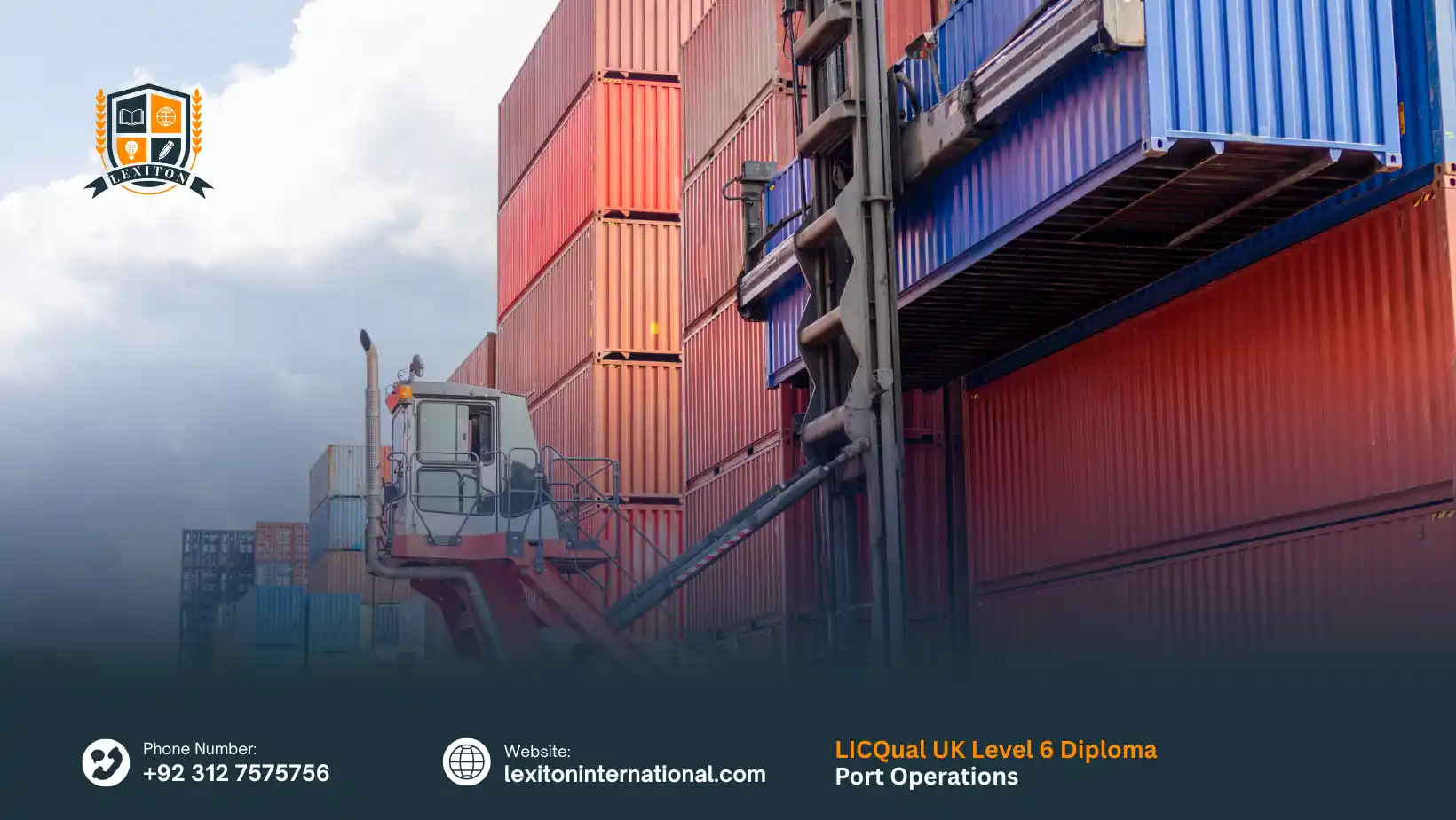
UK Level 6 Port Operations by LICQual
Port operations are the lifeline of global trade, ensuring the smooth movement of cargo, vessels, and logistics across international waters. Every shipment depends on professionals who understand compliance, safety, and the complexities of managing busy ports. In today’s competitive industry, expertise in port operations is vital to sustaining economic growth, international partnerships, and operational trust.
The LICQual UK Level 6 Diploma in Port Operations emphasizes the importance of preparing individuals to meet these challenges with confidence. Port operations are not simply about handling cargo; they require advanced knowledge of international regulations, risk management, and the ability to coordinate complex supply chains under demanding conditions. As global commerce continues to expand, the demand for highly skilled professionals who can uphold operational excellence and contribute to secure port systems has never been greater.
By pursuing this diploma, learners position themselves as capable leaders ready to take responsibility, solve challenges, and contribute to the future of safe and efficient maritime trade.
- Age Requirements: Applicants must be 19 years or above at the time of enrollment.
- Professional Experience: A qualification in business, logistics, or maritime studies is recommended.
- Educational Background: Prior exposure to shipping or port environments is beneficial.
- English Language Proficiency: Learners must have good written and spoken English skills to engage effectively with course materials, reporting tasks, and communication in industrial settings.
Mandatory Units
Unit 1: Strategic Port and Terminal Management
By the end of this unit, learners will be able to:
- Critically evaluate strategic models for port and terminal management in global trade.
- Apply advanced leadership and decision‑making skills to optimize port performance.
- Analyze the impact of competition, regulation, and globalization on port strategies.
- Develop frameworks for sustainable growth and stakeholder engagement in ports.
- Assess the effectiveness of operational policies in enhancing port competitiveness.
- Formulate strategic plans that align port operations with international best practices.
Unit 2: Global Trade, Shipping, and Port Economics
By the end of this unit, learners will be able to:
- Analyze the role of ports within international trade and shipping networks.
- Evaluate the economic impact of port operations on global supply chains.
- Apply advanced economic theories to assess port efficiency and competitiveness.
- Interpret trade data to forecast shipping trends and port development needs.
- Assess the influence of global trade policies and agreements on port operations.
- Recommend strategies to strengthen port contributions to national and regional economies.
Unit 3: Advanced Port Logistics and Cargo Management
By the end of this unit, learners will be able to:
- Apply advanced logistics principles to optimize cargo handling and storage.
- Evaluate multimodal transport systems and their integration with port operations.
- Analyze risks in cargo flow and recommend efficiency‑driven solutions.
- Implement international standards for cargo safety, security, and compliance.
- Assess the role of technology in streamlining port logistics and cargo management.
- Develop strategies to enhance supply chain resilience through port operations.
Unit 4: Risk, Safety, and Crisis Management in Ports
By the end of this unit, learners will be able to:
- Critically assess advanced safety frameworks and international port security standards.
- Apply risk management models to identify, evaluate, and mitigate port hazards.
- Develop crisis management strategies for emergencies such as accidents or natural disasters.
- Evaluate the effectiveness of contingency planning in maintaining port resilience.
- Recommend policies to strengthen occupational health and safety in port environments.
- Lead safety audits and compliance reviews in line with international regulations.
Unit 5: Innovation and Digital Transformation in Ports
By the end of this unit, learners will be able to:
- Evaluate the role of automation, AI, and smart technologies in modern port operations.
- Analyze the benefits and challenges of digital transformation in global ports.
- Apply innovation strategies to improve efficiency, sustainability, and competitiveness.
- Assess the impact of digitalization on cargo tracking, customs, and supply chain visibility.
- Recommend technology‑driven solutions for sustainable and smart port development.
- Lead digital transformation initiatives aligned with international port standards.
Unit 6: Research Project in Port Operations
By the end of this unit, learners will be able to:
- Design and conduct independent research on a specialized area of port operations.
- Critically analyze primary and secondary data to support evidence‑based conclusions.
- Apply advanced research methodologies to complex port management issues.
- Synthesize findings into a structured, professional research report.
- Evaluate the implications of research outcomes for port policy and practice.
- Demonstrate academic integrity, critical thinking, and professional presentation skills.
The LICQual UK Level 6 Diploma in Port Operations is designed for professionals aiming to advance their careers and solve real‑world challenges in port logistics and management.
Who Is This Course For?
- Port operations staff seeking advanced training
- Logistics employees aiming for leadership in service roles
- Cargo handling teams improving operational standards
- Compliance staff working in maritime environments
- Business professionals expanding into port operations
- Career changers pursuing opportunities in shipping logistics
- International learners seeking recognized maritime qualifications
- Supply chain staff moving into leadership positions
The LICQual UK Level 6 Diploma in Port Operations provides learners with the foundation to move confidently into advanced roles across maritime logistics and port services. This qualification strengthens professional credibility and opens doors to diverse opportunities in global shipping.
Future Progression
- Advancement into senior port and logistics positions
- Opportunities to work in international ports and shipping companies
- Enhanced prospects in cargo handling, safety, and compliance roles
- Ability to contribute to risk management and operational efficiency
- Recognition as a qualified port operations professional
- Potential to progress into mentoring, training, or supervisory roles
- Strengthened credibility for global logistics opportunities
Curious About This Course?