
OTHM Level 3 Technical Certificate in Occupational Health and Safety
The OTHM Level 3 Technical Certificate in Occupational Health and Safety is a professional certification designed to develop essential knowledge and practical understanding of workplace health and safety principles, risk assessment, hazard identification, accident prevention, safety procedures and organisational compliance. Comprising 3 Mandatory Units for a combined total of 34 Credits, 340 Hours Total Qualification Time (TQT) and 220 Guided Learning Hours (GLH), the course equips learners with fundamental skills in identifying workplace hazards, assessing risks, implementing control measures and promoting safe working practices. It prepares learners to support health and safety operations, contribute to risk management activities, maintain safer working environments and promote effective occupational health and safety standards across diverse industries.
Awarding Body:
OTHM
603/7346/5
Ofqual qualification number
Level: Level 3
Duration: 2 to 4 months
Units: 3 units
Credits: 34
Assessment: Coursework
Study Mode: Online
Lexiton International is apporved training centre of OTHM.
OTHM Level 3 Technical Certificate in Occupational Health and Safety
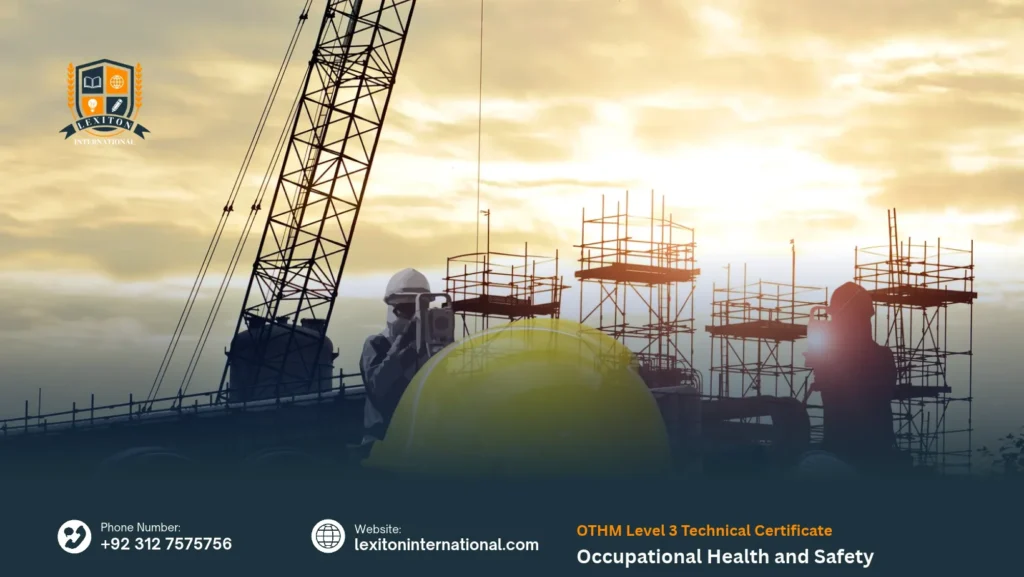
The OTHM Level 3 Technical Certificate in Occupational Health and Safety is a professional certification designed to develop essential knowledge and practical understanding of workplace health and safety principles, hazard identification, risk assessment, accident prevention and effective safety management. This course provides learners with a strong foundation in occupational health and safety practices, helping them understand how to identify workplace hazards, evaluate potential risks and implement appropriate control measures to protect employees, visitors and other individuals.
The OTHM Level 3 Technical Certificate in Occupational Health and Safety covers important areas of workplace safety, including health and safety legislation, organisational responsibilities, safe working procedures, accident prevention and the promotion of positive safety cultures. Learners develop an understanding of how health and safety policies are implemented, how workplace risks are managed and how organisations can maintain safe and compliant working environments across different industries.
Suitable for individuals beginning a career in occupational health and safety, as well as professionals seeking to strengthen their existing knowledge, this certification supports the development of practical workplace safety awareness and professional competence. It also provides a foundation for further professional development in health and safety management, risk control and occupational safety practices. By completing this course, learners can enhance their ability to contribute to safer workplaces, support organisational compliance and promote effective health and safety standards across diverse employment sectors.
Apply or Aask a Question
Our admissions team replies within 24 hours.
Study Units
3 units
Credits
34
Duration
2 to 4 months
Claim Your Spot
Entry requirements
Age: 16 years or above.
Education: A basic secondary education or equivalent is recommended.
Experience: No previous occupational health and safety experience is required.
English: Learners should have sufficient English reading, writing and communication skills to understand course materials and complete assessments.
Not sure if you qualify? Send us your highest qualification and CV and our admissions team will confirm your eligibility before you apply.
Who is this course for?
Course structure & Study units
The OTHM Level 3 Technical Certificate in Occupational Health and Safety is a professional certification designed to develop foundational knowledge of workplace health and safety principles, hazard identification, risk assessment, accident prevention and safe working practices. The programme focuses on understanding health and safety responsibilities, workplace hazards, risk control measures, safety procedures and organisational compliance. It equips learners with essential knowledge and competencies to recognise workplace risks, support effective safety practices, contribute to accident prevention and promote safer working environments across construction, engineering, manufacturing, healthcare, oil and gas and other industrial sectors.
Mandatory Units
Course Benefits
The OTHM Level 3 Technical Certificate in Occupational Health and Safety provides learners with essential knowledge and practical skills to understand workplace safety requirements, identify potential hazards and support effective risk management. This certification helps individuals build a strong foundation in occupational health and safety, improve their professional capabilities and develop the confidence to contribute to safer working environments across construction, manufacturing, engineering, healthcare and other industries.
Key Benefits
- Develop essential knowledge of occupational health and safety principles and practices.
- Understand workplace hazard identification and risk assessment procedures.
- Gain awareness of health and safety legislation and organisational responsibilities.
- Learn effective approaches to accident prevention and workplace risk control.
- Improve understanding of safe working procedures and hazard control measures.
- Strengthen professional skills for entry-level health and safety roles.
- Build a foundation for further professional development in occupational health and safety.
- Enhance the ability to support workplace safety compliance and promote a positive safety culture.
Future Progression Opportunities
Successful completion of the OTHM Level 3 Technical Certificate in Occupational Health and Safety can support career development, progression to higher-level occupational health and safety certifications and opportunities to develop professional expertise in workplace safety, risk management and organisational compliance.
Academic Progression
- Progress to relevant Level 4 certifications or diplomas in Occupational Health and Safety, subject to entry requirements.
- Explore advanced certifications in health and safety management, workplace risk assessment and accident prevention.
- Continue professional development through specialised training in fire safety, environmental management and occupational risk control.
- Build a foundation for further learning in occupational health and safety and related professional disciplines.
Career Progression
- Junior Health and Safety Officer
- Health and Safety Assistant
- Occupational Health and Safety Technician
- Workplace Safety Coordinator
- Risk Assessment Assistant
- HSE Administrator
- Safety Supervisor
- Health and Safety Representative
- Construction Safety Assistant
- Industrial Safety Assistant
Professional Development
- Develop the knowledge and skills required to support workplace health and safety management activities.
- Progress towards supervisory and operational responsibilities in occupational health and safety.
- Gain experience in workplace inspections, hazard identification and risk assessment.
- Support the implementation of organisational health and safety policies and procedures.
- Develop expertise in accident prevention, incident reporting and workplace safety compliance.
- Build a pathway towards advanced occupational health and safety certifications and professional responsibilities.
Note: Further certification, academic progression and employment opportunities are subject to individual awarding organisation, training provider, employer and institutional entry requirements.