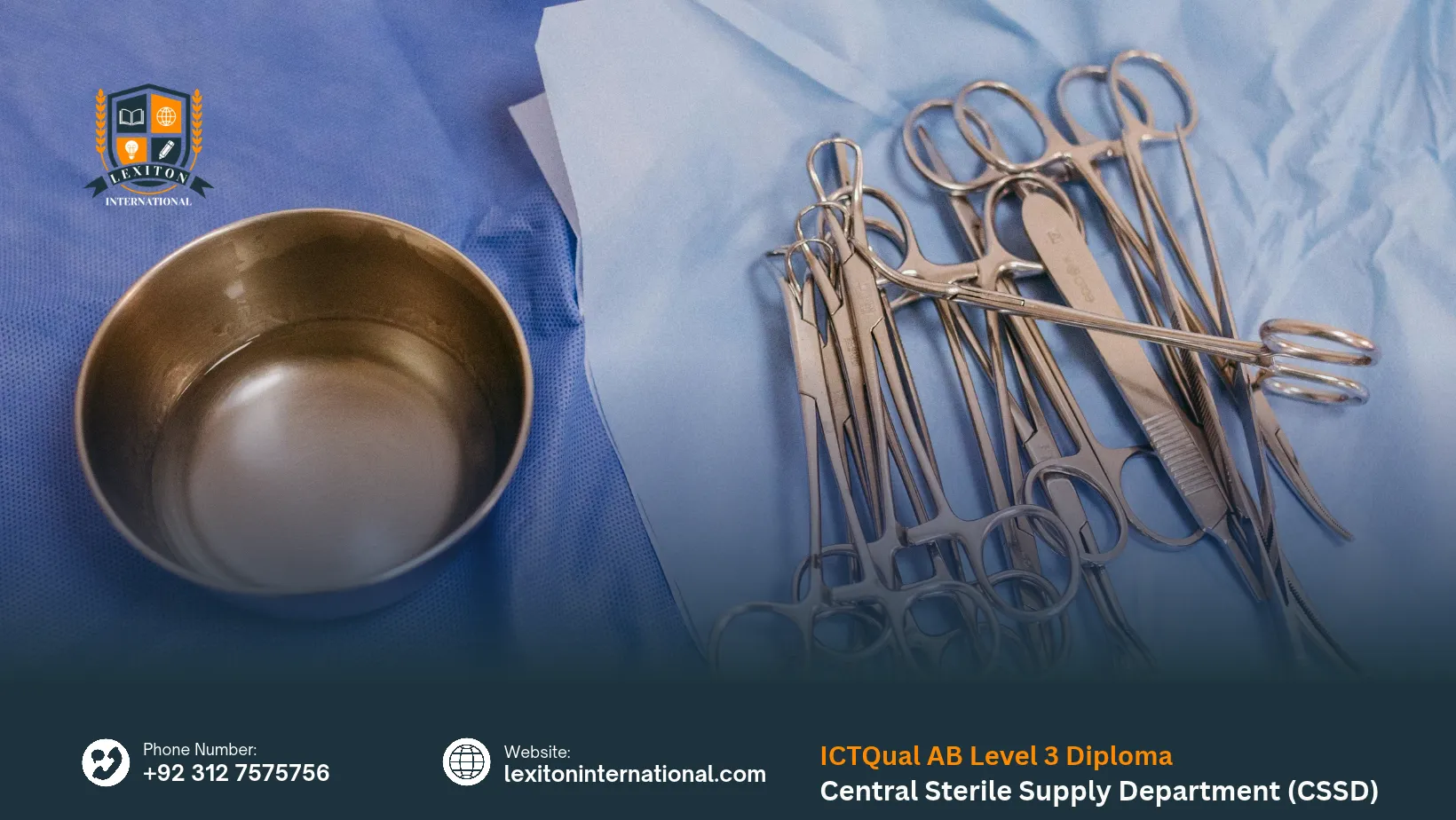
The ICTQual AB Level 3 Diploma in Central Sterile Supply Department (CSSD) is designed for individuals seeking to develop essential knowledge and practical skills in medical instrument decontamination, sterilisation, infection prevention and healthcare equipment management. This qualification introduces Learners to the fundamental principles of Central Sterile Supply Department (CSSD) operations, supporting safe and effective healthcare delivery across hospitals, clinics, surgical centres and other medical facilities.
Throughout the course, Learners develop an understanding of cleaning, disinfection, inspection, packaging, sterilisation and storage procedures for reusable medical instruments. The programme also explores infection control protocols, workplace hygiene, health and safety requirements, equipment handling, quality assurance and the importance of maintaining accurate sterilisation records. These competencies contribute to reducing contamination risks and supporting patient safety in clinical environments.
The ICTQual AB Level 3 Diploma in Central Sterile Supply Department (CSSD) is suitable for aspiring CSSD technicians, healthcare support staff, sterilisation department personnel and individuals interested in pursuing careers in medical instrument processing. It provides a foundation for understanding recognised sterilisation practices and the operational responsibilities associated with sterile supply services.
By developing relevant technical knowledge and professional awareness, Learners can strengthen their understanding of CSSD workflows and prepare for further learning or suitable employment opportunities in healthcare sterilisation, medical equipment processing and infection prevention services, subject to employer requirements and relevant workplace training.
To enrol in the ICTQual AB Level 3 Diploma in Central Sterile Supply Department (CSSD), Learners should meet the following recommended entry requirements to support successful participation in the course:
- Age: Learners should normally be at least 18 years old.
- Educational Background: Learners should have a basic secondary education or an equivalent qualification.
- Experience: Previous experience in a Central Sterile Supply Department (CSSD), hospital, clinic, surgical unit or healthcare environment is advantageous but not essential.
- English Language: Learners should have a sufficient level of English reading, writing, speaking and comprehension skills to understand course materials, participate in learning activities and complete assessments.
Mandatory Units
- Introduction to Central Sterile Supply Services
- Microbiology and Infection Control
- Cleaning and Decontamination of Medical Instruments
- Inspection, Assembly, and Packaging of Medical Devices
- Sterilization Techniques and Processes
- Storage, Transport, and Distribution of Sterile Supplies Auditing
- Protecting Children and Vulnerable Persons
Skills You Will Gain
Introduction to Central Sterile Supply Services
- Understand the role and significance of the Central Sterile Supply Department in healthcare
- Identify the key responsibilities and workflow within a sterile services environment
- Recognise the importance of compliance with healthcare regulations and protocols
- Understand the structure, functions, and coordination between CSSD and clinical departments
Microbiology and Infection Control
- Understand the basic principles of microbiology relevant to CSSD practices
- Identify types of microorganisms commonly associated with healthcare-associated infections
- Explain the modes of transmission and how infection spreads in clinical environments
- Apply effective infection prevention and control measures during instrument processing
Cleaning and Decontamination of Medical Instruments
- Understand the difference between cleaning, disinfection, and sterilisation
- Demonstrate knowledge of manual and automated cleaning techniques
- Identify appropriate detergents and disinfectants for different types of instruments
- Follow safe and effective decontamination procedures to minimise infection risks
Inspection, Assembly, and Packaging of Medical Devices
- Perform visual inspection to ensure medical instruments are clean, intact, and functional
- Understand the procedures for assembling surgical sets and medical devices
- Demonstrate correct techniques for packaging instruments prior to sterilisation
- Recognise the importance of labelling, wrapping integrity, and traceability
Sterilization Techniques and Processes
- Identify various sterilisation methods used in healthcare settings
- Understand the selection criteria for sterilisation techniques based on device type
- Explain validation, monitoring, and documentation processes for sterilisation cycles
- Ensure compliance with safety protocols and regulatory standards during sterilisation
Storage, Transport, and Distribution of Sterile Supplies
- Understand best practices for storing sterilised instruments to maintain sterility
- Follow correct procedures for the safe transport of sterile items within healthcare facilities
- Identify environmental and handling factors that can compromise sterility
- Maintain accurate documentation for inventory control and traceability
Who is This Course For?
The ICTQual AB Level 3 Diploma in Central Sterile Supply Department (CSSD) is designed for individuals who want to develop their knowledge of medical instrument sterilisation, infection prevention, decontamination procedures and sterile supply operations. This qualification is suitable for aspiring healthcare professionals and individuals seeking to build a career in hospital sterilisation services and medical equipment processing.
This course is particularly suitable for:
- Aspiring CSSD Technicians: Individuals who want to begin a career in Central Sterile Supply Department operations, including the cleaning, inspection, packaging and sterilisation of reusable medical instruments.
- Healthcare Support Workers: Professionals seeking to expand their understanding of infection prevention, hygiene practices and the safe handling of medical equipment.
- Hospital and Clinic Staff: Individuals working in healthcare facilities who want to develop their knowledge of sterile supply procedures and support safe clinical environments.
- Sterilisation Department Personnel: Existing staff members who wish to strengthen their understanding of decontamination workflows, sterilisation methods, equipment handling and quality control.
- Surgical and Operating Theatre Support Staff: Individuals interested in understanding how properly processed and sterile instruments contribute to surgical safety and effective patient care.
- Infection Prevention Personnel: Individuals seeking to understand the relationship between instrument decontamination, sterilisation protocols and the prevention of healthcare-associated infections.
- Career Changers and Beginners: Individuals interested in entering the healthcare sector and developing foundational knowledge of medical instrument processing and sterile supply services.
- Healthcare Training Learners: Individuals seeking further professional development in CSSD operations, medical equipment management and infection control practices.
By completing the ICTQual AB Level 3 Diploma in Central Sterile Supply Department (CSSD), Learners can develop relevant knowledge for pursuing suitable opportunities in hospital sterilisation departments, surgical centres, clinics and other healthcare facilities, subject to employer requirements, practical competency and any applicable workplace training requirements. want to develop their understanding of alcohol licensing requirements and prepare for roles involving the lawful sale and supply of alcohol.
Future Progression
Completing the ICTQual AB Level 3 Diploma in Central Sterile Supply Department (CSSD) provides Learners with foundational knowledge of medical instrument sterilisation, decontamination and infection prevention, supporting further training and potential career opportunities in hospitals, clinics and sterile processing departments, subject to employer requirements.
Potential future progression opportunities include:
- Advanced CSSD Qualifications: Progress to relevant higher-level training in Central Sterile Supply Department operations, medical instrument reprocessing and sterile supply management to develop more advanced technical knowledge.
- CSSD Technician Roles: Pursue suitable entry-level opportunities involving the cleaning, inspection, assembly, packaging and sterilisation of reusable medical instruments, subject to employer requirements and practical competency.
- Sterile Processing Technician Development: Build further expertise in instrument decontamination, sterilisation equipment operation, sterile storage and the distribution of medical supplies.
- Infection Prevention and Control Training: Undertake additional training in infection prevention, healthcare hygiene, contamination control and safe working practices within clinical environments.
- Medical Equipment Reprocessing: Develop specialised knowledge of medical device cleaning, disinfection, inspection and reprocessing procedures in accordance with applicable standards and workplace protocols.
- CSSD Quality Assurance: Pursue further learning in sterilisation monitoring, documentation, traceability, quality control and compliance with healthcare procedures.
- Supervisory and Team Leadership Development: With relevant experience and additional training, work towards supervisory responsibilities in sterile processing or central sterile supply departments.
- Healthcare Professional Development: Explore further learning in healthcare support, hospital operations, patient safety and related clinical support disciplines.
- Continuing Professional Development (CPD): Participate in relevant workshops, refresher courses and professional development activities to maintain knowledge of evolving sterilisation technologies, infection control practices and healthcare safety requirements.
Curious About This Course?