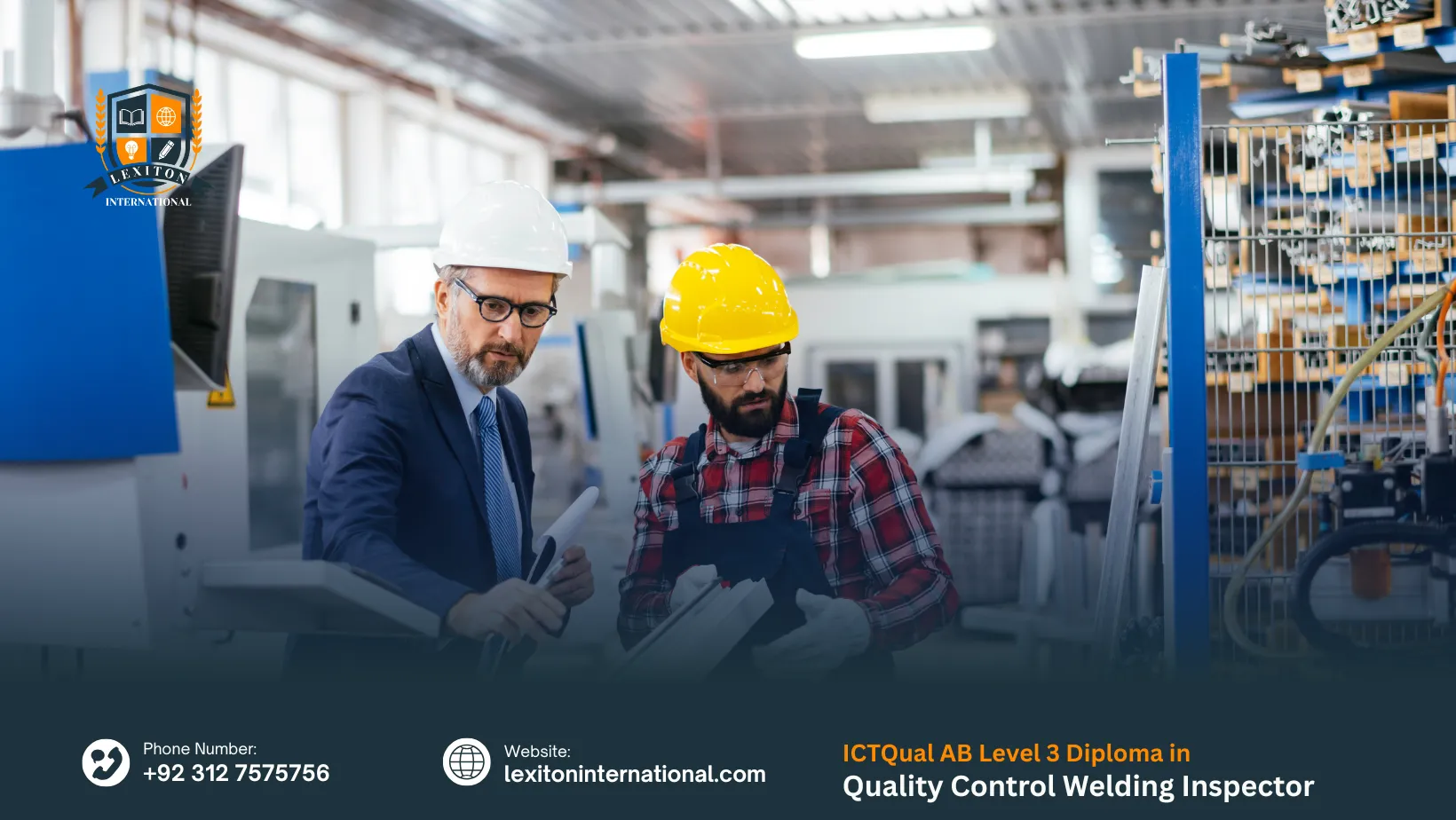
The ICTQual AB Level 3 Diploma in Quality Control Welding Inspector is designed to provide learners with the essential knowledge and practical skills required to perform inspection and quality control duties in welding operations. Welding is a critical process across industries such as construction, oil and gas, manufacturing, and engineering, where safety and precision are paramount. This diploma equips learners with the ability to evaluate welding practices, identify defects, and ensure compliance with international standards, making them valuable contributors to organizational success.
The course overview emphasizes a structured approach to welding inspection, covering topics such as welding processes, material properties, inspection techniques, destructive and non‑destructive testing methods, and documentation procedures. Learners will gain a clear understanding of how welding quality impacts structural integrity and safety, while also developing the ability to apply inspection standards in real‑world scenarios. Through case studies, practical exercises, and applied projects, participants will build confidence in identifying issues, recommending corrective actions, and ensuring that welding operations meet required specifications.
In addition, the diploma highlights the broader role of welding inspectors in maintaining compliance with industry regulations and supporting continuous improvement initiatives. Learners will explore how quality control contributes to operational efficiency, customer satisfaction, and long‑term sustainability. By the end of the program, graduates will be prepared to take on entry‑level roles as welding inspectors, QA/QC technicians, or quality control assistants, while also laying the foundation for progression into advanced qualifications and supervisory positions in welding and quality management.
To enroll in the ICTQual AB Level 3 Diploma in Quality Control Welding Inspector, applicants must meet the following entry requirements. These criteria ensure that learners are adequately prepared to succeed in the program and apply their knowledge effectively in professional settings.
- Age Requirements: Applicants must be at least 18 years old at the time of enrollment to ensure readiness for technical study.
- Qualification Requirements: A Level 2 diploma or equivalent qualification in science, engineering, or a technical field is required.
- Professional Experience: Prior work experience is not mandatory, but exposure to welding, fabrication, or industrial environments will be beneficial.
- Educational Background: Candidates should have a basic foundation in mathematics, science, or technology subjects to support learning.
- English Language Proficiency: Applicants must demonstrate competence in English, either through prior study or recognized language certifications.
- Commitment to Safety and Quality: Candidates should show interest in safety practices and a willingness to engage in projects that promote compliance and quality assurance.
Mandatory Units
By completing the ICTQual AB Level 3 Diploma in Quality Control Welding Inspector, learners will acquire a comprehensive set of skills and knowledge that prepare them to perform inspection, quality assurance, and compliance duties in welding operations. Each study unit is designed to build technical competence, professional discipline, and practical application.
Principles of Welding Technology and Processes
- Gain a clear understanding of the fundamental principles of welding and its importance in modern industries.
- Explore different welding processes such as MIG, TIG, SMAW, and FCAW, and evaluate their applications in various sectors.
- Examine the metallurgical effects of welding on materials, including changes in microstructure and mechanical properties.
- Develop knowledge of welding equipment, consumables, and tools, ensuring proper usage and maintenance.
- Assess factors influencing weld quality, including heat input, joint design, and welding parameters, to achieve defect‑free results.
Welding Codes, Standards, and Specifications
- Interpret international welding codes and standards such as AWS, ISO, ASME, and BS, and understand their global relevance.
- Recognize the role of codes in ensuring safety, compliance, and quality assurance across industries.
- Apply welding specifications to inspection tasks, ensuring adherence to contractual and regulatory requirements.
- Differentiate between national and international standards, analyzing their similarities and differences.
- Develop skills to read, evaluate, and implement Welding Procedure Specifications (WPS) and advise organizations on compliance practices.
Quality Control and Assurance in Welding Inspection
- Define the principles of quality control and assurance, emphasizing their role in welding operations.
- Apply inspection techniques to monitor welding processes and ensure compliance with quality benchmarks.
- Understand the responsibilities of welding inspectors in maintaining organizational quality standards.
- Develop the ability to plan, implement, and evaluate quality assurance systems within industrial environments.
- Identify key performance indicators (KPIs) for welding quality and apply corrective actions to address non‑conformities.
Welding Defects, Testing, and Non‑Destructive Examination (NDE)
- Identify common welding defects such as porosity, cracks, incomplete fusion, and undercutting.
- Understand both destructive and non‑destructive testing methods and their applications in quality control.
- Apply NDE techniques including radiography, ultrasonic testing, magnetic particle inspection, and dye penetrant testing.
- Interpret test results to assess weld integrity and recommend corrective measures when defects are detected.
- Evaluate the advantages and limitations of different testing methods to improve welding processes and ensure compliance.
Health, Safety, and Environmental Practices in Welding Inspection
- Understand occupational health and safety requirements specific to welding environments.
- Identify hazards such as fumes, radiation, burns, and electrical risks, and apply risk assessment techniques to minimize accidents.
- Demonstrate proper use of personal protective equipment (PPE) and promote safe practices among welding teams.
- Recognize the environmental impacts of welding processes and implement strategies for mitigation.
- Develop emergency response strategies and ensure compliance with workplace safety legislation and standards.
Professional Practice and Reporting for Welding Inspectors
- Develop professional ethics and responsibilities required of a welding inspector.
- Demonstrate effective communication skills for reporting and collaboration in technical environments.
- Prepare accurate, detailed, and comprehensive inspection reports for audits and compliance purposes.
- Apply structured documentation practices to support organizational quality assurance systems.
- Recognize the importance of impartiality, integrity, and teamwork in inspection roles, enhancing credibility and career progression.
By mastering these study units, learners will be equipped with the technical expertise, professional discipline, and practical skills necessary to excel as welding inspectors. The program ensures graduates are workplace‑ready, capable of maintaining compliance with international standards, and prepared to contribute to organizational excellence and safety in welding operations.
The ICTQual AB Level 3 Diploma in Quality Control Welding Inspector is designed for individuals who are motivated to build a career in welding inspection and quality assurance. The ideal learner is someone who combines technical curiosity, discipline, and a commitment to professional growth.
Professional Aspirations
- Seeks to enter or advance into roles related to welding inspection and QA/QC.
- Aims to contribute to organizational success through structured quality practices.
- Interested in applying international standards and compliance frameworks in welding.
- Motivated to enhance safety, efficiency, and customer satisfaction in industrial projects.
- Committed to building a career in inspection, auditing, and process improvement.
Academic and Technical Background
- Holds prior qualifications at Level 2 or equivalent in science, engineering, or technical fields.
- Possesses a basic understanding of welding processes and material properties.
- Familiar with general organizational workflows and technical documentation.
- Comfortable with learning inspection techniques and compliance procedures.
- Ready to engage with both theoretical and practical aspects of welding inspection.
Work Experience and Skills
- May have exposure to industrial, construction, or manufacturing environments.
- Demonstrates ability to follow structured processes and technical guidelines.
- Skilled in teamwork and collaboration within operational settings.
- Shows interest in identifying defects and ensuring corrective measures.
- Brings practical insights from technical or service-related roles.
Personal Attributes
- Displays attention to detail and precision in technical tasks.
- Values discipline, accuracy, and consistency in professional work.
- Shows resilience in managing challenges and problem-solving situations.
- Possesses a proactive mindset with readiness to learn and adapt.
- Committed to ethical practices and organizational improvement.
Commitment to Learning
- Willing to invest time and effort in structured study and applied projects.
- Open to adopting new methodologies and industry best practices.
- Engages actively in discussions, workshops, and collaborative learning activities.
- Seeks to continuously update knowledge in line with industry developments.
- Dedicated to achieving certification as a mark of credibility and competence.
In summary, the ideal learner is a motivated individual with a strong foundation, practical interest, and a passion for ensuring welding quality standards in organizational processes.
The ICTQual AB Level 3 Diploma in Quality Control Welding Inspector provides learners with a solid foundation for career growth and academic advancement. Graduates of this program are well-positioned to pursue higher qualifications, specialized training, and diverse professional opportunities.
Career Advancement
- Progression into entry-level welding inspector or QA/QC technician roles.
- Opportunities to work in industries such as construction, oil and gas, manufacturing, and engineering.
- Roles in compliance monitoring and documentation management.
- Enhanced employability in organizations seeking structured welding quality systems.
- Recognition as a certified professional in welding inspection practices.
Academic Pathways
- Eligibility to pursue Level 4 or Level 5 diplomas in quality management or welding technology.
- Opportunities to specialize further in areas such as non-destructive testing (NDT) or advanced welding inspection.
- Strengthened academic profile for higher-level certifications.
Industry Opportunities
- Ability to work with organizations implementing global welding standards.
- Engagement in projects focused on inspection and compliance frameworks.
- Opportunities to contribute to safety and sustainability initiatives in industrial projects.
- Roles in industries requiring strict QA/QC, such as oil refineries, shipbuilding, and aerospace.
- Potential to support cross-functional teams in diverse organizational settings.
Professional Recognition
- Enhanced credibility through certification recognized by employers and institutions.
- Opportunities to join professional associations and QA/QC networks.
- Access to conferences, seminars, and workshops for continuous development.
- Recognition as a skilled practitioner in welding inspection and quality assurance.
- Ability to mentor and support peers in welding quality practices.
Entrepreneurial Pathways
- Potential to establish consultancy services in welding inspection and QA/QC practices.
- Opportunities to design and deliver training programs for organizations.
- Ability to develop innovative solutions for inspection and compliance challenges.
- Scope to contribute to start-ups and SMEs seeking structured welding quality systems.
- Freedom to apply knowledge in entrepreneurial ventures across industries.
In conclusion, the course provides learners with a strong foundation for career growth, academic progression, and professional recognition, ensuring they remain valuable contributors to organizational success and global welding quality standards.
Curious About This Course?