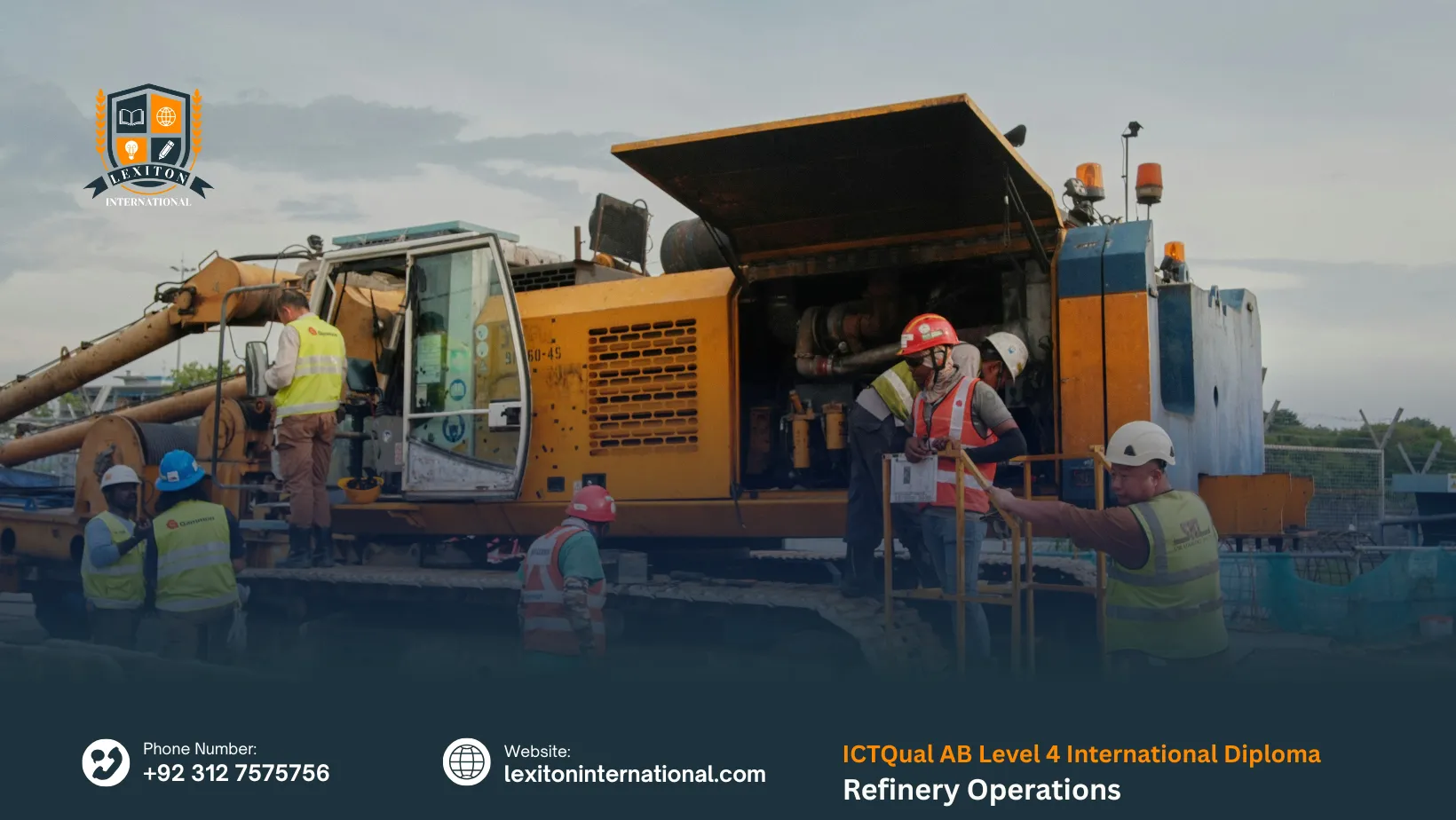
The ICTQual AB Level 4 International Diploma in Refinery Operations is a specialised qualification designed to introduce learners to the essential processes involved in modern petroleum refining. It focuses on how crude oil is transformed into valuable products such as fuels, lubricants, and petrochemicals that power industries and everyday life. This programme is ideal for individuals who want to build a strong foundation in one of the most important areas of the global energy sector.
The course covers key areas such as refining fundamentals, distillation processes, separation techniques, product blending, and refinery safety systems. Learners also gain an understanding of equipment used in refinery operations, process control basics, and environmental considerations. The programme is structured to provide a clear overview of how large-scale refining systems operate efficiently while maintaining safety and quality standards.
By completing this diploma, learners develop a strong understanding of refinery operations and their role in the global energy supply chain. It enhances analytical thinking and technical awareness, enabling individuals to understand industrial processes with confidence. As refineries remain central to meeting global energy demands, this qualification provides valuable insight into a vital and continuously evolving sector.
- Age Requirement: Applicants should ideally be 18 years or older at the time of enrollment.
- Educational Background: A secondary school qualification (or equivalent) is required. Preference is given to candidates with a background in science, mathematics, chemistry, or engineering-related subjects, as these provide the analytical and problem-solving skills essential for refinery studies.
- Work Experience: Work experience is not mandatory at this level. However, prior exposure to industrial, mechanical, or technical environments is considered an advantage. Learners with such experience will find it easier to connect theoretical knowledge with practical refinery applications.
- English Language Proficiency: Since the course is delivered in English, learners must demonstrate a good command of spoken and written English. This ensures they can engage with technical manuals, safety documentation, and assessments effectively.
Mandatory Units
Year 1 – Foundation and Core Knowledge
Skills You Will Gain
Learning Outcomes for the ICTQual AB Level 4 International Diploma in Refinery Operations:
Year 1 – Foundation and Core Knowledge
Introduction to Refinery Operations
- Understand the fundamental principles and objectives of refinery operations.
- Identify the various types of refineries and their operational structures.
- Recognise key roles and responsibilities within a refinery workforce.
- Comprehend the workflow from crude oil reception to product distribution.
- Develop awareness of industry terminology and operational standards.
Petroleum Refining Processes and Techniques
- Understand the core refining processes including distillation, cracking, and reforming.
- Identify the techniques used for separating and converting hydrocarbons.
- Analyse the factors affecting product quality and refinery efficiency.
- Apply knowledge of refining operations to practical scenarios.
- Evaluate the integration of different refining processes in industrial settings.
Process Engineering Principles for Refineries
- Understand process flow diagrams and refinery schematics.
- Apply principles of thermodynamics, fluid mechanics, and heat transfer to refining operations.
- Analyse process parameters to optimise operational performance.
- Develop skills in monitoring and controlling refinery systems.
- Identify bottlenecks and opportunities for process improvement.
Oil and Gas Production Systems
- Comprehend upstream production and its connection to refining operations.
- Understand crude oil characteristics and their influence on processing.
- Analyse production data to inform refining decisions.
- Recognise challenges in transportation and storage of oil and gas.
- Develop knowledge of production systems’ impact on refinery performance.
Safety and Risk Management in Refinery Operations
- Identify common hazards and risks in refinery environments.
- Apply safety protocols and emergency response procedures.
- Understand regulatory requirements for occupational health and safety.
- Develop skills in risk assessment and hazard mitigation.
- Promote a culture of safety and compliance in refinery operations.
Refinery Equipment and Maintenance Practices
- Recognise essential refinery machinery and equipment.
- Understand routine maintenance procedures and schedules.
- Analyse operational performance to prevent equipment failure.
- Apply preventative and corrective maintenance strategies.
- Develop competence in monitoring and troubleshooting industrial equipment.
Quality Control and Process Optimisation
- Understand quality standards for refinery products.
- Apply analytical techniques to assess product quality.
- Monitor process parameters to optimise production efficiency.
- Identify deviations and implement corrective measures.
- Develop strategies for continuous improvement in refinery operations.
Environmental Compliance and Sustainability in Refineries
- Understand environmental regulations affecting refinery operations.
- Apply sustainable practices to reduce emissions and waste.
- Recognise the impact of refinery operations on surrounding ecosystems.
- Develop strategies for resource conservation and environmental protection.
- Evaluate refinery performance against sustainability benchmarks.
Energy Management and Efficiency in Oil Processing
- Understand energy consumption patterns in refinery operations.
- Analyse opportunities for energy savings and efficiency improvement.
- Apply techniques for monitoring and reducing energy usage.
- Integrate energy management into operational decision-making.
- Develop skills in implementing energy-efficient technologies and practices.
Digital Tools and Industrial Automation in Refineries
- Understand the role of digital tools and automation in refinery operations.
- Apply software for process monitoring, data analysis, and simulation.
- Develop skills in using industrial control systems.
- Integrate digital solutions to improve operational efficiency.
- Evaluate emerging technologies for future refinery applications.
Project Management in Refinery Operations
- Understand project lifecycle and management principles in refineries.
- Apply planning and scheduling techniques to refinery projects.
- Monitor resource allocation, budgeting, and timelines.
- Identify and manage risks in operational projects.
- Develop skills in reporting, documentation, and team coordination.
Professional Practice and Future Trends in Refining
- Understand ethical and professional standards in the oil and gas sector.
- Recognise emerging technologies and innovations in refining.
- Analyse industry trends to anticipate operational challenges.
- Develop lifelong learning and continuous professional development strategies.
- Enhance employability and readiness for leadership roles in refinery operations.
The ICTQual AB Level 4 International Diploma in Refinery Operations is designed for individuals who want to build a strong entry-level understanding of refinery systems and how crude oil is processed into valuable energy products. It is ideal for learners aiming to start a practical career in the downstream oil and gas industry.
Who Is This Course For
- Learners who want to begin a career in refinery operations and petroleum processing.
- Individuals interested in how crude oil is converted into fuels like petrol, diesel, and jet fuel.
- Aspiring technicians seeking basic knowledge of refinery units and industrial systems.
- Students from technical or science backgrounds planning to enter the energy sector.
- Workers aiming to shift into oil and gas or industrial plant operations.
- Individuals interested in process plants and large-scale energy production facilities.
- Candidates seeking entry-level opportunities in global refinery companies.
- Learners who want to develop practical understanding of plant operations and systems.
- People interested in working in downstream oil and gas environments.
- Anyone motivated to start a career in the global refinery and energy industry.
The ICTQual AB Level 4 International Diploma in Refinery Operations builds your entry-level competence in downstream oil and gas systems by developing essential understanding of refinery processes, plant operations, and industrial safety practices. It prepares you for practical roles in environments where precision, discipline, and operational awareness are essential.
Future Progression
- Step into entry-level refinery support roles in oil and gas processing plants.
- Assist in basic plant operations involving crude oil conversion processes.
- Contribute to monitoring equipment performance and routine operational checks.
- Work alongside technical teams in refinery and petrochemical facilities.
- Support safe handling of industrial systems and process equipment.
- Build opportunities in downstream energy and refining industry environments.
- Take part in day-to-day operational support within large-scale plants.
- Strengthen eligibility for junior technical positions in global refinery companies.
- Develop recognition for supporting essential energy production and processing activities.
- Position yourself at the starting point of a vital global energy supply industry.
Curious About This Course?