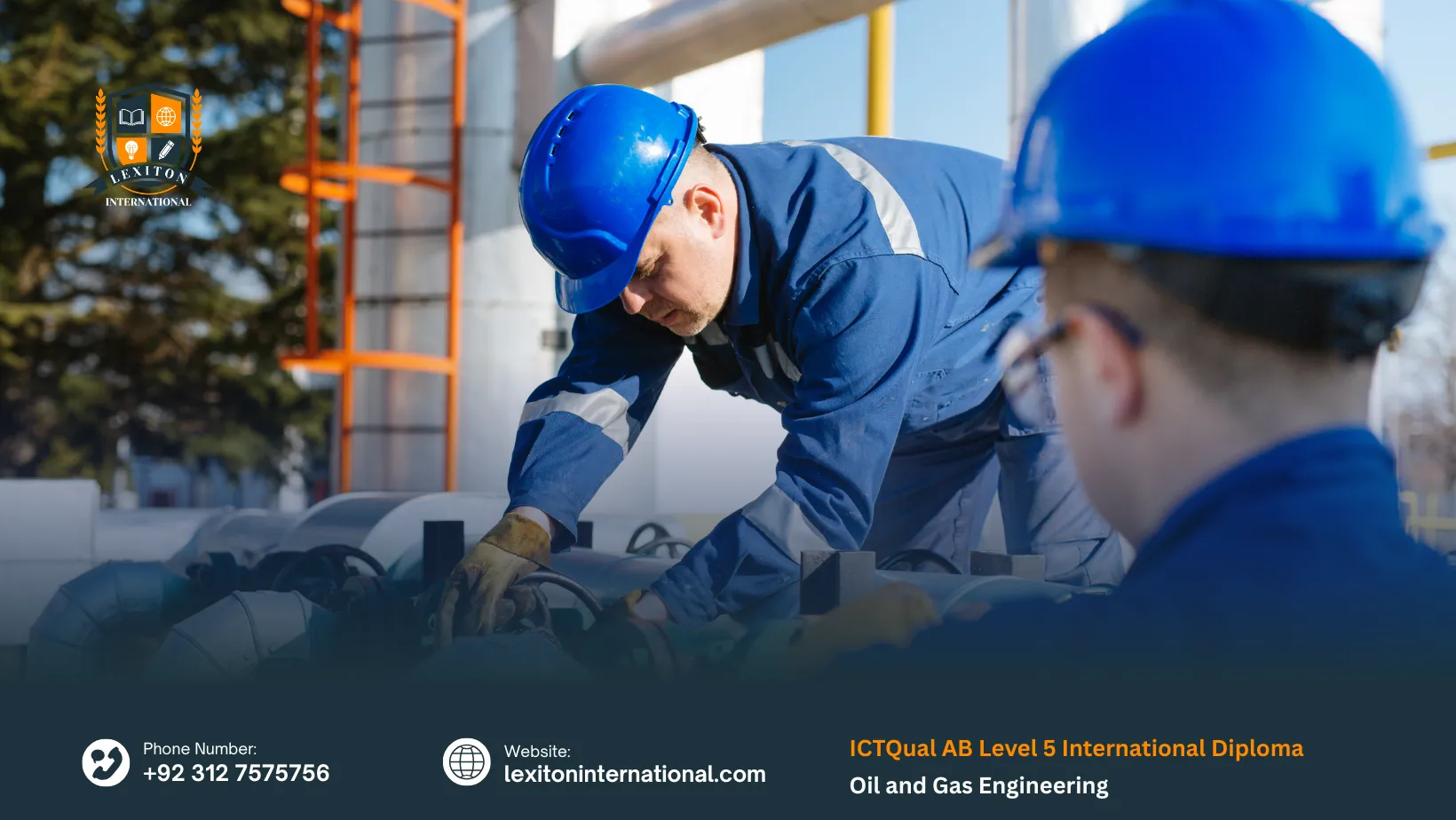
The ICTQual AB Level 5 International Diploma in Oil and Gas Engineering is a specialised qualification designed to develop strong technical understanding of the global oil and gas industry. It focuses on how energy is explored, extracted, processed, and delivered across complex systems that power industries and economies worldwide. This programme is ideal for learners who want to build a solid foundation in one of the most essential and high-demand sectors of the energy field.
The course covers key areas such as drilling fundamentals, petroleum exploration, production systems, refinery operations, and pipeline transport processes. Learners also explore safety practices, environmental considerations, and industry regulations that guide modern oil and gas operations. The programme is structured to provide clear insight into upstream, midstream, and downstream activities, helping learners understand how each stage connects within the global energy supply chain.
By completing this diploma, learners develop strong technical awareness and analytical thinking related to oil and gas engineering systems. It enhances the ability to understand industrial processes and interpret complex energy operations with confidence. As global energy demand continues to grow, this qualification provides valuable knowledge for those aiming to understand and engage with a critical sector of the modern world.
- Age Requirement: Learners should ideally be 18 years or older, as the course involves technical concepts, project work, and applied learning.
- Educational Background: A secondary school qualification is required. Preference is given to candidates with backgrounds in science, mathematics, or engineering-related fields.
- Work Experience: Prior experience in oil and gas, energy, or industrial operations is beneficial but not mandatory. Candidates with exposure to technical or mechanical environments will find the course especially relevant.
- English Language Proficiency: Learners should have a good command of spoken and written English to understand technical content, participate in discussions, and complete assessments effectively.
Mandatory Units
Year 1 – Foundation and Core Oil & Gas Engineering Principles
- Principles of Oil and Gas Engineering
- Fundamentals of Petroleum Exploration and Production
- Organisational Structures and Business Environments in Oil and Gas
- Drilling Operations and Well Control Basics
- Leadership and Team Management in Oil and Gas Projects
- Fundamentals of Health, Safety, and Environmental Management
- Introduction to Reservoir Engineering and Production Systems
- Project Planning and Scheduling in Oil and Gas Operations
- Introduction to Financial and Cost Management for Engineering Projects
- Equipment, Materials, and Maintenance Management
- Problem-Solving and Decision-Making in Oil and Gas Engineering
- Professional and Ethical Practice in Oil and Gas Operations
Year 2 – Advanced Applications and Strategic Oil & Gas Engineering
- Advanced Drilling and Well Intervention Techniques
- Strategic Leadership and Governance in Oil and Gas Projects
- Advanced Reservoir and Production Engineering
- Offshore and Onshore Facility Design and Operations
- Advanced Financial Planning, Budgeting, and Cost Control
- Human Resource and Team Management in Engineering Projects
- Risk Assessment, Incident Investigation, and Safety Management
- Sustainability and Environmental Responsibility in Oil and Gas
- Innovation, Technology, and Digital Tools in Oil and Gas Engineering
- Monitoring, Evaluation, and Performance Metrics in Engineering Projects
- Research Methods in Oil and Gas Engineering
- Capstone Project / Applied Oil and Gas Engineering Practice
Skills You Will Gain
Learning Outcomes for the ICTQual AB Level 5 International Diploma in Oil and Gas Engineering:
Year 1 – Foundation and Core Oil & Gas Engineering Principles
Principles of Oil and Gas Engineering
- Understand the fundamentals of oil and gas engineering and industry operations.
- Analyse exploration, drilling, production, and processing workflows.
- Recognise the roles and responsibilities of engineers in the energy sector.
- Apply basic technical principles to operational scenarios.
- Examine global energy trends and their impact on engineering practices.
Fundamentals of Petroleum Exploration and Production
- Understand geological, geophysical, and reservoir principles for oil and gas exploration.
- Analyse upstream operations from exploration to production.
- Apply exploration and production techniques to real-world scenarios.
- Evaluate factors affecting well productivity and resource recovery.
- Recognise environmental and safety considerations in production operations.
Organisational Structures and Business Environments in Oil and Gas
- Examine corporate structures within oil and gas companies.
- Understand external and internal factors affecting project performance.
- Analyse business environments, regulations, and market dynamics.
- Explore reporting lines, workflows, and organisational decision-making.
- Evaluate policies and procedures supporting operational efficiency.
Drilling Operations and Well Control Basics
- Understand the principles of drilling operations and well construction.
- Learn techniques for maintaining well control and preventing blowouts.
- Analyse drilling rig components, fluids, and equipment.
- Apply safety standards and operational procedures in drilling scenarios.
- Recognise risk factors and mitigation strategies for drilling activities.
Leadership and Team Management in Oil and Gas Projects
- Develop leadership and team management skills in engineering contexts.
- Understand team dynamics and effective communication practices.
- Delegate tasks and responsibilities efficiently.
- Resolve conflicts and motivate teams for high performance.
- Apply leadership principles to engineering project scenarios.
Fundamentals of Health, Safety, and Environmental Management
- Understand occupational health and safety regulations in oil and gas operations.
- Identify workplace hazards and implement control measures.
- Analyse environmental impact and sustainability requirements.
- Apply safety management systems and emergency response procedures.
- Promote a safety-first culture within teams and operations.
Introduction to Reservoir Engineering and Production Systems
- Understand reservoir characteristics and behaviour.
- Analyse production systems and flow mechanisms.
- Apply basic reservoir engineering principles to optimize extraction.
- Evaluate well performance and production data.
- Recognise technologies supporting efficient production operations.
Project Planning and Scheduling in Oil and Gas Operations
- Apply project planning tools to engineering projects.
- Develop schedules for drilling, production, and maintenance activities.
- Monitor project progress and identify potential delays.
- Allocate resources efficiently for project objectives.
- Evaluate project outcomes against defined goals and timelines.
Introduction to Financial and Cost Management for Engineering Projects
- Understand cost estimation, budgeting, and financial reporting principles.
- Monitor expenses and track project financial performance.
- Analyse cost-benefit scenarios for operational decision-making.
- Apply financial controls to ensure efficient resource utilisation.
- Prepare basic financial reports for stakeholders.
Equipment, Materials, and Maintenance Management
- Understand the role of equipment and materials in oil and gas operations.
- Apply maintenance strategies to ensure operational reliability.
- Analyse life-cycle management and asset performance.
- Plan maintenance schedules and preventive measures.
- Evaluate operational efficiency and resource utilisation.
Problem-Solving and Decision-Making in Oil and Gas Engineering
- Develop analytical skills for operational problem-solving.
- Apply engineering principles to decision-making processes.
- Evaluate solutions using risk assessment and feasibility criteria.
- Implement practical strategies in real-world operational scenarios.
- Review outcomes and refine approaches to optimise performance.
Professional and Ethical Practice in Oil and Gas Operations
- Understand professional standards and ethical responsibilities in engineering.
- Apply ethical decision-making in project and operational contexts.
- Recognise the importance of transparency, accountability, and integrity.
- Maintain compliance with regulatory and organisational requirements.
- Promote professional conduct within teams and stakeholder interactions.
Year 2 – Advanced Applications and Strategic Oil & Gas Engineering
Advanced Drilling and Well Intervention Techniques
- Analyse advanced drilling techniques and well intervention operations.
- Apply best practices for maintaining well integrity and productivity.
- Evaluate complex drilling scenarios and troubleshooting methods.
- Implement safety and risk mitigation strategies in advanced operations.
- Optimise operational efficiency using modern drilling technologies.
Strategic Leadership and Governance in Oil and Gas Projects
- Develop strategic leadership skills for large-scale projects.
- Implement governance frameworks to ensure compliance and efficiency.
- Lead cross-functional teams in complex operational environments.
- Formulate policies and procedures for project oversight.
- Evaluate organisational performance and strategic decision-making.
Advanced Reservoir and Production Engineering
- Analyse reservoir performance and production optimisation techniques.
- Apply advanced modelling tools to predict production behaviour.
- Implement strategies for enhanced oil recovery.
- Monitor production systems and troubleshoot operational challenges.
- Integrate reservoir data into decision-making processes.
Offshore and Onshore Facility Design and Operations
- Understand engineering principles for offshore and onshore facilities.
- Analyse facility design, layout, and operational workflow.
- Apply safety and environmental standards in facility operations.
- Plan maintenance, monitoring, and inspection procedures.
- Optimise facility performance and operational efficiency.
Advanced Financial Planning, Budgeting, and Cost Control
- Develop detailed budgets for projects and operations.
- Monitor and control expenditures and financial performance.
- Apply cost forecasting and financial risk management strategies.
- Analyse investment and operational decision scenarios.
- Prepare reports to support strategic financial planning.
Human Resource and Team Management in Engineering Projects
- Lead and manage multidisciplinary engineering teams.
- Plan workforce allocation for projects and operations.
- Address performance, training, and development needs.
- Foster collaboration and high-performance culture.
- Apply leadership principles to achieve project objectives.
Risk Assessment, Incident Investigation, and Safety Management
- Conduct comprehensive risk assessments for operational activities.
- Investigate incidents and implement corrective measures.
- Analyse hazards and develop preventive strategies.
- Apply safety management systems and compliance procedures.
- Promote a culture of safety and continuous improvement.
Sustainability and Environmental Responsibility in Oil and Gas
- Integrate environmental management into engineering operations.
- Apply sustainability practices in production and facility management.
- Evaluate environmental impact and implement mitigation strategies.
- Promote corporate social responsibility in operations.
- Ensure compliance with environmental regulations and international standards.
Innovation, Technology, and Digital Tools in Oil and Gas Engineering
- Apply digital tools, software, and simulation platforms to engineering tasks.
- Evaluate innovative technologies for operational improvement.
- Implement digital monitoring and automation solutions.
- Analyse data to support operational and strategic decisions.
- Enhance efficiency through technological adoption and modernisation.
Monitoring, Evaluation, and Performance Metrics in Engineering Projects
- Establish performance metrics for projects and operations.
- Monitor and evaluate operational outcomes against targets.
- Analyse key indicators to improve efficiency and productivity.
- Conduct audits and reviews to ensure compliance with standards.
- Report findings to stakeholders and management.
Research Methods in Oil and Gas Engineering
- Conduct research on exploration, production, and operational topics.
- Apply qualitative and quantitative research techniques.
- Analyse data to inform engineering decisions and strategies.
- Prepare professional research reports for operational and academic purposes.
- Evaluate research outcomes to support best practices in engineering.
Capstone Project / Applied Oil and Gas Engineering Practice
- Undertake a comprehensive applied project demonstrating technical competence.
- Integrate engineering principles with operational, financial, and safety management.
- Analyse real-world oil and gas scenarios and propose solutions.
- Present findings and recommendations to professional standards.
- Demonstrate mastery of planning, execution, and evaluation in practical projects.
The ICTQual AB Level 5 International Diploma in Oil and Gas Engineering is ideal for individuals who want to enter the energy sector with strong technical understanding and practical engineering awareness. It helps learners build confidence in oil and gas operations while developing the core skills needed to work in real industrial environments.
Who Is This Course For
- Learners aiming to begin a professional journey in oil and gas engineering and operations.
- Individuals interested in how energy is explored, produced, and processed in the petroleum industry.
- Aspiring technicians and engineers looking to understand real-world oilfield systems and practices.
- Workers from mechanical, industrial, or technical backgrounds seeking a career shift into energy.
- Professionals who want to strengthen their understanding of upstream and downstream operations.
- Individuals interested in learning how drilling, production, and refining processes work together.
- Candidates seeking practical knowledge for entry-level roles in global energy companies.
- Learners who want to improve their technical thinking and problem-solving abilities.
- People interested in offshore rigs, refineries, and onshore energy facilities.
- Anyone motivated to build a stable and long-term career in the oil and gas industry.
The ICTQual AB Level 5 International Diploma in Oil and Gas Engineering enhances your technical profile by building strong foundational knowledge of energy systems, field operations, and petroleum industry practices. It prepares you for practical, hands-on roles in one of the world’s most vital and high-demand sectors.
Future Progression
- Support day-to-day operations in drilling sites, refineries, and energy facilities.
- Contribute to field-based activities across onshore and offshore energy projects.
- Assist technical teams in monitoring equipment and operational performance.
- Work in maintenance and operational support roles within energy companies.
- Build opportunities in upstream exploration and downstream processing activities.
- Gain involvement in safety-focused operations across high-risk industrial environments.
- Strengthen eligibility for technical positions in global oil and gas organisations.
- Develop recognition for supporting essential energy production and distribution systems.
- Position yourself within a stable and globally significant energy industry workforce.
Curious About This Course?