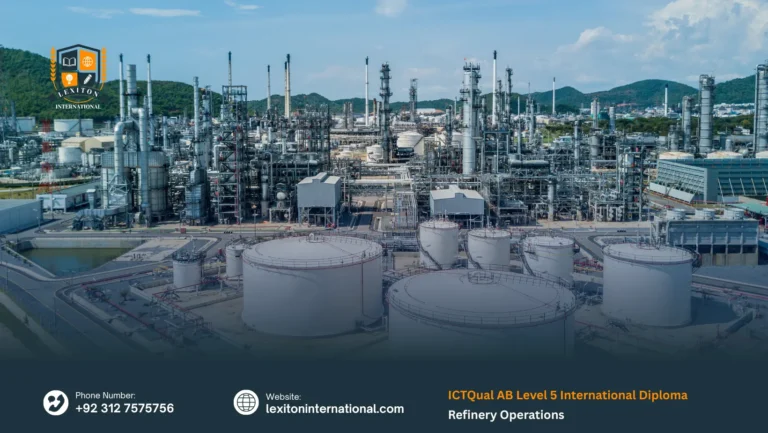
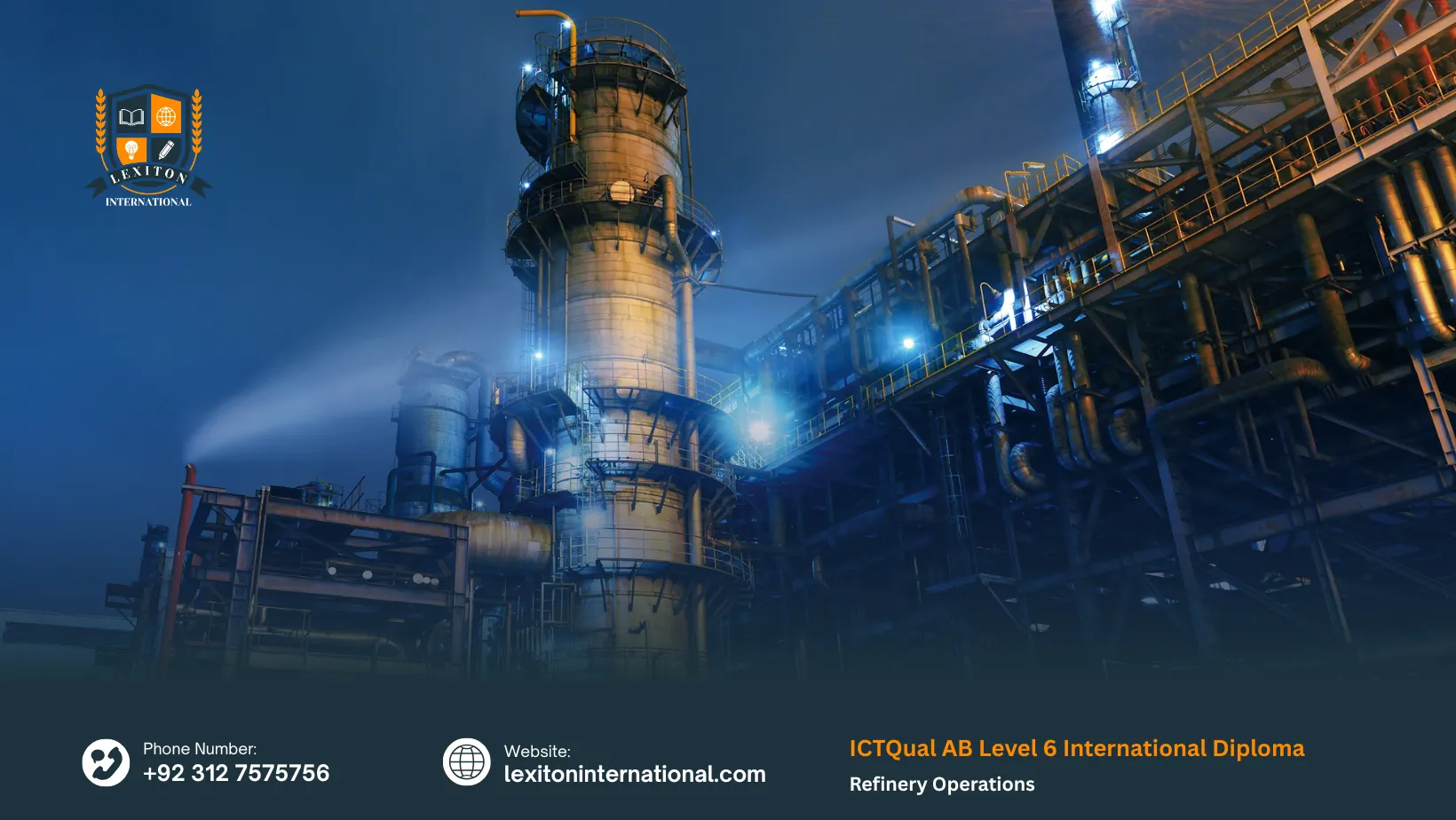
The ICTQual AB Level 6 International Diploma in Refinery Operations is an advanced qualification designed to provide in-depth knowledge of petroleum refining processes, refinery technologies, and operational management within the global energy sector. This internationally recognised programme develops a comprehensive understanding of how crude oil is processed and transformed into essential products such as transportation fuels, lubricants, petrochemicals, and other refined petroleum products. It is suitable for individuals seeking to strengthen their expertise in refinery operations and process industries.
The programme covers a broad range of refinery-related subjects, including crude oil characteristics, distillation processes, catalytic cracking, reforming technologies, process control systems, operational efficiency, and quality management. Learners also explore key areas such as health and safety regulations, environmental compliance, risk management, energy efficiency, and sustainable refinery practices. The curriculum is designed to provide a detailed understanding of the technical, operational, and regulatory aspects of modern refining facilities.
Through the study of refinery systems and industry best practices, learners develop strong analytical, technical, and decision-making capabilities relevant to refinery environments. The qualification enhances understanding of process optimization, operational performance, and compliance requirements, enabling learners to contribute effectively to refinery operations, process management, and organisational objectives within the international oil and gas industry.
- Age Requirement: Learners should ideally be 18 years or older, as the course involves technical decision-making, safety protocols, and leadership responsibilities in refinery environments.
- Educational Background: No formal engineering degree is required; however, a basic understanding of science—particularly chemistry, physics, or mathematics—is beneficial. The course is suitable for both freshers and professionals transitioning into refinery operations.
- Professional Experience: Prior exposure to industrial operations, mechanical systems, or energy projects is advantageous. Experience in process control, maintenance, or safety management will enhance the learner’s ability to apply course concepts effectively.
- English Language Proficiency: Learners should have a good command of spoken and written English to interpret technical documentation, engage in collaborative projects, and complete assessments successfully.
Mandatory Units
Year 1 – Foundation in Refinery Operations
Year 2 – Intermediate Refinery Operations
Year 3 – Advanced Refinery Operations
Skills You Will Gain
Learning Outcomes for the ICTQual AB Level 6 International Diploma in Refinery Operations:
Year 1 – Foundation in Refinery Operations
Principles of Chemical Engineering
- Understand fundamental chemical engineering principles applied in refinery processes.
- Analyse material and energy balances in process systems.
- Apply chemical engineering concepts to basic refinery operations.
Introduction to Petroleum Refining
- Comprehend the overall structure and workflow of petroleum refining.
- Identify major refinery units and their functions.
- Explain the stages of crude oil conversion into usable products.
Crude Oil Properties and Analysis
- Examine the physical and chemical properties of crude oil.
- Conduct laboratory tests to characterise crude oil quality.
- Interpret analytical data for process planning and optimisation.
Refinery Process Units Overview
- Identify key refinery process units and their interconnections.
- Understand operational principles for each unit.
- Recognise the role of each unit in overall production efficiency.
Distillation Principles and Applications
- Explain the principles of distillation and separation.
- Apply distillation techniques to crude oil fractionation.
- Analyse the impact of operational parameters on product quality.
Heat and Mass Transfer in Refining
- Understand fundamental heat and mass transfer processes.
- Apply heat exchange and mass transfer principles in refinery operations.
- Solve basic engineering problems related to thermal and material flows.
Introduction to Catalysts and Chemical Reactions
- Understand types and roles of catalysts in refining reactions.
- Analyse chemical reaction mechanisms relevant to refinery processes.
- Apply basic concepts of reaction engineering in operational contexts.
Process Instrumentation and Control Basics
- Identify common instruments and control systems in refineries.
- Understand feedback and control loops for process stability.
- Apply basic control principles to ensure operational safety and efficiency.
Health, Safety, and Environmental Awareness
- Recognise hazards in refinery operations.
- Apply safety regulations, risk mitigation, and emergency procedures.
- Promote environmentally responsible practices in daily operations.
Industrial Laboratory Techniques
- Conduct practical laboratory tests for refinery operations.
- Apply standard operating procedures for sample handling and analysis.
- Interpret laboratory results to support process decisions.
Technical Report Writing
- Develop skills for preparing professional technical reports.
- Communicate operational, analytical, and experimental findings clearly.
- Apply correct scientific structure, formatting, and referencing.
Introduction to Process Simulation Software
- Gain basic proficiency in refinery process simulation tools.
- Model simple processes to predict operational outcomes.
- Use simulation data to support process understanding and decision-making.
Year 2 – Intermediate Refinery Operations
Advanced Distillation and Separation Techniques
- Apply advanced distillation methods for complex separation tasks.
- Analyse operational efficiency and product yield.
- Optimise separation processes using theoretical and practical knowledge.
Hydrocracking and Hydrotreating Processes
- Understand the principles and applications of hydrocracking and hydrotreating.
- Monitor reaction conditions and catalyst performance.
- Evaluate product quality and process efficiency.
Fluid Catalytic Cracking (FCC) Operations
- Analyse FCC unit operation principles and reactions.
- Apply knowledge to optimise conversion rates and product distribution.
- Identify operational challenges and troubleshooting methods.
Process Control and Automation in Refineries
- Implement advanced control strategies in refinery units.
- Use automation systems to enhance process stability and efficiency.
- Analyse process data for continuous improvement.
Energy Management and Efficiency in Refining
- Identify energy consumption patterns in refinery operations.
- Apply strategies to reduce energy waste and improve efficiency.
- Monitor energy usage and implement optimisation techniques.
Reactor Design and Optimisation
- Understand design principles for industrial reactors.
- Analyse reactor performance for various chemical processes.
- Optimise operating conditions for maximum output and safety.
Process Safety Management
- Apply safety management systems in refinery operations.
- Conduct hazard identification, risk assessment, and mitigation.
- Promote a culture of safety and compliance within operational teams.
Refinery Production Planning
- Develop production schedules aligned with operational capacity.
- Analyse demand and optimise resource allocation.
- Apply planning tools to maintain continuous and efficient operations.
Quality Control and Assurance in Refining
- Implement quality assurance standards and inspection procedures.
- Analyse product specifications to ensure compliance.
- Apply corrective actions to maintain consistent product quality.
Environmental Management and Sustainability
- Identify environmental impacts of refinery operations.
- Implement sustainable practices and regulatory compliance.
- Promote environmental stewardship in production processes.
Petroleum Product Blending Techniques
- Understand blending principles for fuels and lubricants.
- Analyse compatibility and quality of blended products.
- Apply operational techniques to achieve desired specifications.
Data Analysis and Technical Communication
- Interpret process and operational data effectively.
- Develop reports, presentations, and documentation for technical audiences.
- Use data-driven insights to improve operational performance.
Year 3 – Advanced Refinery Operations
Advanced Process Optimisation and Troubleshooting
- Apply advanced techniques to optimise refinery processes.
- Identify operational bottlenecks and implement corrective actions.
- Enhance efficiency, safety, and product quality through analysis.
Refinery Project Management
- Plan, execute, and manage refinery projects.
- Allocate resources and manage project risks effectively.
- Evaluate project outcomes and implement best practices.
Catalysts and Reaction Kinetics in Depth
- Analyse catalyst behaviour and reaction kinetics for industrial processes.
- Apply kinetic models to optimise refinery reactions.
- Troubleshoot catalyst-related issues to maintain efficiency.
Advanced Process Simulation and Modelling
- Use advanced simulation tools for process design and optimisation.
- Model complex refinery operations and predict outcomes.
- Apply simulations to decision-making and performance evaluation.
Corrosion and Maintenance in Refineries
- Understand causes and prevention of corrosion in refinery equipment.
- Develop maintenance strategies to prolong equipment life.
- Apply best practices in inspection, repair, and safety compliance.
Energy Transition and Cleaner Refining Technologies
- Evaluate sustainable technologies and cleaner production methods.
- Implement energy-efficient and low-emission practices.
- Analyse the impact of renewable integration on refinery operations.
Risk Assessment and Hazard Analysis
- Conduct comprehensive risk assessments for refinery processes.
- Identify hazards, assess impact, and implement mitigation strategies.
- Develop contingency plans to ensure operational safety.
Advanced Laboratory Techniques and Process Testing
- Perform high-level laboratory analyses to support process optimisation.
- Apply testing results to refine operational parameters.
- Ensure laboratory data informs strategic decision-making.
Supply Chain and Logistics in Refining
- Analyse the supply chain for refinery feedstock and products.
- Optimise logistics, storage, and distribution strategies.
- Integrate operational planning with supply chain efficiency.
Capstone Project in Refinery Operations
- Conduct an in-depth project integrating knowledge from all previous units.
- Solve real-world refinery challenges using analytical and practical skills.
- Present findings and recommendations professionally.
Professional Development and Leadership in Energy
- Develop leadership, management, and communication skills.
- Enhance teamwork, decision-making, and strategic thinking.
- Prepare for senior roles in operational and technical management.
Strategic Decision-Making in Refinery Management
- Apply analytical and strategic tools for refinery decision-making.
- Evaluate operational, financial, and environmental factors.
- Implement strategies for long-term performance and sustainability.
The ICTQual AB Level 6 International Diploma in Refinery Operations is designed for individuals who want to build strong technical knowledge of refining processes and develop a successful career in the downstream oil and gas industry. It is ideal for learners who aim to understand how crude oil is processed into valuable petroleum products used worldwide.
Who Is This Course For
- Learners who want to start a career in refinery operations and petroleum processing.
- Individuals interested in understanding how crude oil is converted into fuels and petrochemical products.
- Aspiring refinery engineers seeking practical and technical industry knowledge.
- Technicians working in oil and gas who want to upgrade their process and operational skills.
- Professionals aiming to move into downstream energy and refinery-based roles.
- Individuals interested in process engineering, plant operations, and industrial systems.
- Candidates seeking opportunities in petroleum refineries and energy production facilities.
- Learners who want to develop strong analytical and operational decision-making skills.
- Workers from industrial or energy sectors planning to transition into refinery operations.
- Anyone passionate about energy production, industrial processes, and global fuel systems.
The ICTQual AB Level 6 International Diploma in Refinery Operations enhances your professional standing in the downstream oil and gas sector by building strong operational, technical, and process-based expertise. It prepares you for dynamic industrial environments where precision, efficiency, and safety in refining operations are essential.
Future Progression
- Step into refinery operations roles within oil and gas processing and production facilities.
- Support day-to-day plant operations focused on converting crude oil into valuable fuel products.
- Work in process control teams ensuring smooth and efficient refinery performance.
- Contribute to operational safety and quality compliance within industrial environments.
- Build opportunities in petroleum processing, refining systems, and downstream energy operations.
- Join large-scale energy companies managing complex refinery and petrochemical plants.
- Take on responsibilities in monitoring equipment performance and operational efficiency.
- Strengthen eligibility for technical roles in global refinery and energy production sectors.
- Develop recognition for supporting continuous process improvement in industrial operations.
Curious About This Course?