- Age Requirement: Learners should ideally be 18 years or older, as the course involves practical exercises, equipment handling, and emergency response procedures in potentially dangerous settings.
- Educational Background: No formal academic qualifications are required; however, a basic understanding of health and safety principles or prior exposure to industrial work environments is beneficial. The course is suitable for both beginners and experienced professionals.
- Experience: Prior experience in construction, industrial, or maintenance environments is beneficial but not mandatory.
- English Language Proficiency: Learners should have a good command of spoken and written English to follow safety instructions, understand technical documentation, and complete assessments effectively.
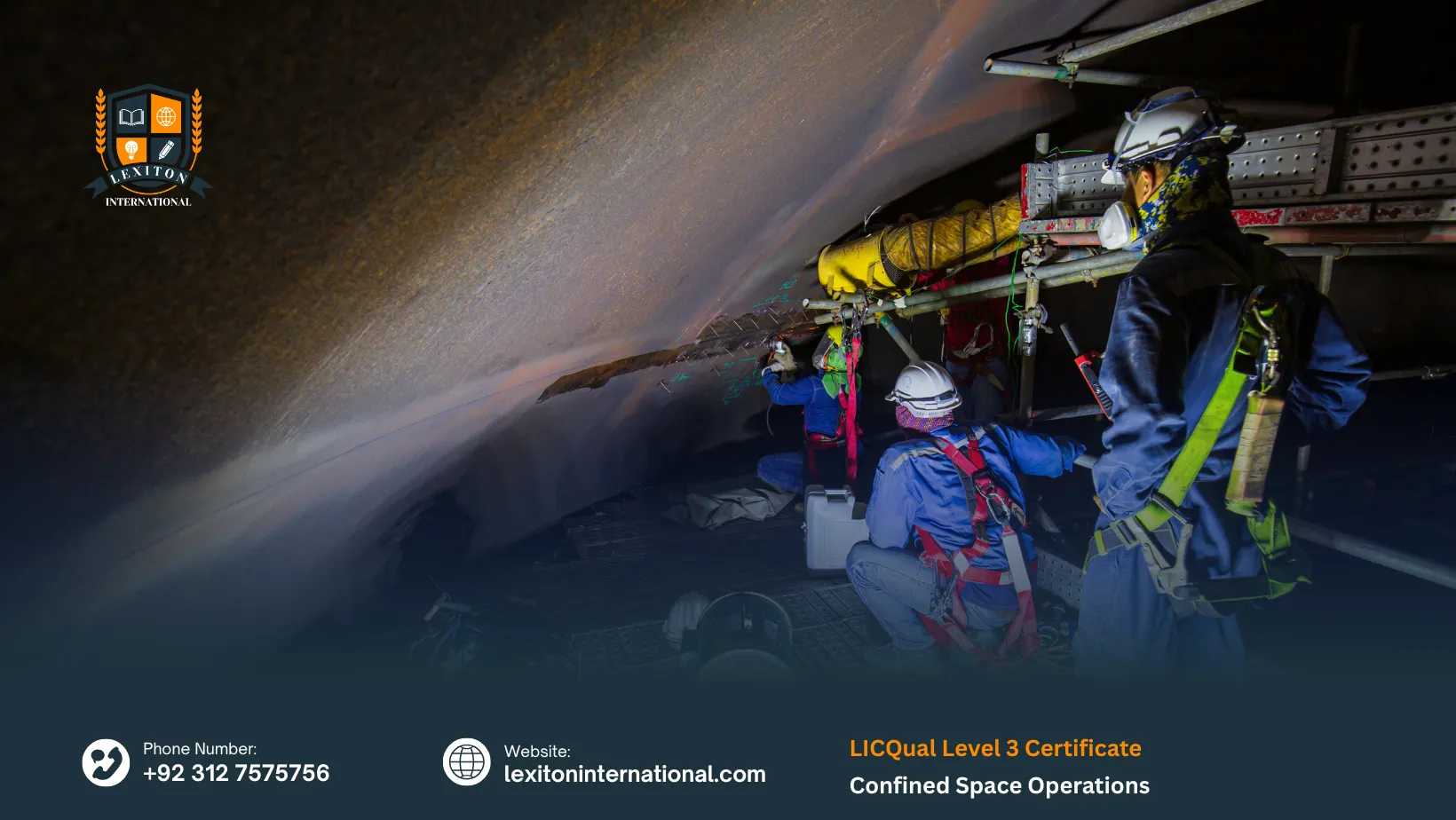
The LICQual Level 3 Certificate in Confined Space Operations is a specialized qualification designed for individuals involved in or supervising work in confined environments such as tanks, tunnels, silos, and underground chambers. It focuses on building essential knowledge of safety principles, risk awareness, and operational controls required in high-risk working conditions.
The programme covers key areas including hazard identification, risk assessment principles, emergency procedures, confined space entry requirements, and the use of safety equipment. It also develops understanding of legal responsibilities, regulatory standards, and safe working practices across industries such as construction, utilities, manufacturing, and industrial maintenance.
This qualification is suitable for professionals working in environments where confined space awareness is essential for safety compliance. It strengthens understanding of workplace safety systems and supports the ability to follow structured procedures in high-risk settings. The LICQual Level 3 Certificate in Confined Space Operations is widely recognized for developing strong safety awareness and operational responsibility in challenging work environments.
Mandatory Units
Skills You Will Gain
By the end of this course, learners will be able to:
Introduction to Confined Space Operations
- Demonstrate an understanding of the types of confined spaces and their inherent risks.
- Recognize the key roles and responsibilities of personnel involved in confined space operations.
- Understand the importance of confined space safety planning and compliance with industry regulations.
- Identify the potential dangers associated with confined spaces and explain the necessity of proper safety measures.
Risk Assessment and Safety Precautions
- Conduct comprehensive risk assessments for confined space work, identifying and evaluating hazards.
- Implement safety control measures to mitigate risks associated with confined space operations.
- Understand and apply safety precautions to prevent incidents, ensuring the safety of workers before, during, and after entry.
- Develop and communicate effective risk management plans tailored to specific confined space environments.
Confined Space Equipment and PPE
- Identify and select the appropriate confined space equipment and PPE based on the specific risks of each operation.
- Demonstrate proper use and maintenance of equipment such as gas detectors, ventilation systems, and communication tools.
- Understand the different types of PPE (e.g., harnesses, respirators) required for confined space entry and emergency scenarios.
- Ensure that all equipment is in working order and suitable for the conditions of the confined space before use.
Confined Space Entry Procedures
- Explain the step-by-step procedures for safe entry and exit from confined spaces, including pre-entry checks and briefing.
- Ensure that all environmental conditions and safety equipment are checked and monitored throughout the entry process.
- Apply best practices to safely initiate, maintain, and terminate confined space operations.
- Understand and follow protocols for maintaining communication and monitoring while inside confined spaces.
Confined Space Rescue and Emergency Response
- Demonstrate knowledge of emergency response protocols and the steps to take in the event of an incident.
- Understand the roles and responsibilities of rescue teams in confined space emergencies.
- Apply confined space rescue techniques, including the use of emergency equipment such as stretchers, ropes, and breathing apparatus.
- Perform basic emergency first aid and response procedures, ensuring the safety of all personnel involved in the rescue.
Practical Application of Confined Space Operations
- Apply theoretical knowledge to real-world confined space situations through practical exercises.
- Demonstrate the ability to perform risk assessments, safely use confined space equipment, and follow entry and exit procedures.
- Participate in realistic emergency response drills, demonstrating the ability to manage confined space incidents safely and effectively.
- Gain hands-on experience to ensure preparedness for confined space operations in actual work environments.
The LICQual Level 3 Certificate in Confined Space Operations is designed for individuals who want to build strong safety awareness and operational understanding in high-risk confined environments. It is suitable for learners aiming to strengthen their competence in managing, supervising, or supporting confined space activities.
Who Is This Course For
- Industrial and utility workers involved in water, gas, energy, and pipeline systems
- Technicians responsible for maintenance, inspection, and cleaning of confined spaces
- Construction and engineering professionals working on tunnels, tanks, or underground structures
- Site supervisors managing excavation and infrastructure-related operations
- Safety officers ensuring compliance with confined space safety regulations
- Emergency response and rescue personnel handling confined space incidents
- Health and safety trainers delivering workplace safety awareness programs
- Quality assurance and compliance staff monitoring operational safety standards
- Career changers entering technical, industrial, or safety-related fields
- Consultants and advisors supporting risk management and workplace safety systems
The LICQual Level 3 Certificate in Confined Space Operations creates strong opportunities for professional growth in safety-critical industries by developing essential knowledge of confined space risk awareness and operational safety. It supports career development across industrial, engineering, and emergency response environments.
Future Progression
- Progress into advanced safety and risk management certifications focused on high-risk environments
- Develop expertise in confined space rescue and emergency response coordination
- Gain knowledge in safety auditing, inspection, and compliance management systems
- Strengthen understanding of international workplace safety standards and regulations
- Work in technical roles within construction, utilities, manufacturing, and infrastructure sectors
- Move into supervisory positions such as Safety Supervisor or Site Operations Coordinator
- Support industrial safety planning, hazard control, and risk mitigation strategies
- Contribute to emergency preparedness and incident response management teams
- Enhance competence in workplace safety documentation and compliance reporting
- Build professional capability for leadership roles in confined space safety operations
Curious About This Course?