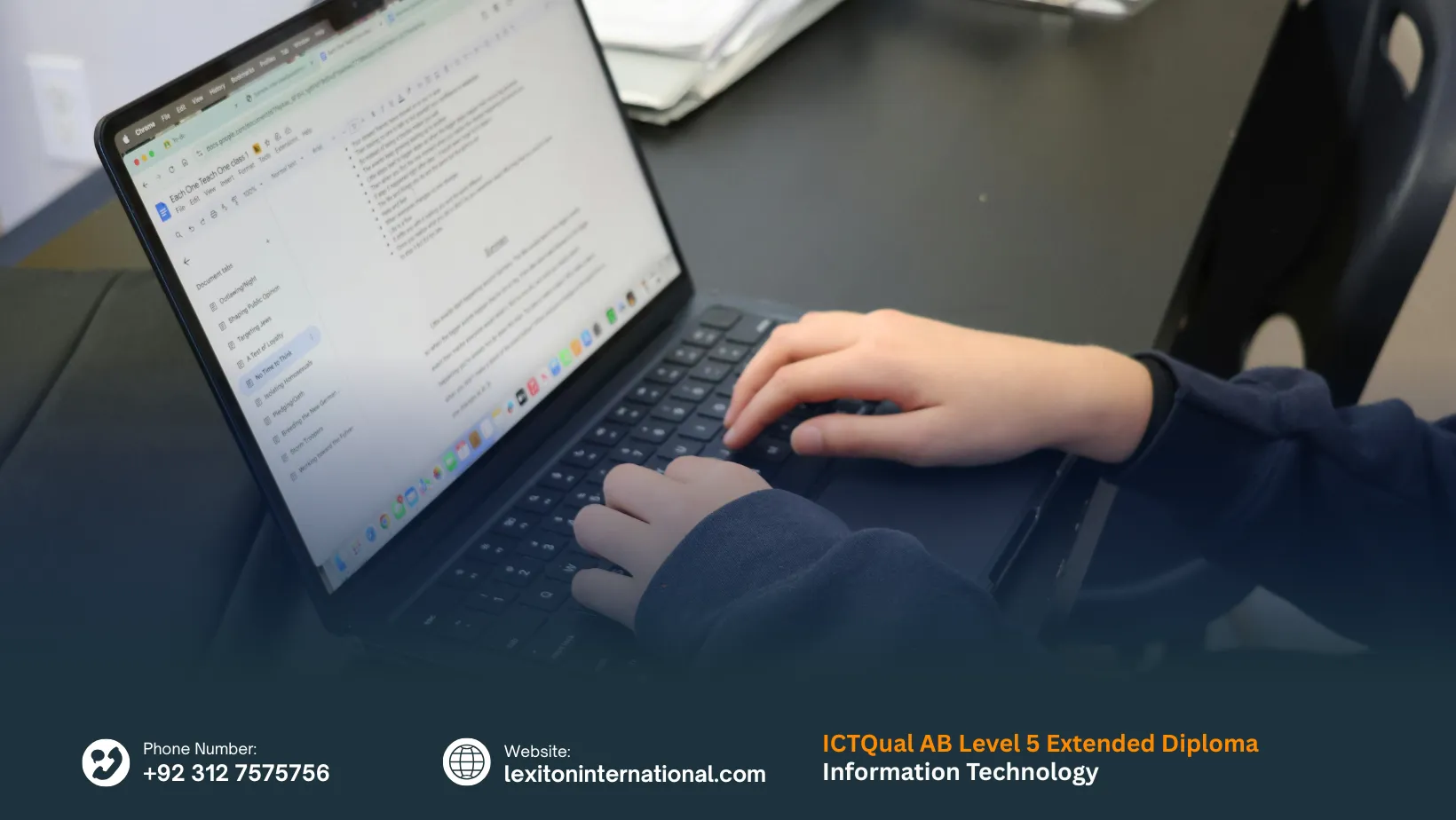
The ICTQual AB Level 5 Extended Diploma in Information Technology is a comprehensive qualification that provides in depth knowledge and practical expertise across the core areas of modern information technology. Designed to reflect current industry requirements, the programme covers software development, computer networking, cybersecurity, database management, cloud computing, systems analysis, IT infrastructure, and project management. It combines theoretical understanding with practical application, enabling learners to develop technical competencies that align with today’s digital business environment.
With technology playing a central role in organisational growth and innovation, the need for robust IT knowledge has never been greater. The ICTQual AB Level 5 Extended Diploma in Information Technology develops essential skills in problem solving, system design, digital security, data management, and technology implementation. Throughout the programme, learners explore contemporary IT concepts, industry best practices, and emerging technologies while gaining experience in planning, managing, and maintaining secure and efficient information systems.
The curriculum is structured to provide a balanced approach to technical knowledge, analytical thinking, and practical application. By addressing both fundamental and advanced aspects of information technology, the qualification supports the development of professional competencies required in modern workplaces. The ICTQual AB Level 5 Extended Diploma in Information Technology reflects internationally recognised standards and equips learners with the knowledge needed to contribute effectively to digital transformation, technology operations, and organisational success.
- Age Requirement: Learners must be at least 18 years old at the time of enrolment for this course.
- Professional Experience: Prior work experience is not mandatory.
- Educational Background: A Level 4 qualification in Information Technology or a related discipline is recommended.
- Language Proficiency: Learners should have a good understanding of English.
Mandatory Units
Skills You Will Gain
Unit 1: Fundamentals of Information Technology Systems
Upon completion of this unit, learners will be able to:
- Evaluate the components and functions of modern IT systems.
- Analyse the role of hardware, software, and operating systems within organisational environments.
- Assess the impact of information technology on business operations and digital transformation.
- Apply IT system concepts to solve workplace technology challenges.
Unit 2: Computer Networks and Communications
Upon completion of this unit, learners will be able to:
- Explain networking principles, architectures, and communication protocols.
- Design and configure basic network infrastructures.
- Analyse network performance, reliability, and security requirements.
- Troubleshoot common networking and connectivity issues.
Unit 3: Database Design and Management
Upon completion of this unit, learners will be able to:
- Design relational databases that meet organisational requirements.
- Develop and manage database structures using SQL.
- Evaluate data integrity, security, and backup strategies.
- Implement database solutions to support business operations.
Unit 4: Software Development and Programming
Upon completion of this unit, learners will be able to:
- Apply programming concepts to develop software applications.
- Analyse software development methodologies and life-cycle models.
- Develop, test, and debug software solutions.
- Evaluate software quality, functionality, and user requirements.
Unit 5: Web Technologies and Application Development
Upon completion of this unit, learners will be able to:
- Design and develop responsive web applications.
- Apply front-end and back-end development technologies.
- Integrate databases and web services into applications.
- Evaluate website usability, accessibility, and performance.
Unit 6: Cybersecurity and Information Assurance
Upon completion of this unit, learners will be able to:
- Assess cybersecurity threats, vulnerabilities, and risks.
- Implement security controls to protect information assets.
- Analyse security policies, standards, and compliance requirements.
- Develop strategies to enhance organisational cybersecurity resilience.
Unit 7: Cloud Computing Technologies
Upon completion of this unit, learners will be able to:
- Evaluate cloud computing models and service architectures.
- Implement cloud-based solutions for business applications.
- Assess cloud security, governance, and operational challenges.
- Recommend appropriate cloud technologies to meet organisational needs.
Unit 8: Systems Analysis and Design
Upon completion of this unit, learners will be able to:
- Conduct business and system requirements analysis.
- Apply system modelling and design techniques.
- Develop technology solutions that address organisational objectives.
- Evaluate system effectiveness and user requirements.
Unit 9: IT Project Management
Upon completion of this unit, learners will be able to:
- Apply project management principles within IT environments.
- Develop project plans, schedules, and resource allocations.
- Manage project risks, quality, and stakeholder expectations.
- Evaluate project outcomes against defined objectives.
Unit 10: Emerging Technologies and Digital Innovation
Upon completion of this unit, learners will be able to:
- Analyse emerging technologies and their business applications.
- Evaluate the impact of AI, IoT, Big Data, and Blockchain technologies.
- Assess opportunities and challenges associated with digital innovation.
- Recommend technology-driven solutions to improve organisational performance.
Unit 11: IT Service Management and Technical Support
Upon completion of this unit, learners will be able to:
- Evaluate IT service management frameworks and best practices.
- Deliver effective technical support and service solutions.
- Monitor and improve service performance and customer satisfaction.
- Apply governance principles to manage IT service delivery.
Unit 12: Information Technology Research Project
Upon completion of this unit, learners will be able to:
- Plan and conduct an independent IT research project.
- Apply appropriate research methodologies and data collection techniques.
- Analyse and interpret research findings to address a technology-related issue.
- Produce and present a professional project report with justified conclusions and recommendations.
The ICTQual AB Level 5 Extended Diploma in Information Technology is suitable for individuals seeking structured and industry-relevant knowledge in modern information technology. The programme provides comprehensive coverage of essential IT disciplines, enabling learners to build practical technical expertise, strengthen analytical abilities, and develop competencies aligned with current digital technologies and organisational requirements.
Who Is This Course For
- Develop core knowledge of modern information technology.
- Build practical skills in software development and programming.
- Strengthen expertise in networking and cybersecurity.
- Gain knowledge of database management and cloud computing.
- Enhance analytical thinking and technical problem solving abilities.
- Improve understanding of IT systems and digital infrastructure.
- Learn IT project management and systems analysis principles.
- Update technical knowledge in line with current industry practices.
- Gain an internationally recognised information technology qualification.
- Develop practical competencies for today’s digital workplace.
The ICTQual AB Level 5 Extended Diploma in Information Technology provides a strong foundation for continued professional development within the rapidly evolving IT sector. The knowledge and practical skills gained through this qualification support increased technical capability, improved workplace performance, and the ability to work with modern digital technologies across a wide range of industries. The programme aligns with current industry practices, helping learners expand their expertise in key areas of information technology.
Future Progression
- Apply advanced IT knowledge in professional workplace environments.
- Strengthen expertise in software development and system design.
- Expand competencies in networking, cybersecurity, and cloud technologies.
- Develop capabilities in database management and digital infrastructure.
- Enhance IT project planning, implementation, and coordination skills.
- Improve technical problem solving and analytical decision-making.
- Support digital transformation and technology-driven business operations.
- Build expertise in managing secure and reliable information systems.
- Adapt to emerging technologies and evolving industry requirements.
- Demonstrate professional competence through an internationally recognised IT qualification.
Curious About This Course?