The I-CERT Six Sigma Yellow Belt Certification is a globally recognized professional qualification that introduces learners to the fundamental principles of Six Sigma, quality management, and process improvement. Designed to meet the demands of modern organizations, this certification provides a structured understanding of how businesses improve efficiency, reduce process variation, minimize waste, and enhance customer satisfaction. It establishes a strong foundation in continuous improvement practices that are widely implemented across manufacturing, healthcare, logistics, finance, construction, information technology, and service industries.
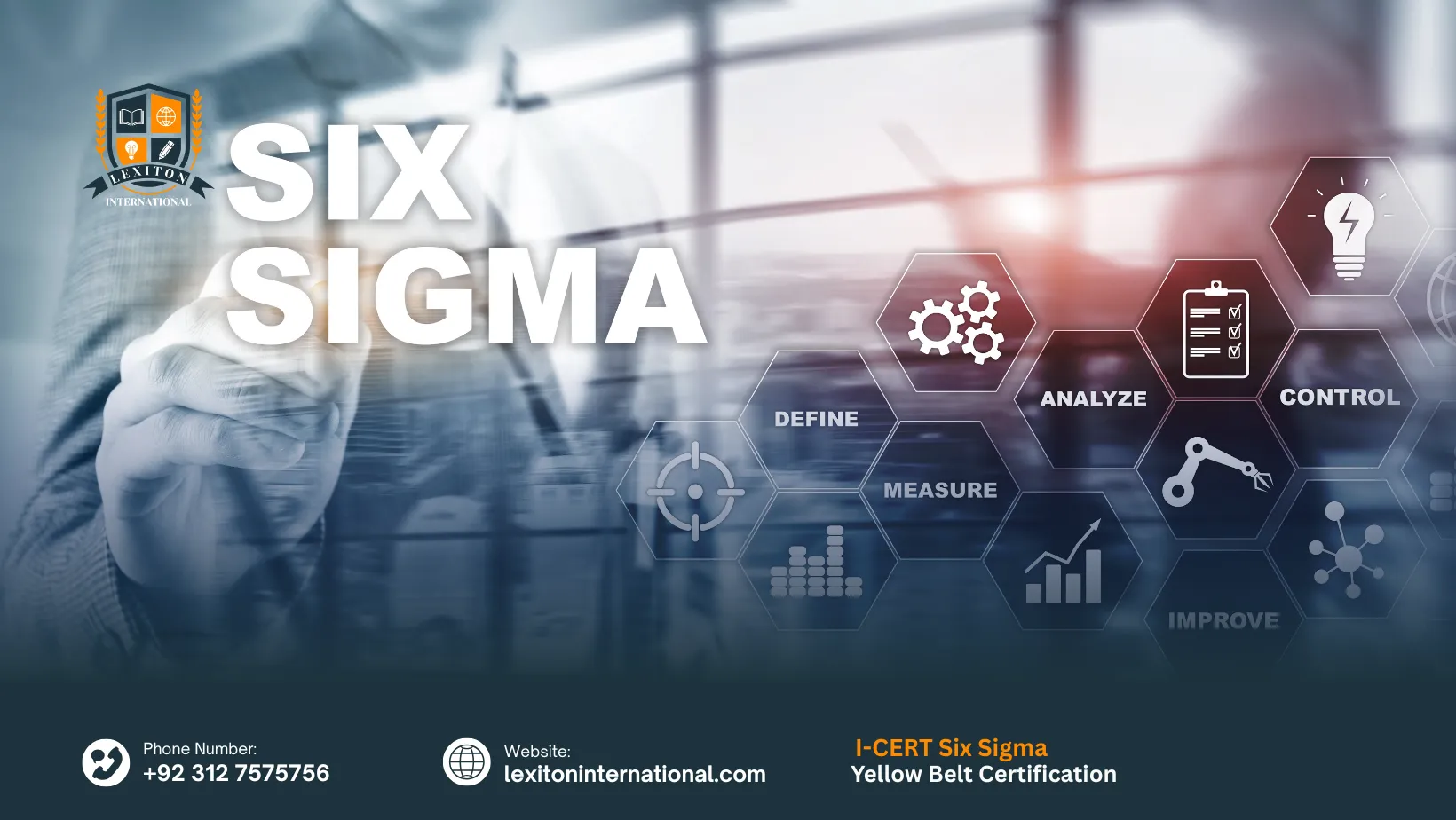
The course covers the essential concepts, tools, and methodologies of Six Sigma, enabling learners to understand process performance, identify the root causes of operational challenges, and apply structured quality improvement techniques. Key areas of study include the DMAIC (Define, Measure, Analyze, Improve, and Control) methodology, process mapping, basic statistical concepts, quality control tools, problem solving techniques, teamwork, and data driven decision making. The qualification provides a systematic understanding of internationally recognized quality improvement practices used to enhance operational consistency and process efficiency.
The I-CERT Six Sigma Yellow Belt Certification aligns with globally accepted quality management principles and supports organizations in achieving greater operational excellence, productivity, and customer satisfaction. By integrating analytical thinking with structured process improvement methods, the certification promotes effective quality management practices, improved process reliability, reduced operational waste, and consistent business performance across a wide range of professional and industrial environments.
- Age Requirements: Learners should be at least 16 years of age at the time of registration.
- Professional Experience: No prior work experience is required.
- Educational Background: A minimum of secondary school education or an equivalent qualification is recommended.
- English Language Proficiency: Learners should have a reasonable standard of English language proficiency.
Mandatory Units
- What Is Six Sigma?
- Six Sigma History and Application
- Other Process Improvement and Quality Methods
- Lean Concepts
- Basic Six Sigma Concepts
- Approaching the Problem
- What is a Process?
- Quality
- Selecting the Right Projects
- Basic Six Sigma Team Management
- Introduction to DMAIC and DMADV
Skills You Will Gain
The I-CERT Six Sigma Yellow Belt Certification equips professionals with advanced knowledge of Six Sigma, Lean, and process improvement. Learners will master DMAIC and DMADV, leadership skills, and statistical tools to lead complex projects, mentor teams, and drive measurable organizational excellence.
What Is Six Sigma?
- Define Six Sigma methodology and its role in process improvement
- Explain how Six Sigma reduces defects and enhances efficiency
- Identify organizational benefits of Six Sigma adoption
Six Sigma History and Application
- Trace the evolution of Six Sigma practices
- Recognize industries where Six Sigma is applied
- Understand global impact on business performance
Other Process Improvement and Quality Methods
- Compare Six Sigma with TQM, Kaizen, and ISO standards
- Evaluate strengths and limitations of different frameworks
- Integrate complementary methods with Six Sigma
Lean Concepts
- Explain Lean principles and waste reduction strategies
- Differentiate Lean vs. Six Sigma approaches
- Apply Lean tools to streamline workflows
Basic Six Sigma Concepts
- Understand variation, defects, and process capability
- Apply Six Sigma terminology in projects
- Use data-driven decision-making
Approaching the Problem
- Develop structured problem-solving approaches
- Apply root cause analysis
- Define problems clearly for improvement
What is a Process?
- Define processes and process mapping
- Identify inputs, outputs, and stakeholders
- Recognize process boundaries
Quality
- Explain quality concepts in business
- Identify customer-focused metrics
- Apply Six Sigma to improve quality
Selecting the Right Projects
- Evaluate project selection criteria
- Align projects with organizational goals
- Prioritize projects based on ROI and feasibility
Basic Six Sigma Team Management
- Understand Six Sigma team roles (Champion, Black Belt, Green Belt)
- Apply effective team management strategies
- Foster collaboration in Six Sigma projects
Introduction to DMAIC and DMADV
- Differentiate DMAIC vs. DMADV methodologies
- Apply DMAIC for process improvement
- Use DMADV for new process or product design
The I-CERT Six Sigma Yellow Belt Certification is suitable for individuals seeking to develop a strong understanding of Six Sigma principles, quality management, and process improvement. It provides valuable knowledge that supports efficient business operations, data driven decision making, and continuous improvement across a wide range of industries and professional environments.
Who Is This Course For?
- Individuals interested in Six Sigma fundamentals.
- Professionals seeking quality management knowledge.
- Employees involved in process improvement.
- Quality assurance and quality control personnel.
- Operations and production staff.
- Supervisors and team leaders.
- Administrative and office professionals.
- Manufacturing and service industry professionals.
- Supply chain and logistics personnel.
- Anyone wishing to understand DMAIC and continuous improvement principles.
The I-CERT Six Sigma Yellow Belt Certification equips learners with practical knowledge of quality management, process improvement, and operational excellence. It develops skills that can be applied across diverse industries to improve efficiency, reduce process variation, and support continuous improvement initiatives. The certification also strengthens professional capabilities in problem solving, data-driven decision-making, and quality focused business practices.
Future Progression
- Participate in Six Sigma and continuous improvement projects.
- Take on greater responsibilities in quality management activities.
- Support process optimization and operational efficiency initiatives.
- Contribute to quality assurance and quality control functions.
- Assist with data analysis and performance improvement tasks.
- Apply DMAIC methodology to workplace processes and problem-solving.
- Strengthen capabilities in process mapping and root cause analysis.
- Improve effectiveness in cross-functional quality improvement teams.
- Enhance professional competence in manufacturing, healthcare, logistics, IT, finance, and service sectors.
- Build practical expertise in internationally recognized quality management and continuous improvement practices.
Curious About This Course?