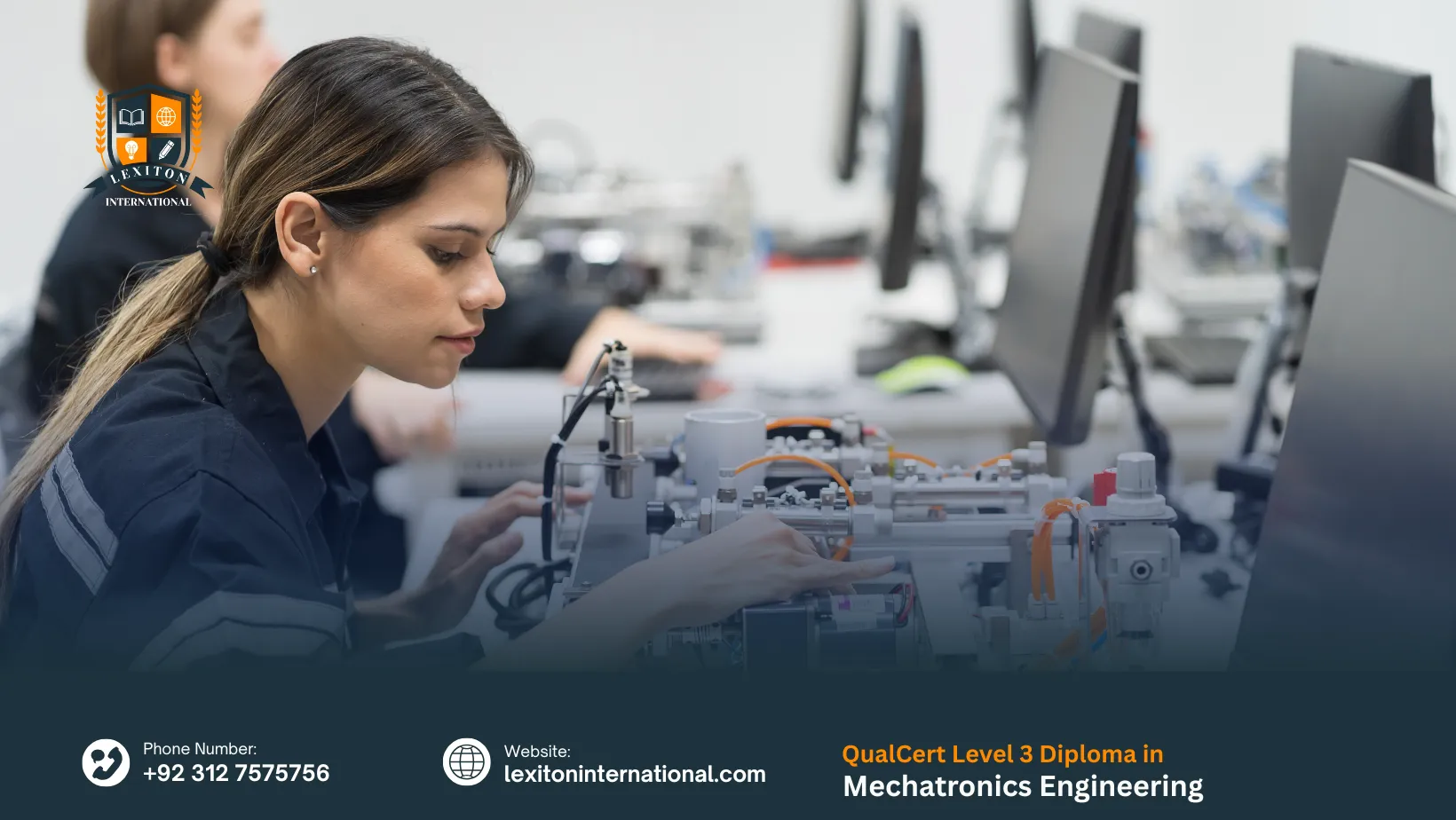
The QualCert Level 3 Diploma in Mechatronics Engineering is a dynamic qualification that bridges the gap between mechanical, electrical, and computer engineering disciplines. Designed for learners who aspire to work at the forefront of modern technology, the course emphasizes the integration of mechanical systems with electronics and intelligent control. Mechatronics is a rapidly growing field that underpins innovations in robotics, automation, manufacturing, and smart devices. This diploma provides students with the opportunity to develop both theoretical knowledge and practical skills, preparing them to meet the demands of industries that rely on advanced automated systems and interdisciplinary engineering expertise.
The QualCert Level 3 Diploma in Mechatronics Engineering is a 60‑credit qualification with a Total Qualification Time (TQT) of 300 hours, including 210 Guided Learning Hours (GLH). It is thoughtfully structured to deliver targeted and efficient skill development, ensuring learners gain a solid foundation in mechatronic principles. The program covers essential areas such as mechanical design, electrical circuits, sensors and actuators, control systems, and computer programming for automation. By combining these disciplines, the course equips learners with the ability to design, analyze, and maintain integrated systems that are increasingly vital in modern industries. The guided learning hours provide structured instruction and hands‑on practice, while independent study encourages learners to apply concepts creatively to real‑world challenges.
Beyond technical knowledge, the diploma emphasizes problem‑solving, innovation, and adaptability—skills that are crucial in today’s fast‑changing engineering landscape. Learners will engage in practical projects that simulate industry scenarios, allowing them to apply mechatronic concepts to robotics, automated manufacturing, and intelligent systems. The qualification is designed not only to build competence but also to inspire confidence in tackling complex engineering problems. Graduates of this program will be well‑prepared to progress into higher education pathways, such as advanced diplomas or bachelor’s degrees in engineering, or to enter the workforce in roles related to automation, robotics, and system integration. With its balanced blend of theory, practice, and industry relevance
The QualCert Level 3 Diploma in Mechatronics Engineering is designed for motivated individuals who are eager to advance their knowledge and professional skills. To ensure that participants are well-prepared for the challenges and opportunities offered by the program, applicants must meet the following entry requirements.
- Age requirements: Applicants must be at least 18 years old at the time of enrollment.
- Qualification requirements: A minimum of a recognized diploma or equivalent certification in a relevant field.
- Professional experience: At least 1–2 years of practical work experience in the industry or related discipline.
- Educational background: Completion of secondary education (high school) with satisfactory grades; preference given to those with undergraduate coursework in related subjects.
- Language proficiency: Demonstrated ability to read, write, and communicate effectively in English (or the primary language of instruction).
- Technical skills: Basic computer literacy and familiarity with digital tools required for coursework.
By fulfilling these requirements, applicants demonstrate their readiness to engage fully with the Guven Course. Meeting these standards ensures that every participant can benefit from the program’s rigorous curriculum and contribute meaningfully to the learning comm
Mandatory Units
Upon successful completion of the QualCert Level 3 Diploma in Mechatronics Engineering, learners will acquire a comprehensive blend of theoretical knowledge and practical skills. The program equips students to design, integrate, and optimize advanced mechatronic systems across diverse industrial applications. The following unit-specific outcomes outline the competencies learners will develop:
Mechatronics System Design
- Understand design principles: Gain a thorough grasp of methodologies used in creating mechatronic systems.
- Analyze integration requirements: Evaluate how mechanical, electrical, and software components interact.
- Design and simulate systems: Apply simulation tools to meet performance, efficiency, and safety standards.
- Select materials and technologies: Choose appropriate components for durability and cost-effectiveness.
- Evaluate trade-offs: Assess how design decisions impact performance, safety, and economic feasibility.
Embedded Systems & Microcontrollers
- Understand embedded architecture: Explore the role of embedded systems in mechatronics.
- Program microcontrollers: Gain proficiency in coding for real-time control and integration.
- Design and troubleshoot systems: Develop skills in testing and resolving embedded system issues.
- Interface with hardware: Connect microcontrollers with sensors, actuators, and electronic components.
- Automate processes: Use embedded systems to control complex mechanical and electrical operations.
Sensors & Actuators
- Understand principles: Learn how sensors and actuators function in mechatronic systems.
- Select and integrate sensors: Apply measurement and feedback mechanisms effectively.
- Choose actuators: Identify suitable actuators for mechanical control and movement.
- Calibrate and troubleshoot: Ensure accuracy and reliability in sensor-actuator performance.
- Enable real-time control: Use sensors and actuators to provide data for dynamic system management.
Industrial Robotics & Control
- Understand robotics fundamentals: Study kinematics, dynamics, and control systems of industrial robots.
- Program and operate robots: Gain hands-on skills in automation tasks for manufacturing.
- Integrate robotic components: Combine sensors, actuators, and control systems for precision.
- Apply simulation techniques: Practice troubleshooting and optimizing robotic systems.
- Follow safety protocols: Implement operational limits and performance optimization strategies.
Mechatronics Integration & Simulation
- Integrate system components: Combine mechanical, electrical, and software elements into cohesive systems.
- Simulate system performance: Predict outcomes and identify issues before implementation.
- Optimize system-level design: Apply techniques to enhance efficiency and functionality.
- Use simulation tools: Gain proficiency in modeling and testing with industry-standard software.
- Apply integration in industry: Implement simulation and integration strategies in real-world scenarios.
Control Systems Engineering
- Understand control principles: Explore feedback loops, stability, and system dynamics.
- Design and implement control systems: Manage mechatronic systems for desired performance.
- Apply control strategies: Use PID and other methods in practical applications.
- Model and tune systems: Employ software tools for simulation and optimization.
- Evaluate real-time performance: Monitor, assess, and refine control systems in practice.
By mastering these outcomes, learners will be equipped with the technical expertise and applied skills necessary to excel in mechatronics engineering. The diploma prepares graduates to contribute effectively to modern industries, drive innovation, and adapt to evolving technological challenges.
The ideal learner for the Level 3 Diploma in Mechatronics Engineering is someone who demonstrates curiosity, commitment, and the ability to blend theoretical knowledge with practical application. The following characteristics define the type of learner who will thrive in this program:
Academic Preparedness
- Possesses a solid foundation in mathematics, physics, and basic engineering concepts
- Demonstrates the ability to grasp technical theories and apply them in practical contexts
- Shows readiness to engage with advanced topics in mechanics, electronics, and computing
- Maintains consistent academic performance and a willingness to improve
- Understands the importance of structured learning and disciplined study habits
Technical Aptitude
- Displays interest in mechanical systems, electronics, and programming
- Has basic computer literacy and familiarity with engineering software tools
- Enjoys problem-solving and hands-on experimentation with technical equipment
- Demonstrates logical thinking and analytical skills for system design
- Shows adaptability in learning new technologies and engineering practices
Professional Mindset
- Values teamwork and collaboration in technical projects
- Demonstrates responsibility and accountability in completing tasks
- Shows interest in industrial applications and real-world engineering challenges
- Maintains a professional attitude toward deadlines and project management
- Understands the importance of safety and ethical practices in engineering
Personal Attributes
- Possesses curiosity and a drive to innovate in engineering solutions
- Demonstrates resilience when facing complex technical problems
- Shows creativity in designing and improving systems
- Maintains motivation and persistence in achieving learning goals
- Displays effective communication skills for technical and non-technical audiences
Career Orientation
- Has a clear interest in pursuing a career in engineering or technology
- Seeks opportunities to apply knowledge in industrial or research settings
- Demonstrates ambition to progress into higher education or specialized training
- Values continuous learning and professional development
- Shows awareness of global trends in automation, robotics, and mechatronics
The ideal learner is one who combines academic readiness, technical curiosity, and professional ambition. Such individuals will not only succeed in the program but also contribute meaningfully to the evolving field of mechatronics engineering.
Completion of the Level 3 Diploma in Mechatronics Engineering opens diverse pathways for learners. The qualification provides a strong foundation for both academic advancement and career opportunities across multiple industries. The following progression routes highlight the future prospects for graduates:
Higher Education Opportunities
- Progression to Diplomas in Civil Engineering or Mechatronics
- Opportunities to specialize in robotics, automation, or control systems at university level
- Access to certifications in advanced engineering disciplines
- Eligibility for research-based projects and academic scholarships
Professional Career Pathways
- Employment in manufacturing industries as junior engineers or technicians
- Roles in automation and robotics companies focusing on system integration
- Opportunities in automotive, aerospace, and electronics sectors
- Entry-level positions in industrial maintenance and process control
- Pathways into engineering consultancy and technical support services
Technical Skill Development
- Advanced training in CAD, CAM, and simulation software tools
- Certification in programming languages for embedded systems and robotics
- Specialized workshops in sensor technology and actuator design
- Hands-on experience with industrial robotics and automation systems
- Continuous professional development through industry-recognized courses
Industry Engagement
- Participation in internships and apprenticeships with engineering firms
- Collaboration with industry projects to gain practical exposure
- Opportunities to attend engineering conferences and technical seminars
- Networking with professionals in mechatronics and related fields
- Access to industry-led innovation and research initiatives
Entrepreneurial Prospects
- Ability to design and develop innovative mechatronic solutions for startups
- Opportunities to establish small-scale automation and robotics businesses
- Application of knowledge in product development and prototyping
- Potential to contribute to smart manufacturing and Industry 4.0 initiatives
- Skills to innovate in sustainable engineering and green technologies
Graduates of the Level 3 Diploma in Mechatronics Engineering are well-positioned to pursue higher education, enter diverse industries, or even embark on entrepreneurial ventures. The qualification serves as a gateway to a dynamic future in engineering and technology.
Curious About This Course?