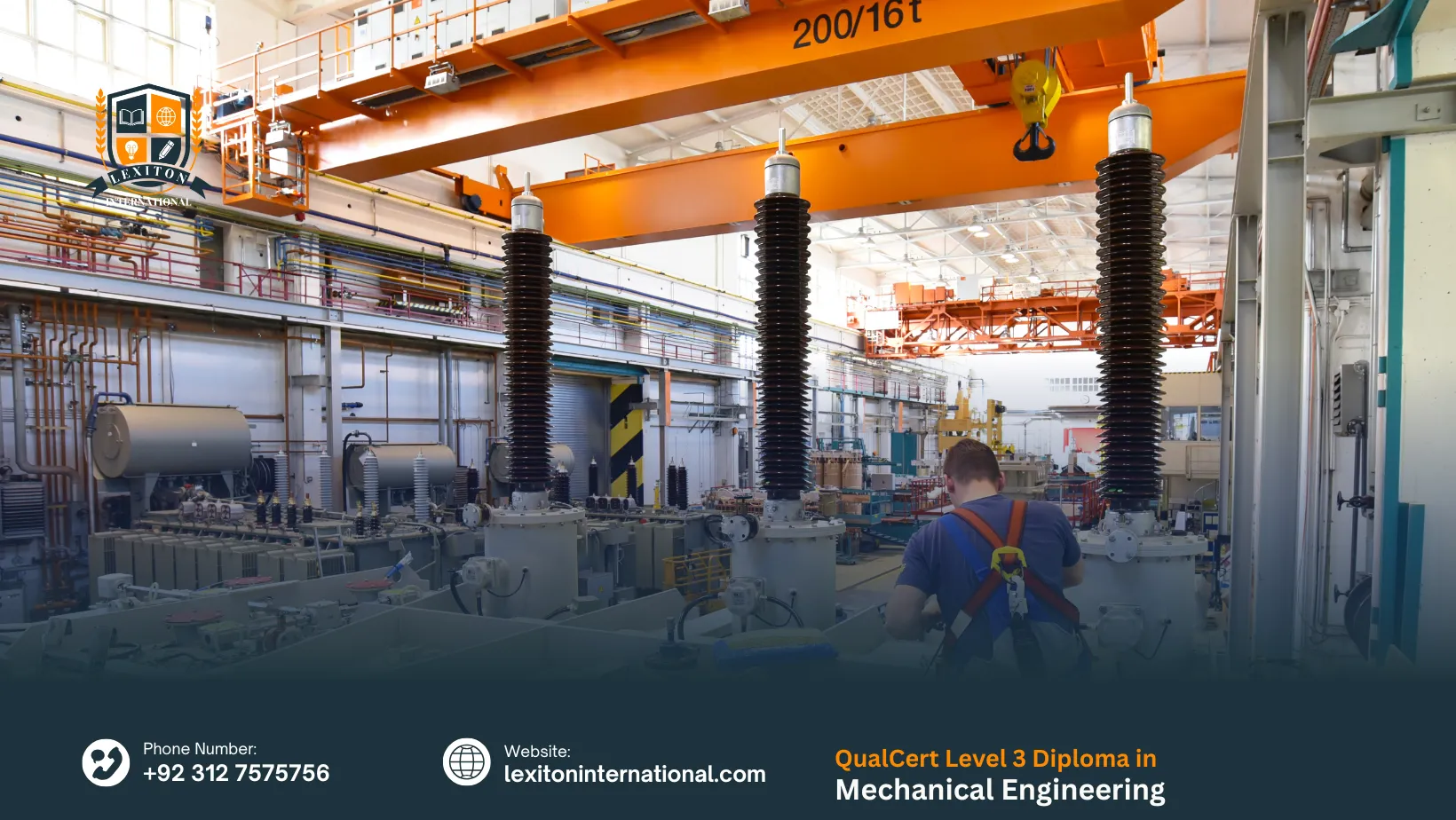
The QualCert Level 2 Diploma in Mechanical Technology is designed to provide learners with a strong entry-level foundation in mechanical principles, technical skills, and applied practices. This qualification is ideal for individuals who are beginning their journey into mechanical engineering and technology, offering a structured pathway to develop essential knowledge and hands-on experience. The program emphasizes practical learning alongside theoretical understanding, ensuring that learners are equipped to handle basic mechanical systems, tools, and processes with confidence. By focusing on core mechanical concepts, safety practices, and workplace readiness, the diploma prepares learners for immediate employment opportunities in technical roles or progression to higher-level qualifications in engineering.
The course introduces learners to the fundamental aspects of mechanical technology, including mechanical systems, materials, applied mathematics, and workshop practices. Learners will gain practical experience in using engineering tools, measuring instruments, and mechanical equipment, while also developing an understanding of how mechanical systems operate in industrial settings. The curriculum emphasizes problem-solving, technical accuracy, and safe working practices, ensuring that learners can apply their knowledge effectively in real-world environments. Through guided projects, case studies, and practical exercises, learners will build confidence in handling mechanical tasks and develop the skills necessary for entry-level roles in engineering and manufacturing industries.
In addition to technical training, the diploma supports the development of transferable skills such as teamwork, communication, and workplace discipline, which are essential for success in mechanical and industrial environments. Learners will explore how mechanical technology contributes to modern industries, gaining insights into manufacturing processes, maintenance operations, and product development. The qualification is structured to encourage progression, enabling learners to move confidently into advanced study or employment. By the end of the program, learners will have a solid grounding in mechanical technology, practical competence in workshop tasks, and the professional readiness required to contribute effectively to engineering teams and industrial operations.
To ensure learners are prepared for the academic and practical demands of the QualCert Level 2 Diploma in Mechanical Technology, applicants must meet the following entry requirements. These criteria are designed to support successful participation and progression within the program.
- Age Requirements: Applicants must be at least 16 years old at the time of enrollment, ensuring readiness for vocational-level study and workplace engagement.
- Qualification Requirements: A minimum of secondary school completion or equivalent qualification is required, with preference for candidates who have studied basic science or technical subjects.
- Professional Experience: Prior work experience is not mandatory, but exposure to mechanical workshops, technical environments, or vocational training will be considered an advantage.
- Educational Background: Learners should demonstrate a basic understanding of mathematics and science, as these subjects are essential for grasping mechanical technology concepts.
- English Language Proficiency: Applicants must have a reasonable command of English to understand course materials, complete assessments, and communicate effectively in technical contexts.
- Commitment to Learning: Candidates should show evidence of motivation, discipline, and the ability to manage independent study alongside practical training tasks.
Mandatory Units
Upon successful completion of the QualCert Level 2 Diploma in Mechanical Technology, students will have:
Advanced Mechanical Drawing & CAD
- Gain proficiency in creating advanced mechanical drawings using industry-standard CAD software.
- Develop the ability to produce 2D and 3D technical drawings for complex mechanical components and assemblies.
- Learn to interpret and analyze engineering drawings, ensuring they meet industry standards and specifications.
- Understand the principles of geometric dimensioning and tolerancing (GD&T) for accurate design representation.
- Apply CAD tools for the design, modification, and optimization of mechanical systems.
Fluid Mechanics & Hydraulics
- Understand the fundamental principles of fluid mechanics and their application to real-world systems.
- Develop the ability to analyze fluid flow, pressure, and velocity in pipes, channels, and open systems.
- Learn the theory and practical applications of hydraulic systems, including pumps, valves, and actuators.
- Gain knowledge in fluid statics, dynamics, and the behavior of fluids under various conditions.
- Solve problems related to fluid flow and hydraulic circuit design, ensuring efficient system operation.
Strength of Materials & Structural Analysis
- Understand the concepts of stress, strain, and deformation in materials under various loading conditions.
- Analyze the mechanical properties of materials and their behavior under tension, compression, bending, and torsion.
- Develop the ability to perform structural analysis on beams, frames, and trusses, applying principles of equilibrium and material strength.
- Apply the theories of elasticity and plasticity to predict material failure and optimize designs.
- Learn to calculate safety factors and assess the load-bearing capacity of structures.
Engineering Mathematics II
- Build on mathematical concepts from earlier courses to solve complex engineering problems.
- Apply advanced calculus, differential equations, and linear algebra to mechanical engineering contexts.
- Develop proficiency in solving problems related to dynamic systems, vibrations, and oscillations.
- Understand the mathematical modeling of engineering systems and use these models for analysis and design.
- Gain the skills necessary to apply numerical methods and computational tools for engineering calculations.
Control Systems & Automation
- Understand the principles of control systems, including open-loop and closed-loop feedback control.
- Develop the ability to model dynamic systems and analyze their stability and response.
- Gain knowledge of automation technologies, including sensors, actuators, and control algorithms.
- Apply control theory to the design and optimization of mechanical systems for precise operation and efficiency.
- Learn to use modern software tools for simulating and designing control systems and automated processes.
Thermodynamics & Heat Transfer
- Understand the laws of thermodynamics and their application to mechanical systems.
- Analyze energy conversion processes, including work, heat, and power generation in mechanical systems.
- Develop the ability to perform heat transfer calculations, including conduction, convection, and radiation.
- Apply thermodynamic principles to optimize system efficiency and performance in heat exchangers, engines, and refrigeration systems.
- Learn to design thermal systems that minimize energy loss and maximize performance in various applications.
The ideal learner for the QualCert Level 2 Diploma in Mechanical Technology is someone who demonstrates curiosity, discipline, and a willingness to build a strong foundation in mechanical principles. This profile highlights the qualities, skills, and attitudes that will enable learners to succeed in the program and prepare for future opportunities.
Academic Readiness
- Possesses a basic understanding of mathematics and science, particularly physics and applied mechanics
- Shows interest in mechanical concepts and their practical applications
- Demonstrates the ability to grasp theoretical knowledge and apply it in simple technical tasks
- Prepared to engage with structured coursework and guided study
- Willing to strengthen academic skills to support progression to higher-level qualifications
Technical Aptitude
- Comfortable working with basic engineering tools and workshop equipment
- Displays practical skills in handling mechanical components under supervision
- Willing to learn new techniques such as measurement, assembly, and maintenance practices
- Demonstrates accuracy and care in completing technical tasks
- Shows adaptability in applying mechanical knowledge to different contexts
Professional Attitude
- Maintains discipline, punctuality, and responsibility in academic and workshop settings
- Demonstrates teamwork and collaboration skills in group activities
- Communicates effectively with peers and instructors in technical contexts
- Shows respect for safety standards and workplace rules
- Exhibits motivation to pursue continuous learning and skill development
Personal Attributes
- Curious and eager to explore how mechanical systems work
- Resilient in overcoming challenges and learning from mistakes
- Organized in managing time, assignments, and workshop tasks
- Creative in approaching simple design and mechanical solutions
- Committed to achieving long-term career goals in mechanical technology
Career Orientation
- Interested in pursuing entry-level roles in mechanical engineering or manufacturing
- Seeks opportunities to gain practical experience in technical environments
- Motivated to progress toward higher-level qualifications in engineering
- Values hands-on training and industry relevance in learning
- Aspires to contribute meaningfully to industrial and technological development
The ideal learner is someone who combines academic readiness, technical aptitude, and professional commitment, ensuring they can fully benefit from the diploma and prepare for a successful career in mechanical technology.
The QualCert Level 2 Diploma in Mechanical Technology provides learners with a strong foundation for career advancement and further study. Successful graduates can pursue multiple pathways, ranging from higher education to entry-level industry roles.
Higher Education Pathways
- Progression to Level 3 diplomas in mechanical engineering or technology
- Entry into vocational programs in Industrial & Manufacturing Engineering or technical fields
- Opportunities to specialize in areas such as manufacturing, maintenance, or product design
- Preparation for certifications that build on mechanical foundations
Professional Career Opportunities
- Employment in entry-level mechanical engineering roles across manufacturing and industrial sectors
- Opportunities in maintenance, assembly, and workshop-based positions
- Roles in technical support or junior engineering assistance
- Entry into apprenticeship programs with engineering firms
- Pathways into production and operational roles in mechanical industries
Technical Specialization
- Development of expertise in workshop practices and mechanical assembly
- Specialization in basic product design and prototyping
- Opportunities to focus on maintenance and repair of mechanical systems
- Skills enhancement in measurement, safety, and technical documentation
- Ability to contribute to efficiency and performance in mechanical operations
Industry Engagement
- Participation in internships or apprenticeships to gain practical experience
- Collaboration with technical teams on supervised projects
- Opportunities to engage with industry standards and workplace practices
- Exposure to industrial environments and mechanical processes
- Development of professional portfolios showcasing technical competencies
Lifelong Learning and Development
- Continuous professional development through short courses and certifications
- Opportunities to attend workshops and technical training programs
- Engagement in emerging technologies and vocational skills
- Building teamwork and communication skills for career advancement
- Commitment to adapting to evolving industry demands and global mechanical trends
Future progression from this diploma opens diverse pathways for learners, enabling them to advance academically, professionally, and technically. Graduates will be well-prepared to contribute to mechanical industries and pursue lifelong growth in mechanical technology.
Curious About This Course?