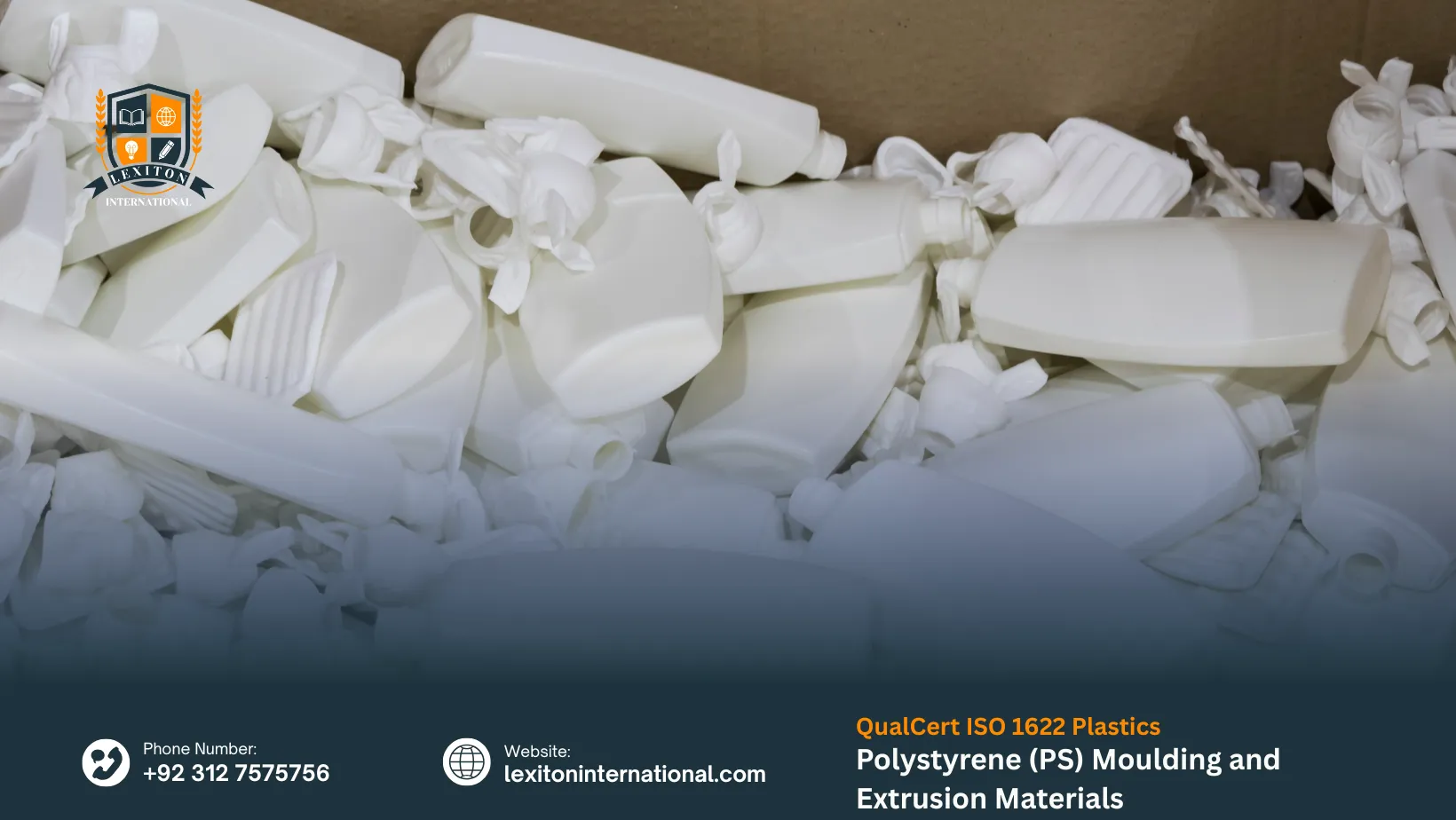
The QualCert ISO 1622 Plastics — Polystyrene (PS) Moulding and Extrusion Materials Course provides learners with a strong foundation in the properties, processing behaviour, and performance characteristics of polystyrene materials used in moulding and extrusion applications. This course introduces participants to the technical requirements outlined in ISO 1622, helping them understand how standardized testing, material classification, and quality parameters influence the production of reliable and high‑performance PS products. It is designed for individuals working in plastics manufacturing, quality control, engineering, and product development who want to enhance their understanding of material behaviour and industry standards.
The course offers a detailed overview of the structure and intent of ISO 1622, guiding learners through the essential criteria used to evaluate polystyrene materials for moulding and extrusion. Participants explore key topics such as material identification, thermal and mechanical properties, melt flow characteristics, and the influence of additives on product performance. Through practical examples and industry‑aligned explanations, learners gain insight into how PS materials respond to different processing conditions and how standardized testing ensures consistency, safety, and product reliability. This helps learners understand the importance of selecting the right grade of polystyrene for specific applications and how to interpret technical data sheets with confidence.
In addition, the course provides a comprehensive understanding of how ISO 1622 supports quality assurance, process optimization, and product conformity within manufacturing environments. Learners examine the relationship between material specifications, processing parameters, and final product performance, enabling them to identify potential issues and implement corrective measures effectively. The course also highlights the role of standardized testing in reducing defects, improving production efficiency, and ensuring compliance with customer and regulatory expectations. By the end of the program, participants are equipped with the knowledge needed to evaluate PS materials, support quality improvement initiatives, and contribute to more efficient moulding and extrusion operations.
To ensure that learners can fully benefit from this QualCert ISO 1622 Plastics — Polystyrene (PS) Moulding and Extrusion Materials, a set of entry requirements has been established.
- Age Requirement: Applicants must be at least 18 years old to ensure they possess the maturity and responsibility needed to understand technical concepts and industry practices.
- Qualification Requirement: A basic qualification such as a certificate or diploma in engineering, manufacturing, or a related technical field is recommended to support comprehension of material properties and processing principles.
- Professional Experience: Experience in plastics manufacturing, moulding, extrusion, quality control, or industrial operations is beneficial, helping learners relate course content to real production environments.
- Educational Background: A general educational background in science, engineering, or industrial technology is preferred, as it supports understanding of material behaviour, testing methods, and process requirements.
- Language Proficiency Requirement: Learners should have a good command of English to understand technical terminology, participate in discussions, and complete assessments effectively.
- Technical Skills Requirement: Basic computer literacy is required, including the ability to use digital documents, online learning platforms, and technical resources relevant to the course.
Mandatory Units
The learning outcomes for the ISO 1622 Plastics — Polystyrene (PS) Moulding and Extrusion Materials Course are designed to equip learners with the technical knowledge, analytical skills, and practical understanding required to work confidently with PS materials in moulding and extrusion environments. Each unit builds progressively, ensuring participants gain a strong foundation in material science, processing techniques, quality control, and compliance with ISO standards.
1. Introduction to Polystyrene (PS) Moulding and Extrusion
- Describe the origin, chemical composition, and structural characteristics that define polystyrene as a versatile thermoplastic material.
- Explain the purpose, scope, and relevance of ISO 1622 in standardizing PS moulding and extrusion processes.
- Identify major industrial applications of PS, including its use in injection moulding, sheet extrusion, and thermoforming.
- Recognize the role of PS in key manufacturing sectors such as packaging, electronics, consumer goods, and insulation products.
- Assess how PS properties influence its suitability for different processing methods and end‑use applications.
2. Material Properties and Quality Control Standards
- Understand the essential physical, mechanical, and thermal properties of PS, including density, melt flow, tensile strength, and heat resistance.
- Explain the importance of standardized testing, material consistency, and quality assurance in PS production.
- Apply ISO‑referenced quality control procedures to evaluate PS materials during incoming inspection and production stages.
- Interpret technical data sheets (TDS), certificates of analysis, and material specifications to verify compliance with ISO 1622.
- Evaluate how variations in material properties affect processing performance and final product quality.
3. Extrusion and Moulding Process Techniques
- Describe the complete workflow of PS moulding and extrusion, from material preparation to final product formation.
- Identify essential equipment such as extruders, moulds, screw designs, heaters, and cooling systems used in PS processing.
- Demonstrate knowledge of critical processing parameters including temperature profiles, feed rates, screw speed, and pressure control.
- Distinguish between various moulding and extrusion techniques used for PS, such as injection moulding, sheet extrusion, and profile extrusion.
- Evaluate how processing conditions influence product quality, dimensional stability, and surface finish.
4. Defects, Testing, and Troubleshooting in PS Processing
- Identify common defects in PS products, including warping, voids, brittleness, flow marks, and discoloration.
- Apply relevant ISO test methods such as melt flow rate testing (ISO 1133) and density measurement (ISO 1183) to assess product quality.
- Analyze the root causes of defects by examining processing conditions, material behaviour, and equipment performance.
- Recommend corrective actions to resolve defects and improve consistency in moulding and extrusion operations.
- Implement a structured troubleshooting approach to maintain stable production and reduce waste.
5. Regulatory Compliance and Environmental Considerations
- Understand key health, safety, and environmental regulations governing PS manufacturing, handling, and storage.
- Comply with ISO standards related to safe material handling, workplace controls, and emissions management.
- Describe the environmental impact of PS, including waste generation, recyclability, and lifecycle considerations.
- Discuss recycling methods, waste reduction strategies, and responsible disposal practices for PS materials.
- Evaluate emerging trends in sustainable PS alternatives, eco‑friendly additives, and green processing technologies.
6. Classification and Identification of PS Moulding and Extrusion Grades
- Differentiate between various PS grades based on molecular structure, performance characteristics, and processing behaviour.
- Interpret ISO‑based classification systems for PS types such as GPPS (General Purpose Polystyrene), HIPS (High Impact Polystyrene), and EPS (Expanded Polystyrene).
- Select the most suitable PS grade for specific moulding or extrusion applications based on technical requirements.
- Label, document, and categorize PS materials accurately in accordance with ISO 1622 guidelines.
- Evaluate how grade selection influences product performance, durability, and processing efficiency.
The ideal learner for QualCert ISO 1622 Plastics — Polystyrene (PS) Moulding and Extrusion Materials is someone who is motivated to understand the technical, practical, and compliance aspects of polystyrene moulding and extrusion. This program is designed for individuals who want to strengthen their knowledge of ISO standards, material properties, and industrial applications.
Plastics Manufacturing Professionals
- Individuals working in moulding, extrusion, or plastics production environments
- Operators and technicians seeking deeper knowledge of PS processing methods
- Professionals responsible for monitoring production quality and efficiency
- Those aiming to reduce defects and improve product consistency
- Learners committed to enhancing their technical expertise in plastics
Quality Assurance and Compliance Officers
- Personnel involved in material testing and quality control procedures
- Professionals ensuring compliance with ISO standards and industry regulations
- Individuals responsible for interpreting technical data sheets and certifications
- Those seeking to strengthen their auditing and inspection skills
- Learners focused on maintaining high product reliability and safety
Engineers and Technical Specialists
- Engineers working in product design, development, or manufacturing processes
- Technical staff responsible for selecting appropriate PS grades for applications
- Individuals interested in optimizing extrusion and moulding parameters
- Professionals aiming to troubleshoot and resolve production challenges
- Learners seeking to apply engineering principles to plastics processing
Supervisors and Production Managers
- Managers overseeing plastics manufacturing operations and workforce safety
- Supervisors responsible for coordinating production schedules and resources
- Individuals aiming to improve operational efficiency and reduce waste
- Leaders seeking to strengthen their understanding of ISO 1622 requirements
- Learners committed to driving continuous improvement in production environments
Consultants and Trainers
- Consultants advising organizations on plastics processing and compliance
- Trainers delivering technical programs in manufacturing or materials science
- Professionals supporting organizations in ISO certification readiness
- Individuals aiming to expand their consulting expertise into plastics standards
- Learners committed to guiding others in best practices for PS processing
Aspiring Specialists in Plastics Standards
- Individuals preparing for careers in plastics auditing and certification
- Learners seeking recognition as specialists in PS moulding and extrusion
- Professionals aiming to broaden their technical portfolio with ISO 1622 knowledge
- Those interested in contributing to sustainable plastics practices
- Learners motivated to build credibility in the field of plastics manufacturing
This course is ideal for learners who value technical precision, compliance, and innovation, and who are ready to apply their knowledge to improve plastics moulding and extrusion processes.
Completing the ISO 1622 Plastics — Polystyrene (PS) Moulding and Extrusion Materials Course opens pathways for learners to advance their careers, expand their technical expertise, and pursue specialized certifications and diplomas in plastics and manufacturing standards.
Advanced Technical Roles
- Opportunities to take on senior roles in plastics manufacturing operations
- Ability to oversee moulding and extrusion processes with greater authority
- Enhanced credibility in managing production efficiency and quality outcomes
- Increased responsibility in troubleshooting and process optimization
- Recognition as a technical specialist in PS materials
Quality and Compliance Pathways
- Advancement into senior quality assurance or compliance positions
- Opportunities to lead ISO‑aligned audits and inspections in plastics industries
- Ability to implement and monitor quality control frameworks effectively
- Strengthened role in ensuring product conformity and customer satisfaction
- Recognition as a compliance expert in plastics processing
Consulting and Advisory Opportunities
- Ability to provide consultancy services in ISO 1622 implementation
- Opportunities to support organizations in achieving plastics certifications
- Capability to advise on material selection, defect reduction, and process improvement
- Enhanced reputation as a trusted advisor in plastics manufacturing
- Potential to expand into multi‑standard consulting across related ISO frameworks
Further Diplomas and Certifications
- Eligibility to pursue advanced diplomas in plastics technology or materials science
- Opportunities to expand into certifications for ISO 9001 (Quality Management) or ISO 14001 (Environmental Management)
- Ability to specialize in integrated management systems for manufacturing industries
- Strengthened foundation for certifications in polymer testing and quality assurance
- Increased potential for recognition through industry‑specific technical diplomas
Training and Instructional Roles
- Ability to deliver internal training on PS moulding and extrusion processes
- Opportunities to develop technical training materials for workforce development
- Capability to mentor junior staff and technicians in plastics manufacturing
- Potential to conduct workshops on ISO 1622 compliance and best practices
- Recognition as a subject‑matter expert in plastics education
Leadership and Continuous Improvement Roles
- Opportunities to lead organizational initiatives for process improvement
- Ability to influence strategic decisions in plastics manufacturing operations
- Increased involvement in sustainability and recycling programs for PS materials
- Capability to drive innovation in product design and material applications
- Strengthened role in shaping organizational culture toward quality and compliance
This course provides a strong platform for learners to progress into advanced roles, pursue specialized certifications, and contribute meaningfully to the plastics industry through technical expertise, compliance, and innovation.
Curious About This Course?