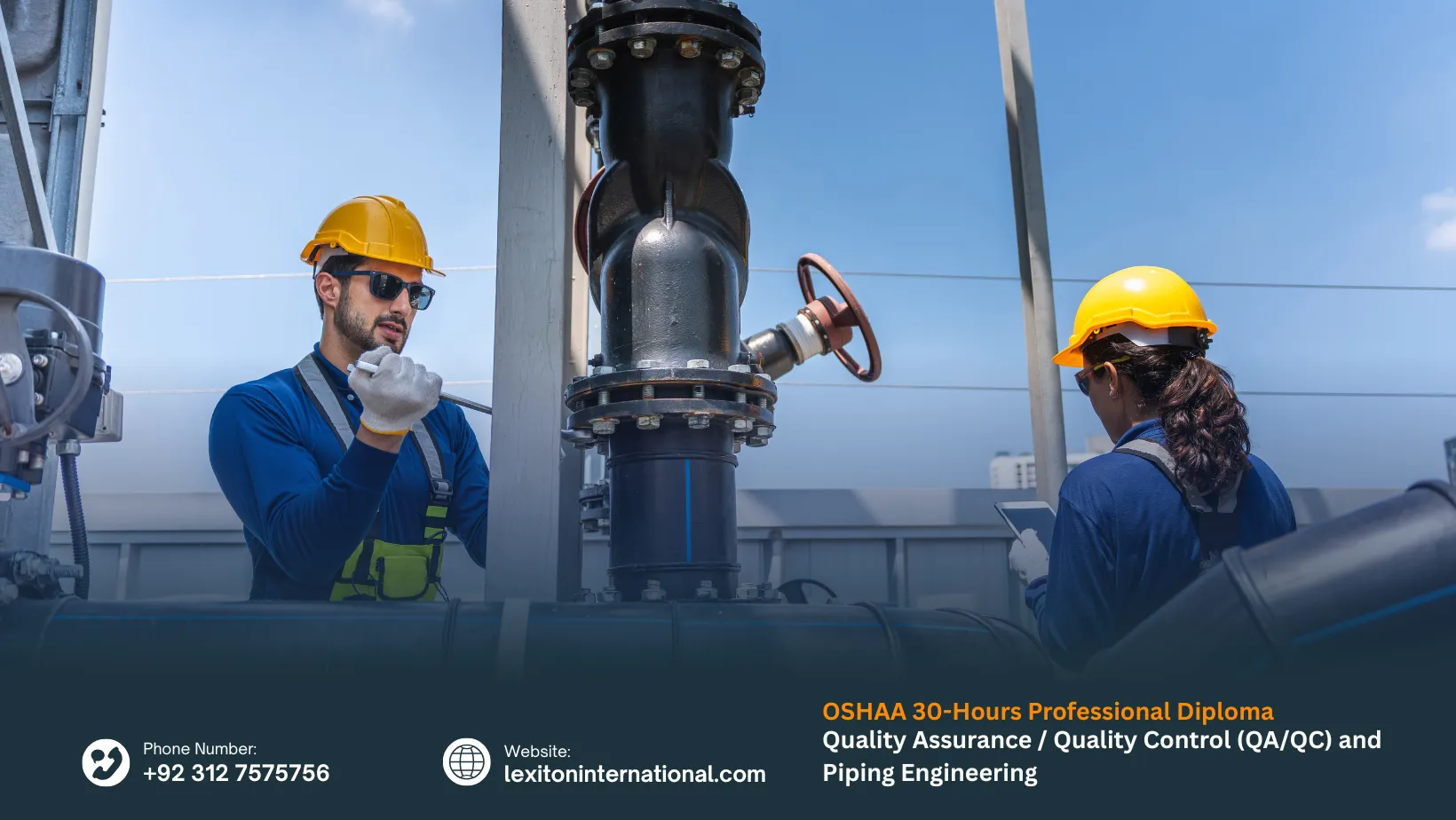
The OSHAA 30-Hours Professional Diploma in Quality Assurance / Quality Control (QA/QC) and Piping Engineering is a career-focused professional training programme designed to provide learners with practical knowledge of quality assurance, quality control, inspection practices, engineering documentation, and piping engineering used across modern industrial projects. As industries increasingly prioritise safety, compliance, operational efficiency, and product reliability, organisations seek professionals who understand how quality management systems and piping standards contribute to successful project delivery. This diploma equips learners with industry relevant knowledge that supports quality-driven engineering operations across sectors such as oil and gas, petrochemicals, power generation, manufacturing, construction, and process industries.
Throughout the course, learners develop an understanding of the core principles of Quality Assurance (QA) and Quality Control (QC), alongside the fundamentals of piping systems, engineering drawings, inspection procedures, material verification, quality documentation, testing methods, and recognised engineering practices. Rather than focusing solely on theory, the programme introduces practical concepts that reflect real workplace expectations, helping learners understand how quality planning, inspection, compliance, and technical documentation contribute to safe, efficient, and reliable engineering projects. This knowledge helps reduce errors, improve project quality, and support compliance with established industry standards throughout the project lifecycle.
Whether you are beginning a career in engineering, working as a technician or inspector, or looking to strengthen your expertise in quality management and piping engineering, the OSHAA 30-Hours Professional Diploma in Quality Assurance / Quality Control (QA/QC) and Piping Engineering provides valuable skills that can be applied across a wide range of industrial environments. By combining QA/QC principles with piping engineering fundamentals, the course prepares learners to support quality focused engineering teams, contribute to inspection and quality assurance processes, interpret engineering documentation with greater confidence, and enhance their professional competence in today’s competitive engineering and industrial sectors.
- Age Requirement: Learners must be at least 16 years old at the time of enrolment for this course.
- Professional Experience: No prior experience required.
- Educational Background: Basic secondary school education or an equivalent qualification is recommended.
- Language Proficiency: Learners should have basic English skills.
Mandatory Units
Skills You Will Gain
Fundamentals of QA/QC in Piping Engineering (2 Hours)
• Understand the core principles and objectives of quality assurance and quality control
• Recognise the importance of QA/QC in piping-related industries
• Identify the roles and responsibilities of QA/QC professionals in project execution
Piping Materials, Components, and Manufacturing Processes (3 Hours)
• Identify common piping materials and their mechanical properties
• Understand the selection criteria for pipes, fittings, flanges, and valves
• Describe various manufacturing and fabrication processes used in piping systems
Welding Technology and Procedure Qualification (4 Hours)
• Explain different welding techniques applicable to piping systems
• Understand welding procedure specifications (WPS) and procedure qualification records (PQR)
• Identify welding symbols and interpret basic weld inspection results
International Codes and Standards: ASME, API, ISO (6 Hours)
• Interpret key international piping standards and codes
• Understand how ASME, API, and ISO standards apply to QA/QC practices
• Apply relevant codes to assess compliance during inspection and testing processes
Non-Destructive Testing (NDT): Methods and Applications (4 Hours)
• Identify various NDT techniques including VT, PT, MT, UT, and RT
• Understand the principles and applications of each NDT method
• Recognise how NDT supports piping system integrity and quality assurance
Interpretation of Piping Isometrics and Layout Drawings (3 Hours)
• Read and interpret piping isometric drawings and layout plans
• Extract essential inspection and verification information from drawings
• Validate piping installation against approved design specifications
Inspection and Test Plans (ITPs) in QA/QC Projects (3 Hours)
• Understand the structure and purpose of ITPs in piping projects
• Develop basic ITPs for piping fabrication and installation activities
• Monitor and document inspection stages in accordance with ITP requirements
Identification and Evaluation of Piping Defects (2 Hours)
• Identify common fabrication and welding defects in piping systems
• Understand causes, risks, and implications of piping defects
• Apply inspection findings to recommend corrective actions
Quality Documentation and Reporting in QA/QC
• Understand the role of WPS, PQR, and NDT reports in quality control
• Maintain accurate and traceable quality records
• Support audits and inspections through proper documentation practicesT Reports, and Records (3 Hours)
• Understand the purpose and contents of essential QA/QC documents
• Accurately review and interpret WPS, PQR, and NDT reports
• Maintain proper documentation and compliance records for audit and verification purposes
This course is recommended for individuals who want to build practical knowledge of Quality Assurance (QA), Quality Control (QC), inspection practices, and piping engineering within industrial environments. It is suitable for learners seeking industry-relevant skills that support quality management, compliance, safety, and reliable engineering operations across sectors such as oil and gas, petrochemicals, manufacturing, construction, and power generation.
Who Is This Course For
- QA/QC Professionals developing quality assurance, quality control, and inspection expertise for industrial projects.
- QA/QC Inspectors improving piping inspection, quality documentation, and compliance monitoring skills.
- Welding Inspectors enhancing weld inspection, defect identification, and quality verification knowledge.
- Mechanical Engineers involved in piping systems, fabrication, inspection, and quality management activities.
- Piping Engineers and Technicians strengthening piping engineering, inspection, and QA/QC practices.
- Fabrication Supervisors managing quality standards, inspection procedures, and engineering compliance.
- Construction Professionals working across oil and gas, petrochemical, manufacturing, power, and industrial projects.
- Maintenance and Plant Personnel improving knowledge of piping systems, equipment quality, and inspection processes.
- Site Supervisors and Project Coordinators overseeing quality focused engineering operations and technical documentation.
- Individuals building practical knowledge of QA/QC principles, piping engineering, inspection techniques, and engineering documentation.
Completing the OSHAA 30-Hours Professional Diploma in Quality Assurance / Quality Control (QA/QC) and Piping Engineering equips learners with practical knowledge that can be applied across a wide range of engineering and industrial environments. The skills gained through this course support quality-focused operations, inspection activities, piping engineering processes, and compliance with recognised industry practices. Learners can use this knowledge to strengthen their professional capabilities and contribute more effectively to quality-driven engineering projects.
Future Progression
- Apply QA/QC Principles in engineering and construction projects.
- Support Piping Engineering with piping systems and technical documentation.
- Conduct Inspection Activities using recognised QA/QC procedures.
- Improve Quality Compliance through industry best practices.
- Manage Quality Documentation including inspection records and reports.
- Strengthen Engineering Processes with effective quality control techniques.
- Collaborate with Project Teams across engineering and construction disciplines.
- Apply Skills Across Industries including oil and gas, manufacturing, and power.
- Enhance Quality Awareness by identifying and addressing quality issues.
- Demonstrate Practical QA/QC Knowledge in piping and industrial engineering environments.
Curious About This Course?