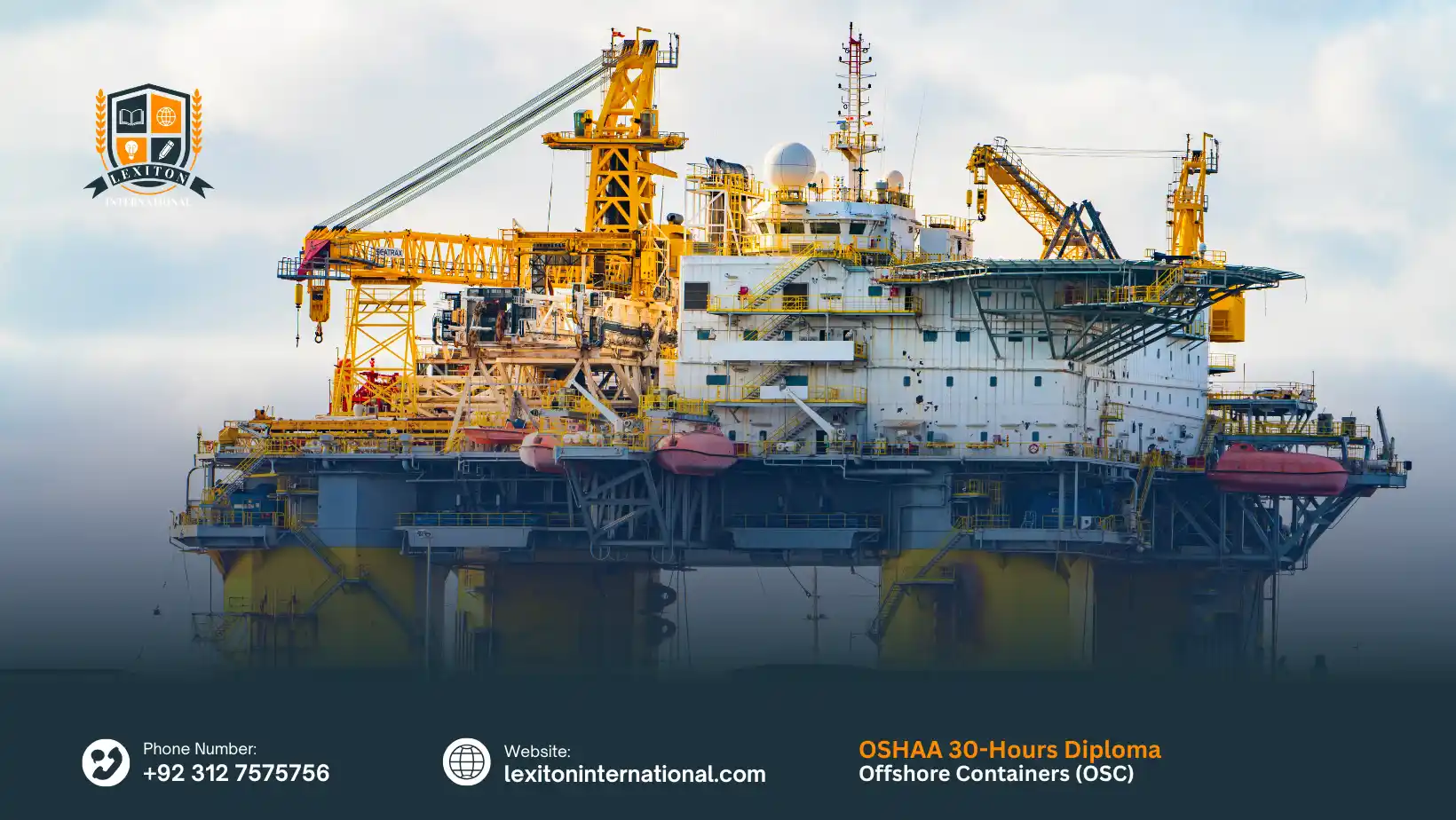
The OSHA 30-Hours Diploma in Offshore Containers (OSC) is a specialized program designed to equip professionals with the skills and knowledge needed to safely handle, inspect, and manage offshore containers in demanding marine and offshore environments. Offshore container operations involve unique hazards due to transportation at sea, lifting operations, and storage under challenging conditions. This diploma ensures learners understand international safety standards, regulatory compliance, and practical procedures to prevent accidents and protect both personnel and cargo.
Offshore operations are critical to industries such as oil and gas, marine logistics, and offshore construction, where improper handling of containers can lead to serious injuries, environmental hazards, and costly operational delays. The OSHA 30-Hours Diploma in Offshore Containers (OSC) provides participants with practical insights into safe container handling, secure lifting techniques, and compliance with regulatory frameworks. Professionals trained through this program gain the confidence to make informed decisions, reduce workplace risks, and contribute to efficient offshore operations.
Aligned with guidance from the Occupational Safety and Health Administration, the OSHA 30-Hours Diploma in Offshore Containers (OSC) combines theoretical knowledge with real-world applications. Completing this course enhances professional credibility, promotes workplace safety, and equips learners with the expertise required to manage offshore container operations responsibly in high-risk environments.
- Age Requirement: Applicants must be at least 18 years old to ensure maturity, responsibility, and readiness for professional-level safety training responsibilities.
- Professional Experience: Prior exposure to offshore, marine, or logistics environments is beneficial but not mandatory for learning.
- Educational Background: Secondary education or equivalent is recommended to understand safety guidelines and technical instructions.
- Language Proficiency: Participants should have a good command of English to communicate effectively, deliver training sessions, and understand course materials.
Mandatory Units
Skills You Will Gain
Introduction to Offshore Containers and Industry Regulations (3 hours)
- Understand the role and importance of offshore containers in marine and oil & gas operations.
- Identify key international regulations and standards (e.g., DNV 2.7-1, ISO, IMDG Code).
- Recognize classification and certification requirements for offshore containers.
Design and Manufacturing Standards (3 hours)
- Explain the fundamental design principles of offshore containers.
- Interpret manufacturing standards and requirements for structural integrity.
- Understand material selection, welding criteria, and safety margins in design.
Inspection and Testing Procedures (5 hours)
- Perform visual and non-destructive testing techniques for offshore containers.
- Identify inspection intervals and documentation protocols.
- Evaluate load testing procedures and inspection criteria for certification compliance.
Maintenance and Repairs of Offshore Containers (3 hours)
- Identify common types of damage and deterioration in offshore containers.
- Apply appropriate maintenance and repair strategies according to industry standards.
- Understand the importance of inspection records and repair traceability.
Lifting Operations and Rigging Practices (5 hours)
- Understand safe lifting practices and offshore rigging techniques.
- Select appropriate slings, shackles, and lifting accessories for different operations.
- Identify load limits, center of gravity, and risk factors during lifting procedures.
Container Identification, Marking, and Traceability (2 hours)
- Recognize mandatory markings, ID numbers, and certification plates on offshore containers.
- Understand data tracking and traceability systems in container logistics.
- Apply proper labeling procedures to ensure regulatory compliance.
Corrosion Protection and Surface Treatment (2 hours)
- Identify common corrosion mechanisms affecting offshore containers.
- Understand coating types, surface preparation, and protective treatment methods.
- Apply preventive strategies to extend container lifespan in marine environments.
Risk Assessment and Hazard Control (3 hours)
- Conduct risk assessments specific to offshore container operations.
- Identify potential hazards and implement appropriate control measures.
- Apply proactive safety planning to mitigate risks in container handling.
Roles and Responsibilities in Offshore Logistics (5 hours)
- Define the roles of key personnel involved in offshore container logistics.
- Understand the responsibilities of safety officers, inspectors, and logistics coordinators.
- Coordinate effective communication and documentation practices in offshore operations.
This course is designed for professionals involved in offshore operations who need to handle, inspect, or manage offshore containers safely. The OSHA 30-Hours Diploma in Offshore Containers (OSC) is ideal for learners seeking practical skills to prevent accidents, maintain compliance, and ensure operational efficiency. It is particularly suited for individuals who want to strengthen their expertise in offshore container handling and contribute to a safer marine work environment.
Who Is This Course For
- Offshore logistics personnel and stevedores
- Crane operators handling offshore container lifts
- Safety officers and compliance managers
- Marine engineers and offshore technicians
- Site supervisors in offshore projects
- Freight and shipping coordinators
- Contractors responsible for offshore container operations
- Professionals aiming to reduce risk and improve operational safety
Completing the OSHA 30-Hours Diploma in Offshore Containers (OSC) builds a solid foundation for advanced roles in offshore logistics and container management. Learners develop strong hazard recognition skills, regulatory awareness, and operational competence.
Future Progression
- Supervising offshore container handling and lifting operations
- Supporting compliance with international maritime safety standards
- Planning and coordinating offshore logistics projects
- Training or mentoring junior staff in safe container management
- Implementing safety protocols for offshore operations
- Improving career prospects in marine and offshore industries
- Enhancing professional credibility in high-risk environments
- Progressing to specialized safety or offshore logistics training.
Curious About This Course?