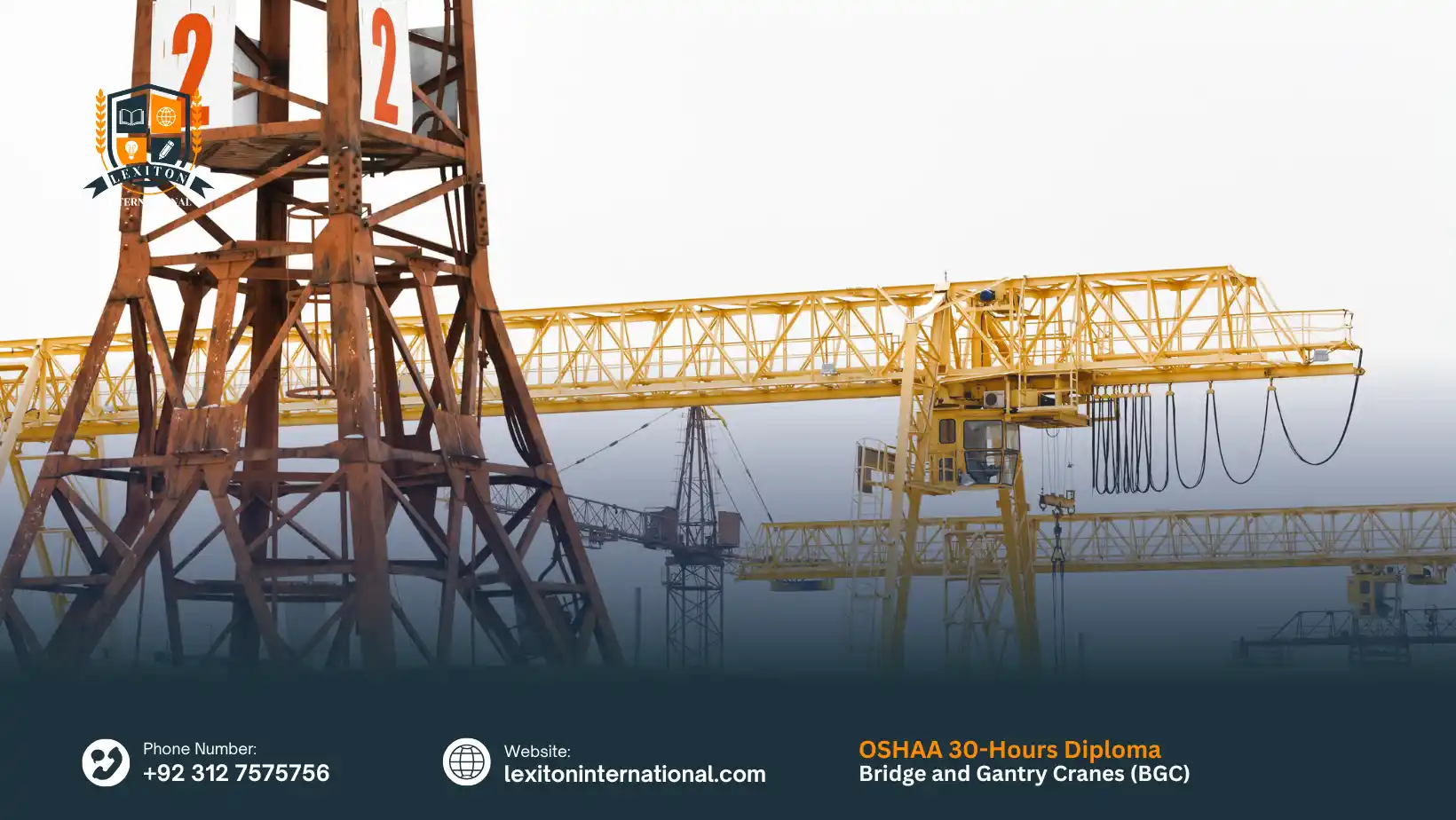
The OSHA 30-Hours Diploma in Bridge and Gantry Cranes (BGC) is a specialized training program designed to equip professionals with the knowledge and skills needed for safe and efficient operation of bridge and gantry cranes. These cranes are critical in industrial, manufacturing, and construction environments, but they also present significant safety risks if not handled correctly. This diploma ensures learners understand operational procedures, hazard identification, and compliance standards, reducing the risk of accidents and enhancing workplace efficiency.
Bridge and gantry cranes are integral to lifting and moving heavy loads in diverse industries, yet improper operation can lead to severe injuries, property damage, and costly delays. The OSHA 30-Hours Diploma in Bridge and Gantry Cranes (BGC) focuses on developing technical proficiency, safety awareness, and risk management skills. Professionals trained through this course gain the confidence to conduct lifts safely, maintain compliance with regulatory standards, and improve operational workflows in their organizations.
Aligned with guidelines from the Occupational Safety and Health Administration, the OSHA 30-Hours Diploma in Bridge and Gantry Cranes (BGC) combines theoretical knowledge with practical applications. Completing this course enhances professional credibility, fosters a safety-first mindset, and equips learners to handle bridge and gantry cranes responsibly in high-risk environments, ensuring safer workplaces and more efficient operations.
- Age Requirement: Applicants must be at least 18 years old to ensure maturity, responsibility, and readiness for professional-level safety training responsibilities.
- Professional Experience: Prior experience in industrial, construction, or crane operations is beneficial but not mandatory.
- Educational Background: Secondary education or equivalent is recommended to understand safety procedures and technical instructions.
- Language Proficiency: Participants should have a good command of English to communicate effectively, deliver training sessions, and understand course materials.
Mandatory Units
Skills You Will Gain
Introduction to OSHAA Standards and Crane Safety Regulations (2 Hours)
- Understand the purpose and framework of OSHAA regulations for crane operations
- Identify the legal responsibilities of crane operators, supervisors, and employers
- Interpret key safety standards and compliance requirements relevant to crane usage
Overview of Bridge and Gantry Crane Types and Components (3 Hours)
- Distinguish between various types of bridge and gantry cranes
- Describe major components and operational features of each crane type
- Assess suitable crane types for different industrial applications
Load Capacity, Stability, and Equipment Selection (4 Hours)
- Calculate load capacities based on crane specifications and site conditions
- Understand factors affecting crane stability during lifting operations
- Select appropriate lifting equipment and accessories for specific tasks
Pre-Operational Checks and Preventive Maintenance (6 Hours)
- Conduct detailed pre-operational inspections of crane systems
- Develop preventive maintenance plans to reduce breakdown risks
- Identify common mechanical and electrical issues through inspection protocols
Safe Operating Techniques for Bridge and Gantry Cranes (4 Hours)
- Apply industry-recommended procedures for safe crane operation
- Manage crane movement, load control, and obstacle avoidance effectively
- Prevent accidents through continuous situational awareness and safety checks
Mechanical, Electrical, and Structural Safety Systems (3 Hours)
- Explain the functions of key mechanical and electrical safety components
- Monitor structural integrity of crane support systems
- Implement safety protocols for control panels, limit switches, and brakes
Hazard Identification and Site Risk Assessment (3 Hours)
- Identify environmental and operational hazards specific to crane operations
- Perform structured risk assessments in various job site conditions
- Recommend appropriate control measures to mitigate identified risks
Signaling Systems and Team Coordination During Lifting (3 Hours)
- Understand hand signals, audible alarms, and radio communication standards
- Coordinate effectively with ground personnel during lifting tasks
- Improve team synchronization through clear communication and defined roles
Emergency Situations and Incident Response Procedures (2 Hours)
- Respond promptly to mechanical failures and load instability scenarios
- Execute emergency shutdown and recovery protocols
- Report incidents accurately and support post-incident investigations
This course is designed for professionals operating or supervising bridge and gantry cranes who want to enhance their safety awareness and technical expertise. The OSHA 30-Hours Diploma in Bridge and Gantry Cranes (BGC) is ideal for those aiming to prevent accidents, ensure regulatory compliance, and improve operational efficiency. It benefits individuals seeking practical knowledge for daily crane operations and risk management.
Who Is This Course For
- Bridge and gantry crane operators looking for formal certification
- Industrial site supervisors overseeing lifting operations
- Maintenance and mechanical engineers working with cranes
- Safety officers responsible for compliance in industrial environments
- Project managers coordinating material handling tasks
- Contractors managing heavy lifting operations
- Workers aiming to reduce operational hazards and downtime
- Professionals seeking to improve workplace safety and efficiency.
After completing the OSHA 30-Hours Diploma in Bridge and Gantry Cranes (BGC), learners gain the skills and confidence to operate cranes safely, manage lifting operations efficiently, and contribute to a safer work environment. This course is ideal for professionals aiming to take on more responsibility, improve compliance with safety standards, and enhance operational efficiency in industrial and construction settings.
Future Progression
- Supervising bridge and gantry crane operations safely
- Supporting compliance with OSHA and industrial safety standards
- Planning and coordinating lifting operations in industrial projects
- Training or mentoring junior operators
- Implementing effective safety protocols on site
- Enhancing employability in industrial and construction sectors
- Improving leadership and communication skills within teams
Curious About This Course?