
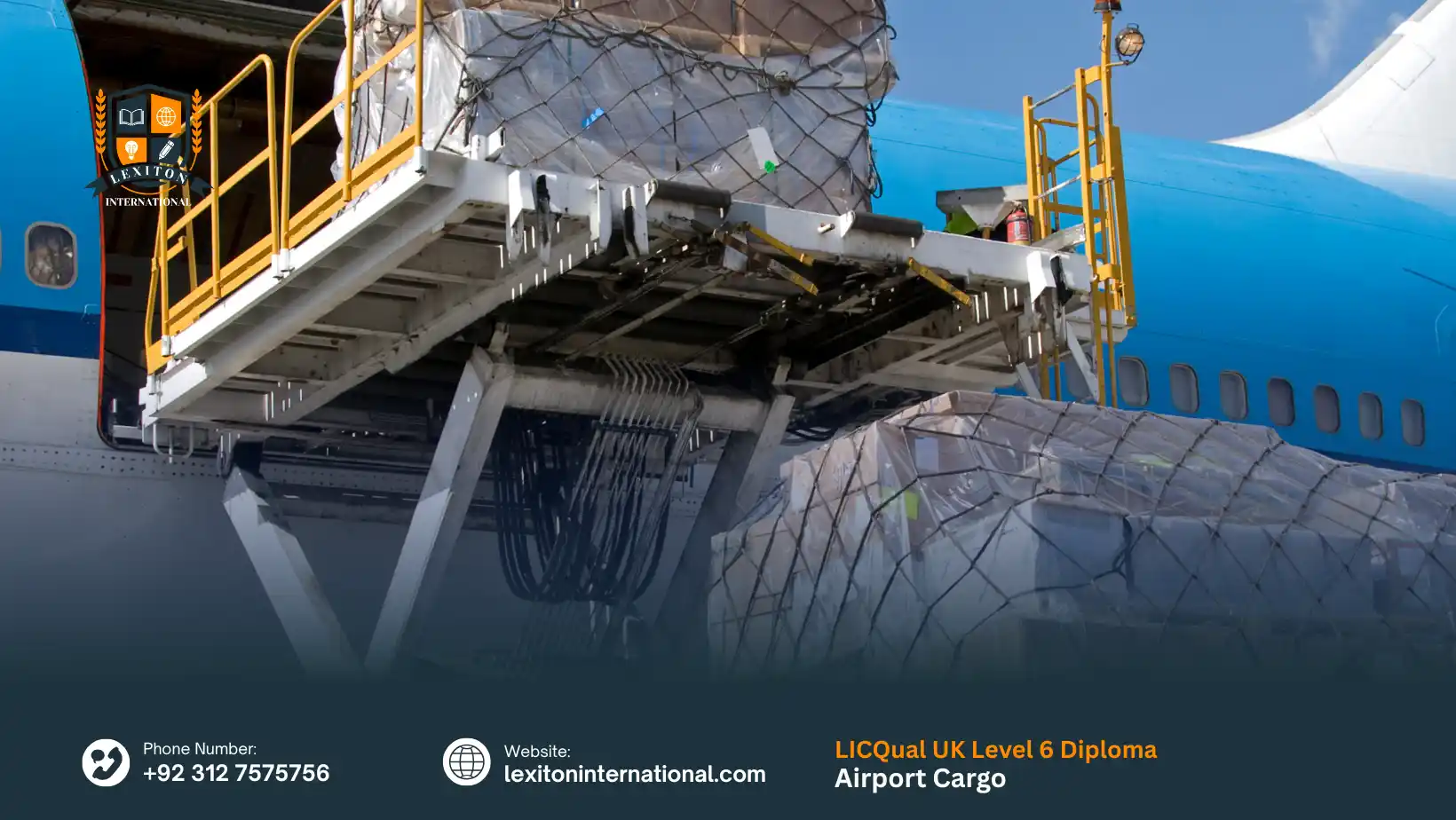
Level 6 LICQual Diploma in Cargo Safety
Global trade relies heavily on airports as hubs for the safe and efficient movement of goods. Every day, thousands of tons of cargo pass through airport systems, making compliance, risk management, and operational excellence essential. In this fast‑paced environment, professionals who understand the complexities of airport cargo operations are vital to ensuring reliability and trust.
The LICQual UK Level 6 Diploma in Airport Cargo highlights the importance of preparing individuals to meet these challenges with confidence. Airport cargo management is not simply about logistics; it is about proactive risk control, leadership in safety culture, and awareness of international standards. As global commerce continues to expand, the demand for highly skilled professionals who can uphold safety standards and contribute to secure cargo operations has never been greater.
By pursuing the LICQual UK Level 6 Diploma in Airport Cargo, learners position themselves as capable leaders ready to take responsibility, solve complex cargo challenges, and contribute to the future of secure and efficient airport logistics.
- Age Requirements: Applicants must be 19 years or above at the time of enrollment.
- Professional Experience: Prior exposure to cargo, logistics, or airport environments is beneficial.
- Educational Background: A qualification in business, management, logistics, or aviation studies is recommended.
- English Language Proficiency: Learners must have good written and spoken English skills to engage effectively with course materials, reporting tasks, and communication in industrial settings.
Mandatory Units
1. Global Air Cargo Management & Strategy
By the end of this unit, learners will be able to:
- Critically evaluate global air cargo markets, trade flows, and competitive dynamics.
- Develop strategic plans for airport cargo operations aligned with international business goals.
- Analyze the impact of globalization, e‑commerce, and digitalization on air cargo growth.
- Apply advanced forecasting and demand planning techniques to cargo operations.
- Assess the role of alliances, partnerships, and intermodal integration in global cargo strategy.
- Recommend strategic improvements to enhance efficiency, profitability, and sustainability.
2. Advanced Cargo Operations & Supply Chain Integration
By the end of this unit, learners will be able to:
- Integrate airport cargo operations with multimodal supply chain networks.
- Apply advanced logistics models to optimize cargo flow, warehousing, and distribution.
- Evaluate the role of automation, robotics, and AI in modern cargo operations.
- Design solutions to minimize bottlenecks and improve supply chain resilience.
- Critically assess the impact of global disruptions (pandemics, trade wars, climate change) on cargo supply chains.
- Implement best practices for end‑to‑end cargo visibility and customer satisfaction.
3. International Aviation Law, Compliance & Risk Management
By the end of this unit, learners will be able to:
- Interpret ICAO, IATA, WTO, and WCO regulations governing international cargo operations.
- Apply legal frameworks to ensure compliance in customs, security, and liability management.
- Evaluate contractual obligations in cargo agreements, insurance, and freight forwarding.
- Assess risk management strategies to mitigate operational, financial, and legal risks.
- Analyze case studies of regulatory breaches and propose corrective actions.
- Recommend compliance frameworks that align with global aviation law and corporate governance.
4. Leadership & Human Resource Management in Cargo Operations
By the end of this unit, learners will be able to:
- Demonstrate leadership skills for managing diverse teams in airport cargo environments.
- Apply HR strategies for recruitment, training, and retention in aviation logistics.
- Evaluate performance management systems to improve workforce productivity.
- Analyze the role of organizational culture in enhancing safety and service quality.
- Implement conflict resolution and negotiation techniques in cargo operations.
- Recommend leadership approaches that foster innovation, compliance, and customer focus.
5. Technology, Innovation & Sustainability in Air Cargo
By the end of this unit, learners will be able to:
- Evaluate the role of digitalization, blockchain, and IoT in transforming cargo logistics.
- Apply sustainable practices to reduce carbon footprint in airport cargo operations.
- Analyze the impact of automation, drones, and AI on future cargo handling.
- Recommend innovative solutions to enhance transparency, security, and efficiency.
- Assess global sustainability frameworks (UN SDGs, ICAO CORSIA) in relation to cargo operations.
- Design strategies that balance profitability with environmental and social responsibility.
6. Research Project in Airport Cargo Management
By the end of this unit, learners will be able to:
- Formulate a research proposal addressing a contemporary issue in airport cargo management.
- Apply appropriate research methodologies to collect and analyze data.
- Critically evaluate academic and industry sources to support evidence‑based conclusions.
- Present findings in a professional report aligned with international academic standards.
- Recommend practical solutions to real‑world challenges in cargo operations.
- Demonstrate independent learning, critical thinking, and problem‑solving at Level 6 standards.
The LICQual UK Level 6 Diploma in Airport Cargo is designed for professionals who want to advance their careers and solve real‑world challenges in cargo logistics.
Who Is This Course For?
- Airport staff seeking advanced cargo training
- Logistics professionals aiming for leadership in aviation cargo
- Ground handling teams improving cargo safety standards
- Security staff working in cargo environments
- Supply chain specialists entering airport cargo management
- Career changers pursuing opportunities in cargo logistics
- Airline employees expanding into cargo operations
The LICQual UK Level 6 Diploma in Airport Cargo provides learners with the foundation to move confidently into advanced roles across cargo logistics and airport operations. This qualification strengthens professional credibility and opens doors to diverse opportunities in global air transport.
Future Progression
- Advancement into senior cargo management positions
- Opportunities to work in international airports and airlines
- Enhanced prospects in cargo operations and compliance roles
- Ability to contribute to risk management and emergency response initiatives
- Recognition as a qualified airport cargo professional
- Potential to progress into mentoring, training, or supervisory roles
- Strengthened credibility for global cargo opportunities
- Expanded career pathways in aviation logistics and support services
Curious About This Course?