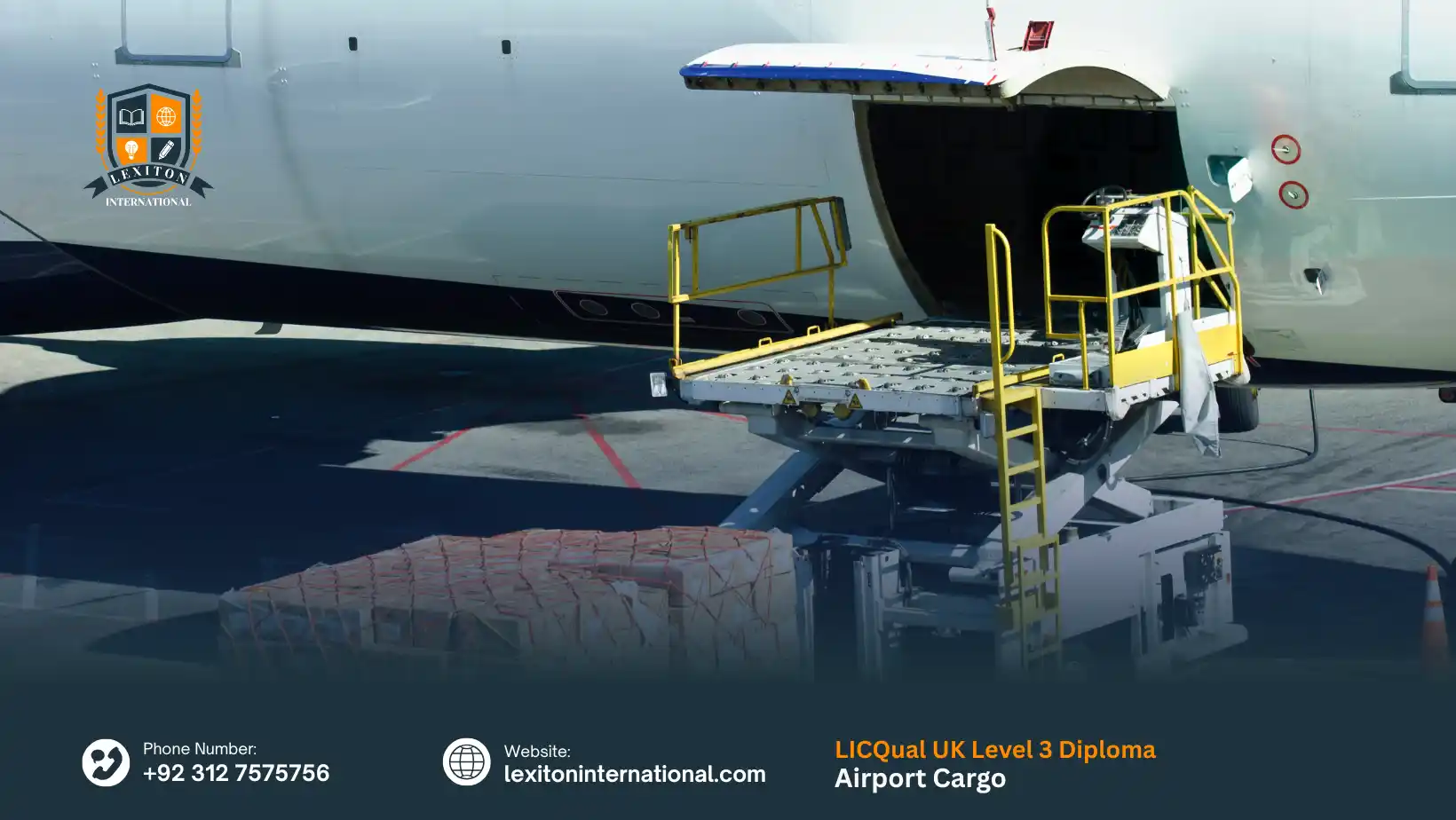
UK Level 3 Airport Cargo by LICQual
Global trade depends on the efficient movement of goods, and airports play a central role in connecting businesses across continents. Every day, thousands of tons of cargo are transported through airport systems, making safety, compliance, and operational efficiency critical to success. In this fast‑paced environment, professionals who understand the complexities of airport cargo operations are essential to maintaining trust and reliability.
The LICQual UK Level 3 Diploma in Airport Cargo highlights the importance of preparing individuals to meet these challenges with confidence. Airport cargo management is not simply about logistics; it is about proactive risk control, awareness of international standards, and fostering a culture of responsibility. As global commerce continues to expand, the demand for skilled professionals who can uphold safety standards and contribute to secure cargo operations has never been greater.
By pursuing the LICQual UK Level 3 Diploma in Airport Cargo, learners position themselves as capable contributors to one of the most vital areas of aviation logistics. This qualification emphasizes the essential role of cargo specialists in maintaining secure, efficient, and globally trusted airport operations
- Age Requirements: Applicants must be 18 years or above at the time of enrollment.
- Professional Experience: No prior experience required, though exposure to cargo or airport environments is beneficial.
- Educational Background: Basic education in aviation, logistics, or transport studies recommended.
- English Language Proficiency: Learners must have good written and spoken English skills to engage effectively with course materials, reporting tasks, and communication in industrial settings.
Mandatory Units
1. Introduction to Air Cargo Operations
By the end of this unit, learners will be able to:
- Explain the structure of the global air cargo industry, including the roles of airlines, freight forwarders, and ground handling agents.
- Identify different types of cargo and their specific handling requirements.
- Describe the end‑to‑end process of airport cargo operations from acceptance to delivery.
- Apply international standards (ICAO/IATA) to basic cargo operations.
- Evaluate the importance of air cargo in global trade and supply chain management.
- Demonstrate awareness of career pathways and professional roles in airport cargo logistics.
2. Cargo Handling & Storage Procedures
By the end of this unit, learners will be able to:
- Apply safe handling techniques for general, perishable, and special cargo.
- Demonstrate correct loading, unloading, and storage procedures in compliance with IATA Cargo Handling Manual (ICHM).
- Inspect cargo for damage, irregularities, and compliance with safety standards.
- Implement correct stowage and securing methods to maintain cargo integrity.
- Evaluate warehouse layout and storage systems for efficiency and safety.
- Use best practices to minimize risks of cargo damage and operational delays.
3. Aviation Safety, Security and Dangerous Goods Awareness
By the end of this unit, learners will be able to:
- Identify categories of dangerous goods and restricted items in line with ICAO/IATA regulations.
- Apply correct labeling, packaging, and documentation procedures for dangerous goods.
- Demonstrate awareness of aviation security protocols, including screening and access control.
- Explain the impact of non‑compliance on safety, security, and legal liability.
- Apply risk management principles to prevent incidents in cargo operations.
- Promote a safety and security culture within airport cargo environments.
4. Documentation and Customs Procedures
By the end of this unit, learners will be able to:
- Prepare and interpret key cargo documents such as Air Waybills, manifests, and consignment notes.
- Explain customs clearance processes for imports, exports, and transshipments.
- Apply international trade compliance standards, including WTO and WCO guidelines.
- Identify common errors in documentation and their impact on cargo movement.
- Demonstrate the ability to complete customs declarations accurately and efficiently.
- Evaluate the role of digitalization in modern customs and documentation systems.
5. Customer Service in Cargo Operations
By the end of this unit, learners will be able to:
- Demonstrate effective communication skills with shippers, freight forwarders, and regulatory authorities.
- Apply customer service principles to resolve complaints and claims in cargo operations.
- Evaluate customer expectations in the context of airport cargo logistics.
- Implement service quality standards to enhance customer satisfaction and retention.
- Use problem‑solving techniques to manage service disruptions and delays.
- Promote a customer‑centric culture within airport cargo operations.
6. ICT and Tracking Systems in Cargo
By the end of this unit, learners will be able to:
- Operate cargo management systems, barcoding, and RFID technologies for cargo tracking.
- Apply digital tools to monitor cargo movement in real time.
- Evaluate the role of ICT in enhancing transparency, efficiency, and security in cargo logistics.
- Demonstrate knowledge of emerging technologies such as blockchain and IoT in cargo tracking.
- Analyze data from ICT systems to improve decision‑making and operational performance.
- Ensure compliance with data security and confidentiality standards in cargo ICT systems.
The movement of cargo through airports is a vital part of global trade and aviation logistics. Professionals working in this sector must be equipped with the right knowledge and skills to ensure efficiency, compliance, and safety. The LICQual UK Level 3 Diploma in Airport Cargo is tailored for individuals who want to build expertise and address real‑world challenges in cargo operations.
Who Is This Course For?
- Airport staff seeking structured cargo training
- Logistics professionals aiming to expand into aviation cargo
- Ground handling teams improving cargo safety standards
- Security staff working in cargo environments
- Supply chain specialists entering airport cargo management
- Career changers pursuing opportunities in cargo logistics
- Airline employees expanding into cargo operations
The LICQual UK Level 3 Diploma in Airport Cargo provides learners with the foundation to advance their careers in cargo logistics and airport operations. This qualification strengthens professional credibility and opens doors to wider opportunities across the global aviation sector.
Future Progression
- Progression into specialist cargo and logistics qualifications
- Opportunities to work in international airports and airlines
- Enhanced prospects in cargo operations, ground handling, and security roles
- Ability to contribute to risk management and compliance initiatives
- Recognition as a qualified airport cargo professional
- Potential to move into mentoring, supervisory, or training positions
- Strengthened credibility for global cargo opportunities
- Expanded career pathways in aviation logistics and support services
Curious About This Course?