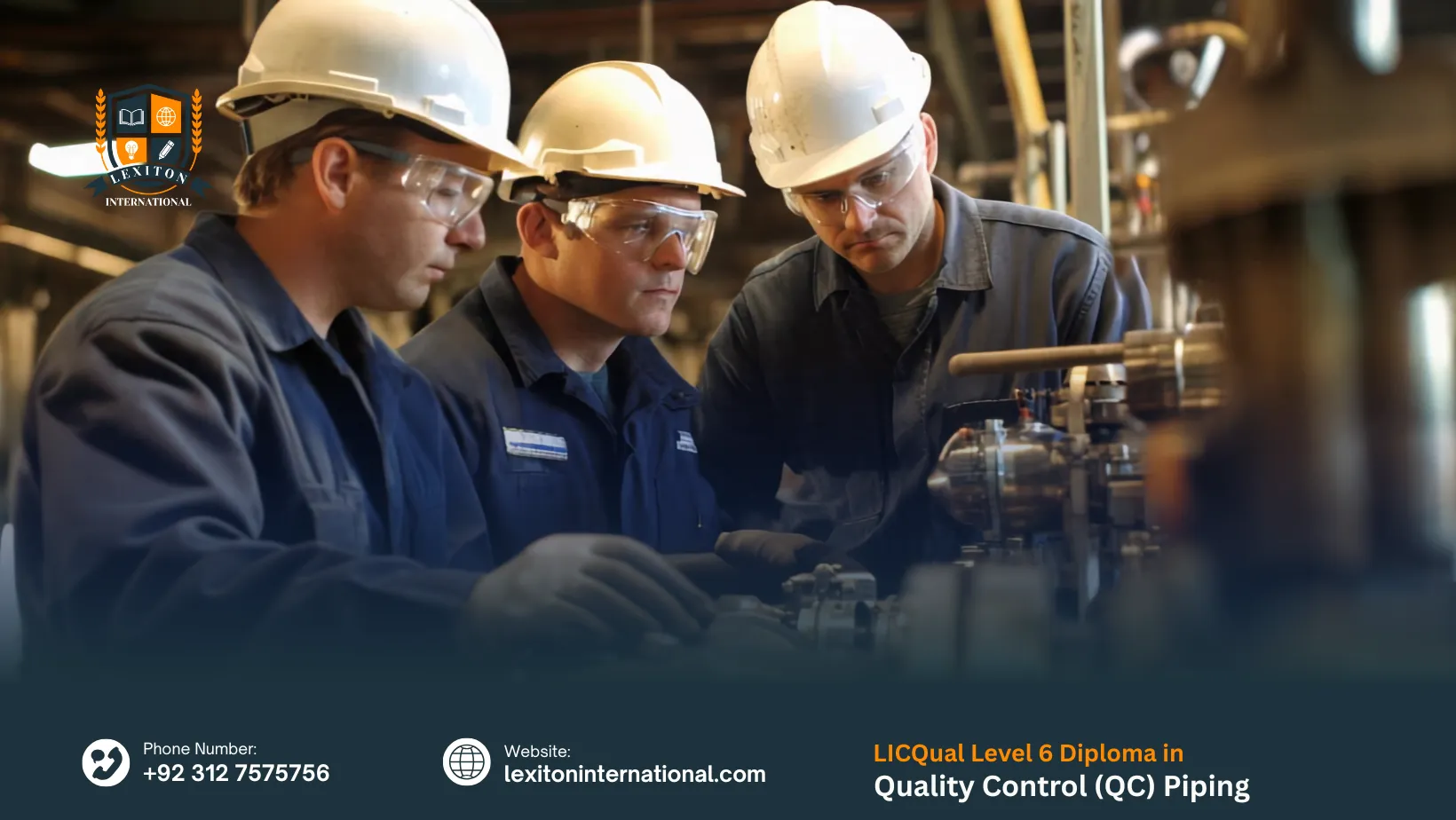
The LICQual Level 6 Diploma in Quality Control (QC) Piping is a highly specialized qualification designed for professionals aiming to master advanced concepts in piping inspection, quality assurance, and compliance. This program provides learners with a deep understanding of the technical, managerial, and regulatory aspects of piping systems, preparing them to take on senior responsibilities in industries such as oil and gas, petrochemicals, power generation, and construction. With a strong focus on international standards, advanced inspection techniques, and project-based applications, the course ensures that learners are equipped with both theoretical knowledge and practical expertise to uphold the highest levels of quality and safety in complex piping projects.
The course covers a wide range of advanced topics including material science, welding quality control, non-destructive examination methods, and documentation systems. Learners will explore how to interpret complex engineering drawings, apply international codes and standards, and implement quality assurance frameworks across large-scale projects. Emphasis is placed on developing analytical skills to evaluate piping layouts, detect defects, and propose corrective measures, while also fostering the ability to manage inspection teams and coordinate with multidisciplinary professionals. By integrating technical knowledge with practical applications, the program ensures that learners are capable of addressing real-world challenges in piping quality control with confidence and precision.
In addition, the diploma highlights the importance of leadership, project management, and continuous improvement in quality assurance practices. Participants will learn how to design and implement quality control plans, monitor installation processes, and maintain compliance with regulatory requirements. The course also emphasizes documentation, traceability, and the use of digital tools to support audits and accountability. By the end of the program, learners will have developed a comprehensive skill set that combines advanced technical expertise with managerial competence, enabling them to contribute effectively to the success of piping projects in diverse industrial environments.
To enroll in the LICQual Level 6 Diploma in Quality Control (QC) Piping, candidates must meet specific entry requirements that ensure readiness for advanced-level training. These requirements balance accessibility with the need for prior knowledge and professional exposure.
- Age Requirements: Applicants must be at least 21 years old to demonstrate maturity and readiness for advanced professional training.
- Qualification Requirements: A prior diploma or equivalent certification in engineering, quality control, or a related technical field is required.
- Professional Experience: Candidates should have at least 2–3 years of relevant work experience in piping, welding, or industrial inspection roles.
- Educational Background: A foundation in science, engineering, or technical studies is essential to understand advanced course content.
- Language Proficiency: Learners must have a good command of English to comprehend technical terminology, course materials, and assessments.
- Technical Aptitude: Applicants should demonstrate strong analytical skills and the ability to grasp complex concepts related to piping systems and quality control.
Mandatory Units
By the end of this course, applicants will be able to demonstrate advanced knowledge and practical expertise in piping quality control, combining technical interpretation, material selection, inspection procedures, and project-based assurance practices. Each unit is designed to strengthen both theoretical understanding and applied skills, ensuring learners are fully prepared to meet industry standards and contribute effectively to complex piping projects.
Piping Engineering Drawing and Isometric Interpretation
- Accurately interpret piping engineering drawings and isometric diagrams to identify components, dimensions, and specifications.
- Apply knowledge of industry symbols, annotations, and conventions to support inspection and quality control processes.
- Translate isometric drawings into practical applications for fabrication, installation, and inspection activities.
- Evaluate piping layouts against project requirements to ensure compliance with design standards and accuracy.
- Strengthen confidence in reading, cross-checking, and validating drawings to minimize errors during project execution.
Advanced Piping Materials, Codes, and Standards
- Analyze the properties and applications of advanced piping materials, including alloys and composites, for diverse industrial environments.
- Interpret and apply international codes and standards such as ASME B31.3, API 1104, and ISO 9001 to maintain compliance.
- Select appropriate materials based on corrosion resistance, pressure ratings, and temperature requirements.
- Assess the long-term impact of material selection on performance, safety, and maintenance of piping systems.
- Develop decision-making skills by aligning material choices with project-specific quality control needs.
Quality Control Procedures in Welding and Piping Fabrication
- Implement structured quality control procedures to monitor welding and fabrication processes effectively.
- Identify common welding imperfections and fabrication errors, recommending corrective actions to meet standards.
- Apply quality assurance techniques to ensure welds and fabricated components comply with specifications.
- Conduct audits of welding and fabrication processes to maintain consistency and traceability.
- Enhance inspection skills to detect deviations early and ensure reliable piping system performance.
Non-Destructive Examination (NDE) Techniques and Applications
- Explain the principles and applications of advanced NDE techniques such as ultrasonic, radiographic, and eddy current testing.
- Perform NDE procedures to detect internal and surface defects, ensuring structural integrity of piping systems.
- Interpret NDE results accurately to assess compliance with industry standards and project requirements.
- Apply safety and procedural best practices during NDE to achieve consistent and reliable outcomes.
- Strengthen technical expertise in selecting appropriate NDE methods for different piping scenarios.
Documentation, Traceability, and Quality Records in Piping QC
- Develop and maintain comprehensive documentation including inspection reports, test records, and certifications.
- Ensure traceability of materials and components throughout fabrication and installation processes.
- Organize and manage quality records to support audits, compliance checks, and accountability.
- Utilize digital tools and systems for efficient documentation and retrieval of QC data.
- Build systematic approaches to record-keeping that enhance transparency and project reliability.
Project-Based Quality Assurance Practices in Piping Installations
- Design and implement quality assurance plans tailored to piping installation projects.
- Monitor and evaluate installation processes to identify deviations and apply corrective measures promptly.
- Collaborate with project teams to integrate QA practices across all phases of installation.
- Analyze project outcomes to improve QA processes and drive continuous improvement.
- Strengthen leadership and coordination skills to ensure quality assurance is embedded in project execution.
The ideal learner for the LICQual Level 6 Diploma in Quality Control (QC) Piping is someone who is committed to advancing their expertise in piping inspection, quality assurance, and compliance. This program is tailored for individuals who aspire to take on senior responsibilities in technical and managerial roles within industries where piping systems are critical.
Technical Aptitude and Interest
- Strong interest in advanced engineering concepts and piping systems
- Ability to interpret complex technical drawings and specifications
- Familiarity with materials, welding processes, and inspection techniques
- Analytical mindset for solving technical challenges in piping projects
- Desire to master advanced quality control practices
Professional Orientation
- Aspires to hold senior roles in oil and gas, petrochemicals, or construction industries
- Values internationally recognized qualifications for career advancement
- Motivated to lead inspection teams and manage compliance responsibilities
- Seeks to contribute to large-scale project success through quality assurance
- Interested in building credibility as a technical expert
Learning Mindset
- Open to mastering advanced codes, standards, and inspection methods
- Willing to engage with both theoretical and practical aspects of training
- Curious about evolving industry practices and technological innovations
- Ready to commit time and effort to intensive learning modules
- Values continuous improvement and professional development
Workplace Readiness
- Prepared to work in demanding industrial environments with strict safety protocols
- Comfortable coordinating with multidisciplinary teams on complex projects
- Skilled in following detailed procedures and maintaining accuracy in documentation
- Willing to take responsibility for compliance and quality assurance outcomes
- Interested in applying advanced knowledge to real-world industrial challenges
Personal Attributes
- Detail-oriented and highly attentive to accuracy in technical work
- Strong communication and leadership skills for reporting and team management
- Reliable and disciplined in adhering to standards and schedules
- Motivated by achieving excellence in quality and safety practices
- Resilient and adaptable to high-pressure industrial environments
Commitment to Quality
- Understands the critical importance of quality control in piping systems
- Dedicated to ensuring safety, reliability, and compliance in projects
- Seeks to uphold international standards and industry best practices
- Motivated to drive continuous improvement initiatives in quality assurance
- Values integrity, accountability, and professionalism in technical roles
The ideal learner is someone who combines technical expertise, leadership qualities, and a commitment to excellence, making them well-suited to succeed in this advanced diploma program.
Completing the LICQual Level 6 Diploma in Quality Control (QC) Piping opens pathways for learners to pursue advanced certifications and higher-level diplomas. These progression opportunities allow learners to strengthen their expertise, broaden their scope of practice, and take on more senior responsibilities in industrial projects.
Advanced Diplomas in Quality Control
- Progress to Level 7 Diplomas in Quality Assurance
- Gain deeper knowledge of advanced inspection and compliance frameworks
- Learn project-level quality management and leadership practices
- Develop expertise in supervising inspection teams across large-scale projects
- Enhance professional credibility with advanced qualifications
Specialized Certifications in Piping Inspection
- Pursue certifications in advanced welding inspection and NDE methods
- Focus on specialized techniques such as ultrasonic phased array or advanced radiography
- Strengthen expertise in defect identification and corrective measures
- Gain recognition as a senior certified piping inspector
- Improve employability in specialized technical roles
Industry-Specific Quality Assurance Programs
- Enroll in certifications tailored to oil and gas or petrochemical industries
- Learn sector-specific codes, compliance requirements, and safety standards
- Build expertise in high-pressure and high-temperature piping systems
- Gain practical knowledge of industry-specific inspection practices
- Position yourself for specialized leadership roles in targeted industries
International Standards and Compliance Training
- Advance knowledge of ASME, API, and ISO standards at higher levels
- Apply global codes in diverse and complex industrial contexts
- Strengthen compliance skills for multinational projects
- Gain recognition in international quality assurance leadership roles
- Expand career opportunities across global industries
Leadership and Supervisory Certifications
- Develop advanced skills for managing inspection and quality control teams
- Learn project coordination and leadership in quality assurance
- Gain certifications in supervisory practices for industrial projects
- Enhance communication and reporting skills for leadership positions
- Prepare for responsibilities in senior quality management roles
Continuous Professional Development
- Engage in short courses to update technical and managerial knowledge
- Stay current with evolving industry standards and inspection technologies
- Build expertise in digital tools for documentation and traceability
- Strengthen adaptability to new inspection methods and innovations
- Maintain professional relevance in dynamic global industries
Future progression ensures learners can continue to grow professionally, gaining advanced diplomas and certifications that expand their expertise and open doors to senior-level roles in quality control and piping inspection.
Curious About This Course?