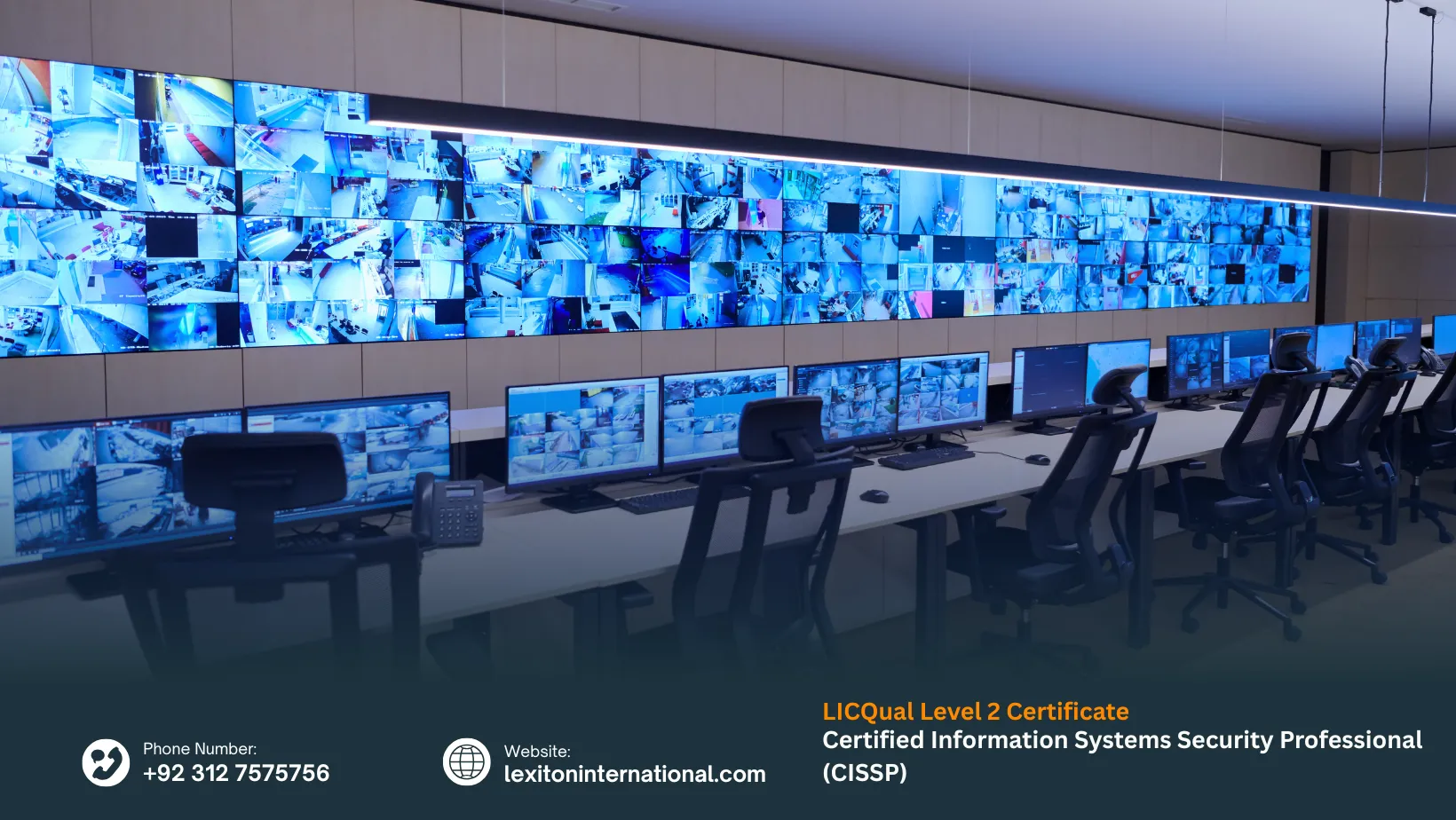
The LICQual Level 2 Certificate in Certified Information Systems Security Professional (CISSP) is a cybersecurity-focused qualification designed to develop learners’ understanding of information security principles, digital protection methods, and secure information system practices. This certificate builds on essential cybersecurity concepts by introducing learners to how organisations identify security risks, protect sensitive information, and apply effective security measures within modern technology environments. It provides structured knowledge of cybersecurity practices that support safer digital operations.
As businesses and organisations increasingly depend on digital platforms, networks, and data-driven systems, the need for effective information security practices continues to grow. This qualification covers important areas such as cybersecurity fundamentals, security controls, access management, data protection, threat awareness, and risk management principles. Learners gain insight into how security strategies are used to reduce vulnerabilities, prevent unauthorised access, and maintain the confidentiality, integrity, and availability of information.
The LICQual Level 2 Certificate in Certified Information Systems Security Professional (CISSP) helps learners develop practical awareness of information security concepts and their application across different workplace environments. The knowledge gained supports understanding of secure technology operations, digital asset protection, and organisational cybersecurity practices. This certification provides valuable insight into modern cybersecurity requirements and helps learners build a stronger foundation in information systems security.
- Age Requirements: Applicants must be 16 years or above at the time of enrollment.
- Professional Experience: No formal work experience is required.
- Educational Background: Learners should have a Level 1 qualification or equivalent.
- English Language Proficiency: Learners should have a basic command of the English language.
Mandatory Units
Skills You Will Gain
By the end of this course, learners will be able to:
Advanced Information Security Concepts:
- Develop an in-depth understanding of advanced information security principles and frameworks.
- Learn to apply security controls to protect critical assets, ensuring confidentiality, integrity, and availability within an organization.
Cryptography and Secure Communication:
- Gain knowledge of cryptographic algorithms and methods used to secure communication and data transmission.
- Learn how to implement encryption, hashing, and key management techniques to protect sensitive data and ensure secure communications.
Security Risk Assessment and Mitigation:
- Understand the process of identifying, assessing, and mitigating risks to IT systems and data.
- Learn how to develop and implement risk management strategies to reduce vulnerabilities and protect organizational assets.
Security Architecture Design and Implementation:
- Gain expertise in designing and implementing secure IT architectures that protect systems, networks, and data from potential threats.
- Learn to integrate security controls into network infrastructure and application design to mitigate risks and ensure system resilience.
Regulatory Compliance and Legal Aspects:
- Understand the importance of regulatory compliance in the context of information security, including key industry standards and laws.
- Learn how to ensure that security practices meet legal requirements and align with data protection regulations, such as GDPR, HIPAA, and PCI-DSS.
Vulnerability Management and Penetration Testing:
- Learn the methods and tools used for identifying, evaluating, and managing vulnerabilities within an organization’s systems and networks.
- Develop the skills needed to conduct penetration testing and ethical hacking to find potential security flaws before they can be exploited.
This certificate is recommended for learners seeking to develop essential knowledge of information systems security, cybersecurity concepts, and digital protection practices. It helps learners understand fundamental security principles, common cyber risks, and the importance of protecting information within modern technology environments.
Who Is This Course For?
- Learners seeking knowledge of cybersecurity fundamentals and digital protection methods.
- Individuals interested in secure computing, cyber threats, and information safety.
- IT users and support staff improving cybersecurity awareness.
- Individuals involved in digital operations and data handling activities.
- Employees seeking knowledge of security controls and risk prevention methods.
- Learners interested in data protection, access management, and safe digital practices.
- Individuals working with information systems and secure data handling processes.
- Technology users seeking awareness of cybersecurity concepts and security practices.
- Learners interested in basic measures for protecting digital assets.
This certificate provides learners with foundational knowledge of information security, cybersecurity principles, and digital protection practices. The understanding gained through this qualification supports the development of secure technology awareness and helps learners apply basic security concepts within digital environments.
Future Progression
- Developing knowledge of cybersecurity fundamentals and information protection principles.
- Expanding understanding of data security, access control, and secure computing.
- Building awareness of cyber threats, vulnerabilities, and risk management approaches.
- Understanding security controls, protection processes, and safe technology practices.
- Strengthening knowledge of digital asset protection and secure systems.
- Developing familiarity with cybersecurity terms, frameworks, and security procedures.
- Supporting preparation for specialised cybersecurity certifications and training.
- Applying information security knowledge across digital and data-driven industries.
- Enhancing awareness of modern cybersecurity challenges and protection requirements.
Curious About This Course?