Introduction
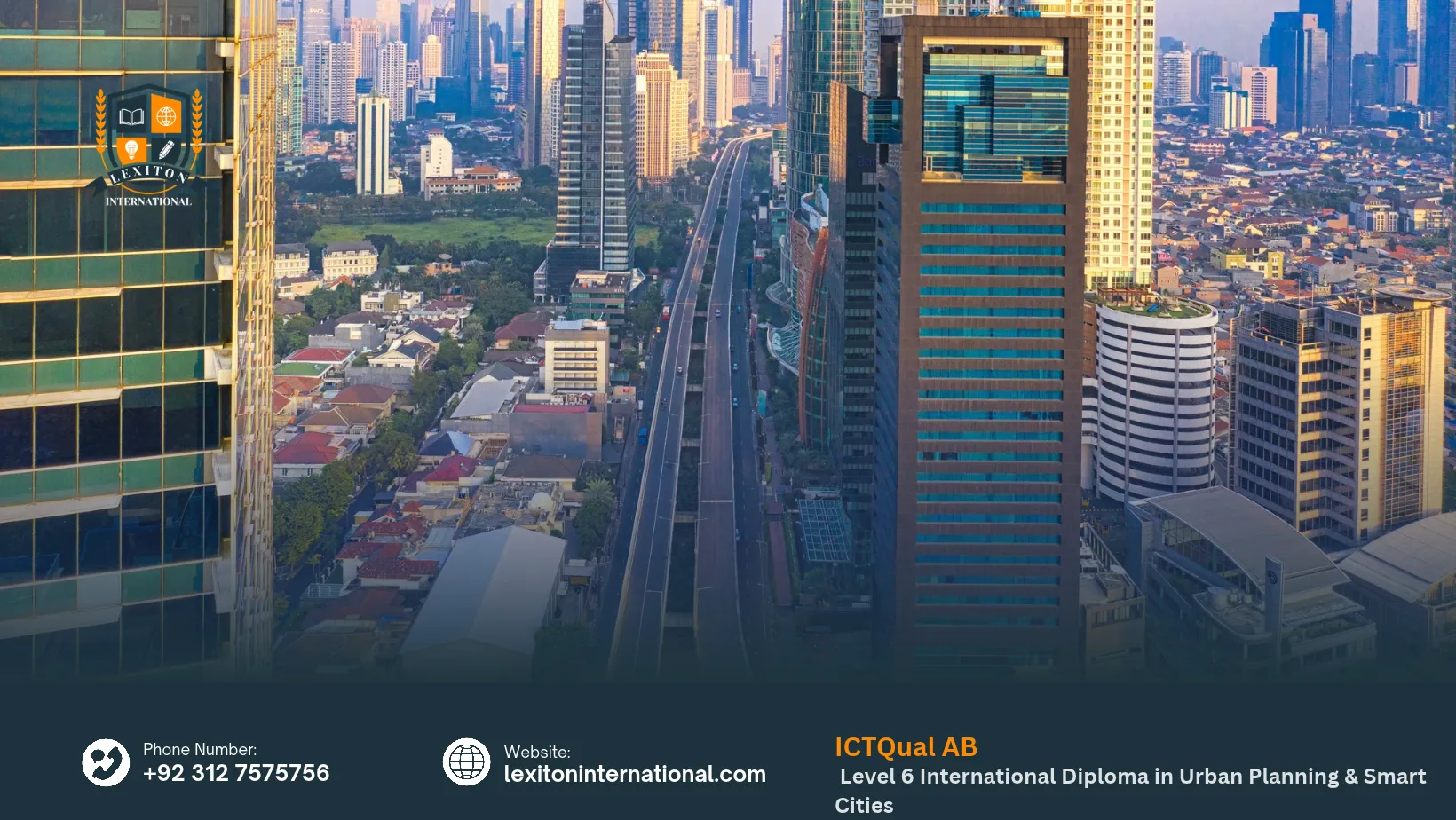
The ICTQual AB Level 6 International Diploma in Urban Planning & Smart Cities is designed to develop Learners’ understanding of sustainable urban development, land-use planning and the integration of digital technologies into modern cities. The qualification explores how urban areas can be planned and managed to address population growth, transport demands, environmental pressures, infrastructure needs and changing community expectations.
Throughout the course, Learners explore urban development strategies, spatial planning, smart infrastructure, sustainable transport, environmental management and the use of digital data in urban decision-making. The programme highlights how technologies such as intelligent transport systems, geographic information systems (GIS), connected infrastructure and urban data platforms can support efficient city services. Learners also examine the importance of community engagement, climate resilience, public spaces and responsible resource management when planning inclusive urban environments.
The qualification is suitable for aspiring urban planners, planning assistants, civil engineering professionals, infrastructure coordinators and individuals interested in sustainable cities and urban development. It encourages analytical thinking, problem-solving and an understanding of the relationship between urban policy, technology and community wellbeing.
By developing industry-relevant knowledge, the Level 6 International Diploma in Urban Planning & Smart Cities can help Learners understand contemporary approaches to city planning and infrastructure development. These competencies are relevant to urban development projects, planning consultancies and smart city initiatives, with career opportunities depending on practical experience, employer requirements and applicable professional regulations.
The ICTQual AB Level 6 International Diploma in Urban Planning & Smart Cities is suitable for Learners interested in urban development, sustainable city planning, smart infrastructure and modern urban management. The following general entry guidelines can help prospective Learners assess their suitability for the qualification.
- Age: Normally 18 years or above, subject to the approved training centre’s admission requirements.
- Experience: Relevant experience in urban planning, civil engineering, architecture, construction, infrastructure development or a related field is beneficial.
- Language Proficiency: Good English reading, writing, speaking and comprehension skills are recommended to understand technical materials and complete assessments.
- Educational Background: A relevant academic or professional qualification in urban planning, architecture, civil engineering, geography, environmental management or a related discipline is recommended. Equivalent education or relevant experience may be considered, subject to the training centre’s requirements.
This qualification, the Level 6 International Diploma in Urban Planning & Smart Cities, consists of 36 mandatory units.
Year 1 – Foundation in Urban Planning & Smart Cities
- Principles of Urban Planning and Smart Cities
- Introduction to Urban Development Projects
- Construction Materials and Methods in Urban Infrastructure
- Spatial Planning and Design Principles
- Project Planning and Scheduling in Urban Projects
- Health, Safety, and Environmental Awareness
- Communication and Stakeholder Management in Urban Planning
- Digital Tools and Construction Technology Fundamentals
- Financial Management in Urban Projects
- Quality Assurance and Control in Urban Development
- Legal and Regulatory Frameworks in Urban Planning
- Professional Ethics and Conduct in Planning
Year 2 – Intermediate Urban Planning & Smart Cities Practices
- Advanced Urban Design and Planning Techniques
- Resource Management and Allocation in Projects
- Project Cost Estimation and Budgeting in Urban Development
- Construction Contract Administration
- Procurement and Supply Chain Management in Urban Projects
- Project Risk Analysis and Mitigation
- Leadership and Team Management in Urban Planning
- Site and Infrastructure Management
- Sustainable Development and Environmental Management
- Project Monitoring and Reporting
- Problem-Solving and Decision-Making in Urban Projects
- Communication and Negotiation Skills in Planning
Year 3 – Advanced Urban Planning & Strategic Leadership
- Strategic Urban Planning and Smart City Management
- Advanced Infrastructure and Project Planning
- Urban Transport and Mobility Systems Management
- Innovation and Emerging Technologies in Smart Cities
- Advanced Risk and Crisis Management in Urban Projects
- Contract Management and Legal Compliance
- Leadership in Urban Planning Projects
- Advanced Project Control and Performance Measurement
- Project Governance and Compliance in Smart City Projects
- Research Methods and Project Analysis in Urban Planning
- Capstone Project in Urban Planning & Smart Cities
- Professional Development and Career Planning
Skills You Will Gain
The ICTQual AB Level 6 International Diploma in Urban Planning & Smart Cities helps Learners develop knowledge of sustainable urban development, land-use planning, smart infrastructure and technology-enabled city management. The course explores how planning decisions, digital tools and environmental considerations can contribute to more accessible, resilient and efficient urban environments.
- Urban Planning Principles: Understand the principles used to organise land, infrastructure, public spaces and urban development in response to community needs.
- Land-Use Planning: Develop knowledge of how residential, commercial, industrial and public areas are allocated and coordinated within urban environments.
- Smart City Technologies: Explore how connected devices, digital platforms and data-driven systems can support urban services and infrastructure management.
- Sustainable Urban Development: Understand approaches to balancing economic development, environmental protection and community wellbeing.
- Geographic Information Systems (GIS): Develop awareness of how spatial data and mapping tools support land-use analysis, infrastructure planning and urban decision-making.
- Urban Mobility and Transport Planning: Understand how public transport, pedestrian routes, cycling infrastructure and traffic management contribute to urban accessibility.
- Smart Infrastructure Management: Explore how digital monitoring and connected systems can support the management of utilities, transport networks and public infrastructure.
- Environmental Impact Awareness: Recognise how urban development can affect air quality, green spaces, water resources, waste management and local ecosystems.
- Climate Resilience Planning: Understand approaches to preparing urban areas for flooding, extreme temperatures and other climate-related challenges.
- Community Engagement: Learn why consultation with residents, businesses and other stakeholders is important when developing urban plans.
- Urban Data Analysis: Develop awareness of how population trends, transport information, land-use data and service indicators can inform planning decisions.
- Public Space and Accessibility Planning: Understand how parks, pedestrian areas and accessible public facilities contribute to inclusive urban environments.
- Infrastructure Coordination: Learn how housing, transport, utilities, public services and other infrastructure requirements interact during urban development.
- Urban Development Policy Awareness: Understand the role of planning policies, development controls and applicable regulations in shaping city growth.
- Resource and Waste Management: Explore approaches to efficient resource use, waste reduction and sustainable urban service delivery.
- Problem-Solving and Decision-Making: Strengthen the ability to assess urban challenges, compare planning options and support evidence-informed decisions.
- Stakeholder Communication: Develop skills for communicating planning ideas and coordinating with public authorities, developers, consultants and community representatives.
The ICTQual AB Level 6 International Diploma in Urban Planning & Smart Cities is designed for Learners who want to understand how cities are planned, developed and managed using sustainable practices and modern technologies. It is suitable for individuals interested in land-use planning, urban infrastructure, smart city systems, environmental sustainability and community-focused development.
Who Is This Course For
This course is particularly suitable for:
- Aspiring Urban Planners: Individuals interested in understanding urban development, land-use planning and the organisation of city spaces.
- Civil Engineering Professionals: Those seeking to expand their knowledge of urban infrastructure, transport networks and city development projects.
- Architecture Professionals: Individuals interested in how building design connects with urban layouts, public spaces and sustainable communities.
- Construction Project Coordinators: Professionals involved in developments that require coordination between buildings, utilities and surrounding infrastructure.
- Geography and GIS Professionals: Individuals interested in applying spatial data and mapping technologies to urban planning and development.
- Environmental Management Professionals: Those seeking to understand environmental sustainability, climate resilience and responsible urban growth.
- Infrastructure Planning Personnel: Individuals involved in planning transport systems, utilities, public facilities and urban services.
- Smart City Technology Professionals: Individuals interested in digital systems, connected infrastructure and data-driven approaches to city management.
- Local Development and Planning Staff: Professionals who contribute to urban improvement initiatives, development proposals or municipal planning activities.
- Transport Planning Professionals: Individuals interested in public transport, traffic management, pedestrian access and sustainable mobility.
- Property Development Professionals: Those seeking to understand land-use decisions, urban growth patterns and infrastructure requirements.
- Public Administration Professionals: Individuals interested in urban policy, public services, development planning and community needs.
- Engineering and Planning Graduates: Learners with a relevant educational background who want to develop knowledge of sustainable cities and urban development.
- Urban Sustainability Enthusiasts: Individuals interested in greener cities, efficient resource use, accessible public spaces and climate-resilient communities.
Future Progression
The ICTQual AB Level 6 International Diploma in Urban Planning & Smart Cities can help Learners develop knowledge relevant to sustainable city development, land-use planning, urban infrastructure and digital urban management. The qualification supports professional development by building an understanding of how planning strategies, spatial data and smart technologies can contribute to more efficient, inclusive and resilient urban environments.
- Urban Planning Assistant: Support the preparation of development plans, land-use proposals and urban planning documentation.
- Urban Development Coordinator: Assist with coordinating urban improvement projects, infrastructure activities and development initiatives.
- Smart City Project Coordinator: Support projects involving connected infrastructure, digital city services and technology-enabled urban management.
- GIS and Spatial Planning Assistant: Contribute to mapping, spatial data analysis and the preparation of information used in urban planning.
- Sustainable Development Assistant: Support initiatives focused on environmentally responsible development, resource efficiency and sustainable communities.
- Infrastructure Planning Coordinator: Assist with coordinating requirements for roads, utilities, public transport and other urban infrastructure.
- Transport Planning Assistant: Contribute to reviewing mobility needs, transport networks, pedestrian routes and public transport planning.
- Environmental Planning Assistant: Support the consideration of environmental impacts, green spaces, waste management and climate resilience in development projects.
- Urban Research Assistant: Help collect and analyse information about population trends, land use, infrastructure demands and urban development challenges.
- Municipal Development Support Officer: Assist with urban improvement programmes, development documentation and coordination between planning stakeholders.
Curious About This Course?