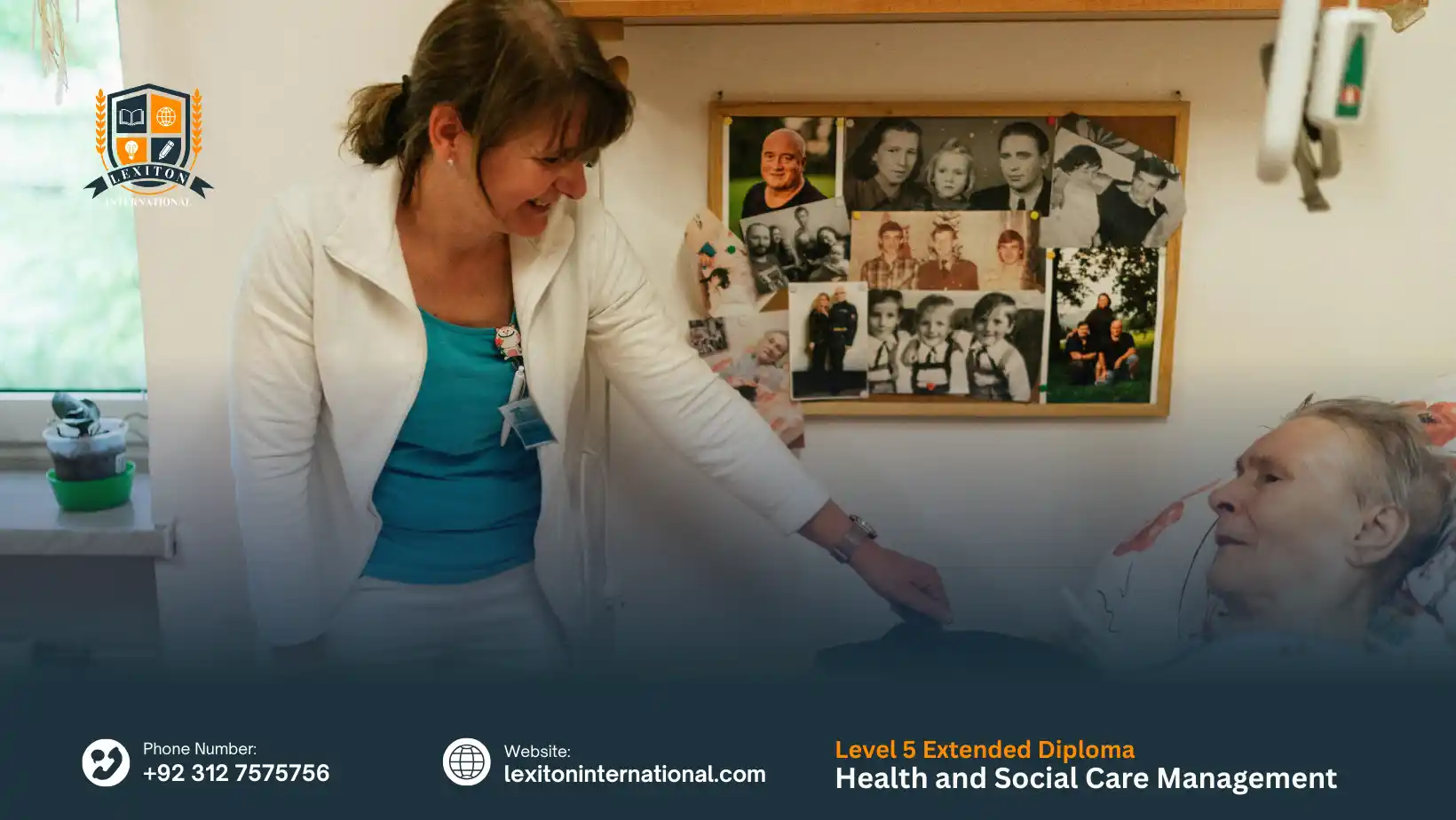
The Level 5 Extended Diploma in Health and Social Care Management is a professional qualification designed for individuals who want to advance their expertise in managing health and social care services. This diploma equips learners with the essential skills, knowledge, and practical tools needed to lead teams, oversee care delivery, and ensure high standards of service within healthcare and social care environments.
Covering key areas such as leadership, quality assurance, policy implementation, safeguarding, and effective communication, the diploma prepares learners to take on supervisory and managerial responsibilities. It emphasizes both theory and applied practice, enabling professionals to confidently address challenges in patient care, staff management, and organizational improvement.
Learners also gain valuable insights into health and safety, ethical practices, and person‑centered approaches, ensuring they can support diverse communities and meet regulatory requirements. With a strong focus on practical application, the Level 5 Extended Diploma in Health and Social Care Management helps professionals build confidence in decision‑making, problem‑solving, and strategic planning.
This qualification is ideal for practitioners, managers, and individuals holding certificates or diplomas who wish to progress into senior roles. Completing this diploma enhances employability worldwide and provides a solid foundation for a rewarding career in health and social care management.
- Age Requirements: Applicants must be 18 years or above at the time of enrollment.
- Professional Experience: Applicants are encouraged to have prior experience in healthcare or social care settings, such as working in hospitals, clinics, community care, or support services. This background helps learners apply theoretical knowledge to real‑world practice and ensures they can engage confidently with the practical aspects of the diploma.
- Educational Background: A relevant Level 3 certificate or diploma in health, social care, or management is typically required. Equivalent international qualifications may also be accepted.
- English Language Proficiency: Learners must have good written and spoken English skills to engage effectively with course materials, reporting tasks, and communication in industrial settings.
Level 4:6
Level 5:6
Upon completion of the Level 5 Extended Diploma in Health and Social Care Management, learners will have achieved the following learning outcomes:
- Comprehensive Knowledge: Demonstrate a thorough understanding of the key concepts, theories, and principles in health and social care management, including organizational behavior, human resource management, finance and budgeting, strategic planning, and quality management.
- Strategic Leadership: Develop the skills and competencies necessary to lead and manage healthcare organizations and social care services effectively. Understand the role of leadership in driving organizational success, fostering innovation, and implementing strategic initiatives.
- Analytical Thinking: Apply critical thinking and problem-solving skills to analyze complex issues and make informed decisions in the context of health and social care management. Utilize appropriate analytical tools and techniques to evaluate data and information, identify trends, and propose effective solutions.
- Ethical Considerations: Demonstrate an understanding of ethical and legal considerations in health and social care management. Evaluate and apply ethical frameworks and principles to ensure the delivery of high-quality, patient-centered care while upholding professional standards and values.
- Effective Communication: Communicate effectively with diverse stakeholders in health and social care settings. Develop strong interpersonal and communication skills to engage and collaborate with teams, patients, families, and external partners, fostering a culture of open communication and shared goals.
- Quality Management: Implement quality management strategies and methodologies to ensure the provision of safe, efficient, and effective healthcare services. Understand the importance of continuous quality improvement, risk management, and patient safety in health and social care settings.
- Financial Management: Gain proficiency in financial management principles and practices specific to healthcare organizations. Develop the ability to analyze budgets, financial statements, and funding models, and make informed financial decisions to optimize resource allocation and achieve organizational goals.
- Professional Development: Reflect on personal and professional growth as a health and social care manager. Identify opportunities for continuous learning and development, engage in self-reflection, and demonstrate a commitment to ongoing professional development to enhance leadership capabilities.
- Teamwork and Collaboration: Foster effective teamwork and collaboration within multidisciplinary teams in health and social care settings. Understand the dynamics of teamwork, conflict resolution, and motivation, and apply strategies to promote a positive and supportive work environment.
- Cultural Competence: Recognize and value the diversity of individuals and communities in health and social care contexts. Develop cultural competence to provide inclusive and culturally sensitive care, ensuring equitable access and addressing the unique needs of diverse populations.
By achieving these learning outcomes, learners will be equipped with the knowledge, skills, and attributes necessary to excel as competent and compassionate health and social care managers, making a positive impact in the lives of individuals and communities they serve.
The Level 5 Extended Diploma in Health and Social Care Management is designed for individuals who want to build advanced skills in managing health and social care services. It is ideal for professionals who already hold certificates or diplomas and are seeking career progression into supervisory or managerial roles.
Who Is This Course For?
- Practitioners working in hospitals, clinics, or community care settings who want to move into management
- Health and social care staff with certificates or diplomas aiming to strengthen leadership and organizational skills
- Team leaders or supervisors seeking to enhance expertise in quality assurance, safeguarding, and policy implementation
- Career changers with transferable skills who want to enter the health and social care sector through a recognized diploma
- International learners looking for a globally recognized qualification to improve employability in health and social care management
- Professionals committed to delivering person‑centered care and driving continuous improvement in service standards
Completing the Level 5 Extended Diploma in Health and Social Care Management opens up strong career and qualification pathways. Learners gain the confidence and recognition needed to move into advanced roles and continue professional development
Future Progression
- Progression into supervisory, managerial, or leadership positions within health and social care services
- Opportunities to become a care manager, team leader, or service coordinator in hospitals, clinics, or community care settings
- Pathways to higher‑level diplomas or certificates in leadership, management, or specialized areas of health and social care
- Ability to pursue professional certifications that strengthen expertise in safeguarding, quality assurance, and policy implementation
- Enhanced employability in international health and social care sectors, with recognition across diverse organizations
- Preparation for roles involving mentoring, coaching, and supporting other practitioners in care delivery
- Development of skills that support continuous improvement and innovation in health and social care management
Curious About This Course?