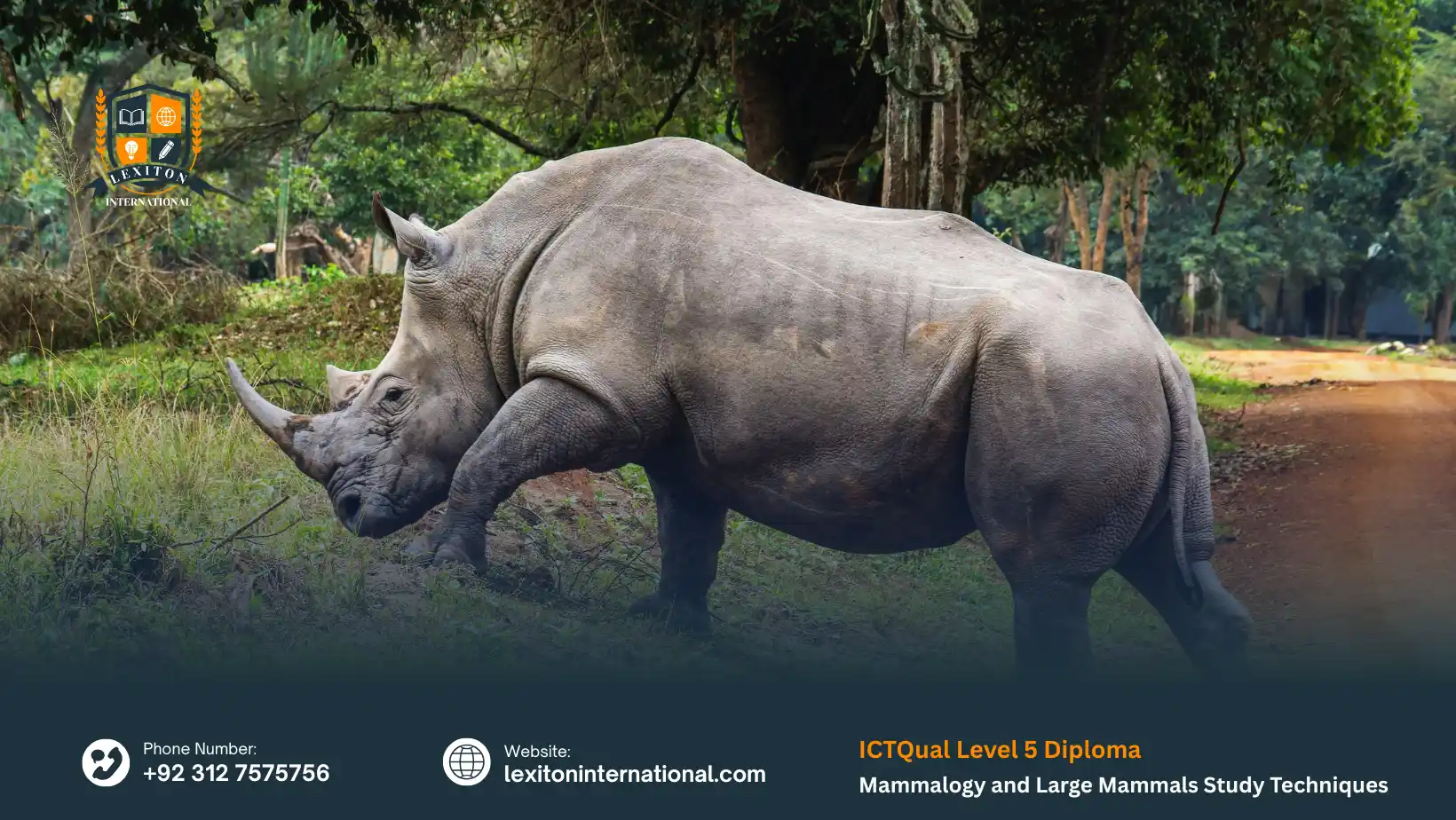
Level 5 Diploma in Mammalogy and Large Mammals
The ICTQual Level 5 Diploma in Mammalogy and Large Mammals Study Techniques is a specialised qualification designed for individuals interested in wildlife science, animal behaviour, and conservation. This course provides in-depth knowledge of mammals, with a strong focus on large mammal species and the techniques used to study them in natural environments. It is suitable for learners who want to build a career in wildlife research, conservation, or environmental management while gaining practical and theoretical understanding aligned with international standards.
Throughout the course, learners will explore key topics such as mammalian biology, ecology, habitat analysis, and field research methods. The programme introduces essential study techniques including tracking, observation, data collection, and ethical wildlife research practices. It also highlights the importance of conservation, biodiversity protection, and environmental sustainability.
Upon completion, learners can pursue career opportunities in wildlife conservation organisations, research institutions, environmental agencies, and zoological settings. This diploma is ideal for those who are passionate about wildlife and want to gain recognised skills in mammalogy and large mammal study techniques, helping them contribute to conservation efforts and scientific research worldwide.
- Age Requirements: Learners must be at least 19 years old to ensure maturity and readiness for technical training.
- Professional Experience: Previous experience is not mandatory, but any involvement in wildlife studies, conservation activities, or outdoor fieldwork will be beneficial for practical learning.
- Educational Background: A Level 3 qualification or equivalent is recommended, preferably in biology, environmental science, or a related subject to support understanding of mammalogy concepts.
- Language Proficiency: Learners must possess good command of English to understand course materials, technical terminology, and assessments clearly.
Mandatory Units
Skills You Will Gain
Integrative Ecosystem Survey Approaches
- Design and conduct ecosystem surveys that integrate multiple ecological variables and mammal populations.
- Apply interdisciplinary methods combining vegetation, climate, and mammal data for holistic analysis.
- Evaluate survey outcomes to inform biodiversity management and conservation planning.
- Adapt survey approaches to diverse ecosystems and conservation contexts.
- Demonstrate ethical and sustainable practices in ecosystem monitoring.
Innovations in Mammal Research Technology
- Utilize advanced technologies such as GPS collars, drones, and camera traps for mammal research.
- Apply acoustic monitoring and remote sensing tools to study mammal behaviour and habitats.
- Assess the benefits and limitations of emerging technologies in ecological research.
- Integrate digital tools into fieldwork for efficient data collection and analysis.
- Explore innovative applications of technology to enhance conservation outcomes.
Global Conservation Strategies for Large Mammals
- Analyze international conservation frameworks and their impact on large mammal protection.
- Evaluate global challenges such as climate change, habitat fragmentation, and poaching.
- Propose sustainable strategies for balancing human development and wildlife conservation.
- Understand the role of global organizations and treaties in mammal conservation.
- Apply ethical and culturally sensitive approaches to international conservation efforts.
Advanced Data Analysis in Mammalogy
- Apply statistical methods to analyze mammal population and ecological data.
- Use modelling techniques to predict population dynamics and habitat use.
- Interpret complex datasets to support conservation decision‑making.
- Present data findings in clear, professional formats for stakeholders.
- Ensure accuracy, reliability, and ethical handling of ecological data.
Leadership in Conservation Projects
- Demonstrate leadership skills in planning and managing conservation initiatives.
- Coordinate multidisciplinary teams to achieve conservation goals.
- Apply project management techniques to ecological and conservation projects.
- Engage communities and stakeholders in conservation decision‑making.
- Reflect on leadership practices to improve future conservation outcomes.
Independent Specialist Fieldwork Project
- Plan and execute an independent fieldwork project focused on large mammal studies.
- Apply advanced survey and monitoring techniques in real‑world contexts.
- Collect, analyze, and interpret field data to produce evidence‑based conclusions.
- Demonstrate safe, ethical, and responsible fieldwork practices.
- Present project findings in a professional report suitable for academic and conservation audiences.
The ICTQual Level 5 Diploma in Mammalogy and Large Mammals Study Techniques is designed for individuals who are passionate about wildlife, animal behaviour, and environmental conservation. It is suitable for learners who want to develop practical and scientific skills in studying mammals, especially large species, and apply these skills in research, conservation, and field-based roles. This course supports both aspiring professionals and those looking to deepen their knowledge in wildlife sciences.
Who Is This Course For?
- Individuals aiming to build a career in wildlife conservation or environmental management
- Students interested in zoology, ecology, or animal science
- Wildlife enthusiasts who want to gain professional knowledge and field study skills
- Professionals working in conservation projects seeking formal qualifications
- Individuals planning to work in national parks, wildlife reserves, or research organisations
- Volunteers involved in animal protection or environmental programmes
- Learners preparing for higher education in environmental or biological sciences
- Anyone interested in studying large mammals and understanding their habitats and behaviour
This course provides a strong pathway for those committed to wildlife and conservation, equipping learners with the knowledge and practical techniques needed to work effectively in mammalogy and large mammal research.
The ICTQual Level 5 Diploma in Mammalogy and Large Mammals Study Techniques offers a strong platform for learners who wish to advance in wildlife science, conservation, and environmental research. This qualification equips learners with both theoretical knowledge and practical field skills, enabling progression into specialised career paths within the global wildlife and conservation sector.
Future Progression
- Continue academic studies in environmental science, biodiversity, or animal behaviour
- Apply for roles in wildlife conservation organisations and environmental agencies
- Work as a Wildlife Research Assistant or Field Surveyor in conservation projects
- Explore opportunities in national parks, wildlife reserves, and ecological research centres
- Develop skills for careers in habitat management, biodiversity monitoring, and species protection
- Build experience for advanced roles in conservation leadership and environmental consultancy
- Prepare for university degree programmes in life sciences or environmental disciplines
This course creates valuable opportunities for long-term development, supporting learners in building a meaningful career dedicated to wildlife protection, scientific research, and sustainable environmental practices.
Curious About This Course?