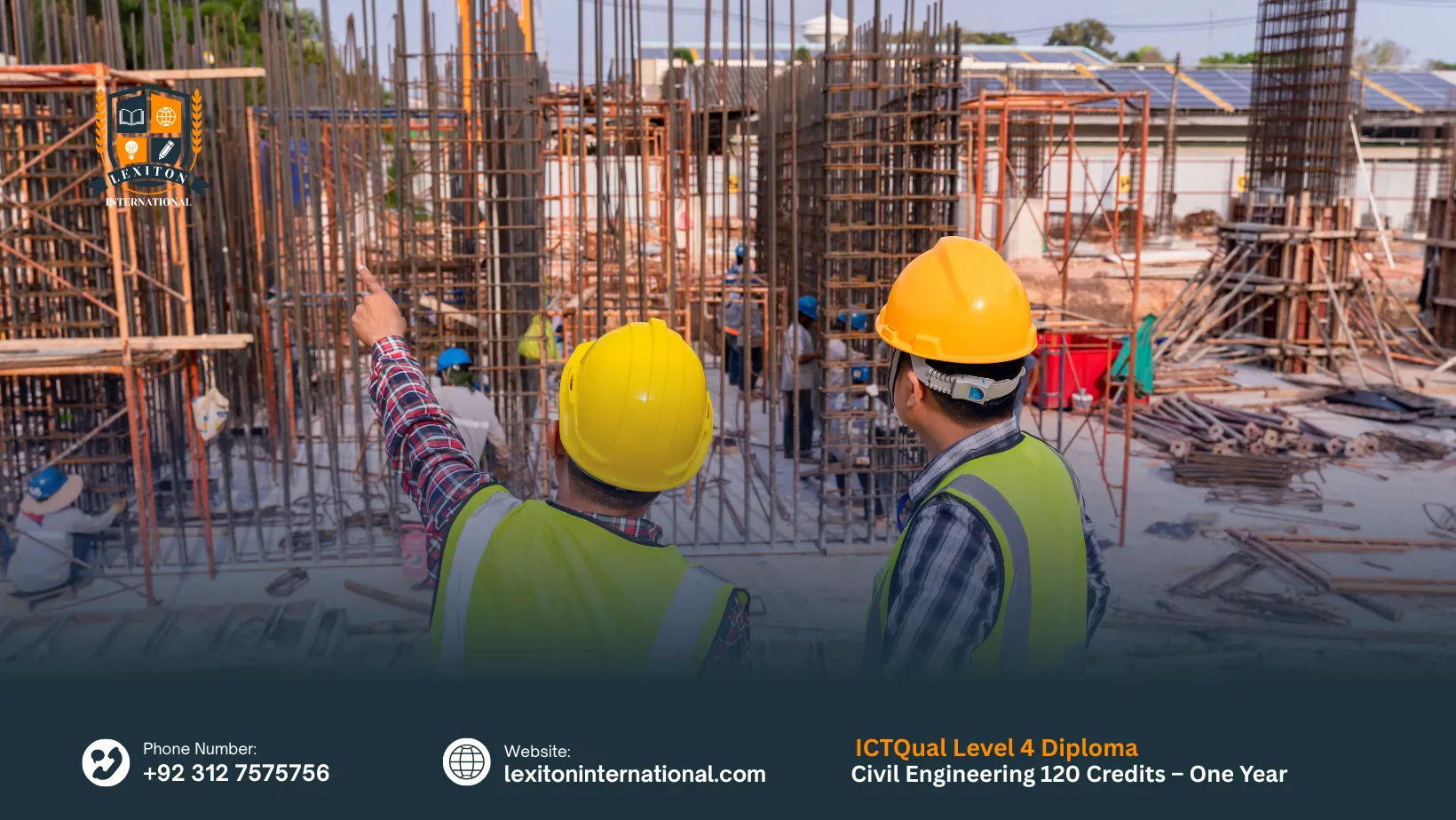
The ICTQual Level 4 Diploma in Civil Engineering 120 Credits – One Year is a professionally structured qualification designed to provide learners with comprehensive knowledge of civil engineering principles, construction processes, and infrastructure development. The programme introduces essential concepts related to engineering design, construction technology, surveying, and project operations, helping learners develop a solid understanding of how civil engineering projects are planned and executed. It is designed to reflect current industry practices and the technical requirements of modern construction environments.
This one year diploma covers key areas of civil engineering, including engineering materials, structural fundamentals, site management, health and safety practices, quality assurance, and technical documentation. Learners gain practical insight into construction methods, project coordination, and engineering problem solving techniques that are widely applied across the construction and infrastructure sectors. The curriculum integrates theoretical knowledge with practical applications to support effective understanding of engineering operations and industry standards.
The ICTQual Level 4 Diploma in Civil Engineering 120 Credits – One Year promotes the development of technical competence, analytical thinking, and professional awareness. Through a structured learning approach, learners enhance their understanding of engineering systems, construction activities, and project management processes. The qualification provides industry relevant knowledge and practical skills that support effective performance in civil engineering, construction, and infrastructure related environments while maintaining a strong focus on quality, safety, and operational efficiency.
- Age Requirements: Applicants must be 18 years or above at the time of enrollment.
- Professional Experience: Prior work experience is not mandatory.
- Educational Background: A Level 3 or an equivalent qualification is recommended.
- English Language Proficiency: Learners should have a reasonable level of English language proficiency.
Mandatory Units
This qualification, the ICTQual Level 4 Diploma in Civil Engineering 120 Credits – One Year, consists of 12 mandatory units.
Skills You Will Gain
Below are the learning outcomes for each of the study units in the ICTQual Level 4 Diploma in Civil Engineering program:
1. Introduction to Civil Engineering
- Understand the role of civil engineering in society and the various sectors within the industry.
- Identify key career opportunities and the skills required to succeed in civil engineering.
- Recognize the history and evolution of civil engineering practices.
2. Materials Science and Engineering
- Analyze the properties of construction materials such as concrete, steel, and composites.
- Evaluate the suitability of materials for different types of civil engineering projects.
- Apply knowledge of material testing methods to ensure durability and strength in construction.
3. Surveying Techniques and Equipment
- Demonstrate proficiency in using surveying equipment and techniques for measuring distances, angles, and elevations.
- Interpret and apply surveying data for civil engineering projects.
- Understand modern advancements in surveying technologies and their impact on construction accuracy.
4. Structural Analysis and Design
- Analyze forces, moments, and load distributions in various structures.
- Design simple structural elements such as beams, columns, and foundations using appropriate engineering methods.
- Apply structural design codes and standards to ensure safety and stability.
5. Geotechnical Engineering
- Understand soil mechanics and the behavior of soil and rock in engineering contexts.
- Conduct soil tests and interpret results for foundation design.
- Apply geotechnical principles to assess ground conditions for construction projects.
6. Construction Technology and Methods
- Identify and apply modern construction techniques and technologies in civil engineering.
- Understand the construction process, from excavation and site preparation to finishing.
- Evaluate the use of prefabrication, modular construction, and other innovative methods in the industry.
7. Environmental and Sustainability Issues in Civil Engineering
- Evaluate the environmental impact of civil engineering projects and propose sustainable alternatives.
- Apply green building practices and eco-friendly materials in design and construction.
- Understand the principles of waste management and energy efficiency in civil engineering projects.
8. Project Management in Civil Engineering
- Plan, organize, and manage civil engineering projects, including budgeting, scheduling, and resource allocation.
- Apply project management tools and techniques to control costs, timelines, and quality.
- Understand the roles and responsibilities of project managers in large-scale civil engineering projects.
9. Construction Safety and Risk Management
- Recognize safety hazards in construction environments and apply safety regulations and protocols.
- Conduct risk assessments to identify and mitigate potential dangers on construction sites.
- Understand the importance of health and safety management systems in maintaining a safe working environment.
10. Hydraulics and Water Engineering
- Apply principles of fluid mechanics to design water supply and drainage systems.
- Analyze the behavior of fluids in engineering contexts, including flow rates and pressure.
- Design and evaluate flood control measures and water treatment systems.
11. Transportation Engineering and Planning
- Understand the principles of designing and planning transportation infrastructure such as roads, railways, and airports.
- Analyze traffic flow and apply transportation planning concepts to improve efficiency and safety.
- Evaluate the environmental and social impacts of transportation projects on communities and ecosystems.
12. Civil Engineering Design Project
- Integrate knowledge from various areas of civil engineering to design a practical civil engineering project.
- Apply engineering analysis, design principles, and project management techniques to develop a comprehensive project plan.
- Present and communicate the design process, including solutions to challenges encountered during the project.
The ICTQual Level 4 Diploma in Civil Engineering 120 Credits – One Year is designed for individuals seeking a structured understanding of civil engineering principles, construction practices, and infrastructure development. The qualification provides industry-relevant knowledge and practical insights into engineering operations, project activities, and construction technologies. It supports the development of technical awareness and professional competencies applicable across the engineering and construction sectors.
Who Is This Course For?
- Individuals interested in civil engineering and construction fundamentals.
- Learners seeking knowledge of surveying, engineering materials, and structural principles.
- Construction personnel aiming to strengthen technical understanding.
- Individuals interested in infrastructure development and engineering operations.
- Staff involved in site management, quality control, and project coordination.
- Those seeking knowledge of engineering documentation and technical reporting.
- Individuals interested in construction technology and engineering problem-solving.
- Personnel working in engineering and construction support roles.
- Learners seeking awareness of health, safety, and quality practices.
- Individuals developing industry-relevant civil engineering skills and competencies.
The ICTQual Level 4 Diploma in Civil Engineering 120 Credits – One Year equips learners with essential civil engineering knowledge, technical awareness, and practical competencies relevant to the construction and infrastructure sectors. The qualification supports professional growth by enhancing understanding of engineering operations, project activities, and industry practices. It also provides a solid platform for engaging with a wide range of engineering and construction-related responsibilities.
Future Progression
- Civil engineering support and technical assistant roles.
- Construction site operations and project coordination functions.
- Surveying and measurement-related activities.
- Quality control and inspection support within construction projects.
- Engineering documentation and technical reporting responsibilities.
- Site supervision and construction administration tasks.
- Infrastructure development and maintenance projects.
- Health, safety, and compliance-related functions in construction environments.
- Engineering consultancy and project support services.
- Opportunities across construction, infrastructure, utilities, and engineering organizations.
Curious About This Course?