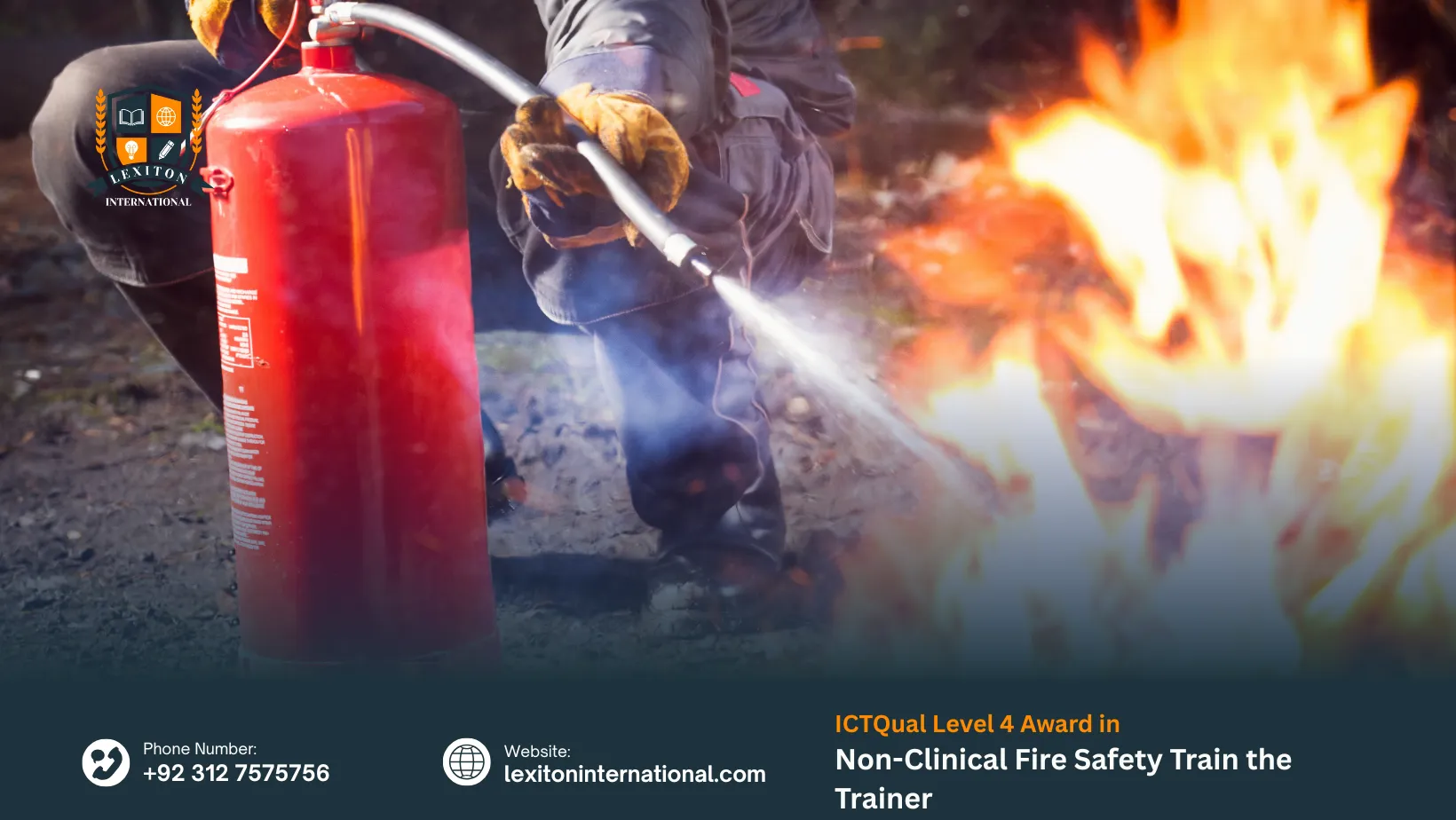
The ICTQual Level 4 Award in Non-Clinical Fire Safety Train the Trainer is a specialised qualification designed to prepare professionals to deliver effective training in fire safety across non-clinical environments such as offices, educational institutions, industrial facilities, and community organisations. This program blends technical fire safety knowledge with advanced training delivery skills, ensuring that learners not only understand the principles of fire prevention and emergency response but can also communicate these effectively to diverse audiences. By focusing on both safety protocols and instructional competence, the award equips participants to become influential trainers who can foster safer workplaces, reduce risks, and promote compliance with fire safety legislation and organisational policies.
This award provides a comprehensive framework for understanding fire safety from a non-clinical perspective, covering essential topics such as fire prevention strategies, emergency evacuation procedures, risk assessment, and the safe use of fire safety equipment. Learners will explore the causes of fire incidents, the importance of workplace preparedness, and the role of staff in maintaining safe environments. Alongside technical knowledge, the course emphasises the design and delivery of engaging training sessions, enabling participants to tailor content to the needs of their learners. By integrating fire safety principles with adult learning methodologies, the program ensures that trainers can effectively influence behaviour, encourage compliance, and instil confidence in emergency preparedness.
Beyond technical and instructional content, the program highlights professional responsibility, ethical considerations, and the importance of aligning training with organisational policies and national standards. Learners will gain practical insights into developing training materials, assessing learner outcomes, and adapting sessions for diverse workplace contexts. The award is particularly suited for individuals tasked with leading safety initiatives, as it equips them with the tools to inspire confidence, encourage best practices, and contribute to long-term improvements in workplace safety culture. Upon completion, participants will be recognised as competent trainers capable of delivering impactful fire safety education that supports organisational resilience and public well-being.
Applicants wishing to enrol in the ICTQual Level 4 Award in Non-Clinical Fire Safety Train the Trainer must meet the following entry criteria:
- Age Requirement: Candidates must be at least 21 years of age at the time of enrollment.
- Academic Qualification: A minimum qualification (or equivalent) in fire safety, education, or a related discipline.
- Professional Experience: At least two years of relevant work experience in fire safety, occupational safety, risk management, or training delivery.
- Educational Background: Completion of secondary education with demonstrated proficiency in English language and basic ICT skills.
- Communication Skills Requirement: Strong ability to present information clearly in both written and spoken formats.
- Professional Development Requirement: Evidence of commitment to continuous learning and reflective practice throughout the course
Mandatory Units
By completing the study units of the ICTQual Level 4 Award in Non-Clinical Fire Safety Train the Trainer, learners will acquire both technical fire safety knowledge and advanced training delivery skills. Each unit is carefully designed to combine theoretical understanding with practical application, ensuring participants are fully prepared to act as competent trainers who can influence workplace safety culture and compliance.
Introduction to Fire Safety Training
- Explain the fundamental principles of fire safety in non-clinical environments and their importance for workplace safety.
- Understand key legislation, regulations, and guidance relevant to fire safety and apply them in practice.
- Identify the roles and responsibilities of fire safety trainers, staff, and management in maintaining safe environments.
- Analyse the importance of creating a fire-safe workplace and promoting awareness among employees.
- Recognise common fire hazards and risk factors specific to non-clinical settings and propose strategies to mitigate them.
Fire Prevention Strategies
- Conduct effective fire risk assessments tailored to non-clinical environments.
- Identify and manage potential fire hazards before they escalate into incidents.
- Implement proactive fire prevention measures and organisational policies to minimise risks.
- Advise staff and learners on safe practices that reduce fire hazards in daily operations.
- Monitor and review fire prevention strategies to ensure continuous improvement and effectiveness.
Emergency Procedures and Evacuation
- Plan and implement emergency fire procedures, including clear evacuation routes and assembly points.
- Lead and coordinate staff during fire drills and real emergency situations with confidence.
- Communicate calmly and effectively under pressure to ensure safe evacuation.
- Understand the roles and responsibilities of fire wardens and evacuation teams.
- Evaluate and improve evacuation procedures through observation, feedback, and compliance with regulations.
Fire Safety Equipment and Systems
- Identify and explain the purpose of fire safety equipment such as alarms, extinguishers, sprinklers, and signage.
- Demonstrate correct usage and routine maintenance of fire safety systems.
- Evaluate the suitability of fire safety equipment for different non-clinical environments.
- Train staff and learners in the proper use of fire safety devices to ensure readiness.
- Monitor, report, and address faults or deficiencies in equipment to maintain compliance with legal standards.
Training Delivery and Facilitation
- Plan and design effective fire safety training sessions tailored to adult learners.
- Apply adult learning principles to engage participants and encourage active involvement.
- Use diverse training methods such as demonstrations, discussions, and practical exercises.
- Facilitate interactive learning activities to ensure knowledge retention and skill development.
- Adapt training delivery to meet the needs of diverse learners and workplace contexts.
Assessment and Evaluation
- Develop assessment tools to measure learner knowledge, competence, and confidence in fire safety.
- Conduct both practical and theoretical assessments to evaluate skills and understanding.
- Provide constructive feedback to learners to support continuous improvement.
- Analyse assessment results to identify gaps and adapt training content accordingly.
- Maintain accurate records of learner progress and apply reflective practice to enhance training effectiveness.
Practical Application and Case Studies
- Apply theoretical fire safety knowledge to real-world workplace scenarios.
- Analyse case studies to identify risks, propose solutions, and evaluate outcomes.
- Demonstrate correct fire safety procedures during simulations and practical exercises.
- Collaborate with colleagues to address fire safety challenges and implement best practices.
- Translate learning into actionable strategies that improve workplace fire safety culture.
Together, these learning outcomes ensure that graduates of the ICTQual Level 4 Award in Non-Clinical Fire Safety Train the Trainer are not only knowledgeable in fire safety principles but also skilled in delivering impactful training. Learners will emerge as competent professionals capable of shaping safer workplaces, influencing organisational compliance, and fostering a culture of prevention and preparedness.
The ICTQual Level 4 Award in Non-Clinical Fire Safety Train the Trainer is designed for individuals who aspire to become effective trainers in fire safety, combining technical knowledge with strong communication and facilitation skills. The ideal learner demonstrates professional commitment, a passion for workplace safety, and the ability to influence positive change through training.
Professional Background
- Individuals working in occupational safety, facilities management, or risk assessment roles
- Supervisors and managers responsible for workplace fire safety compliance
- Trainers and educators seeking to expand their expertise in fire safety delivery
- Professionals engaged in emergency preparedness and safety initiatives
- Consultants and advisors supporting organisational fire safety strategies
Skills and Competencies
- Strong communication and presentation skills for effective training delivery
- Ability to engage diverse learners and adapt training methods to different contexts
- Analytical thinking to assess fire risks and propose solutions
- Confidence in applying fire safety protocols in practical settings
- Commitment to promoting a culture of safety and accountability
Educational and Knowledge Base
- Solid foundation in health, safety, or related disciplines
- Understanding of workplace fire safety principles and emergency procedures
- Familiarity with adult learning theories and training methodologies
- Basic ICT skills to support digital learning and e-learning platforms
- Awareness of legislation, policies, and guidelines relevant to fire safety
Personal Attributes
- Professional integrity and ethical responsibility in training and practice
- Motivation to support continuous improvement in workplace safety standards
- Empathy and respect for diverse learner needs and backgrounds
- Resilience and adaptability in challenging or emergency situations
- Dedication to lifelong learning and reflective practice
Career Aspirations
- Desire to become a recognised fire safety trainer
- Interest in advancing into leadership or consultancy roles
- Commitment to improving organisational safety culture and compliance
- Ambition to contribute to public safety initiatives and awareness campaigns
- Willingness to mentor and inspire future trainers and professionals
The ideal learner for this award is someone who blends professional expertise with a genuine passion for education, ready to take on the responsibility of shaping safer workplaces and communities through effective fire safety training.
Graduates of the ICTQual Level 4 Award in Non-Clinical Fire Safety Train the Trainer will be well-positioned to pursue advanced qualifications, professional recognition, and leadership roles. This award provides a strong foundation for career growth, academic progression, and opportunities to influence workplace safety practices.
Professional Development
- Opportunities to become certified workplace trainers in fire safety
- Advancement into supervisory or managerial positions in safety departments
- Ability to lead fire safety initiatives within organisations
- Recognition as a subject matter expert in fire safety training
- Potential to work as independent consultants or freelance trainers
Academic Progression
- Eligibility to pursue higher-level awards in training and education
- Pathways into advanced diplomas in occupational health and safety
- Opportunities to specialise further in fire safety and risk management
- Access to professional development courses in adult learning and facilitation
Industry Opportunities
- Employment in corporate safety departments across diverse industries
- Roles in training institutions, NGOs, and community organisations
- Opportunities in government or regulatory agencies overseeing fire safety compliance
- Consultancy work supporting fire safety strategies and audits
- Engagement in international projects promoting workplace safety
Skill Enhancement
- Development of advanced training design and delivery skills
- Strengthening of leadership and mentoring capabilities
- Enhanced ability to evaluate and improve workplace fire safety practices
- Greater confidence in managing emergencies and evacuation procedures
- Expanded knowledge of global fire safety standards and best practices
Long-Term Career Pathways
- Progression into senior training and development roles within organisations
- Opportunities to influence policy and organisational safety strategies
- Potential to contribute to academic research and publications in fire safety
- Ability to mentor new trainers and build training teams
- Recognition as a leader in fire safety education and workplace safety culture
This award provides learners with a strong platform for career advancement, academic progression, and professional recognition, enabling them to become influential leaders in fire safety training across multiple sectors.
Curious About This Course?