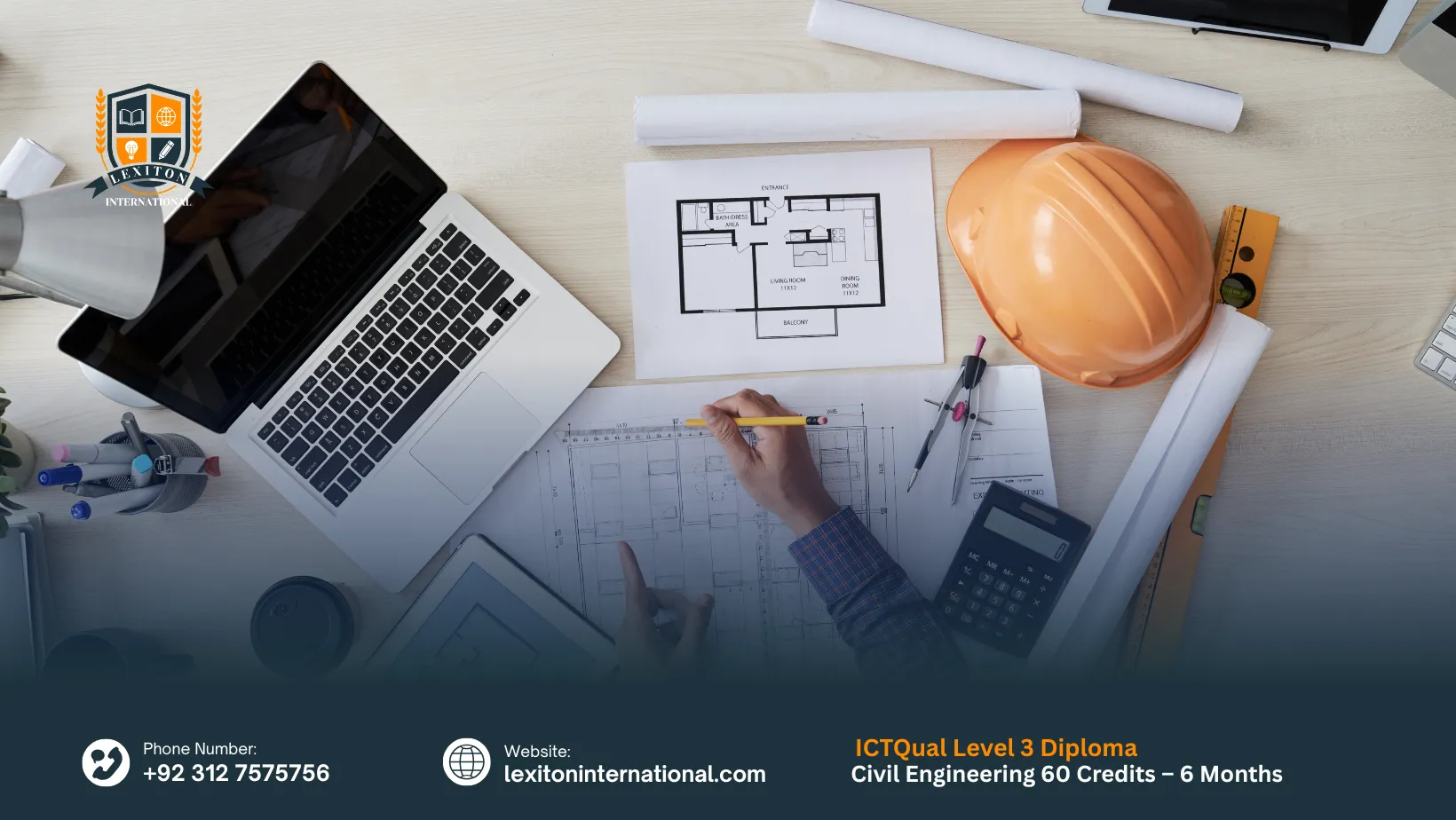
The ICTQual Level 3 Diploma in Civil Engineering 60 Credits – 6 Months is a comprehensive qualification designed to provide a strong understanding of the fundamental principles and practices of civil engineering. The programme covers essential areas such as construction technology, engineering mathematics, surveying techniques, structural concepts, and infrastructure development. It is structured to deliver industry-relevant knowledge that reflects current engineering standards and professional practices.
This diploma focuses on the technical and practical aspects of civil engineering, enabling learners to develop an understanding of how engineering projects are planned, designed, and executed. The curriculum explores key topics including construction materials, site operations, health and safety requirements, project coordination, and quality control processes. Through a balanced combination of theoretical concepts and applied learning, the qualification supports the development of technical competence and engineering awareness.
The ICTQual Level 3 Diploma in Civil Engineering 60 Credits – 6 Months aligns with the evolving needs of the construction and infrastructure sectors. It highlights modern engineering methods, sustainable construction practices, and the effective use of technology within civil engineering projects. By addressing both foundational and contemporary aspects of the discipline, the qualification provides a structured pathway for acquiring valuable civil engineering knowledge within a focused six-month duration.
- Age Requirements: Applicants must be 16 years or above at the time of enrollment.
- Professional Experience: No prior work experience is required.
- Educational Background: A Level 2 qualification or an equivalent qualification is recommended.
- English Language Proficiency: Learners should have a reasonable level of English language proficiency.
Mandatory Units
This qualification, the ICTQual Level 3 Diploma in Civil Engineering 60 Credits – 6 Months, consists of 6 mandatory units.
- Construction Technology and Materials
- Structural Mechanics and Design
- Site Surveying and Geotechnics
- Health, Safety, and Environmental Practices
- Project Management Fundamentals
- Civil Engineering Drawing and CAD
Skills You Will Gain
Below are the learning outcomes for each of the study units in the ICTQual Level 3 Diploma in Civil Engineering program:
Construction Technology and Materials
- Identify and explain the properties and applications of various construction materials (e.g., concrete, steel, timber, and composites) used in civil engineering.
- Evaluate material performance based on factors such as durability, cost, and suitability for different types of construction projects.
- Understand and apply construction technology techniques, including modern methods of construction and material testing processes.
- Assess the impact of material choice on the sustainability and efficiency of a construction project.
Structural Mechanics and Design
- Apply basic principles of structural mechanics to understand how forces (e.g., tension, compression, shear, bending) affect structures.
- Perform load calculations for structural components such as beams, columns, and foundations, considering factors like dead loads, live loads, and environmental forces.
- Design simple structural systems following relevant codes and standards to ensure safety and efficiency in the construction of buildings and infrastructure.
- Assess structural stability and propose solutions to mitigate risks or weaknesses in structures.
Site Surveying and Geotechnics
- Use surveying instruments (e.g., total stations, levels, GPS) to measure and record site data accurately.
- Interpret topographical maps and site plans to inform engineering decisions and project design.
- Understand and analyze soil properties, including soil types, compaction, and bearing capacity, for appropriate foundation design.
- Apply geotechnical principles in the assessment of site conditions and in making recommendations for foundation types and soil treatments.
Health, Safety, and Environmental Practices
- Understand and apply health and safety regulations within construction and civil engineering projects to protect workers and the public.
- Implement risk management strategies to minimize hazards on construction sites, ensuring compliance with local and international safety standards.
- Promote sustainable practices within civil engineering projects by assessing environmental impacts and recommending mitigation strategies.
- Recognize and apply environmental laws and guidelines in construction projects to reduce the ecological footprint of civil engineering practices.
Project Management Fundamentals
- Apply basic project management principles to plan, execute, and monitor civil engineering projects effectively.
- Develop project schedules and timelines, allocating resources (e.g., labor, materials, equipment) efficiently to meet deadlines and budgets.
- Monitor project costs and understand financial management techniques, including cost estimation, budgeting, and controlling project expenditures.
- Assess and manage risks in civil engineering projects, implementing mitigation strategies to minimize delays or budget overruns.
Civil Engineering Drawing and CAD
- Create accurate technical drawings of civil engineering designs using traditional drawing methods and modern CAD (Computer-Aided Design) software.
- Interpret complex engineering plans and drawings, identifying key components, dimensions, and specifications.
- Use CAD software to design, modify, and visualize civil engineering structures such as roads, bridges, and drainage systems.
- Produce clear and detailed design documentation that can be used for project planning, permitting, and construction.
The ICTQual Level 3 Diploma in Civil Engineering 60 Credits – 6 Months is designed to support the development of practical and technical knowledge within the civil engineering and construction sectors. The qualification focuses on core engineering principles, construction processes, infrastructure development, and industry standard practices. It provides structured learning aligned with modern engineering requirements and workplace expectations.
Who Is This Course For?
- Those seeking knowledge of civil engineering principles and construction methods.
- Individuals interested in engineering design, surveying, and construction technology.
- Personnel involved in construction and site operations.
- Professionals looking to enhance their understanding of construction materials and structural concepts.
- Those aiming to strengthen awareness of health and safety practices in engineering environments.
- Individuals seeking training in engineering calculations, measurements, and technical documentation.
- Personnel working in infrastructure and construction related sectors.
- Those interested in sustainable construction practices and modern engineering technologies.
- Professionals seeking knowledge of project planning, resource management, and construction workflows.
- Individuals looking to understand civil engineering regulations, standards, and industry practices.
The ICTQual Level 3 Diploma in Civil Engineering 60 Credits – 6 Months provides a strong foundation in civil engineering concepts, construction practices, and infrastructure development. The knowledge and skills gained through this qualification can support engagement with a wide range of technical and professional activities within the engineering and construction sectors. It also contributes to the development of competencies that are valued across modern construction environments.
Future Progression
- Apply civil engineering principles in construction and infrastructure projects.
- Contribute to site planning, project coordination, and construction operations.
- Support surveying, measurement, and engineering documentation activities.
- Participate in quality control and compliance processes within construction projects.
- Utilize engineering calculations and technical data for project related tasks.
- Engage with sustainable construction practices and environmental management initiatives.
- Assist in the implementation of health, safety, and risk management procedures.
- Contribute to structural, transportation, and infrastructure development projects.
- Apply modern construction technologies and engineering software tools in workplace settings.
- Support project management, resource allocation, and construction workflow processes.
Curious About This Course?