
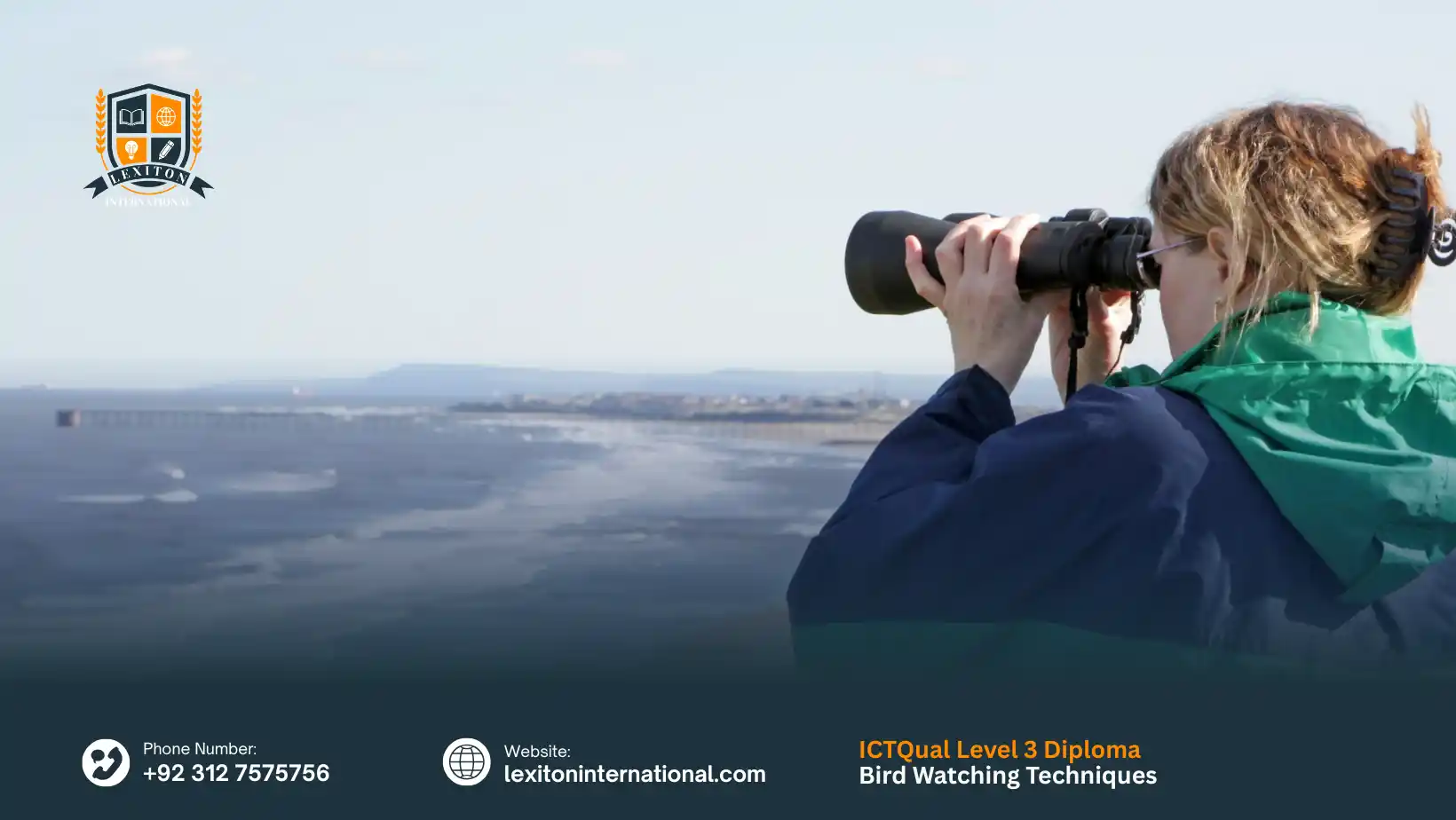
ICTQual Level 3 Diploma in Bird Watching Techniques
The ICTQual Level 3 Diploma in Bird Watching Techniques is designed for anyone passionate about nature and wildlife who wants to develop advanced skills in observing and identifying birds. This course provides learners with the knowledge and practical techniques needed to study birds in the wild, understand their behaviors, and recognize different species. You will learn how to use tools such as binoculars, field guides, and notebooks effectively to make accurate observations. The course is suitable for beginners as well as enthusiasts looking to improve their bird watching skills for recreational, research, or professional purposes.
Throughout the course, learners will explore essential topics such as bird anatomy, migration patterns, feeding and mating behaviors, and habitat types. The program also covers ethical bird watching practices, recording observations, wildlife photography, and contributing to conservation projects. With a combination of theory and practical exercises, learners gain the confidence to observe birds carefully, take accurate field notes, and understand how human activities affect bird populations. These skills not only enhance your enjoyment of bird watching but also allow you to support local environmental and citizen science initiatives.
Completing the ICTQual Level 3 Diploma in Bird Watching Techniques equips learners with valuable skills for both personal growth and career development. Graduates can take part in bird surveys, wildlife research, conservation projects, eco-tourism, and educational programs, while also preparing to progress to higher-level courses in wildlife management, ecology, or environmental studies. This diploma provides a strong foundation for anyone who wants to deepen their knowledge of birds, contribute to conservation efforts, and develop professional skills in wildlife observation and management.
- Age Requirements: Learners must be at least 18 years or older at the time of enrollment.
- Professional Experience: No work experience is needed. Having previous interest in wildlife, ecology, or nature studies can be helpful.
- Educational Background: A basic school education or equivalent is recommended, but no prior ornithology or wildlife experience is required.
- English Language Proficiency: Learners must have a good command of English to engage with course materials, assessments, and technical documentation effectively.
Mandatory Units
Skills You Will Gain
Regional Ornithology Studies
- Identify bird species unique to specific regions and understand their ecological significance.
- Analyze migratory patterns and seasonal variations across different habitats.
- Compare regional biodiversity to highlight conservation priorities.
- Apply regional knowledge to enhance survey accuracy and ecological awareness.
- Recognize cultural and environmental factors influencing bird populations in local contexts.
Survey Methodologies
- Design structured bird surveys using point counts, transects, and timed observations.
- Select appropriate methodologies based on habitat type and conservation objectives.
- Implement systematic survey protocols to ensure consistency and reliability.
- Adapt survey strategies to environmental conditions and species behaviour.
- Evaluate survey effectiveness through reflection and refinement of techniques.
Data Analysis and Interpretation
- Organize and manage collected data using standardized formats and digital tools.
- Apply basic statistical methods to interpret bird distribution and abundance.
- Identify ecological trends from survey results to support conservation decisions.
- Present findings clearly through charts, reports, and visual summaries.
- Ensure data integrity by following ethical and professional standards.
Conservation Awareness and Advocacy
- Understand threats to bird populations including habitat loss and climate change.
- Promote ecological awareness through education and community engagement.
- Advocate for sustainable practices that protect habitats and biodiversity.
- Support conservation initiatives by contributing data and expertise.
- Encourage responsible bird watching as a tool for conservation advocacy.
Fieldwork Safety and Risk Management
- Apply safety protocols during fieldwork in diverse natural environments.
- Identify potential risks including weather, terrain, and wildlife encounters.
- Use appropriate equipment safely and responsibly.
- Develop risk management plans to ensure safe participation in surveys.
- Promote teamwork and communication to enhance safety in group fieldwork.
Project Work in Bird Watching
- Plan and execute independent projects focused on bird watching and conservation.
- Integrate survey methodologies into practical fieldwork assignments.
- Analyze and present project findings in professional formats.
- Demonstrate advanced bird identification skills through applied research.
- Reflect on project outcomes to improve future bird watching practices.
The ICTQual Level 3 Diploma in Bird Watching Techniques is ideal for anyone who wants to improve their knowledge and skills in observing birds and understanding their habitats. This course is designed for learners who are passionate about wildlife and want to combine practical field skills with scientific understanding.
Who Is this for
- Nature enthusiasts who want to develop advanced bird watching skills.
- Students or hobbyists interested in learning about bird species, behavior, and habitats.
- Volunteers or individuals planning to support conservation projects or citizen science programs.
- Professionals working in eco-tourism, wildlife education, or environmental organizations.
- Beginners who want to gain confidence in using binoculars, field guides, and recording observations.
- Anyone planning to progress to higher-level courses in wildlife, ecology, or environmental management.
This course is suitable for both beginners and those with some prior interest in wildlife. By completing it, learners will gain the knowledge and practical skills needed to enjoy bird watching, participate in conservation projects, and pursue further studies or professional opportunities in wildlife and environmental fields.
After completing the ICTQual Level 3 Diploma in Bird Watching Techniques, learners will have strong skills in watching, identifying, and understanding birds. This course helps you take the next steps in learning, conservation work, or careers in wildlife.
Future Progression
- Move on to higher courses in wildlife management, ecology, or environmental studies.
- Join bird surveys, research projects, or community science programs.
- Work in eco-tourism, wildlife education, or managing nature reserves.
- Help with conservation projects, habitat protection, and monitoring wildlife.
- Build skills to support environmental organizations and local wildlife projects.
- Gain experience for roles in field research, wildlife guiding, or environmental work.
This course gives learners practical knowledge and skills they can use in many wildlife and conservation roles. It prepares you for further studies, career growth, and active participation in protecting birds and nature, helping you grow both personally and professionally in wildlife and environmental fields.
Curious About This Course?