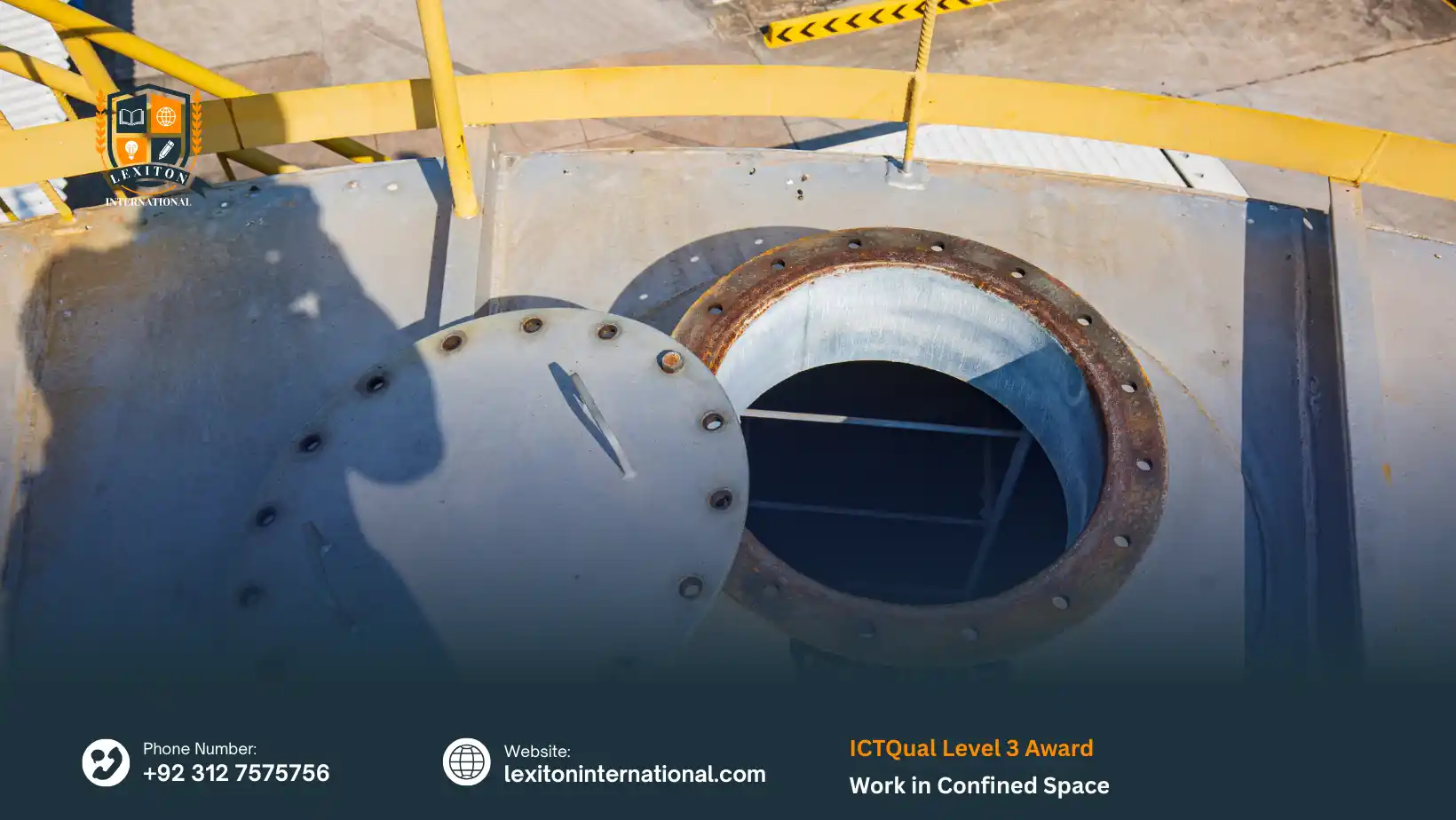
Confined Space Work Training Level 3 Award
The ICTQual Level 3 Award in Work in Confined Space is a professional health and safety qualification designed to help learners understand how to work safely in restricted and enclosed environments. Confined spaces can be dangerous due to limited entry, poor ventilation, and the presence of hazardous gases. This course provides essential knowledge about safe working procedures, hazard awareness, and emergency response in confined space environments.
This training programme covers key topics such as identifying confined space hazards, understanding safety control measures, using personal protective equipment (PPE), and following safe entry and exit procedures. Learners also gain knowledge of risk assessment, permit-to-work systems, gas detection awareness, and emergency rescue planning. The course focuses on building safety awareness and helping learners understand how to reduce risks while working in confined areas.
The ICTQual Level 3 Award in Work in Confined Space is suitable for individuals working in construction, oil and gas, engineering, utilities, manufacturing, and maintenance industries. It is ideal for both beginners and experienced workers who want to improve their confined space safety knowledge. By completing this qualification, learners can enhance workplace safety skills, improve job opportunities, and support safe working practices in high-risk environments.
- Age Requirement: Learners must be at least 18 years or older at the time of enrollment.
- Educational Background: No formal qualifications are required, but basic secondary education is recommended for understanding safety procedures.
- Experience: No prior experience is required, although workplace or industrial experience is helpful.
- Language Proficiency: Learners must have good written and spoken English skills to engage effectively with course materials, reporting tasks, and communication in industrial settings.
Mandatory Units
Skills You Will Gain
1. Understanding Confined Spaces
- Define and classify confined spaces according to industry standards.
- Identify common confined space hazards, including atmospheric, physical, and biological hazards.
- Recognize the characteristics and features of confined spaces to determine risk levels and necessary precautions.
2. Legislative and Regulatory Framework
- Explain the key health and safety legislation and regulations governing confined space work.
- Understand compliance requirements and responsibilities for employers, employees, and duty holders.
- Apply legal provisions to ensure safe work practices and regulatory compliance in confined space operations.
3. Risk Assessment and Hazard Control
- Conduct thorough risk assessments for confined space work activities.
- Identify and prioritize potential hazards within confined spaces.
- Implement control measures to eliminate or mitigate risks associated with confined space hazards.
4. Safety Equipment and Personal Protective Equipment (PPE)
- Select appropriate safety equipment and PPE for confined space entry and work activities.
- Inspect and maintain safety equipment and PPE to ensure functionality and reliability.
- Demonstrate correct usage and donning/doffing procedures for safety equipment and PPE.
5. Entry and Exit Procedures
- Develop safe entry and exit procedures specific to confined spaces.
- Establish communication protocols for workers inside confined spaces and with personnel outside.
- Implement emergency evacuation procedures and assembly points for confined space emergencies.
6. Emergency Response and Rescue Operations
- Prepare for confined space emergencies through effective planning and training.
- Execute rescue techniques and procedures for extricating workers from confined spaces.
- Provide first aid treatment for injuries sustained in confined space incidents.
7. Ventilation and Atmospheric Monitoring
- Understand the importance of ventilation in confined spaces to control atmospheric hazards.
- Operate ventilation systems effectively to maintain safe air quality within confined spaces.
- Utilize atmospheric monitoring equipment to assess and monitor air quality parameters.
8. Confined Space Entry Permits and Procedures
- Implement confined space entry permit systems to control access and work activities in confined spaces.
- Allocate roles and responsibilities to personnel involved in confined space entry operations.
- Document and maintain records of confined space entry permits, procedures, and activities for compliance and accountability.
The ICTQual Level 3 Award in Work in Confined Space is designed for individuals who are required to work in or around confined spaces where safety risks are high. It is suitable for learners who want to develop the knowledge and practical awareness needed to work safely in restricted and hazardous environments.
Who Is This Course For
- Construction workers involved in confined space activities
- Oil and gas industry employees working in tanks or pipelines
- Engineering and maintenance staff handling restricted areas
- Utilities workers such as water, sewer, and electrical teams
- Industrial and manufacturing workers in enclosed spaces
- Health and safety assistants and site safety staff
- Beginners entering high-risk industrial environments
- Supervisors overseeing confined space operations
The ICTQual Level 3 Award in Work in Confined Space provides a strong foundation for learners to advance into higher-level safety and technical roles. It supports career growth in industries where confined space work and safety management are essential.
Future Progression
- Progress to advanced confined space rescue and entry training
- Move into Health and Safety Officer or Safety Supervisor roles
- Develop skills for Permit Controller or Site Safety Inspector positions
- Advance into oil and gas, construction, and engineering safety careers
- Specialise in confined space rescue and emergency response roles
- Progress toward gas testing and hazardous environment certifications
- Enhance opportunities in safety compliance and risk management roles
- Build a pathway toward professional safety leadership certifications,
Curious About This Course?