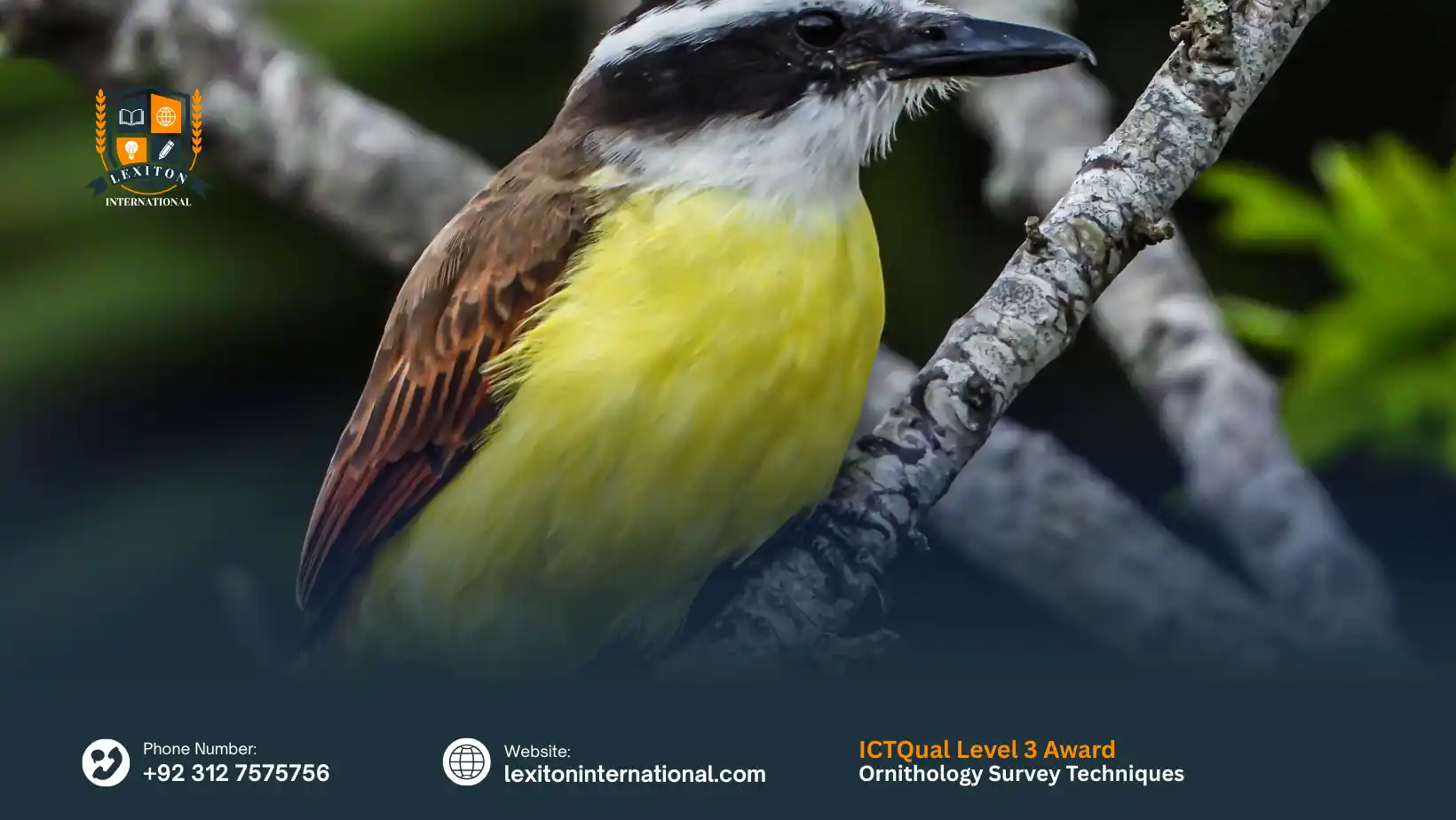
ICTQual Level 3 Certificate in Ornithology Surveys
The ICTQual Level 3 Award in Ornithology Survey Techniques is a specialized vocational qualification designed to provide a rigorous scientific foundation in avian monitoring and data collection. This professional program focuses on the technical methodologies required to identify, track, and record bird populations across diverse ecosystems with precision. By engaging with this curriculum, students master the essential fieldwork skills and observational ethics necessary to contribute to high-level ecological research and professional biodiversity assessments.
As global environmental challenges accelerate, the ability to accurately monitor avian health has become a critical pillar of conservation biology. Birds serve as vital bioindicators, offering immediate insights into the stability of our planet’s shifting habitats. Professionals who possess validated survey expertise are no longer just observers; they are essential guardians of ecological data. Mastering these scientific techniques ensures that conservation efforts are grounded in empirical evidence, allowing for the protection of vulnerable species through informed, data-driven decision-making.
The true importance of this discipline lies in its power to influence global environmental policy and habitat management. By bridging the gap between basic birdwatching and professional fieldwork, individuals can address the urgent need for standardized biological recording. This expertise allows practitioners to solve complex environmental puzzles, ensuring that every survey contributes to the long-term survival of avian populations. Ultimately, advancing your skills in this field places you at the forefront of a scientific movement dedicated to preserving the natural world through expert ornithological guidance.
- Age Requirements: Learners must be at least 16 years or older at the time of enrollment.
- Professional Experience: While formal experience is preferred, it is not mandatory; a documented interest in wildlife conservation is essential.
- Educational Background: A Level 2 qualification (or equivalent) in a science-related subject is highly recommended for academic readiness.
- English Language Proficiency: Learners must have a good command of English to engage with course materials, assessments, and technical documentation effectively.
Mandatory Units
Skills You Will Gain
Advanced Bird Identification and Classification
- Accurately identify a wide range of bird species using visual, auditory, and behavioural characteristics.
- Distinguish between similar species by applying advanced classification keys and field guides.
- Understand bird taxonomy and classification systems relevant to ornithological surveys.
- Recognise age, sex, and seasonal variations in bird species.
Survey Planning and Fieldwork Preparation
- Plan effective ornithological surveys based on objectives, habitats, and seasonal factors.
- Select appropriate survey methods and equipment for different environments.
- Apply health, safety, and ethical considerations during fieldwork activities.
- Prepare survey schedules and risk assessments for field-based studies.
Recording, Mapping, and Reporting Bird Populations
- Accurately record bird observations using standard survey recording methods.
- Use basic mapping techniques to illustrate bird distribution and habitats.
- Compile and organise survey data into clear and structured records.
- Produce simple survey reports suitable for conservation or environmental use.
Finding reliable ways to quantify biodiversity is a significant challenge for modern environmental sectors. The ICTQual Level 3 Award in Ornithology Survey Techniques provides a practical solution for those struggling to transition from amateur observation to professional biological recording. This program is specifically designed for individuals who need to master standardized data collection to influence conservation outcomes and habitat protection strategies.
Who Is this for
- Aspiring Ecologists: Individuals aiming to secure entry-level roles within environmental consultancies or wildlife organizations.
- Conservation Volunteers: Dedicated site wardens looking to formalize their skills with a recognized vocational qualification.
- Field Researchers: Science graduates who need to bridge the gap between theoretical knowledge and practical avian survey methods.
- Park Rangers: Professionals responsible for land management who require accurate data to maintain local biodiversity levels.
- Citizen Scientists: Enthusiasts who want to ensure their biological records meet the rigorous standards of national recording schemes.
- Environmental Educators: Teachers and guides who wish to provide more technical and scientifically accurate wildlife information.
Completing this professional qualification serves as a vital stepping stone for those aiming to establish a long-term career in environmental science and wildlife management. By mastering standardized data collection, you position yourself as a competent professional ready to take on increasing levels of responsibility within the ecological sector.
Future Progression
- Senior Field Surveyor: Take on a leadership role by overseeing large-scale biodiversity projects and managing teams during complex environmental impact assessments.
- Ecological Consultant: Provide professional advice to developers and government agencies regarding avian protection and the mitigation of habitat loss.
- Conservation Officer: Lead strategic initiatives for wildlife charities and NGOs to protect endangered species and restore vital local ecosystems.
- Biodiversity Data Manager: Specialize in the technical analysis and reporting of biological data for national environmental databases and research institutions.
- Wildlife Site Manager: Assume responsibility for the operational health, monitoring protocols, and habitat restoration of nature reserves and protected lands.
- Ornithological Specialist: Become a recognized subject matter expert in specific avian groups to support focused research or environmental law enforcement.
Curious About This Course?