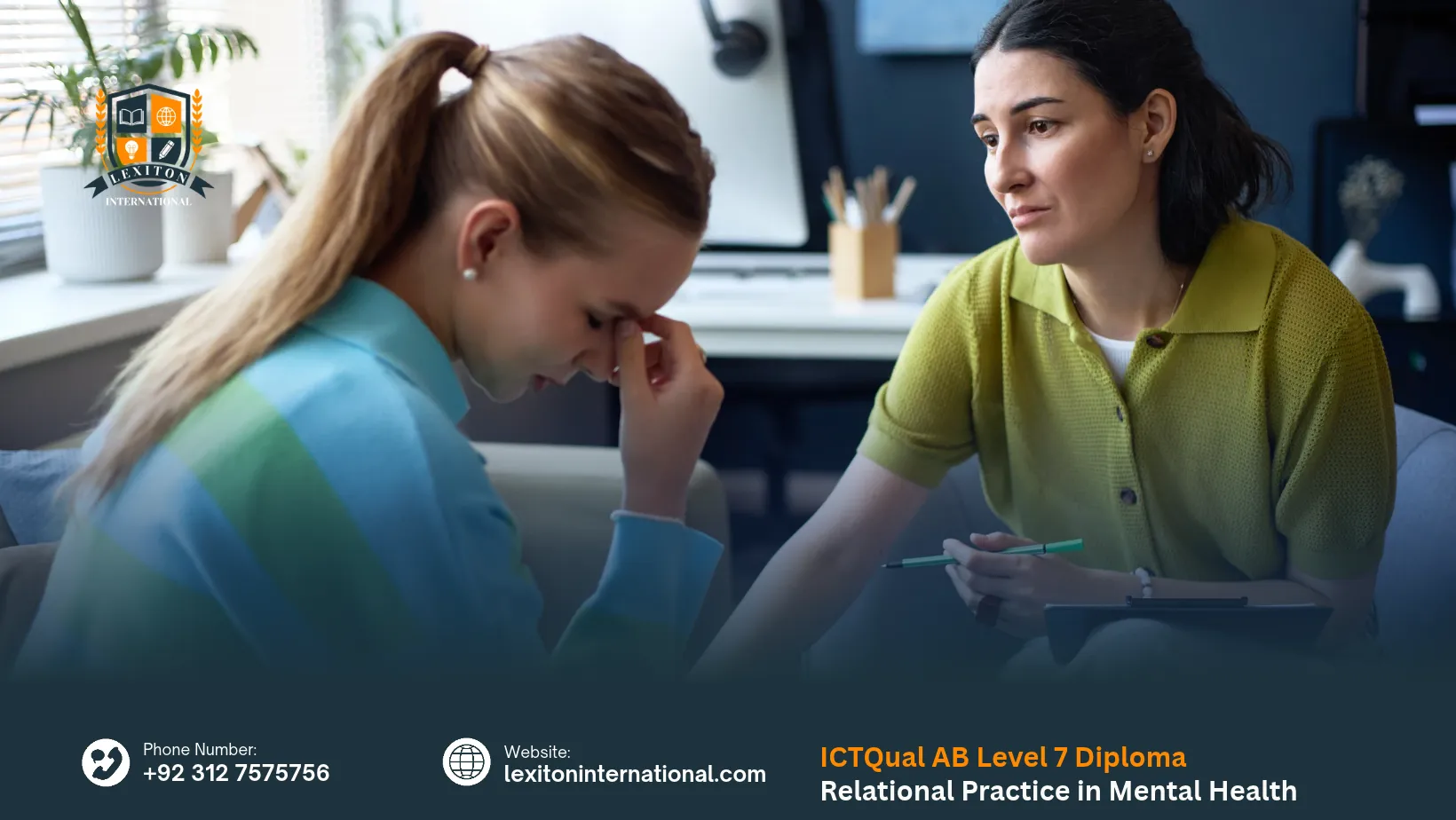
The ICTQual AB Level 7 Diploma in Relational Practice in Mental Health is an advanced professional certification designed for individuals seeking to develop specialist knowledge and practical expertise in relationship-centred mental health practice. This programme focuses on the importance of therapeutic relationships, effective communication, empathy, emotional awareness and professional boundaries in promoting positive mental health outcomes.
The certification provides an opportunity to explore the complex relationship between psychological well-being, human behaviour and interpersonal experiences. Learners develop an advanced understanding of neurobiology, psychodynamic theories, trauma-informed approaches, mental health conditions and recovery-oriented practices. It also examines how family relationships, social environments, cultural influences and individual experiences shape mental health and emotional well-being.
Through advanced learning and reflective practice, learners strengthen their ability to apply ethical principles, make informed professional decisions and establish safe, supportive and inclusive relationships. The programme also emphasises person-centred support, safeguarding responsibilities, professional accountability and collaborative working within mental health services.
The ICTQual AB Level 7 Diploma in Relational Practice in Mental Health is particularly valuable for experienced mental health practitioners, counsellors, healthcare professionals and social care specialists seeking to enhance their professional capabilities, strengthen leadership potential and contribute to effective, compassionate and evidence-informed mental health support.
Applicants interested in enrolling in the ICTQual AB Level 7 Diploma in Relational Practice in Mental Health should generally meet the following entry requirements:
- Age: Learners should be at least 18 years old.
- Educational Background: A recognised Level 6 certification, undergraduate degree or equivalent international academic achievement is recommended.
- Experience: Previous experience in mental health, counselling, psychology, healthcare, social care or community support is beneficial.
- English Language: Learners should have a sufficient level of English reading, writing, speaking and comprehension skills to understand course materials, participate in learning activities and complete assessments.
Mandatory Units
- Neurobiology, Psychodynamic Theory and Practice
- Trauma-informed Approach in Mental Health
- Presenting Issues and Diagnoses in Mental Health
- Enabling Recovery in Mental Health
- Social Dynamics in Mental Health
- Professional Skills in Mental Health
Skills You Will Gain
Unit 1: Neurobiology, Psychodynamic Theory and Practice
By the end of this unit, learners will be able to:
- Explain the neurobiological processes influencing mental health, emotional regulation, behaviour and interpersonal relationships.
- Analyse the relationship between brain development, psychological experiences and individual responses to emotional distress.
- Evaluate key psychodynamic theories and their relevance to understanding unconscious processes, attachment patterns and relational experiences.
- Apply psychodynamic concepts to explore interpersonal relationships, emotional difficulties and behavioural patterns in mental health practice.
- Critically examine the influence of early life experiences, defence mechanisms and relational dynamics on psychological well-being.
- Reflect on the application of neurobiological and psychodynamic perspectives within ethical, person-centred mental health practice.
Unit 2: Trauma-informed Approach in Mental Health
By the end of this unit, learners will be able to:
- Explain the psychological, emotional, physical and social effects of trauma on individuals and their relationships.
- Analyse the impact of adverse childhood experiences, prolonged stress and traumatic events on mental health and emotional regulation.
- Evaluate the core principles of trauma-informed practice, including safety, trust, choice, collaboration and empowerment.
- Apply trauma-informed communication and relational approaches when supporting individuals experiencing psychological distress.
- Identify potential trauma responses and develop appropriate strategies to reduce the risk of re-traumatisation.
- Critically evaluate ethical considerations, professional boundaries and safeguarding responsibilities in trauma-informed mental health practice.
Unit 3: Presenting Issues and Diagnoses in Mental Health
By the end of this unit, learners will be able to:
- Identify common mental health presenting issues, including anxiety, depression, trauma-related difficulties, emotional dysregulation and interpersonal challenges.
- Explain the principal characteristics of recognised mental health conditions and their potential effects on daily functioning and relationships.
- Analyse the biological, psychological, social and environmental factors that may contribute to mental health difficulties.
- Evaluate the benefits and limitations of diagnostic frameworks when understanding individual experiences of psychological distress.
- Differentiate between observable symptoms, individual experiences and formal clinical diagnoses within the boundaries of professional competence.
- Apply appropriate assessment, referral and collaborative support principles when responding to presenting mental health concerns.
Unit 4: Enabling Recovery in Mental Health
By the end of this unit, learners will be able to:
- Explain the principles of recovery-oriented mental health practice, including hope, autonomy, empowerment and personal responsibility.
- Analyse the individual, relational and environmental factors that influence recovery, resilience and psychological well-being.
- Evaluate person-centred approaches that support individuals in identifying strengths, goals, preferences and recovery priorities.
- Develop collaborative support strategies that promote independence, social inclusion and meaningful participation in everyday life.
- Apply reflective practice and effective communication to strengthen supportive relationships throughout the recovery process.
- Critically assess the effectiveness of recovery approaches using individual feedback, agreed goals and relevant outcome measures.
Unit 5: Social Dynamics in Mental Health
By the end of this unit, learners will be able to:
- Explain how family relationships, social networks, cultural influences and community environments affect mental health and well-being.
- Analyse the relationship between social inequality, discrimination, stigma, poverty and barriers to accessing mental health support.
- Evaluate the influence of interpersonal relationships, group dynamics and social expectations on emotional experiences and behaviour.
- Apply inclusive, culturally responsive and relationship-centred approaches when supporting individuals from diverse backgrounds.
- Examine the role of families, communities and multidisciplinary teams in promoting mental health and social inclusion.
- Develop strategies to address relational difficulties, strengthen social support and promote respectful professional relationships.
Unit 6: Professional Skills in Mental Health
By the end of this unit, learners will be able to:
- Demonstrate advanced communication, active listening and relationship-building skills appropriate to mental health practice.
- Apply reflective practice, critical thinking and professional judgement when responding to complex interpersonal and emotional situations.
- Evaluate ethical principles, confidentiality requirements, professional boundaries and safeguarding responsibilities in mental health settings.
- Develop collaborative working practices with service users, families, colleagues and relevant multidisciplinary professionals.
- Apply appropriate documentation, information-sharing and referral procedures in accordance with organisational policies and applicable legislation.
- Formulate a professional development plan that identifies learning needs, strengthens practice and supports continuous professional development.
Who is This Course For?
The ICTQual AB Level 7 Diploma in Relational Practice in Mental Health is suitable for:
- Experienced mental health practitioners seeking advanced professional development.
- Counsellors and counselling support professionals interested in relationship-centred approaches.
- Psychologists and psychology professionals wishing to strengthen their understanding of relational mental health practice.
- Healthcare professionals supporting individuals experiencing psychological and emotional difficulties.
- Social workers and social care professionals involved in mental health support services.
- Community mental health workers seeking to improve their professional practice.
- Recovery support practitioners interested in trauma-informed and person-centred approaches.
- Mental health team leaders and service coordinators aiming to strengthen their professional and leadership capabilities.
- Professionals interested in advancing their knowledge of psychological well-being, therapeutic relationships and ethical mental health practice.
Future Progression
Successful completion of the ICTQual AB Level 7 Diploma in Relational Practice in Mental Health can support further professional development and career advancement across mental health, healthcare and social care sectors. Depending on previous academic achievements, professional experience and relevant admission requirements, learners may explore the following progression opportunities:
- Advanced Mental Health Practice: Develop specialist expertise through additional professional certifications in mental health, psychological well-being and relationship-centred care.
- Counselling and Psychotherapy: Explore further professional training in counselling, psychotherapy and therapeutic interventions, subject to relevant entry and supervised practice requirements.
- Trauma-Informed Practice: Develop advanced competencies in trauma-responsive support, psychological recovery and emotional well-being.
- Mental Health Leadership: Progress towards leadership and management certifications relevant to mental health services, healthcare organisations and social care environments.
- Research and Academic Development: Explore research-oriented programmes and advanced academic opportunities in mental health, applied psychology and relational practice.
- Continuing Professional Development: Strengthen professional competencies through specialised training in safeguarding, ethical decision-making, reflective practice and person-centred support.
Curious About This Course?