Introduction
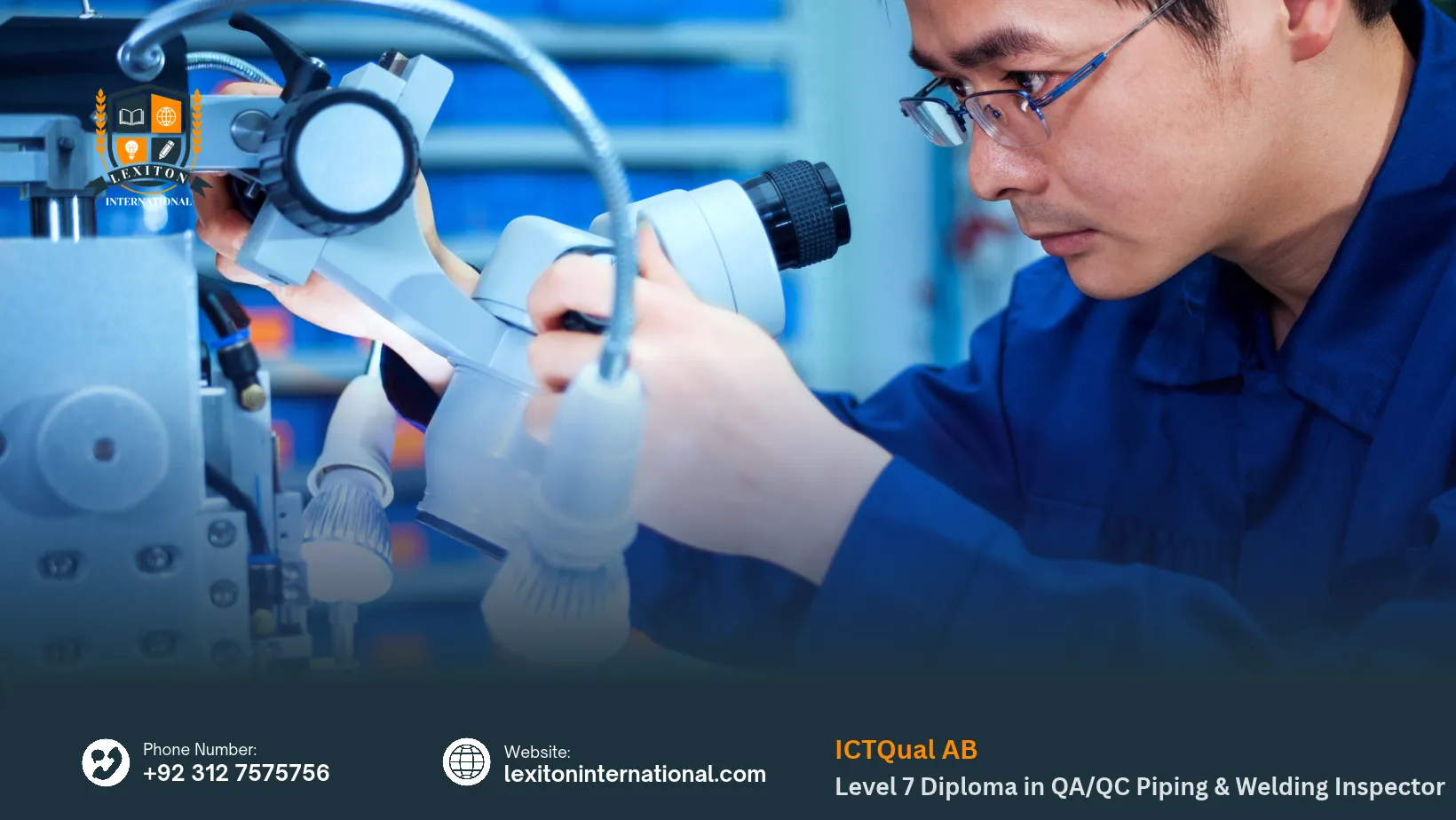
The ICTQual AB Level 7 Diploma in QA/QC Piping & Welding Inspector is designed to develop advanced knowledge of quality assurance, quality control, piping inspection and welding quality management. The qualification focuses on inspection principles, technical requirements and quality procedures used to support the reliability, safety and compliance of piping and welded structures across industrial engineering projects.
This diploma covers key areas such as piping inspection, welding inspection, material verification, welding defects, non-destructive testing awareness, technical drawings, inspection documentation, quality standards, non-conformance reporting and corrective actions. Learners can develop an understanding of how inspection activities help verify materials, welding quality and piping installations against applicable project specifications and industry requirements. The course also highlights the importance of accurate reporting, quality records and effective coordination with engineering and project teams.
The ICTQual AB Level 7 Diploma in QA/QC Piping & Welding Inspector is relevant to Learners in Pakistan and internationally who work in, or aspire to develop expertise in, oil and gas, petrochemicals, construction, fabrication, manufacturing and industrial projects. It may benefit quality professionals, piping personnel, welding inspectors and engineering staff seeking advanced technical knowledge.
Through structured learning, Learners can strengthen their inspection awareness, quality management knowledge and understanding of piping and welding requirements in demanding industrial environments.
The ICTQual AB Level 7 Diploma in QA/QC Piping & Welding Inspector is intended for Learners seeking advanced knowledge of piping inspection, welding quality and industrial quality control. Relevant technical experience and educational preparation are recommended.
- Age: Learners should normally be 18 years or older.
- Experience: Previous experience in QA/QC, piping engineering, welding inspection, fabrication, construction or oil and gas is strongly recommended.
- Language Proficiency: Good English proficiency is recommended to understand technical specifications, inspection reports, engineering documents and course materials.
- Educational Background: A relevant qualification in engineering, welding technology, mechanical studies or quality management is recommended. Equivalent technical learning and experience may be considered, subject to the approved centre’s requirements.
- Technical Knowledge: Basic understanding of piping systems, welding processes, engineering drawings and quality control principles is beneficial.
- Learning Ability: Learners should be prepared to study technical requirements, inspection procedures, quality documentation and industrial standards.
The ICTQual AB Level 7 Diploma in QA/QC Piping & Welding Inspector, qualification consisting of 6 mandatory study units.
Mandatory Units
- Executive QA Strategy & Global Regulatory Compliance
- Multi‑Disciplinary Piping & Welding Projects at Enterprise Scale
- Innovative Digital Inspection Technologies & Smart NDT
- Enterprise Risk & Resilience Planning with Incident Response
- Change Management, Knowledge Transfer &Organisational Development
- Master‑Level Research Project & Case Study in Inspection Engineering
Skills You Will Gain
The ICTQual AB Level 7 Diploma in QA/QC Piping & Welding Inspector helps Learners develop advanced technical knowledge of piping inspection, welding quality, quality assurance and industrial inspection procedures. These skills are relevant to oil and gas, petrochemical, construction, fabrication and other engineering environments.
- Quality Assurance: Understand advanced quality assurance principles used in piping and welding projects.
- Quality Control: Apply knowledge of quality control procedures to support compliance with project specifications and technical requirements.
- Piping Inspection: Develop knowledge of piping inspection methods, installation requirements and component verification.
- Welding Inspection: Understand welding inspection principles, weld quality requirements and inspection checkpoints.
- Material Verification: Assess the importance of verifying piping materials, certificates and traceability records against project requirements.
- Welding Defects: Identify common welding defects, understand their causes and recognise appropriate reporting procedures.
- Technical Drawings: Interpret piping drawings, welding symbols, isometric drawings and relevant technical documentation.
- Inspection Planning: Understand how inspection and test plans (ITPs) define inspection stages, acceptance criteria and required records.
- Non-Destructive Testing: Develop awareness of non-destructive testing (NDT) methods used to examine welds and piping components.
- Quality Documentation: Understand how to prepare, review and maintain inspection reports, weld records and quality documentation.
- Non-Conformance: Recognise deviations from specifications and understand non-conformance reporting and corrective action processes.
- Industry Standards: Develop awareness of applicable codes, standards, project specifications and acceptance criteria.
- Welding Procedures: Understand the importance of welding procedure specifications (WPS) and welder qualification records.
- Dimensional Inspection: Develop awareness of dimensional checks, alignment, fit-up and installation tolerances in piping systems.
- Safety Awareness: Recognise inspection-related hazards and the importance of following safe working procedures on industrial sites.
- Quality Reporting: Communicate inspection findings, document defects and support effective coordination between QA/QC teams, engineers and project personnel.
The ICTQual AB Level 7 Diploma in QA/QC Piping & Welding Inspector is suitable for Learners seeking advanced technical knowledge of piping inspection, welding quality assurance and industrial quality control. It is particularly relevant to professionals working in engineering, fabrication, construction, oil and gas, and petrochemical projects.
Who Is This Course For
This course is particularly suitable for
- QA/QC Engineers: Suitable for quality professionals seeking to strengthen their knowledge of inspection procedures, quality standards and compliance requirements.
- Welding Inspectors: Ideal for inspectors who want to develop their understanding of weld quality, defects and inspection documentation.
- Piping Engineers: Relevant to professionals involved in piping systems, installation, technical specifications and project quality.
- Welding Professionals: Beneficial for individuals working with welding processes, fabrication quality and weld inspection requirements.
- Quality Inspectors: Suitable for personnel responsible for material verification, inspection checks and non-conformance reporting.
- Fabrication Supervisors: Useful for professionals overseeing welding, piping fabrication and quality control activities.
- Oil and Gas Professionals: Relevant to personnel involved in pipelines, refineries, petrochemical facilities and industrial projects.
- Construction Professionals: Suitable for site personnel working with piping installation, welding activities and engineering quality requirements.
- Mechanical Engineers: Beneficial for professionals seeking specialised knowledge of piping and welding inspection practices.
- Career-Focused Learners: Suitable for individuals with relevant technical preparation who want to strengthen their expertise in QA/QC piping and welding inspection.
Future Progression
The ICTQual AB Level 7 Diploma in QA/QC Piping & Welding Inspector can help Learners strengthen their technical knowledge for quality-focused responsibilities across engineering, construction, fabrication, oil and gas, and petrochemical projects. The knowledge gained may support professional development and preparation for specialised inspection and quality management roles, subject to relevant experience and employer requirements.
- QA/QC Engineering: Strengthen knowledge relevant to quality assurance and quality control activities in industrial projects.
- Welding Inspection: Develop technical understanding relevant to weld inspection and welding quality verification.
- Piping Inspection: Build knowledge for piping inspection, installation checks and compliance with project specifications.
- Quality Management: Develop awareness of quality systems, inspection planning, corrective actions and continuous improvement.
- Oil and Gas: Apply piping and welding quality knowledge to pipeline, refinery and petrochemical project environments.
- Fabrication Supervision: Strengthen understanding of fabrication quality, welding requirements and inspection coordination.
- Inspection Coordination: Develop knowledge relevant to coordinating inspections, reviewing reports and maintaining quality records.
- Project Quality: Support quality-related activities involving technical specifications, inspection plans and non-conformance management.
- Technical Documentation: Build expertise in reviewing inspection records, material documentation and welding quality reports.
Curious About This Course?